



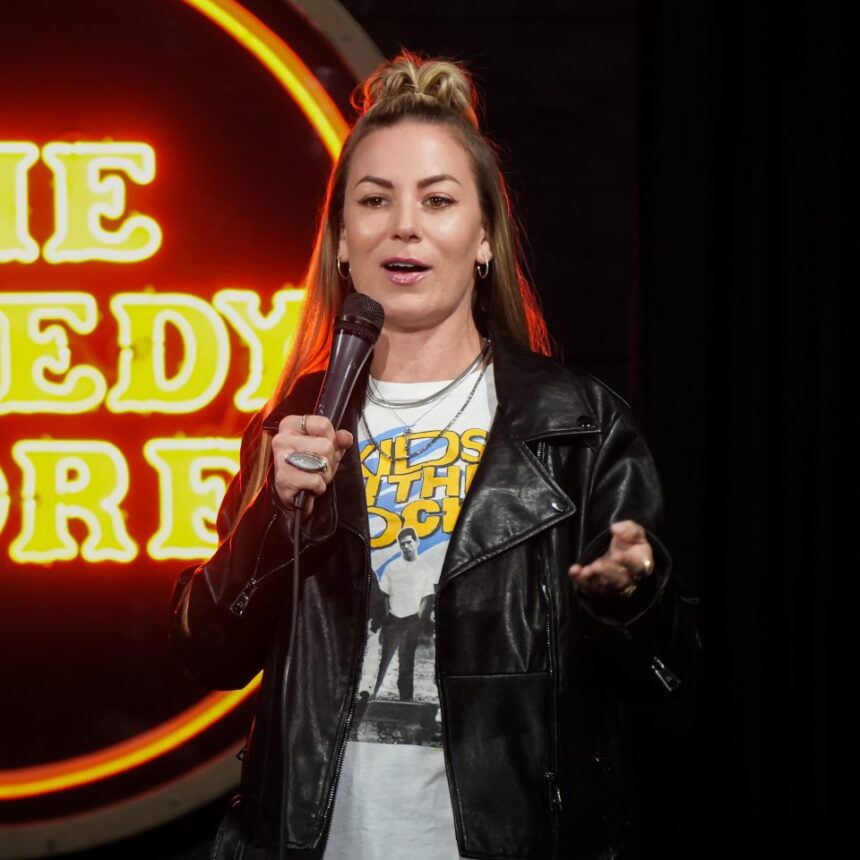
“Grief is a gift. Right now, it may feel like a curse. It burns every fiber of your being, leaving you feeling lost, alone, and untethered,” says Jessimae Peluso, remembering the period when she lost both of her parents. She does not say it for effect. She says it because she earned it. She says it the way people speak when there is no filter left to protect them.
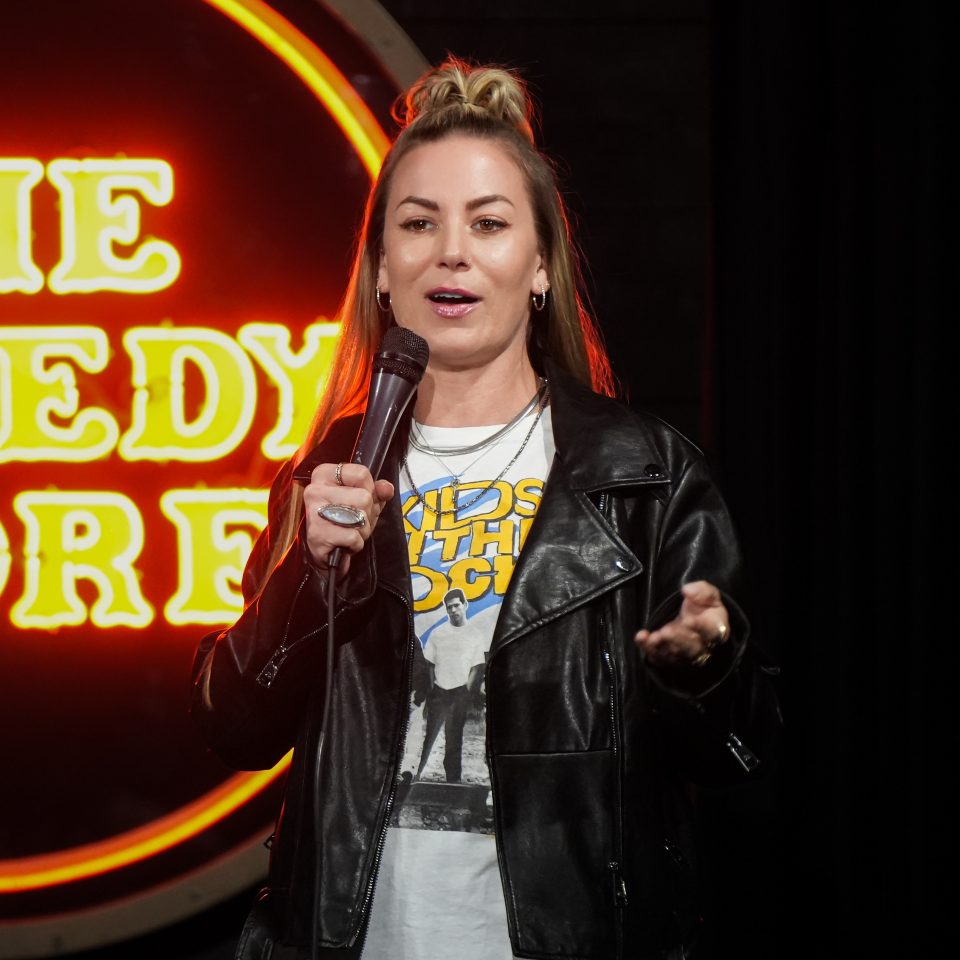
Peluso is known for stand-up comedy, MTV’s Girl Code, a long relationship with humor and weed, and the kind of irreverent timing that makes even the mundane absurd. But somewhere between growing an audience and after her parents got sick and eventually passed, she found herself holding something heavier than jokes. She found grief.
Most people run from pain, but Jessimae turned toward it with a microphone.
After her parents passed, something strange happened: people online began messaging her about their own losses. She did not ask for that responsibility, nor did she brand herself as a guide for emotional collapse. She was just openly grieving, and her audience recognized something familiar.
In her words, the response clarified the work that needed to be done: “After losing both of my parents, I was struck by how many fans reached out to share that my grief also touched them. I had always included my parents in my stand-up and on my podcast, so when they got sick and eventually passed, my audience felt like they knew them and felt connected to the loss.”
That is where Dying Laughing was born. Not in a meeting or as a pitch, but in the simple fact that loss had made her transparent and her audience felt safe enough to respond.
Jessimae says she did not jump into the concept right away. “It actually took me over a year to rebrand my podcast into something grief and mental health focused,” she explains. She wanted to be intentional. She jokes about being a Virgo, but the truth behind it is focus, avoiding the show to become trauma porn. The goal was to build something that could hold the weight.
“I’m a Virgo, so perfectionism is the cross I bear. I wanted to make sure it had real depth. I dug into grief literature and explored different healing modalities, partly for my own journey and partly to shape the show.”
She was already talking about her family in comedy, so, when her parents died, the audience did not disappear; they leaned in. They wanted to know what comes after the punchline. The answer was the part no one wrote for her.
Grief shows up without a script. Jessimae says humor did not trivialize her experience: it kept her alive in it and made space for breath. “My purpose is to sprinkle joy onto a heavy subject, to show that we can laugh with our grief, not just suffer through it. Suffering is a choice. Healing is a journey.”
The podcast is not “funny takes on death” or novelty sadness. It is a collection of the emotional leftovers no one knows where to store, filtered through someone who understands that comedy is not the opposite of pain. Comedy is how pain metabolizes.
And yes, cannabis sits close to that process.
Jessimae has always had a connection with weed, but she says it did not start in high school, or as a rebellious stoner origin myth. That part of her identity emerged later. “The truth is I actually only started partaking in the jazz cabbage in the last decade or so, having never even smoked in high school.”
The way she describes weed is not as a crutch or hype, but as a companion. “Once I only enjoyed cannabis as a solution to boredom, and that quickly evolved into a portal for healing for me.”
Years ago, Jessimae used to host a live show on Instagram called Weedsday. She smoked, told stories, interacted with fans. It was a loose, intimate hangout, and her family would sometimes appear on camera. Later, when her father became sick, the tone changed. Even though the space was still playful and chaotic and full of personality, something deeper was happening. “Once I lost my father, I used the show as a way to raise awareness and charity for an Alzheimer’s foundation.”
Cannabis stopped being recreational and became relational, allowing her to stay present through the kind of day most people try to escape.
“Cannabis was a medicine that helped me show up deep for myself while I was losing my father. It slowed me down, and gave me some space to feel the feels.”
Her take on weed and grief is not the cliché of stoner enlightenment. It is quieter. More grounded. “I wouldn’t say cannabis opens the door to grief, it walks you through it.”
And then she says something you do not hear often. That grief is not something to fix. “Grief is universal, but it wears a custom suit for everyone.” That sentence is a reminder that no two losses are the same, but we still try to navigate them as if there is a map.
Jessimae talks about the community forming around her work. People write to her, send voice notes, DM her. Not to ask for jokes, but to share something that hurts. “I find it really humbling to be a person many people have turned to for solace, reprieve and relief from their own despair.”
Although the show isn’t therapy, it has become a gathering point: “Through the sharing of my own losses, I am building a community. How beautiful is that? My loss has given me more than I could have asked for. A universally shared experience and one giant grief gang.”

There is an episode where Sarah Barthel of Phantogram talks about her sister’s suicide. There is another where John Stamos speaks about signs from the other side. Jessimae listens. She does not actively try to solve anything. “By talking so much with people about loss, it really proves and highlights that everyone’s grief is so personal. This universal experience is a deeply individualized one.”
Then she shares something that could only come from her: “I think loss can create magic. I know it does. After my mom passed, I saw her in Italy. I called my sister immediately and said, Mom didn’t die, she’s just on vacation in Sorrento.”
It is impossible to tell if she is serious or joking, and that’s the point. Sometimes the pain hits so hard you need a laugh just to breathe. Sometimes the laugh hits so honestly it becomes a kind of prayer. Jessimae lives in that tension.
She also believes in absurdity as survival. “Absurd humor became a survival mechanism.” She tells a story about her father, deep into dementia, getting confused and aggressively hitting on her sister.
“It was truly heartbreaking for me to see. Because I’m the hot sister.” Pain. Then punchline. Not to erase the ache. To hold it.
She does not pretend weed solves grief, but she knows that cannabis shaped her ability to sit inside the hard parts. “It allowed me to just be. To just be sad. To just be angry, and depressed.” She describes the plant as a bridge. Not out of grief. Into it.
“We all know laughter is one of the best medicines. But when paired with a little bit of the jazz cabbage, it can be a super healer.”
It is easy to imagine Dying Laughing filling a room soon. Jessimae sees it too. “Definitely live events and grief seminars are in the future.” Not comedy clubs. Not self-help conferences. Something new.
“There are endless possibilities, but I do know that I am brewing up a unique grief experience that focuses on the blessings and joy that come from and are on the other side of loss.”
In her mind, grief is not a hole, a bottomless pit. It’s a gateway.
“Grief is a doorway to personal freedom if you can have access to the right tools. I want to make that accessible to a wider audience. That’s my calling in life.”
When asked what she would tell someone in the High Times community who is grieving right now, she does not offer a shortcut. She brings truth. “Grief is a gift.”
She knows it may feel cruel, like the world is ending. She has been in that landscape and she knows the terrain. “There is life and love waiting for you. And that’s a gift.”
No slogan. No takeaway. Just the real thing: a woman who lost both parents. A comedian who refuses to pretend pain is punchline-ready. A stoner who used weed not to escape reality, but to feel it.
Grief did not break her. It stripped her.
And what remained was human.
Photos courtesy of Jessimae Peluso.