






A GOP congressman says President Donald Trump would “wrong” to move forward with a plan to reschedule marijuana, which he described as a “gateway drug” that leads to the use of “harder substances”—despite numerous studies contradicting that theory.
The cannabis community is waiting with bated breath for Trump to make a decision on a proposal to move cannabis from Schedule I to Schedule III of the Controlled Substances Act (CSA). He said in August that there’d be a decision within weeks, and on Monday he said the administration was looking “very strongly” at the issue.
Rep. Mike Lawler (R-NY) was asked about the potentially imminent reform during an interview with NewsNation’s “The Hill” that aired on Monday. And the congressman said it would be a bad idea, even though rescheduling would not federally legalize cannabis.
Part of his thinking is rooted in the debunked “gateway drug” theory. Lawler also argued that there’s a policy disconnect between the administration’s aggressive anti-drug campaign ostensibly focused on fentanyl and the reported plans to reschedule marijuana, which Trump said on Monday would remove research barriers to study the plant.
“If you look at the reason that we went after the cartels and labeled them foreign terrorist organizations, it’s because over 75,000 Americans are dying on an annual basis from fentanyl overdoses,” Lawler said. “Most of the drugs laced with fentanyl are coming across the border. And so [Trump is] right to go after that.”
“He’s right to go after fentanyl. That is what is killing many Americans on an annual basis,” the congressman said. “But I think rescheduling marijuana is wrong. The fact is, marijuana is a gateway drug. Most of the people [who] end up using harder substances start out on marijuana.”
He also echoed a common prohibitionist talking point about the potential health risks associated with using high-THC marijuana products.
“The THC content in marijuana is significantly higher today than it was 30, 40 years ago,” he said, “and so when you look at the challenges that we’re facing as a country with substance use disorder, I don’t think rescheduling marijuana is wise. I’m opposed to that.”
“I think we need to work to address the fact that we have a demand issue in this country. We need to help people get the support that they need—simultaneously going after the dealers and those, certainly, who push fentanyl-based products,” Lawler added.
It remains to be seen whether Trump will ultimately fulfill his campaign promise to move cannabis to Schedule III, which would not legalize the plant but would let marijuana businesses take federal tax deductions while removing certain research barriers.
He endorsed rescheduling—as well as industry banking access and a Florida adult-use legalization initiative—on the campaign trail last year. But he’s since been largely silent on the issue since taking office during his second term, until a briefing in August where in response to a reporter’s question he announced the administration would decide on rescheduling within weeks.
Meanwhile, multiple top congressional Democrats are making the case that the modest reform would not go far enough—including Sen. Ron Wyden (R-OR) who said the move is only an attempt by the president to “gaslight” voters into thinking he legalized cannabis to boost his “pathetic” approval ratings.
A major drug testing industry organization separately said it’s “sounding the alarm” amid the reports Trump may soon finalize the rescheduling proposal, arguing that the policy change would “have catastrophic consequences for the safety of the United States workforce and transportation sectors.”
—
Marijuana Moment is tracking hundreds of cannabis, psychedelics and drug policy bills in state legislatures and Congress this year. Patreon supporters pledging at least $25/month get access to our interactive maps, charts and hearing calendar so they don’t miss any developments.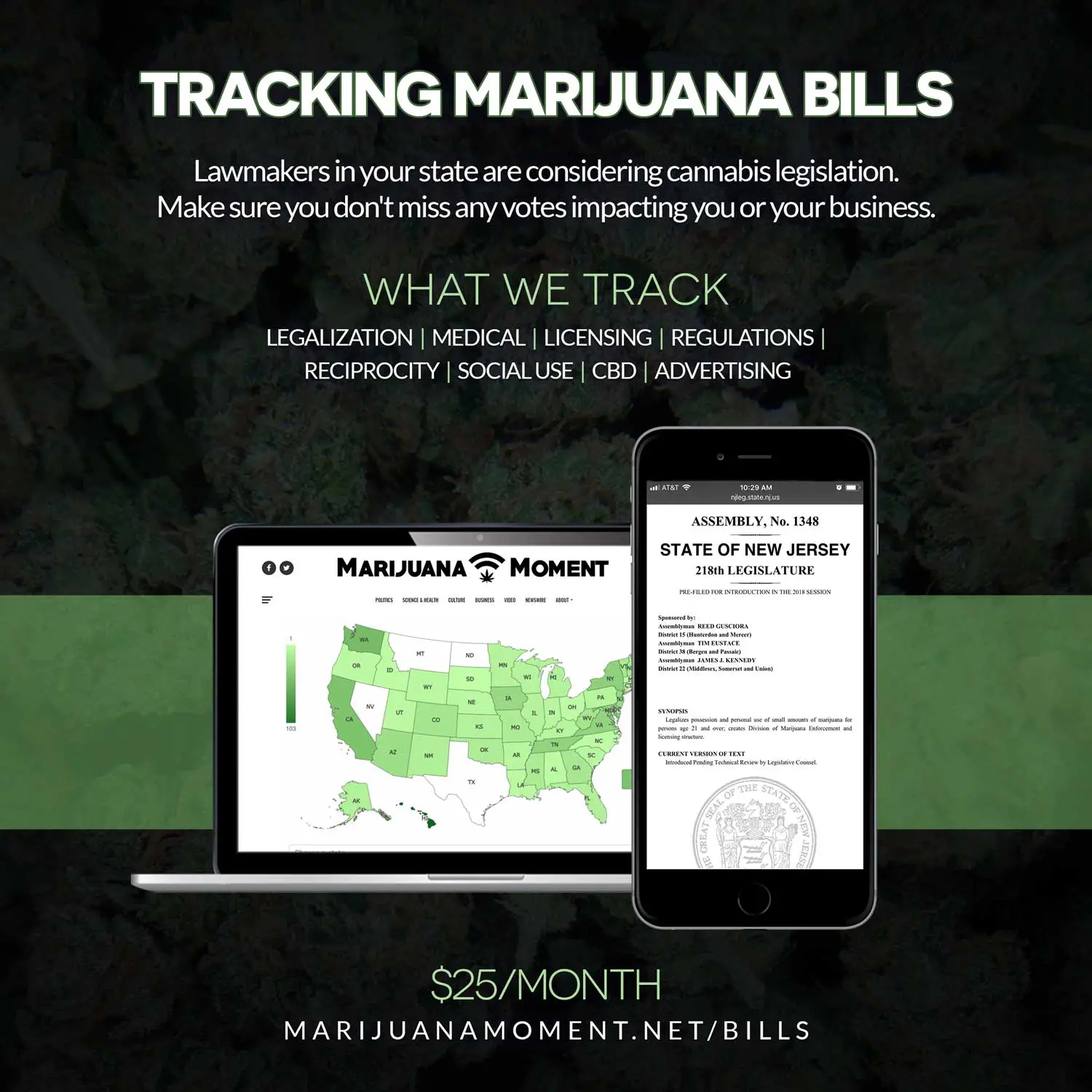
Learn more about our marijuana bill tracker and become a supporter on Patreon to get access.
—
Cannabis industry stakeholders are holding out hope that the reform will be achieved as soon as possible, but opponents—including the National Drug & Alcohol Screening Association (NDASA) and Smart Approaches to Marijuana (SAM)—are working to dissuade the administration before a final decision is made.
For what it’s worth, a White House spokesperson told Marijuana Moment last week that no actions have been finalized so far.
Bipartisan congressional lawmakers have been weighing in on the potential rescheduling decision over the past week—with Democrats like Rep. Alex Ocasio-Cortez (D-NY) calling the reform a “no-brainer” and others like Rep. Andy Harris (R-MD) pushing back against the proposal.
The Washington Post reported last week that Trump was planning to issue an executive order directing federal agencies to move ahead with cannabis rescheduling.
The outlet also said the president met earlier this week in the Oval Office with marijuana industry executives, Health and Human Services Secretary Robert F. Kennedy Jr. and Centers for Medicare and Medicaid Services Administrator Mehmet Oz. During that meeting, Trump phoned Johnson, the House speaker, who expressed his opposition to rescheduling cannabis,
If the administration does ultimately enact rescheduling, it would mark one of the most significant developments in federal marijuana policy since its prohibition a half a century ago, with a Schedule III reclassification recognizing that marijuana has medical value and a lower abuse potential compared to other Schedule I drugs like heroin.
Photo courtesy of Chris Wallis // Side Pocket Images.
Marijuana Moment is made possible with support from readers. If you rely on our cannabis advocacy journalism to stay informed, please consider a monthly Patreon pledge.