




There’s something primal about growing your own plant. It’s independence and freedom in a pot. A small act of rebellion in a red Solo cup. The quiet magic of planting a seed and watching life emerge from soil and light—and the satisfaction of knowing exactly what went into the flower you’ll one day hold between your fingers and share with your friends and family. Plant medicine grown at home is a small but mighty revolutionary act of independence and artistry.
But while legalization has swept much of the country, home cultivation still lives in a confusing patchwork of laws. Some states invite you to plant your seeds and grow freely; others threaten fines or felonies for doing the same thing. The rules are constantly shifting, and for a community that values freedom and autonomy, that uncertainty can be maddening.
This guide breaks it down into three key areas :
- Where You Can Grow: A State-by-State Breakdown.
- What kind of genetics fit your life: Autos vs Photos.
- How to keep your setup simple and successful: 5 key non-negotiables for success.
Part I: Can I Even Grow?
Let’s start with the law—not the kind that harshes your mellow, but the kind that protects you from losing your crop, your cash, or worse.
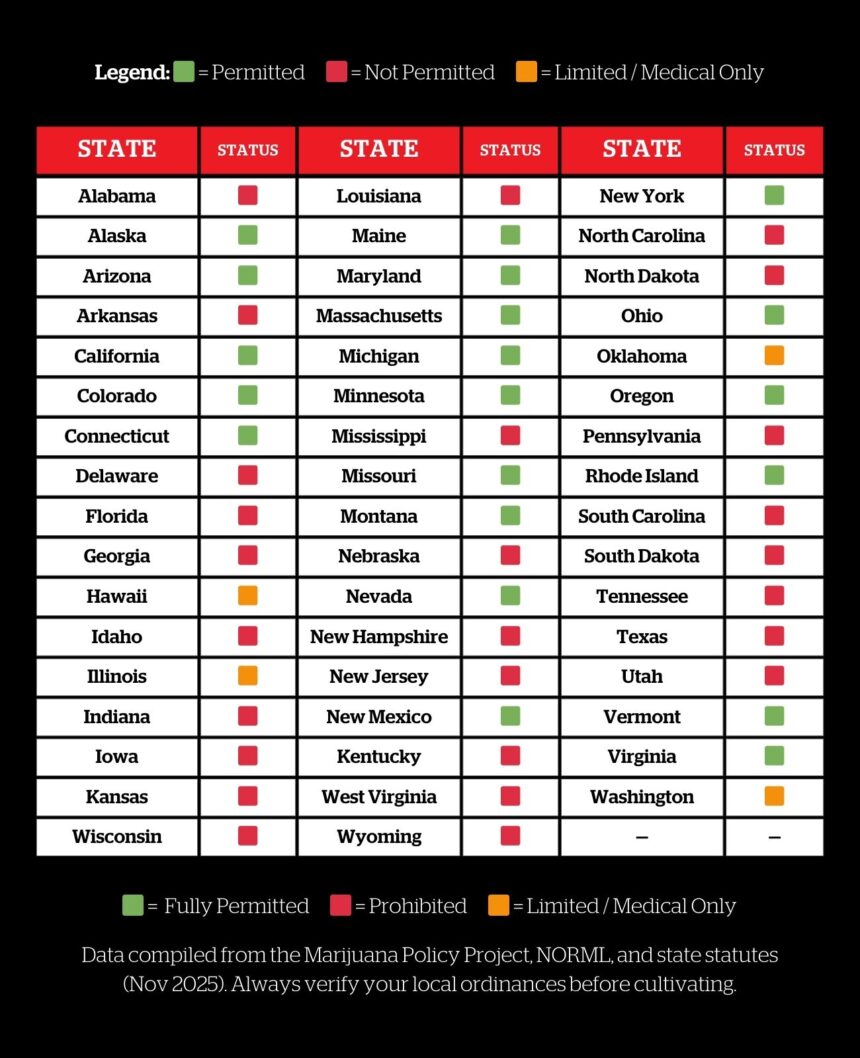
Every state sits somewhere on the spectrum between fully free and completely forbidden. Some allow a handful of plants for personal use, others only permit licensed medical patients, and a few still consider home cultivation off-limits altogether.
Below is a simple, visual snapshot — our best understanding of home-grow legality across the U.S. as of November 2025. Laws change frequently, so treat this as a starting point, not a gospel truth. Before you pop that first seed, do your own due diligence: check your state’s current cultivation guidelines to make sure you’ve got a legal path forward.
And for reference, here in Oregon, adults 21+ can legally grow up to four plants per household for personal use—a model that strikes a balance between freedom and responsibility.
Home-Grow Laws by State (as of November 2025)
Part II: Autos vs. Photos — Know Your Plant Personality
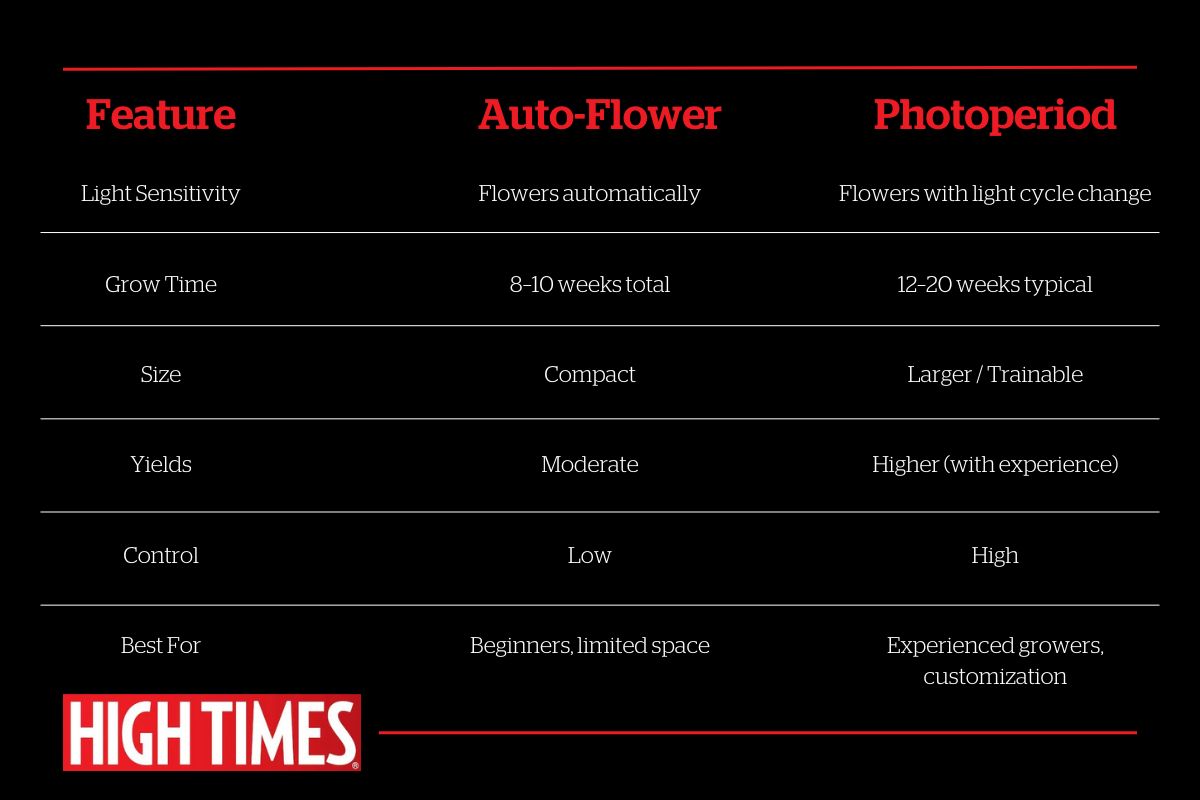
Once you’ve confirmed you can legally grow, the next question is what you should grow. Here we really have two categories: autos and photos.
Auto-flowering strains (autos) are the set-it-and-forget-it option for beginners and busy growers. They flower automatically after a few weeks, don’t depend on light cycles, and finish fast. You sacrifice some control—and often a bit of yield—but you gain predictability. We have experimented with auto-flowering genetics in our cultivation setup on our farm, and we have found a few genetics that we find very compelling.
One breeder in particular has made auto-flower breeding his calling card is James Loud Genetics (JLG). The variety and quality of cultivars James has folded into his breeding techniques have raised the bar on auto-flowers. The other huge advantage to autos is that they are almost always feminized seeds. This means the risk of males—to be avoided unless you are interested in breeding—is eliminated, so you can feel confident you will end up with a female flower.
Photoperiod genetics (photos), on the other hand, is where artistry comes in. They respond to light and timing, letting you decide when to flip them into flower. They’re slower, bigger, and reward patience with higher yields and broader expression of terpenes. Until you change your light cycle from an 18/6 to a 12/12, photos will continue to grow in a vegetative state. Once you change the light cycle to 12 hours of light and 12 hours of dark, the hormonal shift begins, and the plants begin their 9-12 week flower cycle.
Depending on how large a space you have, you will only want to manage your veg time so that by the time you flip your plants into flower they are not too large. And unless you get a cutting from a female plant, starting with photos mostly means regular non-feminized seeds.
The risk here is that you don’t know if it will be a male or female. Yes, of course, there are feminized photos you can find from seed banks and this helps reduce the possibility of male expression. However, it is not a guarantee that you won’t end up with a male expression. So be mindful of the fact that male and female expressions are possible.
Cultivation tip: match your genetics to your lifestyle, not your ego. If you travel a lot or can’t check your tent daily, autos will treat you better than finicky photos that demand routine and patience.
Part III: Keep It Simple SOPs
Forget the grow bibles and online debates—the best cultivators master the basics and repeat them consistently. We manage thousands of square feet of canopy—veg and flower—and produce thousands of pounds of cannabis annually on our farm. Running large rooms, greenhouses and full-term outdoor gardens for the past decade has shown us the complete range of issues and challenges that inevitably emerge.
In preparation for the launch of our online course, we decided to invest in a 4 x 8 Gorilla grow tent in order to understand the challenges of cultivation on that scale. If nothing else, it has demonstrated the challenges of growing in a tent set up. But what it has also demonstrated is that you can absolutely grow fire in a tent if you are focused and present with the process.
Here are the (5) non-negotiables for any successful grow, whether you’re running a small tent or a backyard greenhouse:
- Light: The single biggest driver of plant health and yield. Invest here first. We only use LED lights at our facility. Fluence, Scynce, and FOHSE are a few top brands. There are many choices, but LED is where you want to be.
- Air flow: Keep air moving. Stagnant air is a pest and pathogen paradise. Air flow in the tent, closet, or garage is essential.
- Substrate: Quality soil beats nutrient hype. We have been loyal to the soil since day one, and we will preach soil cultivation forever. It is the easiest, most forgiving medium to grow in by far. A nutrient-dense soil is literally the foundation of our cultivation.
- Water: Overwatering kills more plants than neglect ever did. Don’t overwater your plants. Hand watering is still the gold standard, but blue mat systems are emerging as a viable option when you’re away for the weekend and can’t have someone water your plants. But a deployment cadence that allows even dry back on your pots is critical. On average, we have two days in between waterings.
- Cleanliness: Your space should smell like fresh soil, not mildew. Basic housekeeping and cleanliness are essential to running a good grow. Clean floors, scissors, etc. It all stacks, and remember, bleach wins over rubbing alcohol.
If you lock down these five, you’re most of the way to a great foundation for your home grow setup. The rest is just refinement—dialing in feed, pruning technique, and the rhythm that suits your space. There is artistry in the details here, and it can be overwhelming if you’re doing it for the first time.
When I looked around a few years ago to determine what resources were available to provide clarity on some of the basic blocking and tacking of cultivation, I was surprised to find very little in the way of clear online education. With nearly a decade of experience cultivating at scale, I hope to share some of my earned wisdom and insights to help newcomers get their start in craft cannabis. It’s truly a rewarding process, whether you’re growing for fun or making your own medicine.
Closing: The Spirit of the Grow
Home cultivation isn’t just about saving money or flexing genetics—it’s about the relationship between you and the plant; between the light and soil.
Even in a world of corporate cannabis and dispensary convenience, the passionate home grow remains the heartbeat of the culture. It’s where knowledge is passed hand-to-hand, where independence still sprouts under lights and in basements, where the love of the plant stays personal.
So check your laws, respect your limits, and grow something worth tending to.
Because when it’s your hands in the soil, that flower hits different.
This article is from an external, unpaid contributor. It does not represent High Times’ reporting and has not been edited for content or accuracy.