





This article originally appeared in High Times Magazine’s 50th Anniversary Print Issue. Order yours here and get it delivered to your door.
The roads are quieter now in the Emerald Triangle. On stretches of State Route 299, the sight of logging trucks has returned. Humboldt County’s timber economy once defined the region—until environmental restrictions, overharvesting, and shifts in global trade forced its decline in the 1990s. Cannabis filled the gap. What followed was another cycle of boom, regulation, and retreat—weed and wood: two strands shaping the DNA of California’s North Coast.
Fishing faded. Mills closed. Tourism never quite arrived. The economy leaned heavily on cannabis—first underground, then medical, now licensed. Cal Poly Humboldt, once a forestry school, has shifted with the times, offering a cannabis studies minor, partnering with regenerative farms, and funding applied research. The pivot mirrored the plant’s deep roots here.
The change didn’t come all at once. Proposition 215 ushered in a medical gray zone in 1996, but the true “Green Rush” unfolded a decade later. From roughly 2007 until just before Prop 64 passed in 2016, growers, speculators, and capital poured in. Hillsides were cleared for hoop houses. Gas stations and garden centers overflowed. In Willow Creek, there were even traffic jams.
Amy and Jacques Neukom, who run Neukom Family Farm on the banks of the Trinity River, remember how dizzying it was. Their diversified organic farm has been rooted in Willow Creek for over three decades, featuring a CSA model that incorporates fruit, vegetables, livestock, and cannabis. “There were people everywhere,” Jacques says. “Gas stations, grocery stores, garden centers—everything was packed. We had two giant garden centers in town.”
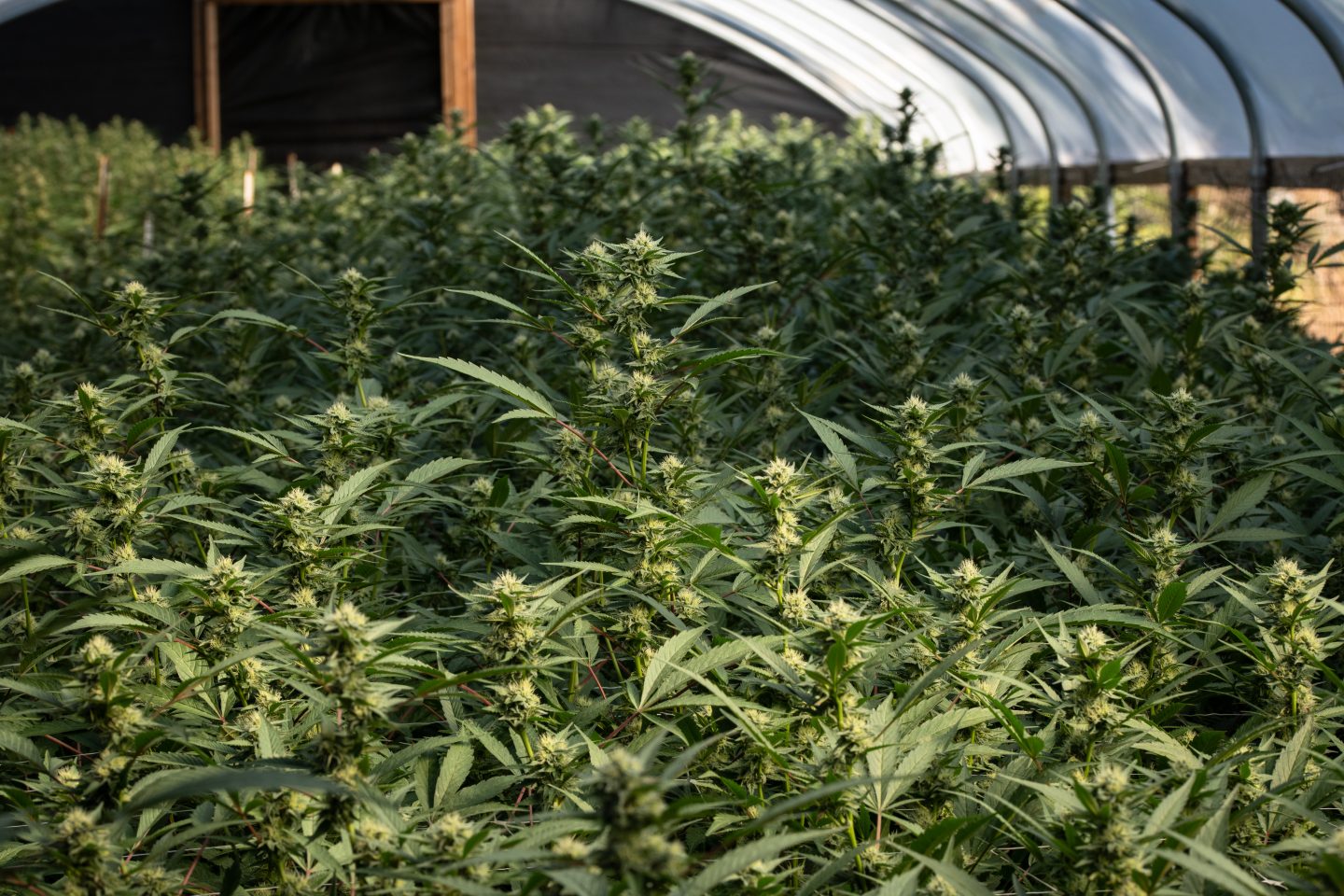
Solstice potlucks and neighborly bartering gave way to bulldozers carving terraces into every slope. Dylan Mattole, who has farmed in Southern Humboldt for decades and now runs Mattole Valley Sungrown, recalls the churn. “It was crazy how fast it happened,” he says. “People cleared sites, put up plastic, failed, then rented to the next crew. It was a pyramid of collapse that kept recycling.”
By 2017 or 2018, the rush had come to an end. Permits grew more expensive, regulations multiplied, and wholesale prices collapsed. Most of the newcomers left. What remained were the farmers who had already built their lives here and had no intention of walking away.
“That’s when the paperwork started outweighing the plant,” Mattole says. “We used to walk into town and know who was trimming for whom. Now everyone’s just trying to make it through.”
For Mattole, survival has meant scaling back and leaning on neighbors. “All those people who showed up with money are gone,” he says. “The ones still here are scrappers. They’ll do whatever it takes to stay.” He compares the moment to the earliest back-to-the-land farmers. “Nobody was getting rich. They were just living a life. Now it feels like we’re back to that.”
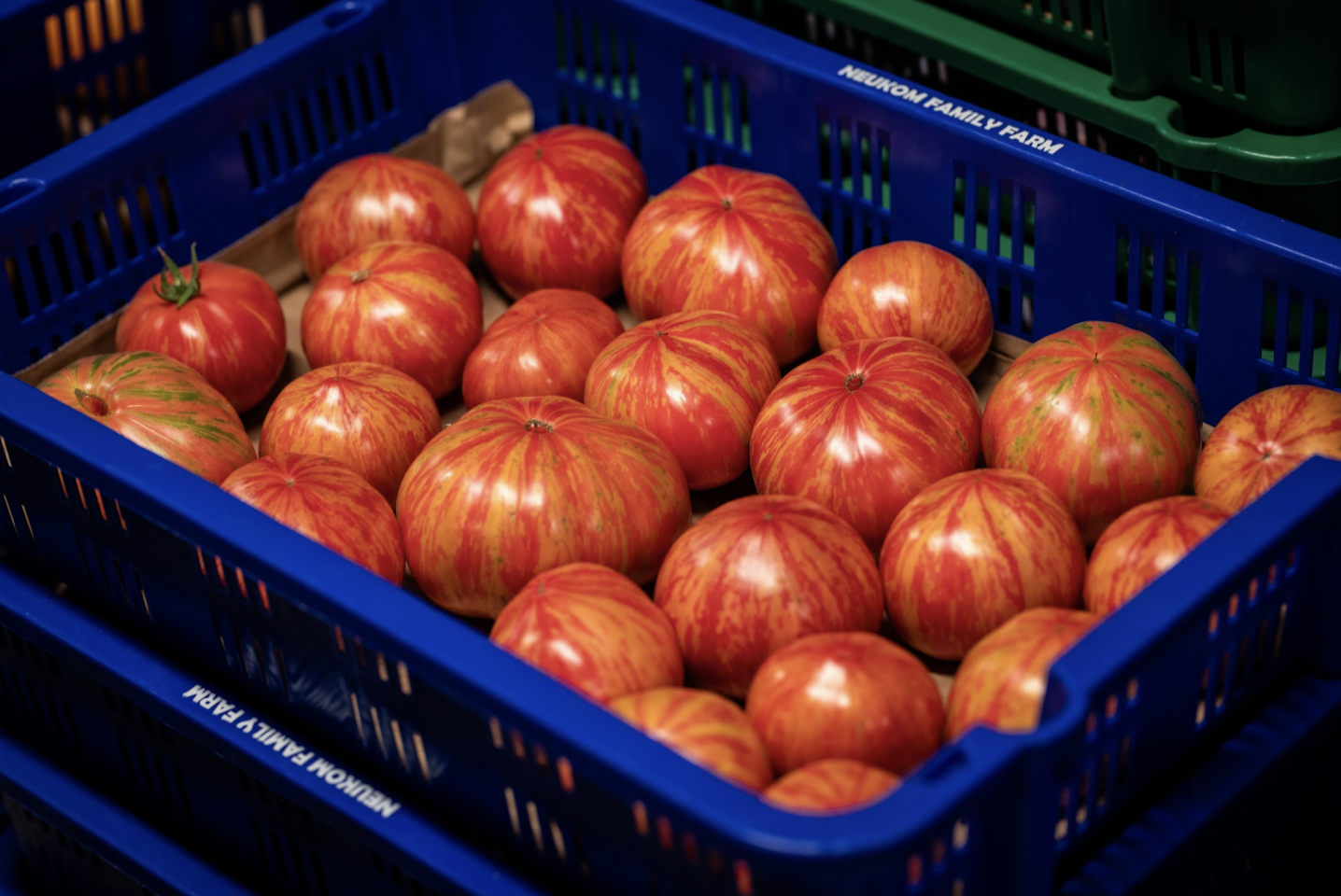
The Neukoms came to the same conclusion. They weren’t just cannabis farmers—they were Willow Creek’s peach growers, melon growers, CSA stalwarts. Their flower was constantly rotated with livestock and vegetables, raised in native soil. “People come for peaches and melons,” Amy says. “And they ask about the flower.”
Also read: Trees Grow in Brooklyn: A Rooftop Cannabis Garden Grown in Living Soil
When Prop 64 passed, they weren’t sure how their neighbors would react. “We had a good reputation as food farmers,” Jacques says. “But we didn’t know if people would be okay with the cannabis.” They decided to be direct. “I told my neighbor, listen, it’s legal now. Who do you want growing it? Wouldn’t you rather it be me?”
It worked. “By the time our daughter graduated, the same parents who wouldn’t socialize with us were telling their kids, ‘Only smoke the Neukoms’ stuff,’” Amy says. “They knew it was clean.” At the farmer’s market, customers now ask about cannabis the way they ask about tomatoes or grapes. “There’s no stigma in that moment,” she adds.
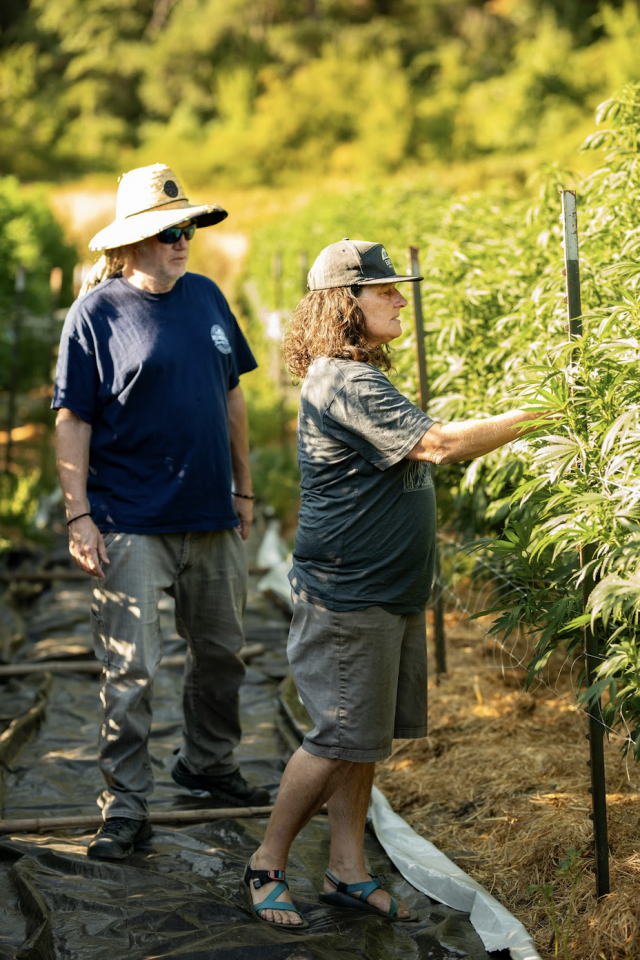
The farm itself carries the lesson. For four years, the Neukoms tried a no-till system, planting rosemary, oregano, chamomile, and alyssum among the cannabis beds. The habitat attracted pollinators, but it also tipped the soil toward fungi, causing the cannabis to shrink each year, even as the herbs thrived. “We realized weed prefers disturbed soil,” Jacques says. “It’s like ditch weed—it wants bacteria, not fungi.” They tilled again, turned under the herbs, layered compost, and the crop recovered.
They bring in live beneficial insects every two weeks from an insectary in Redding—ladybugs, predatory wasps, lacewings—to avoid spraying. Subsurface drip puts water directly to the roots once a week, conserving groundwater and stimulating microbial life. “The plants love it,” Jacques says. “Four hours a week, that’s all.”
It shows at the farmstand. “We didn’t have peaches one week, just melons and tomatoes,” Amy recalls. “The line still wrapped around the market. People come for the food, and now they ask about the cannabis, too. That never would have happened ten years ago.”
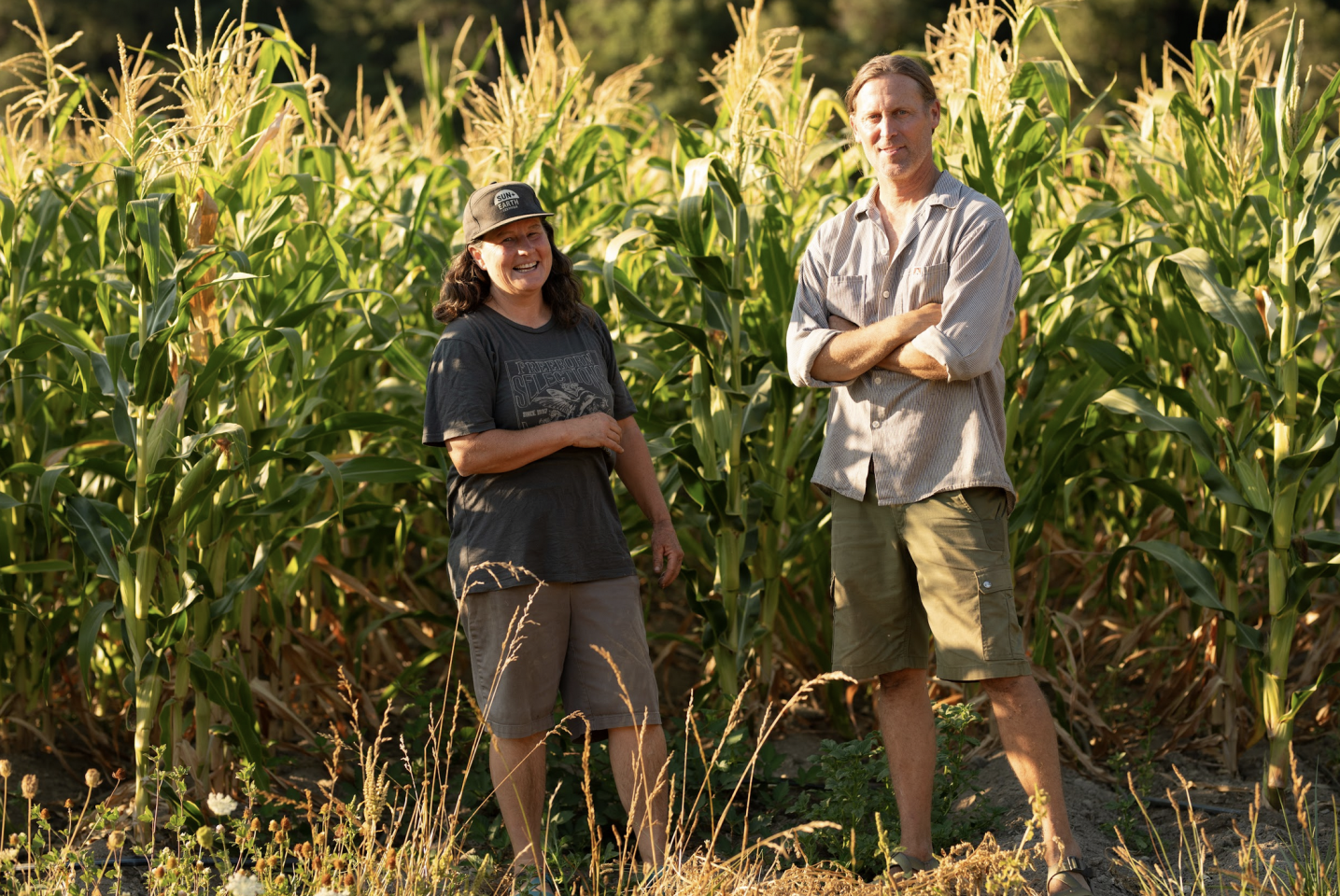
Nik Erickson, who runs Full Moon Farms in Willow Creek and serves on the local water board, also witnessed the stigma fade. He remembers the Green Rush chaos—the traffic, the opportunists, the burnout—and the crash that followed. “There used to be tension between growers and townspeople,” he says. “People thought we were ruining the town. Now it’s different. We’re running the museum. We’re on the water board. We show up.”
For Erickson, survival isn’t about volume or price per pound—it’s about trust.
“I used to think we had to build a brand. Now I think we just need enough trust to last.”
Cannabis, once whispered about, has become part of civic life. “That normalization is more valuable than any marketing strategy.”
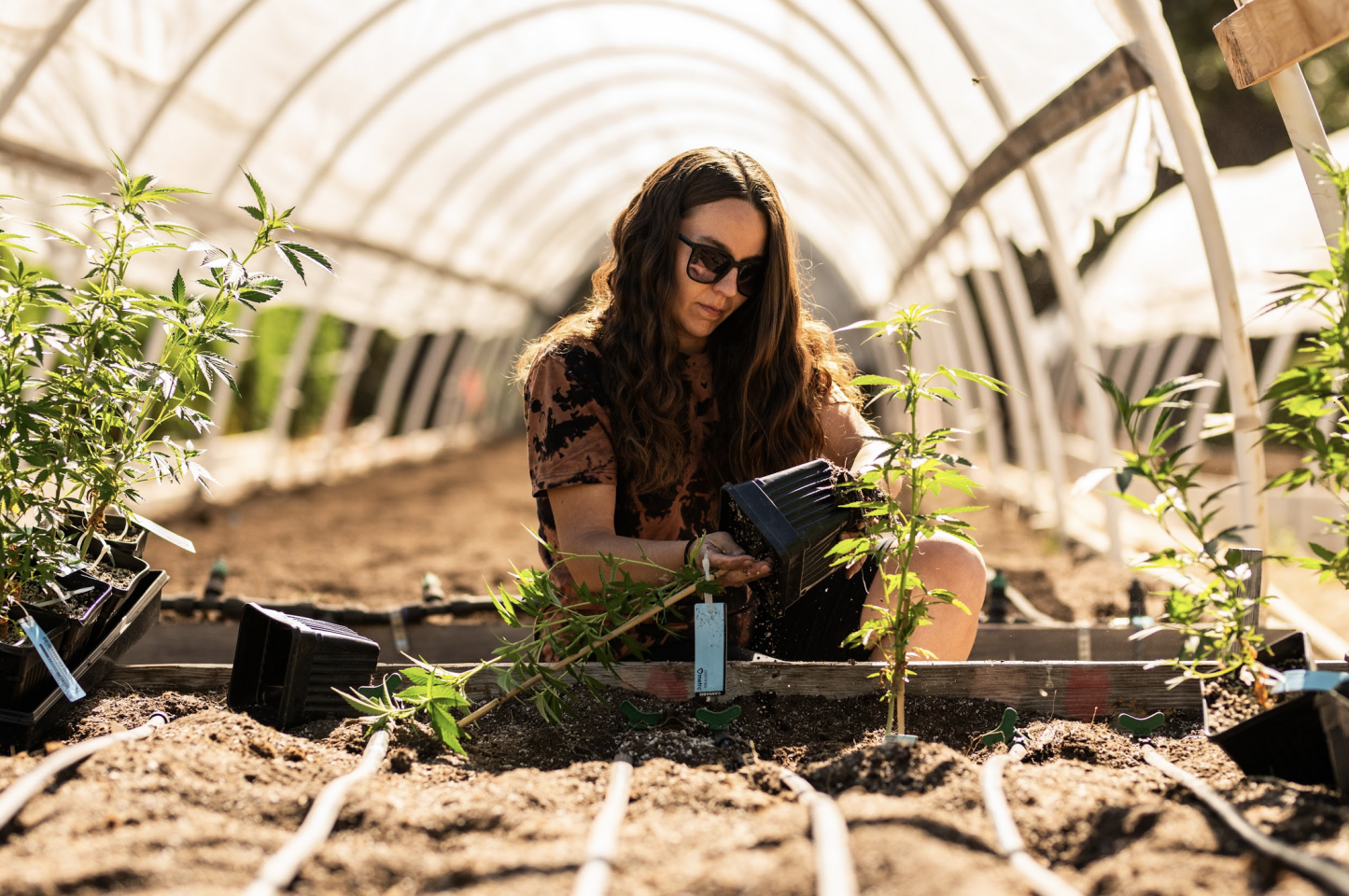
However, legalization also burdened farmers with paperwork. “We know how to farm,” Jacques says. “Suddenly we’re expected to be compliance officers and marketers.” Erickson puts it plainly: “We used to focus on the plants. Now it’s spreadsheets and politics. That’s the job.”
Across the county line in Covelo, Mendocino, Joey Gothelf of WildLand Cannabis describes the grind from his smaller perch. “If I’m doing a good job growing the plants, I’m doing a bad job somewhere else,” he says. “And if I’m doing a really good job at all the other things, the plants have aphids.”
Also read: Chaos in a Jar: Field-Testing Flower for Hash
Gothelf stresses he never wanted to build a brand. “It’s screaming into the void,” he says. “We didn’t ask for this. We were just farming, and suddenly the outside world decided everything was going to change.”
He leans on wholesale and white-label deals to survive but dreams of something closer to farming’s roots: a cannabis CSA. “If people bought in the way they do for vegetables, the stress would be off,” he says. “The weed would be better. Instead we grow more out of desperation, and it all has to be the best weed we’ve ever grown.”
Language evolved alongside practice. For years, “outdoor” was shorthand for bulk, cheap flower. “It sounds scrappy,” says Joseph Haggard, who farms with his family at Emerald Spirit Botanicals in Mendocino and is a founding member of Farm Cut, a cooperative brand that pools sun-grown flower from small farms under a shared label. “‘Sun-grown’ means something different. It says this was grown with attention to land and light.”
Emerald Spirit specializes in terpene-forward, balanced cultivars like Pink Boost Goddess and Royal Blueberry, bred for experience rather than THC percentages. “We’re talking about clarity, calm, uplift,” Haggard says. “Not just numbers on a jar.”
That approach resonates. Emerald Spirit has tripled its sales in three years, one of the few brand-level success stories in the current market. “We’re finding more people who say cannabis feels too strong,” Haggard says. “When you offer something functional, flavorful, smooth, they give it another chance.” Customers have told him that Pink Boost Goddess is the only flower they’ve smoked that hasn’t made them anxious. One called it “the strain that made my brain come back online instead of shutting down.”
Industry data backs him up. Headset reported that terpene-labeled flower is one of the fastest-growing segments in U.S. dispensaries, while BDSA found that lower-THC, effect-driven strains show higher repeat-purchase rates. It’s a small but telling counterpoint to the dominance of high-THC indoor cannabis.
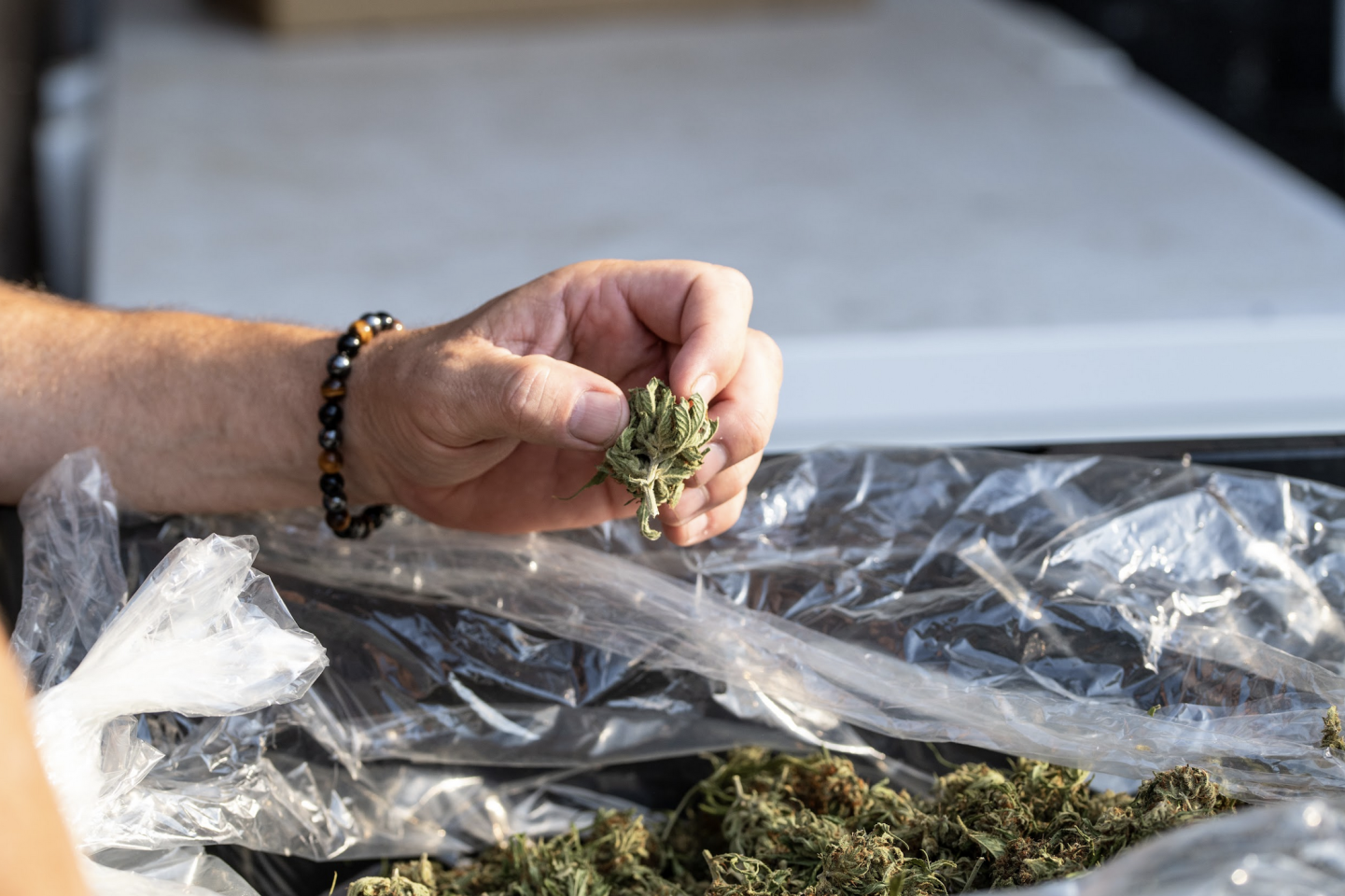
Science supports what farmers see. Sun-grown cannabis tends to express broader terpene diversity and more minor cannabinoids than indoor cannabis. At the California State Fair, sun-grown cultivars have dominated terpene categories.
Farmers reach for wine as a comparison. “Nobody questions terroir in wine,” Jacques says. “Why should cannabis be different?” The Triangle’s diurnal swings, coastal influence, and decades of organic practices shape each harvest. “Indoor may look shinier,” Haggard says, “but sun-grown tastes like place.”
California has even created a cannabis appellations program, modeled loosely on wine AVAs, though rollout has been slow. Humboldt, Mendocino, and Trinity farmers hope terroir designations will one day give sungrown the same cultural and economic power that Napa achieved with grapes.
But buyers still chase high THC and glossy nug shots. “I’ve had people reject a batch without opening it,” Gothelf says. “It tests at 19 percent, the terps are loud. Doesn’t matter.” Erickson calls it a problem of education. “Most buyers never open the bag,” he says. “They read a number. But cannabis isn’t just THC. Like wine, your best bottle isn’t about alcohol percentage.”
That mismatch—between what small farms produce and what buyers accept—remains the sticking point. “It’s always ‘the market, bro,’” Gothelf says. “Like it’s some giant living in the hillside that comes down to visit the townspeople. Really, it’s just an excuse to pay us $250 a pound for weed they admit is incredible.” Wholesale prices had collapsed so far that $500 a pound now counted as “great.” For small farms, it became survival math.
Still, survival has depended on experimenting with new structures. Some farmers leaned on cooperatives, pooling their flower under shared labels. Others turned to certification schemes or lifestyle campaigns that could connect cultivation to values beyond THC. A handful of retailers, too, have carved out space for sungrown when most chains would not.
In Mendocino, Farm Cut brings together independent farms under one craft label, giving them the strength of numbers while still preserving their individual identities. Sun+Earth, launched in 2019, offers cannabis the equivalent of an organic seal: certifying flower grown outdoors in living soil, with regenerative practices and fair labor standards. California also created OCal, a parallel to USDA Organic, but farmers note that without meaningful retail support, it remains a more expensive regulatory stamp than a market driver.
In Humboldt, the model most often cited is Humboldt Family Farms. A coalition of legacy cultivators—including the Neukoms in Willow Creek—the group jars, markets, and distributes flower while telling the provenance story of Humboldt sun-grown. “They get scale,” Erickson says, who also works with the group. “They understand what 5,000 square feet can and can’t do.” Farmers recall earlier attempts, most notably Flow Kana, which tried to unite small farms under a single distribution umbrella. It collapsed under debt, a cautionary tale of how investor promises can outpace farmer realities.
Humboldt Family Farms has already produced measurable results. According to founder and chair Scott Vasterling, who also serves on California’s Cannabis Advisory Committee to the DCC, sungrown flower and prerolls rose from 4 percent of sales in June to 11 percent in August across all Embarc stores, following a Surfer Magazine campaign celebrating the sungrown lifestyle. For farmers long boxed out, it is proof that education, storytelling, and collective branding can move the needle.
Retail partners are part of that momentum. Embarc has been one of the few larger chains to consistently support sungrown, dedicating shelf space and providing consumer education. Solful, a boutique chain in Sebastopol, Santa Rosa, and San Francisco, has built its entire reputation on championing small farms and sungrown flower. In Southern California, Catalyst—better known for its tax activism—now carries a dedicated sungrown brand on its shelves, a symbolic but important signal in the state’s most indoor-driven market. Independents like SPARC in San Francisco and Farmacy in Santa Barbara have carved out similar space. Farmers point to these shops as rare partners willing to educate customers, rather than chasing THC numbers.
Other legacy outfits remain visible as well. Sol Spirit Farm in Trinity has paired regenerative cultivation with on-farm eco-tourism. Emerald Queen in Humboldt has built a reputation for terpene-rich flower, while Ridgeline Farms continues to bring home Emerald Cup trophies with its sungrown cultivars. These farms, such as the Neukoms or Mattole Valley Sungrown, demonstrate that survival is possible when cultivation is tied to place and identity.
None of these models—Farm Cut, Sun+Earth, Humboldt Family Farms, CSA experiments, sympathetic retailers—represents a silver bullet. But they are replicable. Each one shows that with storytelling, provenance, and cooperation, sungrown can find its footing.
Meanwhile, the national context continues to squeeze. Federal prohibition blocks interstate commerce, although both California and Oregon have passed “interstate compact” laws that state legislatures could activate if federal law were to change. Banking reform has stalled for years, keeping farmers locked out of basic financial services. Retail consolidation has concentrated power in chains that dictate shelf space and payment terms, thereby influencing the market.
Even so, California sungrown finds its way east. Much of the flower fueling New York’s gray market, historically, was outdoor, from the Emerald Triangle. Consumers already smoked it, even if they don’t know it. The challenge is less about quality than perception.
The attrition has been brutal. According to the Humboldt County Growers Alliance, more than 75 percent of small farms in the region closed or were absorbed. In 2021, California counted over 7,000 licensed farms. By mid-2024, fewer than 3,000 remained—those who survived scaled back, diversified, and held on to what mattered.
“This used to be a whisper network,” Amy says. “Now we’re visible. That brings new risks, but also new ways to connect.” Erickson agrees. “The Green Rush was a blur. What we’ve got now is more intentional. Smaller, slower, harder—but more human.”
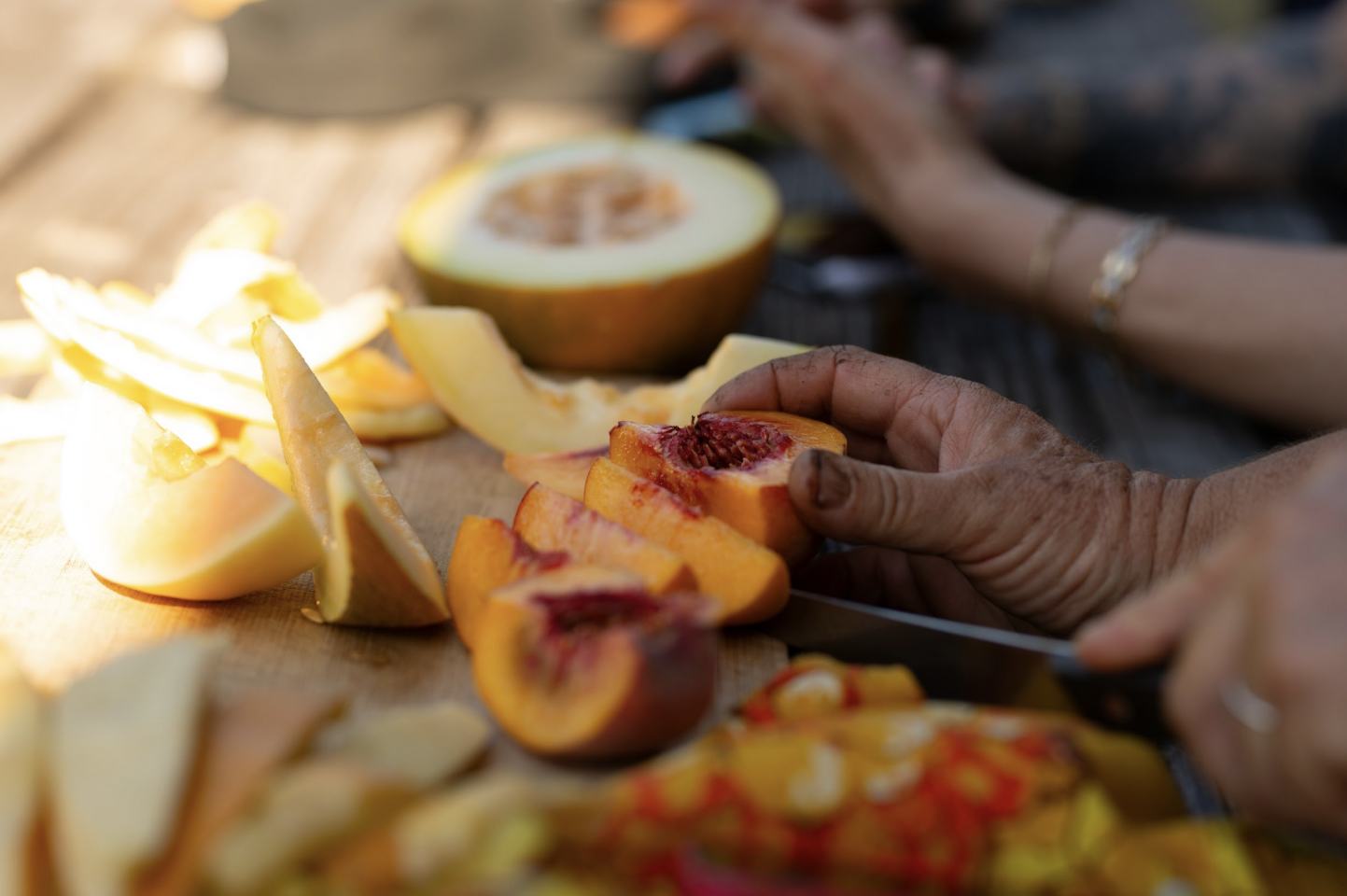
The rush is over, and the speculators are gone. What remains are families who rotate cannabis between rows of melons, who fix irrigation lines on weekends, who serve on water boards, who sell peaches and joints at the same stand. They have moved past the chaos of the boom years into something steadier, if leaner.
The lumber trucks on 299 rumble past fields, some of which have changed hands or gone quiet. Others are still planted, still walked, still harvested. Still producing up on the hill. The canopy is smaller. The roots grow deeper.
Outdoor survived the Green Rush; sungrown will decide what comes next.
This article originally appeared in High Times Magazine’s 50th Anniversary Print Issue. Order yours here and get it delivered to your door.
Photos by Ryan Johnson Bitar