




Editor’s Note: High Times has long supported the removal of cannabis from Schedule I and ultimately federal descheduling. The following guest column reflects the legal analysis of the author and examines what current rescheduling efforts do (and do not) mean for today’s cannabis operators.
By Jason W. Klimek, partner and cannabis industry team co-leader at Harris Beach Murtha
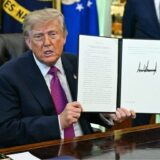
When President Donald Trump signed an executive order directing the Attorney General to “expedite” the rescheduling of cannabis to Schedule III, the reaction was immediate. Headlines framed it as momentum. Markets reacted. Once again, expectations surged.
However, for cannabis companies operating today, the executive order does not change the law or rescheduling, and it does not alter the business reality on the ground.
The current rescheduling effort did not begin with Trump. It began in 2022, when the Biden administration asked the Department of Health and Human Services to review cannabis under the Controlled Substances Act. HHS completed that review in 2023 and recommended moving marijuana to Schedule III. Since then, the process has been with the Drug Enforcement Administration, which must complete a formal rulemaking before anything actually changes.
That rulemaking is still unfinished and now stalled. In early 2025, a federal judge suspended the DEA’s rescheduling hearings after a lawsuit alleged bias and conflicts of interest within the agency. Until that litigation is resolved, the process cannot meaningfully move forward. An executive order does not change that.
At most, the order signals political interest. It does not override federal statutes, cure procedural defects, or bypass the courts.
What This Executive Order Does Not Do
The biggest problem with the current coverage is imprecision. The executive order does not deliver any immediate legal relief to cannabis businesses, and it does not unlock the benefits many people assume come with Schedule III.
Taxes (280E)
Nothing about the executive order changes federal tax treatment. As the IRS announced in 2024, cannabis companies remain fully subject to Internal Revenue Code Section 280E unless and until marijuana is actually rescheduled by final rule. Even then, any relief would apply only going forward. There is no mechanism for retroactive relief. Companies remain liable for past and current 280E exposure regardless of political announcements.
Banking
Rescheduling does not fix cannabis banking. Banks are not suddenly free to lend, process payments, or provide services to cannabis businesses simply because an executive order was signed. Without separate legislation or a fundamental shift in federal enforcement posture, financial institutions still face regulatory risk. Schedule III does not eliminate that risk and neither does this order.
Interstate Commerce
Rescheduling does not legalize interstate cannabis sales. State-licensed operators remain confined within state borders, locked into fragmented markets that distort pricing, limit scale, and favor consolidation. The executive order does nothing to change that.
Federal Access Requires Federal Compliance
Most importantly, none of the perceived benefits of rescheduling are available unless a company becomes federally compliant.
Schedule III does not magically federalize the existing adult-use market. Access to interstate commerce, broader banking protections, and true federal legitimacy requires DEA registration and FDA approval for specific products. Most products currently sold in state markets such as smokable flower, high-dose edibles and concentrates were never designed to meet FDA approval standards and almost certainly would not.
Until a company is DEA-licensed and its products are FDA-approved, it remains outside those systems regardless of how cannabis is scheduled.
So Who Actually Benefits?
That reality leads to an uncomfortable but necessary question: who actually wins from Schedule III rescheduling, at least in its early stages?
The most obvious beneficiaries are not state-licensed adult-use operators. They are pharmaceutical companies developing FDA-approved cannabinoid drugs, federally compliant manufacturers with the capital to pursue DEA registration and clinical trials, and research institutions operating squarely within the federal system.
By contrast, dispensaries and adult-use brands selling flower, edibles, and concentrates do not automatically gain anything from rescheduling. Their products remain federally illegal unless approved. Their banking challenges remain unresolved. Their markets remain intrastate. Their tax exposure remains unchanged until — and unless — a final rule takes effect.
Rescheduling may open doors, but only for those already positioned to walk through federal gatekeepers.
The Bigger Tension
If rescheduling eventually happens, it intensifies the structural mismatch between federal drug law and state adult-use markets.
Schedule III formally recognizes accepted medical use and brings cannabis squarely into the FDA’s orbit. That raises difficult questions for an industry built around consumer-access models rather than pharmaceutical ones. At the same time, pharmaceutical companies investing billions in cannabinoid research are unlikely to tolerate a parallel market selling the same compounds without FDA approval.
Those pressures could emerge through enforcement decisions alone, without any new legislation.
None of this means reform is bad. It means reform is complex and executive orders do not resolve conflicts baked into federal law.
The Bottom Line
Cannabis rescheduling is not a switch that can be flipped by presidential decree. It is a slow, contested legal process that has already been underway for years and remains tied up in litigation. Executive action may generate headlines, but it does not rewrite statutes, erase tax liability, open banks or legalize interstate commerce.
In the meantime, for cannabis licensees, the most immediate effect of the executive order is simply how many phone calls are being made to ask what it actually changes.
Right now, the only thing moving faster than the process itself is the hype surrounding it.
This article is from an external, unpaid contributor. It does not reflect High Times’ reporting or editorial views and has not been edited for content or accuracy.
Photo by Andy Feliciotti on Unsplash