






East Forest wants your attention for two hours. In 2025, that’s borderline illegal.
I called East Forest from Buenos Aires. He answered from Boise, Idaho, inside what he casually referred to as “my studio.” Same planet, same year.
Culturally, though, the gap closed fast. Two urban guys on opposite ends of the hemisphere, talking through a screen about nervous systems, panic, mushrooms, capitalism, and why modern life keeps insisting that you become separate, isolated, and personally responsible for problems that are obviously structural.
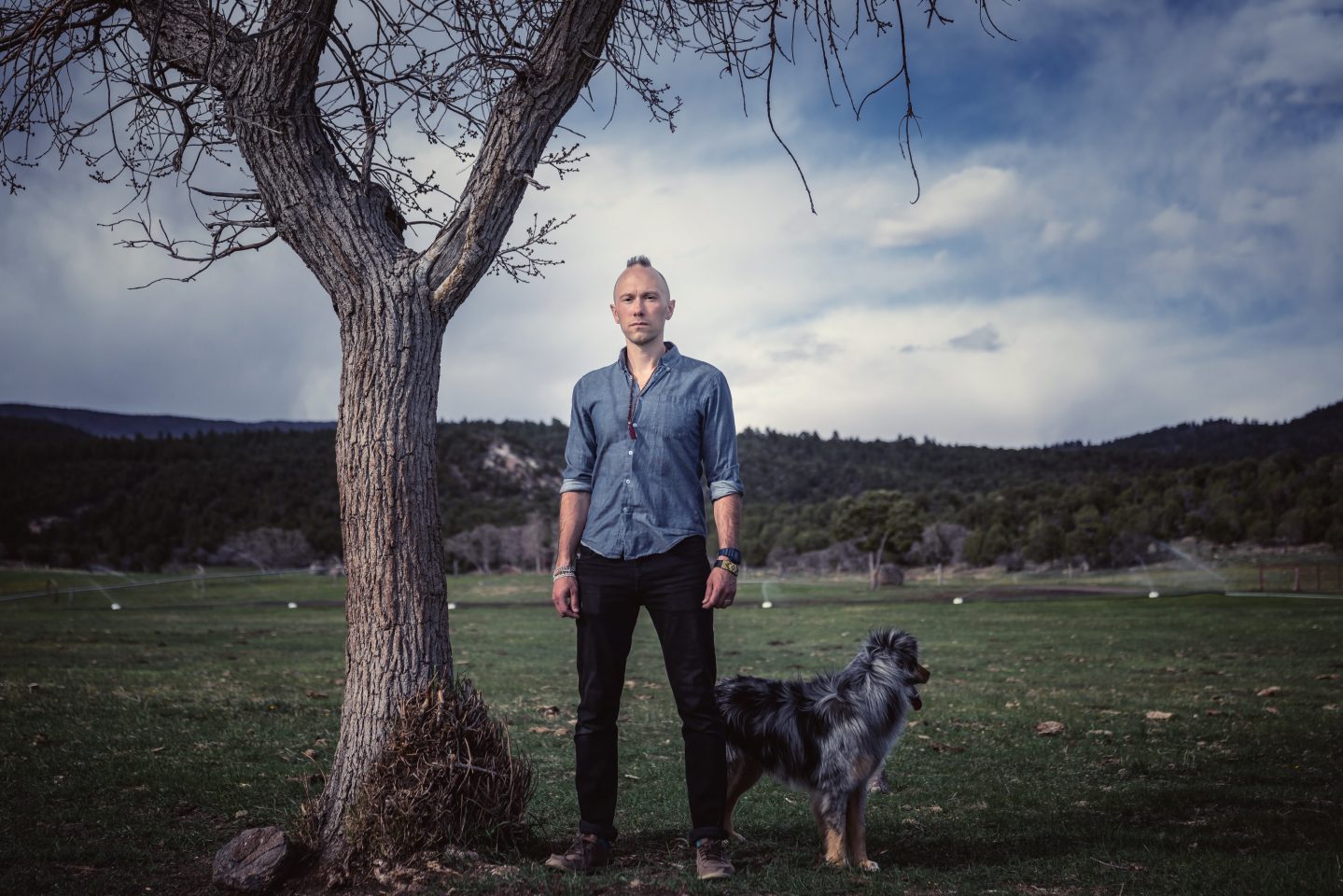
Born Krishna-Trevor Oswalt, reborn East Forest, this mystical person in front of me on a screen has a new documentary out, Music for Mushrooms.
It follows his work at the edge of music, ceremony, and what passes these days for mental health infrastructure. It also follows his quests. He puts some doubts on camera too, both in the documentary and in our friendly get-together, which already puts him ahead of most people selling “personal transformation” on TikTok.
And in a move that feels generous and militant, he’s putting the film online for free.
Music for Mushrooms is available on YouTube starting Sunday the 21st, free to watch, initially through the end of January, possibly longer “if it’s working.”
The central hub is MusicForMushrooms.com, and the movie is online here.
As the responsible journalist and human experience lover that I try to be, I watched the film, which fortunately isn’t a sales pitch for psychedelics, and listened hard to most of the material that East Forest has online.
What I can tell you is that Music for Mushrooms is kind of a field report from someone who has spent nearly two decades watching people crack open at his shows without really understanding why, but trying to understand why.
A late bloomer with a recorder
Oswalt grew up in Oregon. He went east for college, then moved to New York City and stayed for almost a decade. Leaving, he says, felt like escaping. Big cities train your nervous system to accept permanent alertness as normal. Once you leave, it’s hard to pretend that’s healthy.
He didn’t start writing songs until he was about 19. In school, he did everything musical that was offered: choir, band, musical theater. In college, he took music classes, studied harmony, jazz history, film scoring, electronic music. He’s largely self-taught as an engineer and producer. “You learn by doing,” he said, which is musician code for I made a lot of bad tries and survived.
In his early 20s, he was also pursuing acting. The real shift came earlier, in 2008, when nothing was working as he played in traditional bands in New York.
Oswalt wanted to be a musician and an actor. Following the suggestion from a friend, he decided to make music specifically to listen to on mushrooms. When he later took mushrooms with that music, the experience changed his life.
Long before the documentary, before the tours, before Spotify playlists titled “Psychedelic Healing,” there were private gatherings with friends and friends of friends.
East Forest was born when a friend started organizing small circles where people would take mushrooms and he would play live. At first, these happened in New York City apartments. Then they moved upstate, to a farm on a commuter train line about 70 miles north. A mystical place that still exists.
They did this for years underground, with no audience growth strategy or social media, and eventually it began to grow.
Forgetting, Remembering, Forgetting Again
A conversation with East Forest
Rolando García: In the documentary, you repeat a line that stuck with me: sometimes you forget, and then you remember. What is it exactly that we forget?
East Forest: I think we forget that we’re part of something bigger than just ourselves. In normal life we feel very separate—like we’re just this individual, isolated, alone. But in truth,h we’re part of an ocean. We’re a drop in that ocean, but we’re not separate from it.
Modern life tells you a different story. It tells you that you are separate, that you need to protect yourself, that you need insurance, that there are winners and losers. Psychedelic medicines show you something else. They don’t explain it as an idea. They show it through feeling.
And you can’t really argue with a felt experience. It’s not something you read in a book. It’s something you understand in your bones.
García: But then the experience ends. You go back to your life. The same problems are still there. Structurally, nothing has changed. Isn’t that why we forget again?
East Forest: I think what changes isn’t the world, it’s your perspective on it. The recognition is that the change we want externally actually starts internally. You go inside, you do work on yourself, you look at things that happened to you, you heal what you can. And hopefully you come out of that more loving, more compassionate, more understanding.
That’s how collective change happens. It doesn’t happen from the outside in. It happens from the inside out. That’s why inner work matters. It’s not optional.
García: A lot of people in the film talk about anxiety, depression, and how scary the world feels. But the “bad guys” are still there. How do you think about good and evil?
East Forest: I think people make choices, and choices have consequences. That’s real. We live in a universe of cause and effect. You can call it karma if you want, but it’s almost Newtonian.
A lot of what we call evil comes from wounding. Things happen to people, they react, then more things happen, and it builds. So, to me, the calling of our time is trauma work. Going back, looking at what happened to us, helping each other work through it.
Life isn’t about being blissed out all the time. Life is the point. The friction is the point. I don’t really buy into a simple us-versus-them story, because that game never ends.
What I do believe in is compassion. Not building higher walls. That never works.
García: Your work sits right next to psychedelics, but you’re not a clinician. What responsibility does an artist have in this space?
East Forest: These medicines are amplifiers. They’re very powerful. They can help, but they can also be destabilizing or traumatizing if people aren’t supported.
What I’ve found is that music, if it’s intentional, can guide a journey in a really meaningful way. It’s one of the lowest barriers to entry. That’s why Music for Mushrooms exists as music before anything else. The album came first. It’s on YouTube, on Spotify. It’s essentially free.
The title already tells you what it’s for. If you’re in the right place, with the right mindset, music can be the guide. Of course, psychedelics aren’t for everyone. But music is.
García: Do people take mushrooms at your shows?
East Forest: Some do. Some don’t. And that’s the tension I’m working with.
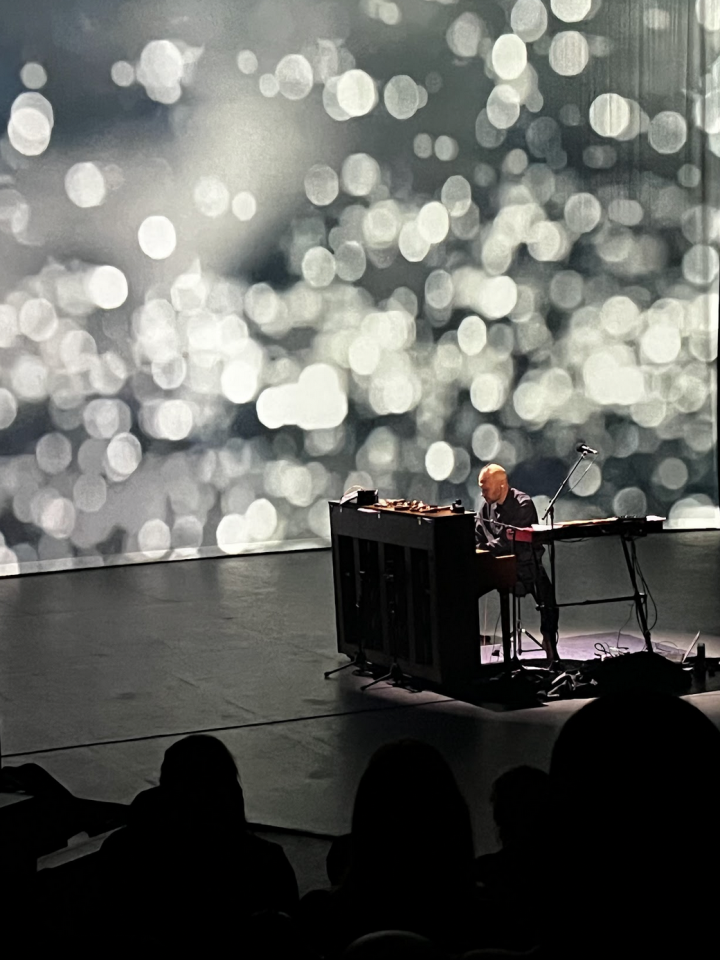
I don’t really call them concerts or ceremonies. They’re a hybrid. Some people show up wanting to be entertained. Others are there for something deeper. I’m trying to meet both.
We live in a world of very short attention spans. I’m not going to play ambient soundscapes for four hours. The shows are about two hours. You should be able to enjoy them even if you’re totally sober and don’t know anything about psychedelics.
It’s an experiment. I change things all the time to see what works.
García: How do you know when something is working?
East Forest: You just know. It’s energetic. I’ve played enough shows to feel when something lands and when it doesn’t. You hear from people. You see if they come back.
(In East Forest shows, people often bring yoga mats and rest on the floor while listening, which I think is really cool)
There are metrics, sure. But mostly it’s just paying attention.
García: Let’s talk about scale. You started with small, private circles. Now you’re touring, releasing a film. How do you deal with the tension between ceremony and commodification?
East Forest: There is a tension. Definitely.
But people’s interest in psychedelics is a symptom of what’s happening in the world. There’s pressure. There’s collapse. People are looking for ways to cope, to heal.
Capitalism is going to try to absorb everything. Weed already went through that. Psychedelics are going through it now. It’s going to be messy. There’s no pure version where it all just works.
Humans learn by making mistakes. We’re complex beings socially. That’s what makes being alive rich… and complicated.
García: Some anthropologists talk about psychedelic narcissism: powerful experiences without ethical frameworks, leading to ego inflation. Do you see that?
East Forest: Absolutely. It’s a trap, and it happens a lot.
That’s why community matters. You need mirrors. People who can reflect things back to you honestly. And let you know if you are full of shit. If everyone around you is an asshole, it’s probably you.
Social media makes it worse. The more grandiose and controversial someone gets, the more the algorithm rewards them. Numbers go up, money comes in, and they think, “I must be right.”
That’s how people lose the plot.
García: There’s a moment near the end of the film with young men from very difficult backgrounds. No drugs, just music. Why was that important for you to show?
East Forest: Because it showed me something universal.
There was one kid we didn’t film. He was the toughest guy there. Gang member. Shot nine times. And he had the strongest reaction. He broke down crying. It felt wrong to put a camera on that.
It was a bigger response than I sometimes see from wealthy yoga audiences. All we did was create a simple structure: sit on the ground, be in a circle, listen.
Music doesn’t discriminate. You don’t need money for it to reach you. But at the same time, basic needs matter. It’s hard to focus on anything if you’re hungry or unsafe.
Both things are true.
García: What do people misunderstand most about your work?
East Forest: They think it’s only about mushrooms.
I don’t actually do psychedelics that often. What I’m really interested in is living. How to make sense of being alive right now. We’re all going to die. That’s not morbid, it’s just true.
So what do we do with the time we have?
The answers never come to me as ideas. They come as feelings. From walking, from music, from helping someone. It’s a remembering process, over and over again.
At the end of the day, I just believe in the power of music. I want it to stand on its own. You shouldn’t need to know anything about me to enjoy it.
After almost an hour of talking, it became clear that Music for Mushrooms isn’t really about mushrooms.
In an era where everything competes to fracture your focus, offering two uninterrupted hours of diving into music and compassionate talks might be a radical move. Music for Mushrooms is now available for free on YouTube at least through the end of January.