






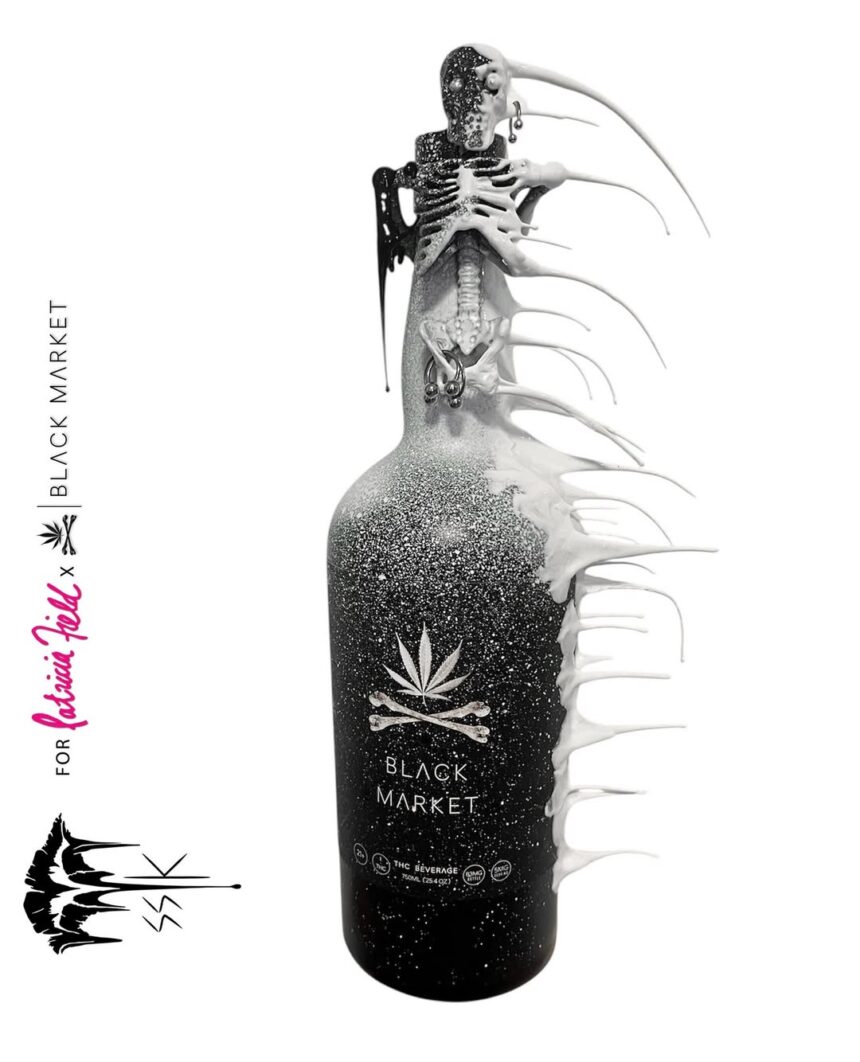
Cannabis has been moving through that underground-to-icon pipeline for decades. So when Patricia Field’s universe collides with a hemp-derived THC beverage on the eve of New York Fashion Week, it doesn’t feel provocative. It feels right on time.
This is, after all, the same creative force behind Sex and the City and The Devil Wears Prada. A stylist who turned fashion into narrative, rebellion into glamour, and excess into language long before any of it was considered respectable.
Highly Anticipated, the limited-edition capsule created with Black Market and four designers from Patricia Field’s orbit, doesn’t treat weed as a novelty or a trend. It treats it as part of the creative bloodstream that has always run through art, nightlife, and fashion. The difference now is visibility.
At the center of the project is a federally legal, hemp-derived Delta-9 THC beverage brand that rejects the idea of cannabis as either vice or gimmick. Built by a team with deep roots in cannabis culture, the brand blends bold design with carefully selected wellness-forward ingredients, positioning itself as a deliberate alternative to alcohol rather than a replacement for it.
Instead of claiming the spotlight, Black Market and the Patricia Field ARTFashion Gallery operate as facilitators, using the product not as a branding exercise, but as a canvas. Each designer was given space, resources, and autonomy to reinterpret the bottle through their own language, materials, and creative processes.
In an industry where collaborations often extract value from creatives without truly supporting them, Highly Anticipated flips the script. It’s not about borrowing edge or aesthetics, but about amplifying independent voices that already exist at the intersection of fashion, culture, and subversion, and letting them be seen on their own terms.
High (on) Fashion
Let’s get one thing straight: this isn’t weed merch.
There are no lazy motifs or wink-wink pot jokes stitched into a hoodie. Instead, each designer was invited to do exactly what they already do best, interpreted through the lens of Black Market—and the experience of being under the influence.
“Each of these artists already came to the table with their own unique process and aesthetic. For example, Free Maison’s predominant materiality is metal, while Wonderpuss Octopus has a signature three-dimensional painting technique that emulates organic lifeforms. Chelle Bee is all sparkle with hand-applied rhinestones, and SSIK is known for her unique use of silicone,” Field explains.
Rather than imposing a look, the brief aimed to be experiential. The artists were encouraged to sample the product and let that guide their process. What emerged reflects both the cannabis experience and each designer’s individual identity.
Here, weed appears as a symbol embedded into material language, not a joke or a shortcut.
Who’s Participating
Free Maison, founded by Jesse Aviv and Tay Dun, reworks ancient chainmail techniques through contemporary ciphering, using anodized aluminum to create lightweight, sculptural garments meant to be worn and collected.
Wonderpuss Octopus, the practice of artist PJ Linden, transforms found objects into meticulously painted, three-dimensional works that blur sculpture, fashion, and organic form—an approach long championed by Patricia Field.
Brooklyn-based Chelle Bee infuses maximalist glamour into the capsule, transforming everyday garments through dense crystal embellishment that treats excess as structure rather than ornament.
SSIK Designs, led by FIT-trained designer Kristina Kiss, channels downtown New York nightlife into experimental silhouettes defined by silicone treatments, garment manipulation, and a DIY ethos born from wearing what didn’t yet exist.
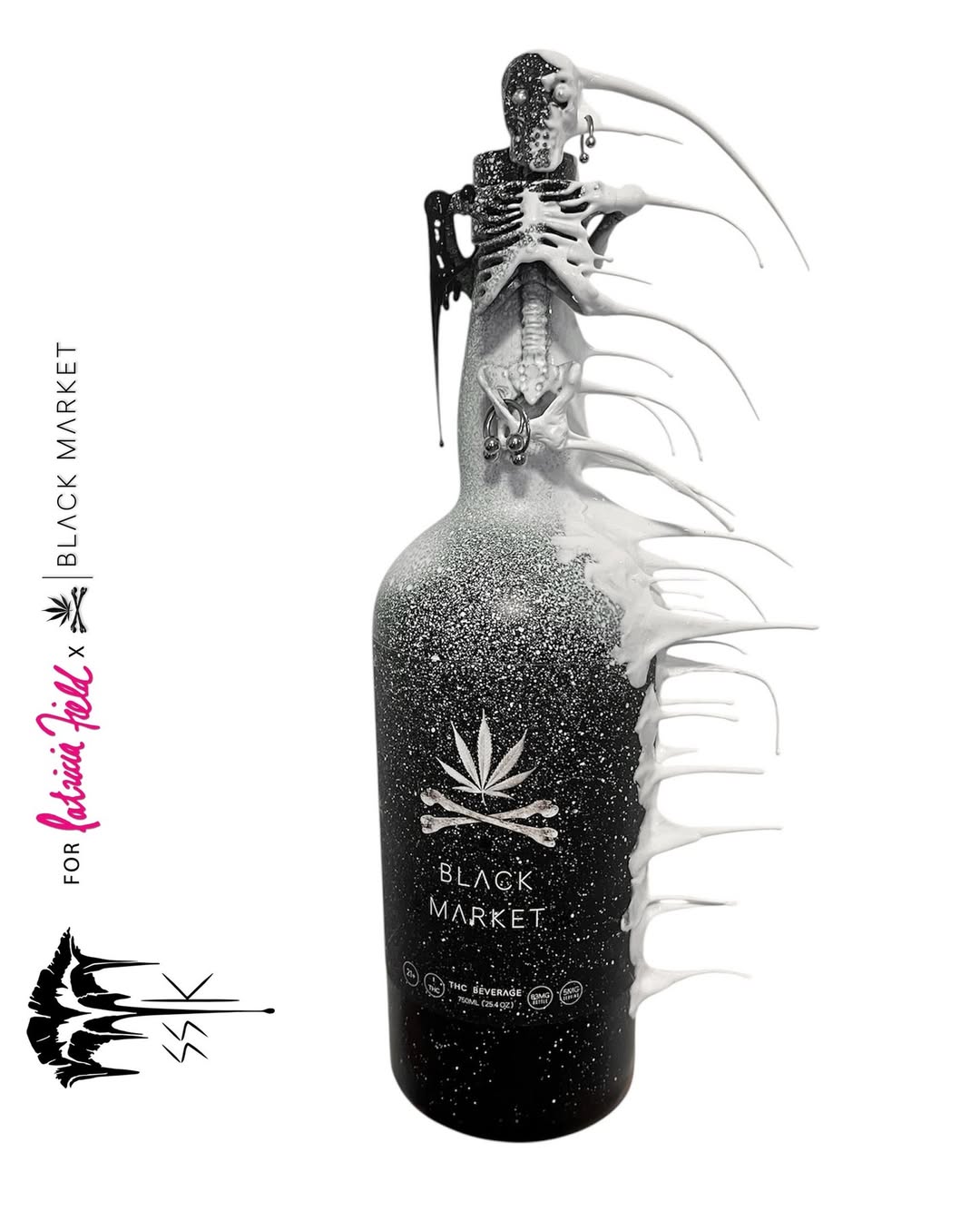
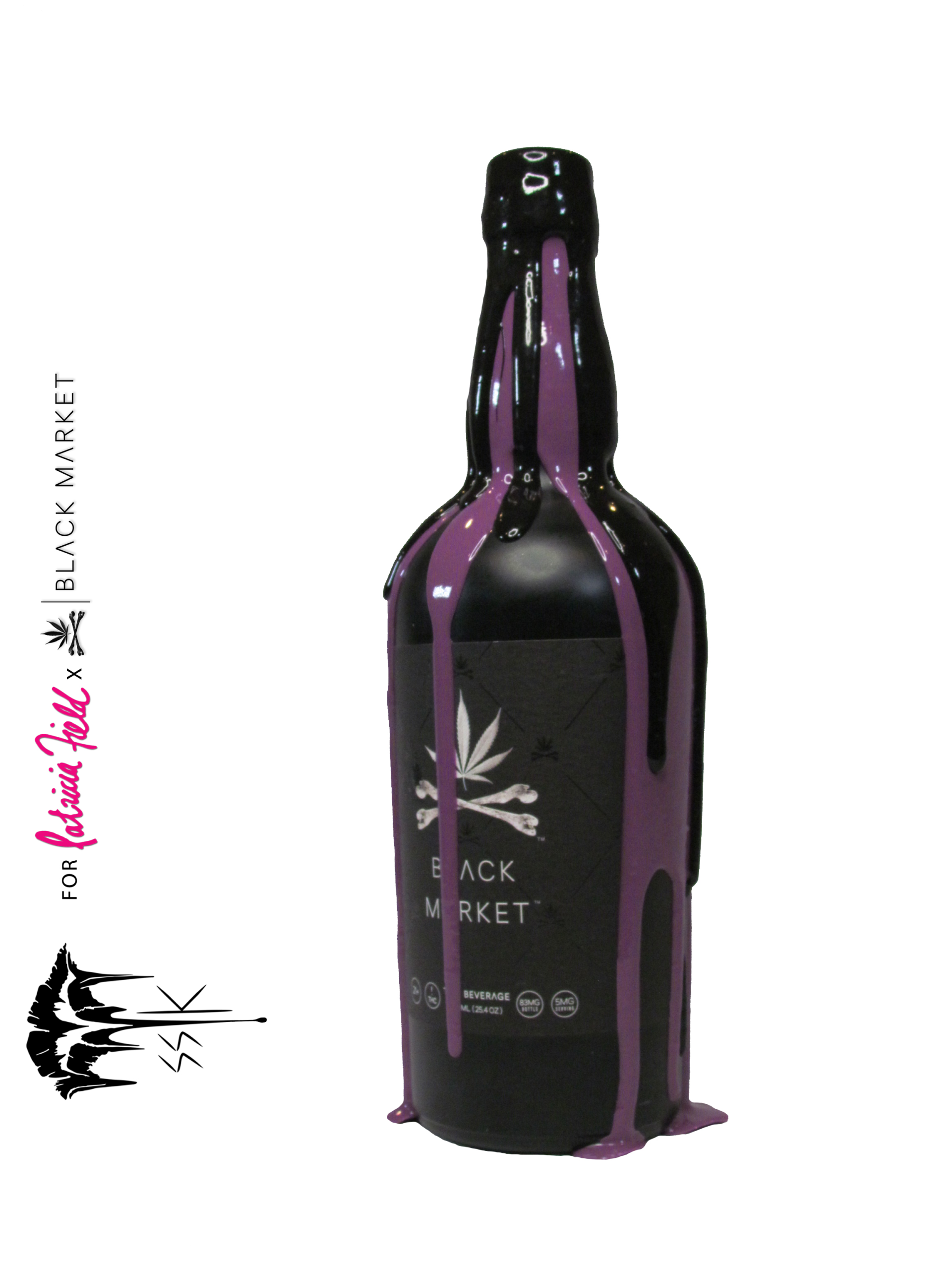
Together, the designers form a capsule that reads less like a collection and more like a shared frequency.
This Isn’t Resistance. It’s Creative Freedom.
Despite arriving amid renewed legislative pressure on hemp-derived THC, Michael Robinson, manager of Patricia Field’s boutique and creative operations, is careful not to frame Highly Anticipated as protest fashion. Creatives, after all, are not strangers to using altered states as gateways to inspiration, and cannabis has quietly occupied that space for centuries.
“Now that cannabis use is legal and destigmatized, they can really let loose and enjoy themselves on whatever that journey looks like for them.”
There’s something quietly radical about that. Not rebellion for rebellion’s sake, but the freedom to create without shame.
Heidi Minx, Chief Marketing Officer of Black Market, acknowledged the broader cultural and regulatory tensions surrounding the project. “The Draconian legislative actions at the end of last year definitely caused a lot of tension, headaches and sleepless nights. But I will allude to the adage that silence is akin to complicity. Artists have visually expressed dissent against over-control for time-eternal.”
So, if weed suddenly feels fashionable, Robinson argues that it’s not because it became trendy. It’s because the barriers finally cracked.
“Cannabis has been ‘in’ for a long time—but now, finally, people have easy access to it and the freedom to enjoy it because the legal roadblocks have been eased.”
Support for cannabis, he notes, isn’t driven purely by its former taboo status, but by a sense that its prohibition was unfair. After all, in The Land Of The Free, people don’t like unnecessary bans on relatively innocuous things, or restrictions that feel pointlessly punitive.
Before You Buy, Check the Supply
At the same time, there’s a wellness, eco-friendly component at play. Younger generations are increasingly turning away from alcohol and embracing cannabis as a more natural alternative. Those same values—care, sustainability, and accountability—are increasingly shaping fashion itself.
“We work with up-and-coming artists and designers who handmake one-of-a-kind creations using upcycled garments and materials. We also have an extensive vintage department. This shop is a really guilt-free way to enjoy fabulous fashion,” Field says.
Robinson frames it through a familiar fashion reference: “I think Miranda Priestly’s The Devil Wears Prada character summed it up perfectly when she chided Emily for her dismissal of cerulean blue.”
In fashion, nothing exists in a vacuum. The cerulean sweater was never just blue, and hemp is never just a trend. Everything we wear is connected to an invisible supply chain that begins long before the storefront. Farmers need stability. Stores need consistent rules. People need to know their jobs are secure.
One of the most subversive details of Highly Anticipated has nothing to do with THC.
“The Patricia Field boutique is a female-owned, small business that supports emerging creative talent, so that’s where the proceeds will go. You won’t find any executives or shareholders lining their pockets off our partnerships. Our main goal is to highlight these talented individuals and bring awareness to their work,” Robinson states.
In an industry where collaborations often prioritize corporate profitability while creatives receive little recognition, this model stands apart. It’s patronage, not performance.
Asked what Highly Anticipated looks like in practice during Fashion Week, Robinson frames it as a natural extension of Field’s long-standing relationship with artists and subculture: “We’re two separate brands from two separate industries, but like-minded in so many ways that partnering just felt natural and effortless.”
The launch is not conceived as a traditional event. Visitors will be able to meet the artists, acquire their work, and view the customized Black Market bottles as standalone art objects. Participation, not spectacle, is the point.
The collaboration extends beyond garments and into the glass. Black Market will be serving a curated menu of “Hightails”, THC-infused cocktails inspired by each of the designers in the capsule. Each recipe translates materiality, texture, and aesthetic obsession into liquid form: layers, shine, metal, drip, and volume reimagined through color, flavor, and structure. A fully immersive sensory experience.
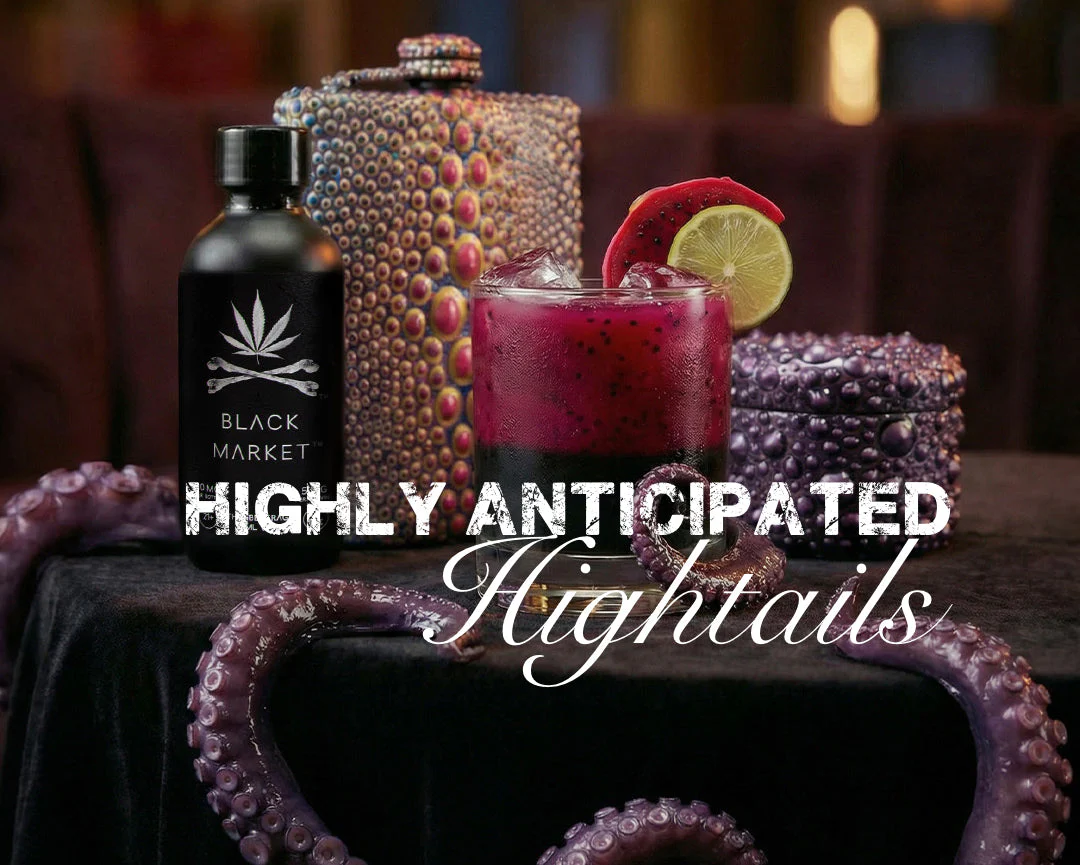
“We’ve partnered with Black Market on our last two in-store events (Fashion Week & our anniversary) and our clientele really enjoyed it. Fashion people love a party, they love to get high, and they love beautifully designed things. What’s there to hesitate about?”, Robinson states.
‘More Power to You’
For Patricia Field herself, cannabis was never a statement.
“I’d enjoy a joint from time to time, but it was more for relaxation and social enjoyment with friends. I’ve always been a champion of self-expression, experimentation, and creativity, first and foremost —so if you use cannabis in your pursuit of these ideals, more power to you!”
Which, honestly, might be the most Patricia Field answer of all.