



Image lightbox
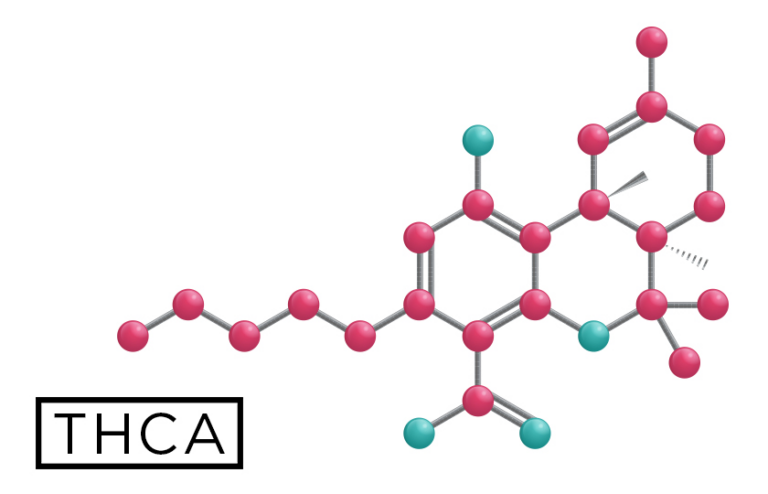
If you’ve ever wondered what THCA is in cannabis flower, the answer starts with how cannabis plants actually produce cannabinoids. The package might advertise “30% THC,” but the lab report shows almost no THC at all. Instead, it lists a much larger number for something called THCA.
So what’s actually in the flower you’re buying?
Most cannabis plants don’t produce THC directly. What they produce instead is THCA (tetrahydrocannabinolic acid), the primary cannabinoid found in raw cannabis flower.
THCA forms inside the sticky trichomes that coat cannabis buds. On its own, it doesn’t produce the classic cannabis high. When heat is applied through smoking, vaping, or cooking, THCA undergoes decarboxylation, a chemical reaction that converts it into delta-9 THC, the compound responsible for cannabis’s psychoactive effects.
Understanding that conversion helps explain why flower labels show high THCA numbers, how labs calculate potency, and why the THC percentage on a package doesn’t always mean what people expect.
How the cannabis plant produces THCA
Cannabis plants don’t produce THC directly. Instead, they first produce THCA, which later converts into THC when heat is applied.
This process happens inside the plant’s trichomes, the tiny resin glands that coat the surface of cannabis flowers and give them their sticky texture. Inside those trichomes, the plant builds cannabinoids through a series of enzyme driven reactions.
The starting point for many cannabinoids is a compound called CBGA, often referred to as the “mother cannabinoid.” From there, different enzymes convert CBGA into several acidic cannabinoids, including THCA, CBDA, and CBCA.
In freshly harvested cannabis, most of the THC related content exists as THCA rather than delta 9 THC. That’s why lab reports for raw flower usually show high THCA percentages and very small amounts of THC.
Genetics play the biggest role in determining how much THCA a plant produces. Some cultivars naturally express more of the enzyme responsible for creating THCA, which is one reason certain strains consistently test higher in potency. Growing conditions such as light, plant health, and harvest timing can also influence cannabinoid levels, but genetics largely set the upper limit.
When you see a THCA percentage on a flower label, it reflects how much of the plant’s cannabinoid production ended up as THCA before harvest.
THCA vs. THC: what changes during decarboxylation
When cannabis flower is smoked, vaporized, or cooked into edibles, heat changes the chemistry of the plant. The compound responsible for most of the psychoactive effects, THC, is not actually present in large amounts in raw flower. Instead, the plant primarily contains THCA.
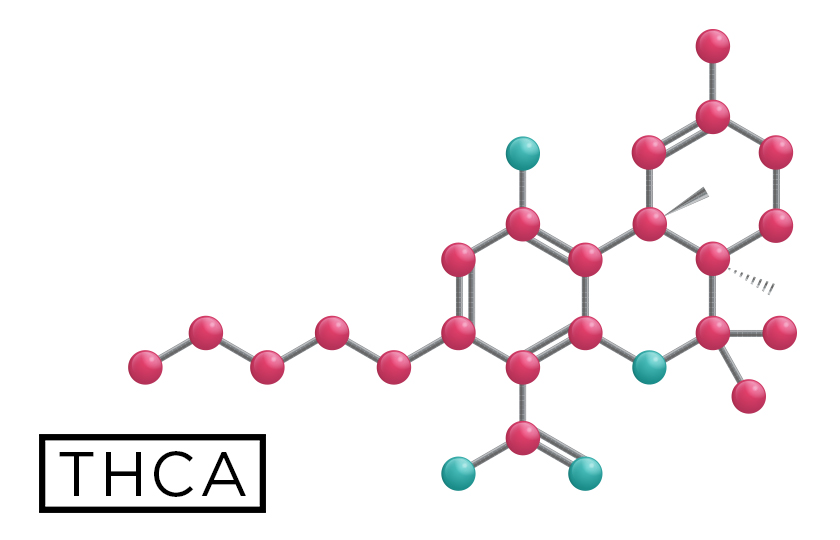
THCA and THC are closely related molecules. The key difference is that THCA contains an extra chemical group called a carboxyl group. When heat is applied, this group is removed in a reaction known as decarboxylation. During this process, the molecule releases carbon dioxide and transforms into delta 9 THC.
This change is important because THCA does not interact strongly with CB1 receptors in the body’s endocannabinoid system. After decarboxylation, THC can bind to those receptors, which is what produces the effects most people associate with cannabis.
The conversion is not perfectly efficient. Some THC can degrade into other compounds, such as cannabinol or CBN, especially when exposed to prolonged heat, light, oxygen, or aging. Because of this, the amount of THC actually delivered during smoking or vaporization may differ slightly from the theoretical amount calculated from lab tests.
This chemical shift explains why lab reports show high THCA levels in raw flower, even though the effects consumers experience come from THC.
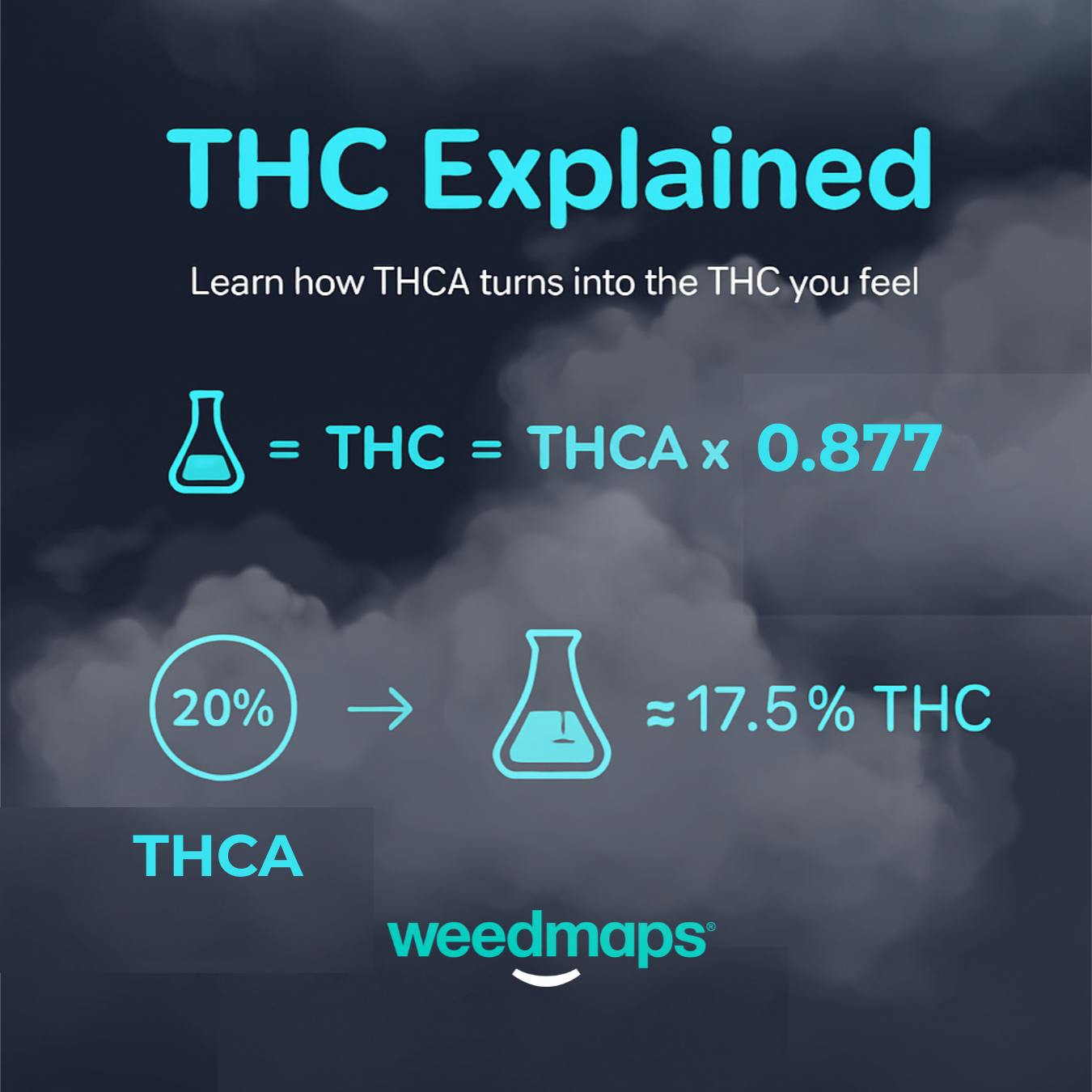
Image lightbox
Why THCA is the dominant cannabinoid in raw flower
Cannabinoids are biosynthesized in their acidic forms. THCA accumulates in trichomes as the plant matures, and only minimal spontaneous decarboxylation occurs under typical post-harvest conditions. Unless flower is exposed to significant heat, it will not naturally convert large amounts of THCA into delta-9 THC.
This is why lab reports for freshly tested flower often show:
Small amounts of THC may still appear on lab results. That can result from minor natural decarboxylation during drying, curing, transport, or sample preparation. It does not mean the flower was altered. It reflects the chemical instability of THCA over time when exposed to heat, light, or oxygen.
Understanding this baseline helps normalize what you see on product listings.
THCA stability: what affects potency over time
THCA is relatively stable under cool, dark, and dry conditions, but it is not permanent. Environmental factors influence how quickly it converts or degrades.
The main drivers of change are:
- Heat, accelerates decarboxylation
- Light (especially UV exposure), promotes degradation
- Oxygen, contributes to oxidative breakdown
- Time, allows gradual chemical change
When THCA decarboxylates, it becomes THC. With continued exposure to heat, light, and oxygen, THC can gradually degrade into cannabinol (CBN), a process documented in stability and forensic chemistry studies. Because of this chemical progression, improper storage can reduce measurable THCA and change the overall cannabinoid profile of the flower.
Cannabis stored in cool, dark conditions with limited air exposure retains cannabinoids more effectively than flower exposed to fluctuating temperatures or light.
This means older or poorly stored flower may lose potency over time and test differently than it did at harvest.
What “high THCA” flower really means
In many markets, consumers use “high THC” as shorthand for potency. In lab terms, that number usually starts as THCA.
When you see flower labeled at 28%–32%, that figure typically reflects calculated total THC derived largely from THCA content. It does not mean the flower contains that percentage of active delta-9 THC in its raw state.
It also does not guarantee identical effects between two products with similar percentages.
Potency labels represent laboratory measurements under standardized conditions. Real-world experience depends on:
- Decarboxylation efficiency during smoking or vaping
- Cannabinoid balance beyond THC
- Terpene profile
- Individual physiology
THCA percentage tells you how much potential THC exists before heating. Total THC tells you the estimated maximum after conversion. Neither number fully captures the complete chemical profile of the flower.
Looking beyond a single percentage gives you a more accurate understanding of what you’re buying.
How flower is tested for THCA and THC
When cannabis flower is tested, labs measure both THCA and delta 9 THC separately. This is why lab reports often show two different numbers instead of a single THC percentage.
Most licensed labs use a method called high performance liquid chromatography, or HPLC, to analyze cannabinoids. This technique allows scientists to measure THCA and THC without heating the sample during testing.
That detail is important because heat would trigger decarboxylation and convert THCA into THC. Older analytical methods such as gas chromatography applied heat during testing, which caused THCA to convert and could make THC levels appear higher than they actually were in the raw flower.
Using HPLC allows labs to report three separate values:
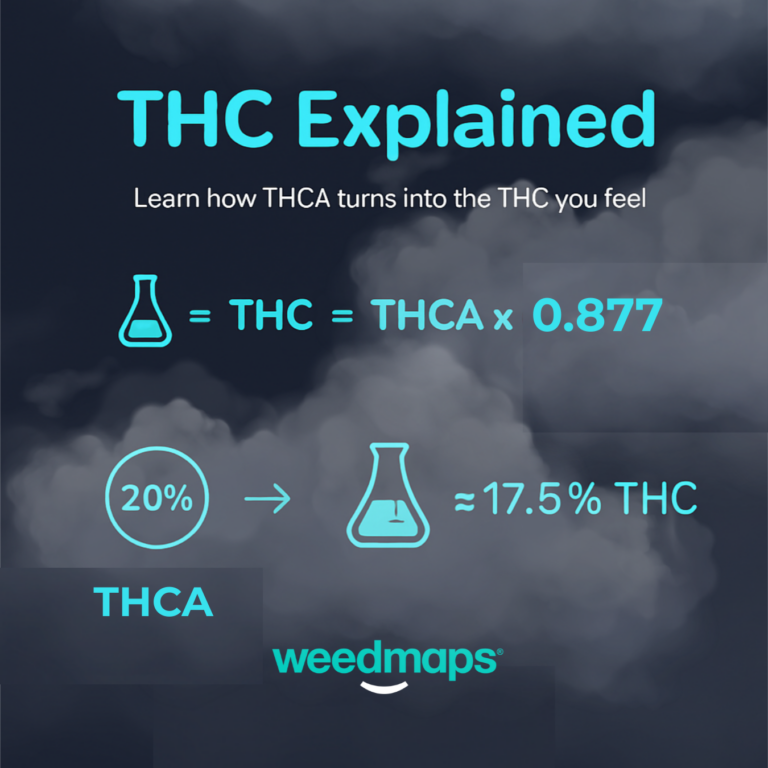
Because THCA is measured without being converted during testing, labs use a formula to estimate the amount of THC that could be produced after heating. That calculation is what produces the total THC number shown on many product labels.
Why total THC is an estimate, not a guarantee
The total THC number assumes full decarboxylation under ideal conditions. In real-world use, conversion efficiency varies.
Factors that influence conversion include:
- Combustion temperature
- Vaporizer temperature settings
- Duration of heat exposure
- Uneven heating across the flower
Some THCA may not fully convert. Some THC may degrade if temperatures are too high. That means the labeled total THC represents maximum potential, not an exact delivered dose.
This explains why two products with identical total THC can feel different in practice.
THCA in the context of the full cannabinoid profile
THCA percentage does not exist in isolation. Flower contains dozens of cannabinoids and terpenes that shape the overall experience.
Two strains can test at 28% THCA and still differ because of:
- Minor cannabinoids (CBG, CBC, trace CBD)
- Terpene concentration and composition
- Moisture content and curing quality
THCA determines potential THC content, but it does not define the entire chemical profile. Reading potency labels alongside terpene data provides a more accurate picture than focusing on a single number.
The bottom line on THCA in cannabis flower
Most cannabis flower doesn’t actually contain much active THC when it’s sitting on the shelf. What the plant produces is THCA, which converts into THC once heat is applied through smoking, vaping, or cooking.
That’s why lab reports list THCA separately and why dispensary labels calculate something called total THC. It represents the maximum amount of THC that could be available after the flower is heated.
Understanding that difference makes potency labels much easier to read. Instead of focusing on a single percentage, you can look at the full lab results and get a better sense of what you’re actually buying.
You can explore cannabis flower and compare lab results from licensed dispensaries near you on Weedmaps.