




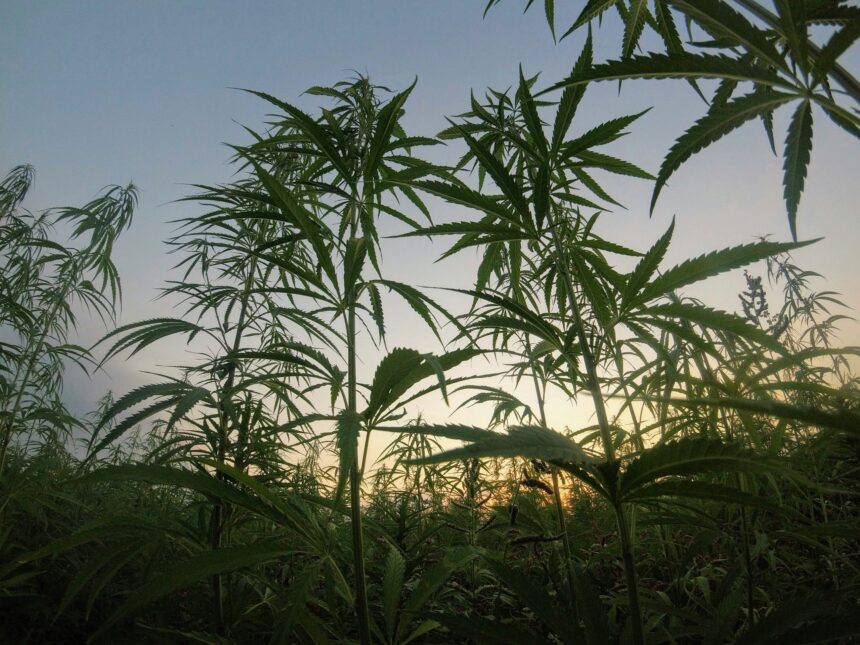
The road into the Mzintlava River Valley is not on any investment map. It bends past a school with a broken bell, past two spaza shops, and then the tar gives up. What follows is dust, goats, and small fields that look untidy to anyone trained by brochures.
This is where South Africa’s cannabis story lives.
A young woman named Thandi (not her real name) plants the seeds her mother kept in a coffee tin, inherited from her grandmother. The income from her plants pays for paraffin, school shoes, and the bus into town. She laughs at being called a farmer. She says she is “at home.” Standing beside her, this feels ordinary.
On paper, what she does is a crime.
Her father was arrested. Chemicals were sprayed on her crops. Roving units of the South African Police Service (SAPS) still burn fields under the Drugs and Drug Trafficking Act of 1992. Two provinces away, a multimillion-rand greenhouse grows the same plant behind glass and steel. That operation is under the South African Health Products Regulatory Authority (SAHPRA) multimillion-rand licence, for export only. The only difference is the cost of the fences.
The World That Worked
Long before “value chains” arrived, the rural heritage families developed a system. Seed was saved. Soil conditions were known. Tradition taught feeding the plant, not too much, not too little, just enough. Harvests moved through quiet networks of cousins, taxi drivers, and market traders. Money stayed in the village longer than government grants.
In many districts, cannabis is the only crop that reliably turns into cash. When factories closed, and mines stopped hiring, it carried the financial gap. People speak about this economy softly, as it might disappear if spoken too loudly, or the SAPS arrives like an all-destroying, avenging angel, like so many times before.
This economy survived the eradication and arrest campaigns and every shift in national mood. It survived because of tradition, healing, and demand. Calling it “informal” deliberately misses the point. It was never unstructured, only unrecognized; a three-hundred-million-rand hole everyone wants.
The New Official Road
While the valley sleeps as it has for a hundred years, another South African cannabis industry is being designed elsewhere. Experts and departments sketch its shape around conference tables. Its logic is imported, not designed for African heat and dust, from boardrooms in Canada under deep snow.
Licences, permits, security plans, compliance files, and SOPs with names and numbers. It is a system modeled on pharmaceutical exports. Entry tickets are expensive. Paperwork is heavy. The language is legal English, not isiXhosa or isiZulu. The licensed farms that emerge are neat, fenced, and distant from the places where the plant is grown, for traditional medicine, a hundred years before hospitals.
On paper, this is modern. People in suits nod and applaud.
On the ground, SAPS continues to raid. People across the world benefit from the plant, but not here. In practice, two economies speak past each other. Licensed facilities are restricted by license conditions from exporting. Domestic demand remains served by the old informal routes. Increasingly, the product is illegally dumped locally because it cannot meet export specifications. The result is an official sector with unused capacity, and an unofficial sector that feeds the street.
When Hemp Needs a Police File
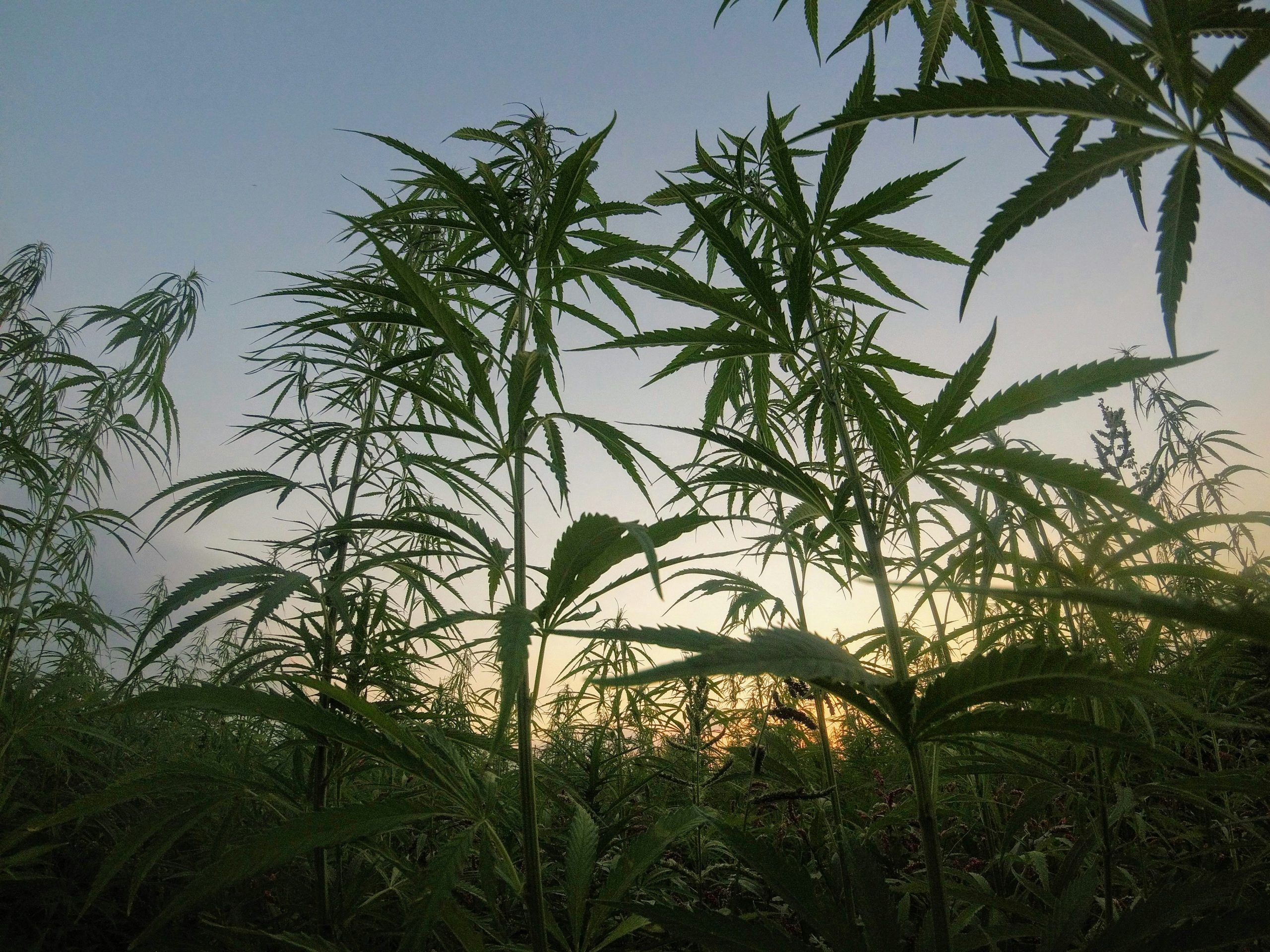
One of the strangest turns in South Africa’s cannabis bureaucracy arrived with great fanfare under the name “hemp.” Not a different plant or a cousin. The same plant, separated on paper and in legal jargon due to the THC percentage. Let’s be clear. It is not a relative of cannabis. It is cannabis, regardless of what the forms insist.
Across much of the world, hemp is treated like any other agricultural crop. In South Africa, farmers must report planting and movement to the police. The plant is non-intoxicating and used to make fiber, soap, or fabric.
A grandmother growing hemp becomes, administratively, a person of interest. Police stations already stretched by real crime are asked to supervise fields of a crop that cannot get anyone high. No other plant in South Africa carries this suspicion. Maize does not notify the SAPS station before it is grown. Grapes do not fill in forms to become wine. Tobacco, the country’s biggest legal killer, is sold openly on every corner. Only this flowering plant must explain itself.
Between these two systems stand real people. Young growers watch videos of gleaming facilities they will never afford, let alone enter. Traditional doctors who travelled freely to buy, worry about SAPS checkpoints. Families that depended on seasonal income feel the ground shifting.
Nobody in this story is a villainous drug dealer, pushing substances that destroy lives. The president speaks of jobs and exports. Rural communities speak of survival. The law draws a line between “licensed” and “illegal.” Life draws a line between “can I feed my children or not?” Those lines rarely match.
Knowledge That Doesn’t Live in Laboratories
South Africa is proud of many heritage crops: rooibos, buchu, and marula. Their commercial value was recognized and removed from community care over generations. Cannabis follows a similar path; the caretakers received no recognition.
Landrace genetics are shaped by soil and climate over decades and are passed down within families. Thandi and her neighbors are pushed out. Their knowledge quietly leaves with them, a language nobody bothers to record. Culture is not a museum object; it is the way everyday problems are solved. The current framework is designed to ignore that.
Imagine small-grower permits instead of arrests, criminal dockets, and criminal records for life. Co-operatives growing and sharing, not SAPS burning and destroying. Agricultural support as a bridge between the valley and the greenhouse. This is not radical; it is how crops enter the formal economy. You start with the people’s knowledge and build around them, not against them.
Standing in Thandi’s field, the debate feels both smaller and larger. Smaller, because it is one household trying to survive. As her thousands of neighbors are affected, poverty becomes the future shape of rural South Africa.
The Distance That Matters
Will the country grow this economy? They are currently doing all they can to keep it out of reach. The plant is being legislated as a plant worse than heroin or cocaine. There is little science or recognition of its medical heritage. The answer will only be found in a boardroom if her heritage is recognized.
The sun slides slowly down the sky in this valley. Smoke from cooking fires wobbles in the air. Thandi locks her gate with an old piece of wire inherited from her mother. Her voice is tied to whether it will rain, school fees needing to be paid, and whether the bus will run tomorrow.
Her concerns are practical, like the plant. South Africa’s cannabis future is between Thandi and the faceless greenhouses of the new industry. The distance between them is not measured in kilometers; it is measured in understanding. Shortening this distance will be a happy ending for everyone. If not, the plant will continue to grow as it always has, and her economy will go underground, where it has lived for hundreds of years, without legitimacy.
This article is from an external, unpaid contributor. It does not represent High Times’ reporting and has not been edited for content or accuracy.