






If you’ve ever scanned a QR code on a cannabis package and landed on a wall of numbers, that’s a COA — and it’s one of the most important tools you have as a buyer.
A cannabis COA (Certificate of Analysis) is a lab report that shows exactly what’s in a cannabis product. It documents potency, cannabinoid content, terpene profile, and the results of safety testing for contaminants like pesticides, heavy metals, and residual solvents.
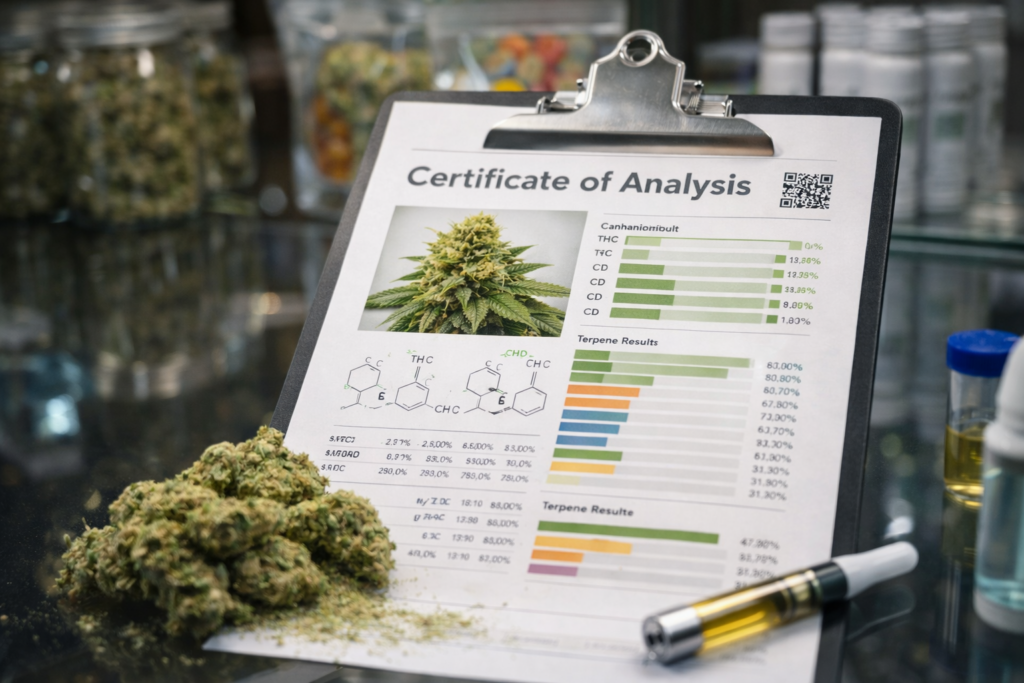
Photo by: Gina Coleman/Weedmaps
Image lightbox
What is a cannabis COA?
Licensed, accredited labs generate COAs after testing a specific batch or lot. Dispensaries use them to confirm regulatory compliance. Consumers can use them to make informed decisions before buying — and to verify that what’s on the label matches what’s actually in the product.
This guide walks through each section so you can quickly understand what the results actually mean and how to use them.
Where to find a COA
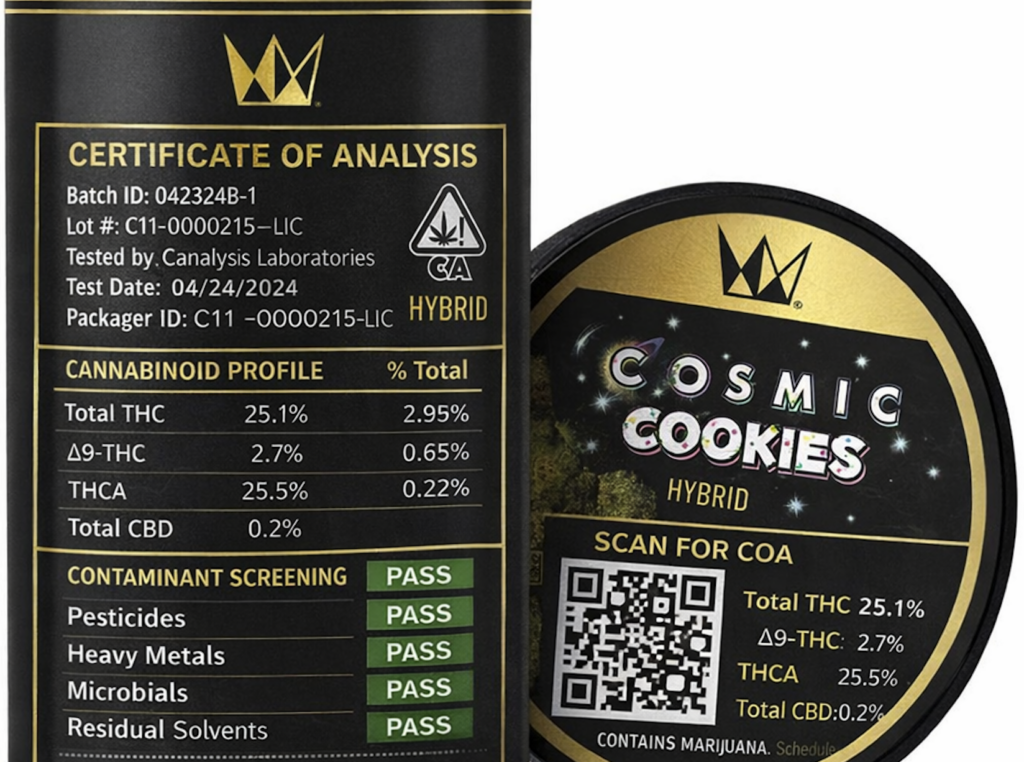
Image lightbox
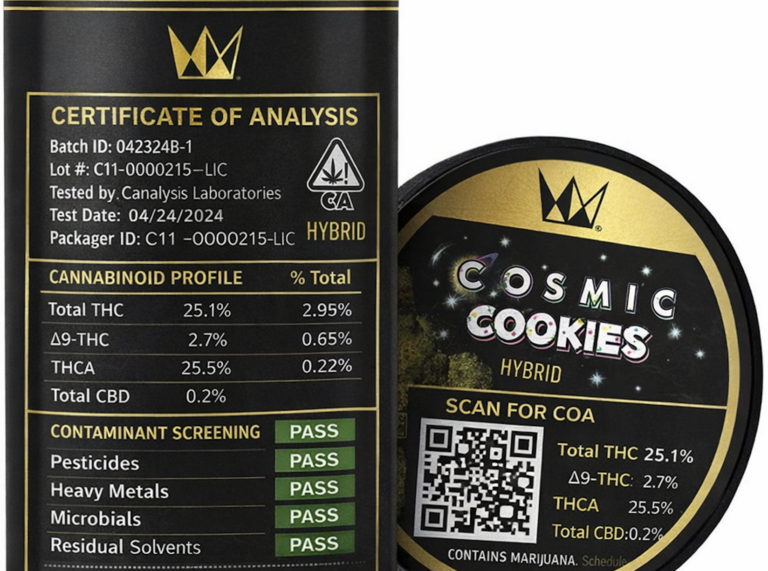
Most legal cannabis products include a QR code on the packaging that links directly to the COA. You can also find lab results:
- On brand or dispensary websites
- Through in-store menus
- By request at a licensed dispensary
If a product doesn’t have a COA or the link is broken, that’s a red flag worth taking seriously.
How to read a cannabis COA
A COA can look intimidating at first glance, but the structure is consistent across most labs. Once you know what each section is telling you, it clicks quickly. Here’s what to focus on.
What does the cannabinoid profile show?
This section lists the concentration of cannabinoids detected in the product — and it’s where most people get tripped up.
What is the difference between Total THC and delta-9 THC on a COA?
- Delta-9 THC: The active, intoxicating form of THC already present in the product
- THCA: The non-intoxicating acidic precursor that converts to delta-9 THC when exposed to heat
- Total THC: A calculated estimate of full psychoactive potential after decarboxylation, using the formula: (THCA × 0.877) + delta-9 THC
That 0.877 multiplier accounts for the molecular weight lost when THCA sheds its carboxyl group during heating. It’s a small but meaningful difference — and it’s why Total THC is the number that actually matters when you’re trying to gauge potency.
Products marketed as high-THCA flower can still be extremely potent once combusted or vaporized. Total THC is the honest number.
What other cannabinoids appear on a COA?
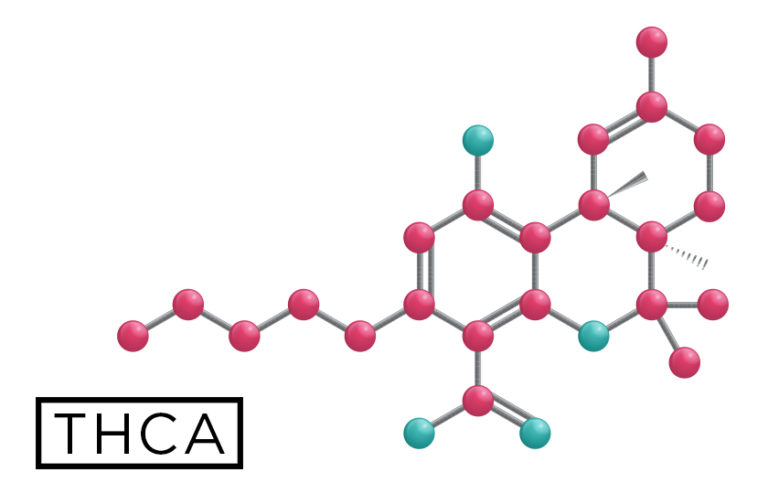
Image lightbox
- CBD (cannabidiol): Non-intoxicating; often associated with calming or balancing effects
- CBG (cannabigerol): The precursor cannabinoid from which most other cannabinoids — including THC and CBD — are biosynthesized during plant development
- CBN (cannabinol): A degradation byproduct that forms as THC oxidizes over time; more common in aged or improperly stored cannabis
Different cannabinoid ratios can meaningfully shape the overall experience beyond THC percentage alone.
What does the terpene profile mean on a COA?
Terpenes are the aromatic compounds responsible for the distinct flavors and smells across cannabis varieties. They shape how a product feels just as much as how it smells, even when THC numbers look identical.
Common terpenes you’ll see on a COA:
- Myrcene: Earthy, musky, herbal
- Limonene: Bright citrus
- Caryophyllene: Spicy, peppery — notable as the only terpene known to interact with cannabinoid receptors
- Pinene: Sharp, piney, fresh
This is why two products with nearly identical THC percentages can feel and taste completely different. The terpene profile is often a better predictor of character than potency numbers alone.
What does contaminant testing show on a COA?
Photo by: Gina Coleman/Weedmaps
Image lightbox
This is the most important section from a safety standpoint. A compliant product should show a clear Pass across every category. Here’s what each test screens for:
Pesticides
Chemical residues that may have been used during cultivation. Regulated markets set maximum residue limits (MRLs) for dozens of compounds.
Heavy metals
Contaminants like lead, arsenic, cadmium, and mercury — cannabis is a bioaccumulator, meaning it readily absorbs heavy metals from soil.
Microbials
Mold, yeast, and harmful bacteria including E. coli and Salmonella. Most markets also require water activity (Aw) testing, which measures moisture levels that can support microbial growth in stored products.
Residual solvents
Relevant for concentrates and extracts — confirms that solvents used during extraction (butane, propane, ethanol, etc.) fall within safe limits.
Any Fail in this section is disqualifying. Don’t rationalize it.
How is potency displayed by product type?
COAs present potency differently depending on what’s being tested:
- Flower: Percentage (%) by dry weight
- Concentrates: Percentage (%) and sometimes milligrams per gram (mg/g)
- Edibles: Milligrams (mg) per serving and per package total
Understanding the format helps you compare products accurately and dose appropriately — especially when moving between product categories.
What batch and lab information should a COA include?
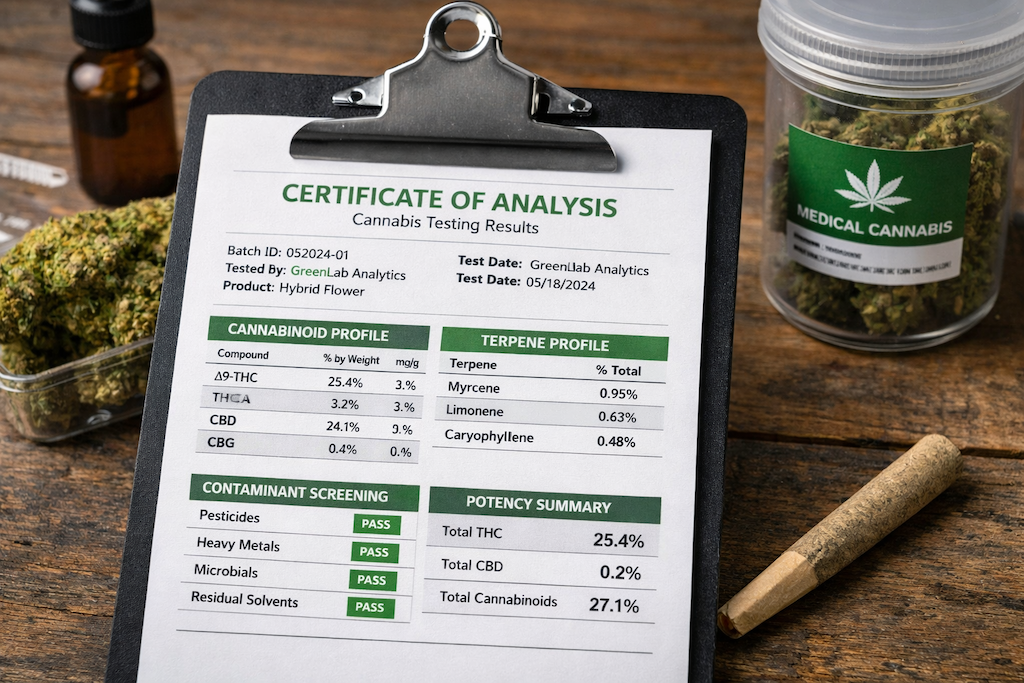
Image lightbox
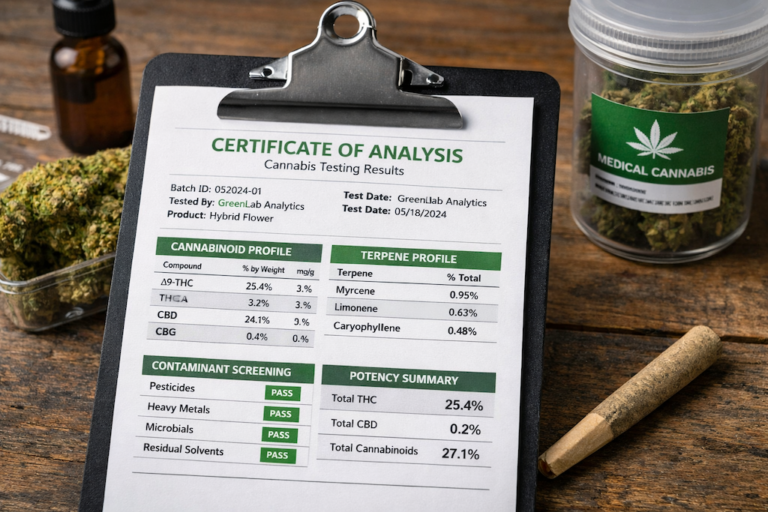
Every legitimate COA should include:
- Batch or lot number: Must match the number printed on your packaging
- Test date: Confirms how recent the analysis is — older results may not reflect current inventory
- Lab name and accreditation: Confirms the facility is licensed and qualified to conduct regulatory testing
COAs apply to specific batches, not entire product lines. If the batch number on the COA doesn’t match the one on your package, that report doesn’t cover what you’re holding.
What are the red flags on a cannabis COA?
Not all COAs are created equal. Watch for:
- Missing or broken QR codes
- No batch number, or a batch number that doesn’t match the packaging
- Test dates that are significantly outdated
- Missing contaminant testing sections — pesticides, heavy metals, microbials, and solvents should all be present
- Results that look incomplete, rounded suspiciously, or inconsistent across sections
If something doesn’t add up, put it down and find a product that has its paperwork in order.
The bottom line
A cannabis COA shows what’s in your product and whether it passed safety testing. Cannabinoids tell you potency. Terpenes tell you character. Contaminant results tell you whether it’s safe. Batch details confirm the report actually covers what you’re buying.
If you’re not checking the COA, you’re guessing. Find dispensaries near you on Weedmaps and look for products with verified COAs before you buy.