





Photo by: Gina Coleman/Weedmaps
Image lightbox
THCA edibles and THC edibles might look similar on a dispensary menu, but they don’t behave the same way in the body.
A big part of the difference comes down to heat during preparation. THC edibles already contain activated THC. After consumption, the liver converts part of that THC into 11-hydroxy-THC, a compound researchers associate with the stronger and longer-lasting effects many people report from edibles.
THCA, by contrast, is what cannabis produces before heat is applied — meaning the final experience depends on whether that conversion happened during preparation. Unless it’s converted into THC during cooking or extraction, it may move through the body differently and produce a very different experience.
Understanding how heat, digestion, and metabolism affect cannabinoids helps explain why two edibles that look similar on a menu can feel very different once consumed.
Start with the basic difference between THCA and THC
THCA and THC are closely related molecules. In fact, THC forms directly from THCA.
Cannabis plants naturally produce THCA, not THC. The difference between the two molecules is a small chemical group attached to THCA. When heat removes that group, THCA converts into delta-9 THC, the cannabinoid most associated with cannabis’s intoxicating effects.
This is why raw cannabis rich in THCA typically doesn’t produce the same effects as products that already contain THC.
Why heat matters when making edibles
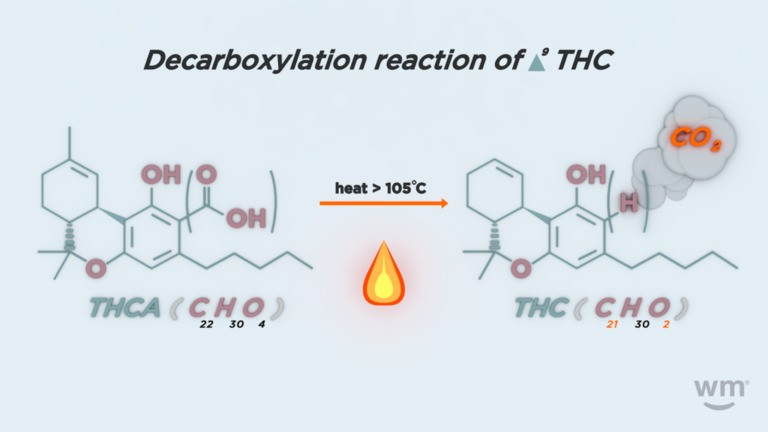
Image lightbox
Heat is what activates THC in most cannabis products.
During edible production, cannabis is usually heated before it’s infused into butter, oil, or other ingredients. This step triggers decarboxylation, the process that converts THCA into THC. If cannabis isn’t heated during preparation, the final edible could still contain mostly THCA instead of active THC.
Because digestion alone doesn’t reliably convert THCA into THC, how the edible is prepared plays a major role in how it behaves in the body.
What happens after you eat an edible
Edibles follow a very different path through the body compared with smoking or vaping cannabis. After consumption, cannabinoids move through the digestive system and are absorbed alongside dietary fats before reaching the liver. This step — called first-pass metabolism — is one of the reasons edible effects usually take longer to appear than inhaled cannabis.
Several factors can influence how quickly this happens, including:
- stomach contents
- fat intake
- individual metabolism
These variables help explain why edible onset can vary from person to person.
Why THC edibles can feel stronger
Image lightbox
When THC reaches the liver, enzymes convert part of it into 11-hydroxy-THC.
This compound reaches the brain efficiently and interacts strongly with cannabinoid receptors. Many researchers believe this metabolite contributes to why edible cannabis often feels stronger and longer-lasting than inhaled THC.
Afterward, the body continues breaking cannabinoids down into inactive compounds that are eventually eliminated.
Why THCA edibles can behave differently
THCA interacts with the body differently than THC.
In its raw form, THCA shows very little interaction with CB1 receptors, the receptors most closely associated with cannabis’s intoxicating effects.
If an edible contains mostly THCA that hasn’t been converted through heat, the compound may move through digestion without producing the same pathway that THC edibles follow.
In practical terms, this means a THCA-dominant edible could feel very different from a THC edible — even if their cannabinoid percentages look similar on a label.
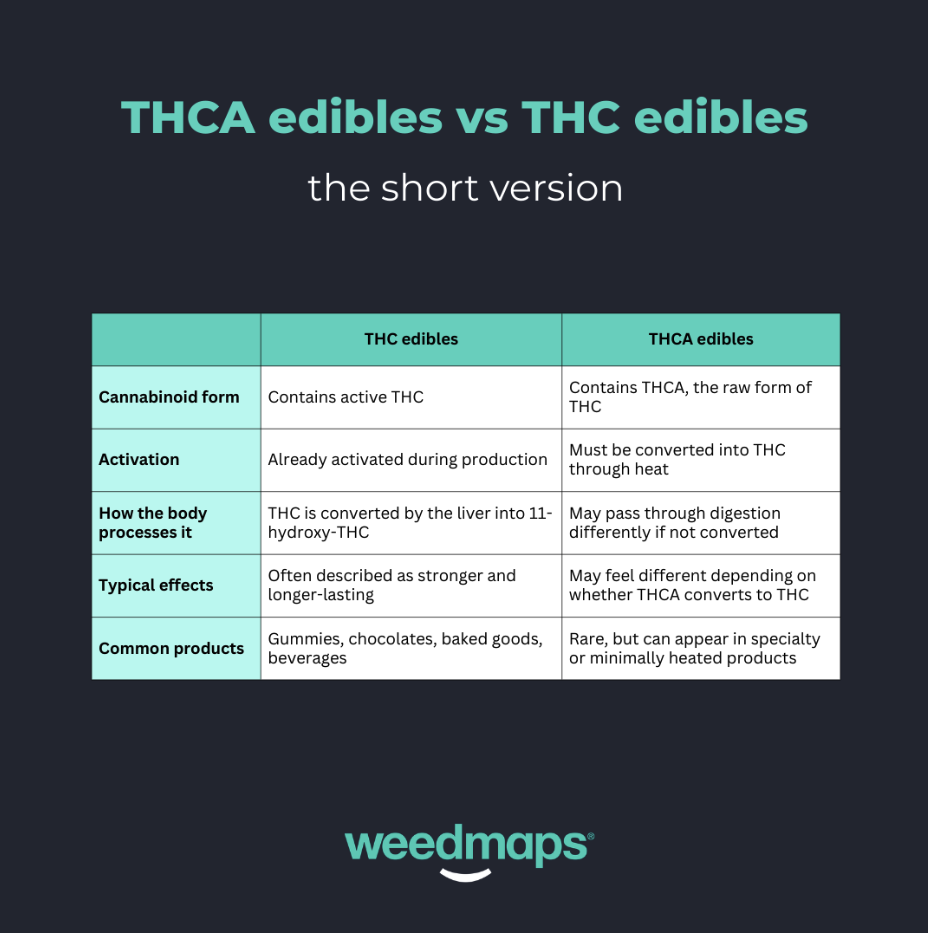
Image lightbox
How edible experiences can vary
Several factors shape how an edible experience unfolds.
Onset: Edible effects typically begin between 30 minutes and two hours after consumption because cannabinoids must pass through digestion and liver metabolism first.
Intensity: The formation of 11-hydroxy-THC can make edible effects feel stronger than inhaled cannabis.
Duration: Because cannabinoids remain active in the bloodstream longer after oral consumption, edible effects often last four to eight hours or more.
If THCA remains largely unconverted during preparation, THCA-dominant products may not follow the same pattern.
The bottom line

THC edibles already contain active THC, while THCA edibles contain THCA — the raw precursor that cannabis plants naturally produce. The key difference comes down to heat during preparation, which determines whether THCA converts into THC before consumption.
Understanding that difference can make it easier to interpret product labels and know what to expect from an edible.
Order THC edibles for pickup or delivery from a dispensary near you on Weedmaps.