





Image lightbox
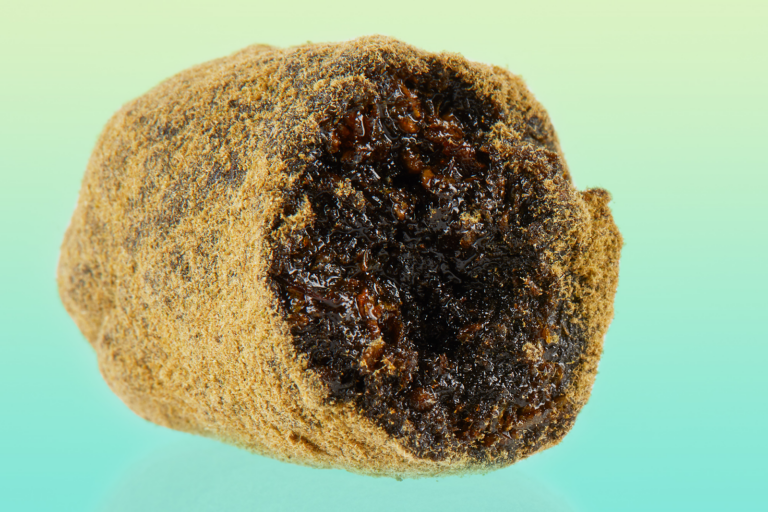
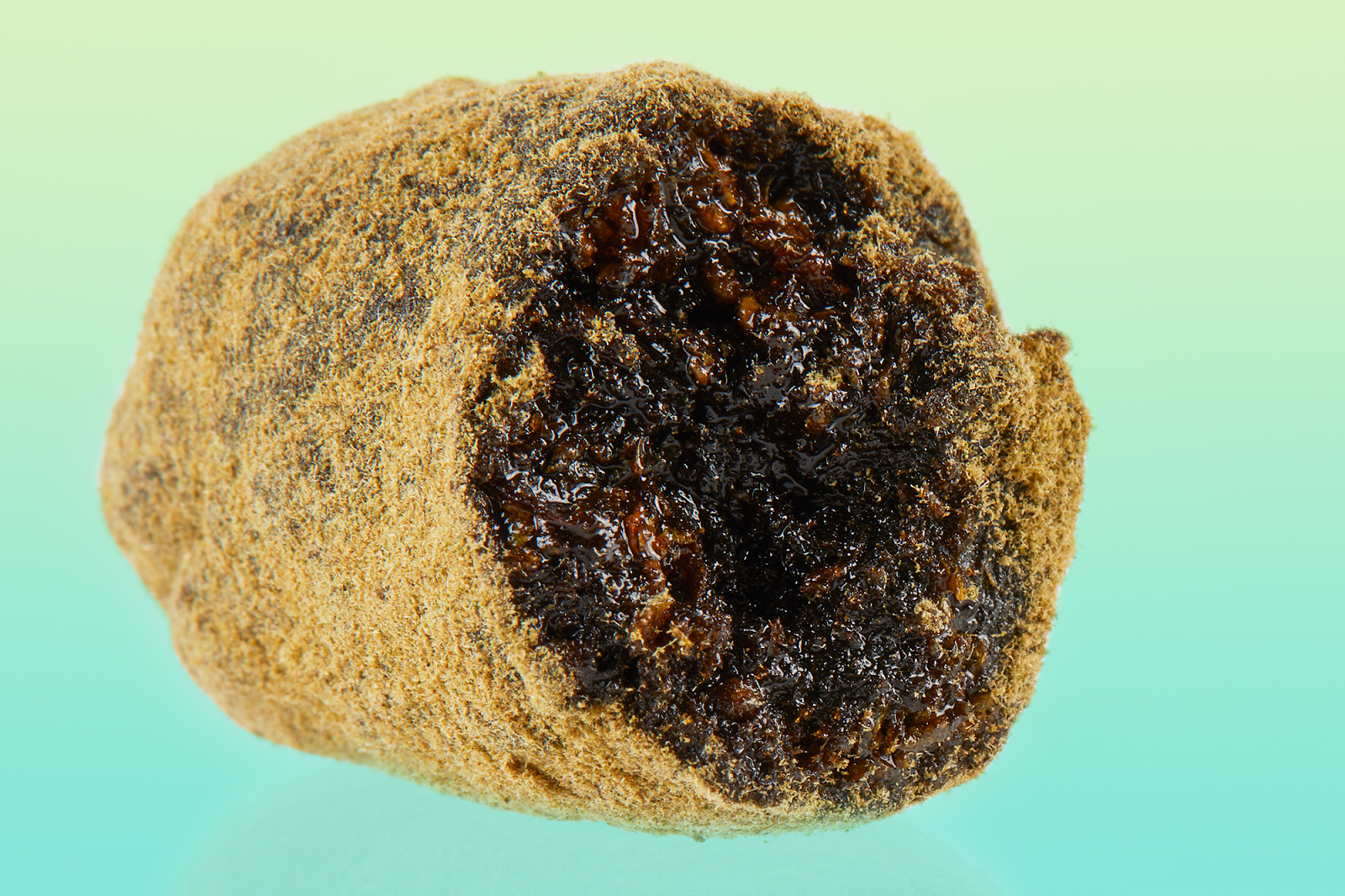
Moon rocks are formed by coating cannabis flower in concentrate and rolling it in kief, stacking three high-potency materials into a single nug that burns slower and hits harder than standard flower.
Moon rocks are among the more potent cannabis products available, but what actually makes them so strong isn’t just the ingredients. It’s how they’re layered together.
At a glance, moon rocks appear dense, crystal-covered buds. In reality, they’re built in stages: cannabis flower coated in concentrate, then rolled in kief. Each layer adds cannabinoids, stacking potency and changing how the product behaves when smoked.
And that structure is the whole point. Unlike traditional flower or even infused pre-rolls, moon rocks aren’t evenly mixed. They’re physically layered, which affects everything from burn speed to airflow to cannabinoid delivery.
Understanding how those layers are applied and how they interact helps explain why moon rocks deliver more cannabinoids, feel stronger, burn slower, and require a different approach than standard flower.
Once you break down the process, it becomes clear that moon rocks aren’t just a novelty product. They’re a simple form of potency engineering, built from three cannabis materials working together.
What makes moon rocks different from regular flower
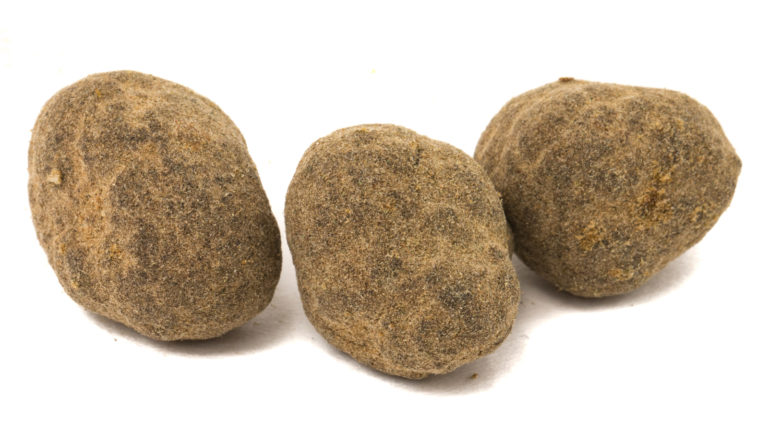
Image lightbox
Moon rocks start with a flower, but that’s where things change.
Traditional flower burns evenly because its structure allows for consistent airflow through the plant material. Moon rocks are layered on the exterior, which creates uneven density and restricts airflow during combustion.
This structure makes them:
- More potent per gram
- Slower to burn
- Harder to break apart and handle
The result is a product that looks like flower but performs more like a hybrid, residing between flower and concentrates.
Step 1: choosing the flower base
The process begins with a dense, well-formed nug.
Structure matters here. A solid bud holds its shape during coating and provides a stable surface for the concentrate to stick to. Loose or airy flower doesn’t work as well because it can collapse under the added weight.
Quality also plays a role. Since the flower is the core of the product, its cannabinoid content, moisture level, and cure all influence the final result.
A properly cured nug creates a better foundation for even coating and adhesion.
Step 2: concentrate coating and adhesion
Next, the flower is coated in concentrate. This is what allows the outer layers to stick.
The type and consistency of the concentrate matter. Oils that are too thin can drip or soak unevenly into the bud, while thicker, more viscous concentrates create a more controlled coating.
The goal is to create a tacky outer layer that:
- Adheres to the surface of the flower
- Holds the kief in place
- Adds an additional layer of cannabinoids
This step determines how evenly the product is coated and how well the next layer will bind.
Step 3: kief adhesion and surface coverage
Once the bud is coated, it’s rolled in kief.
Kief sticks to the concentrate layer, creating a textured outer surface rich in trichomes. Coverage can vary depending on how much kief is used and how evenly it’s applied.
This outer layer:
- Increases overall cannabinoid density
- Adds a dry coating that helps balance the sticky oil
- Changes how the product ignites and burns
A well-coated moon rock should have consistent coverage without large bare spots or excess clumping.
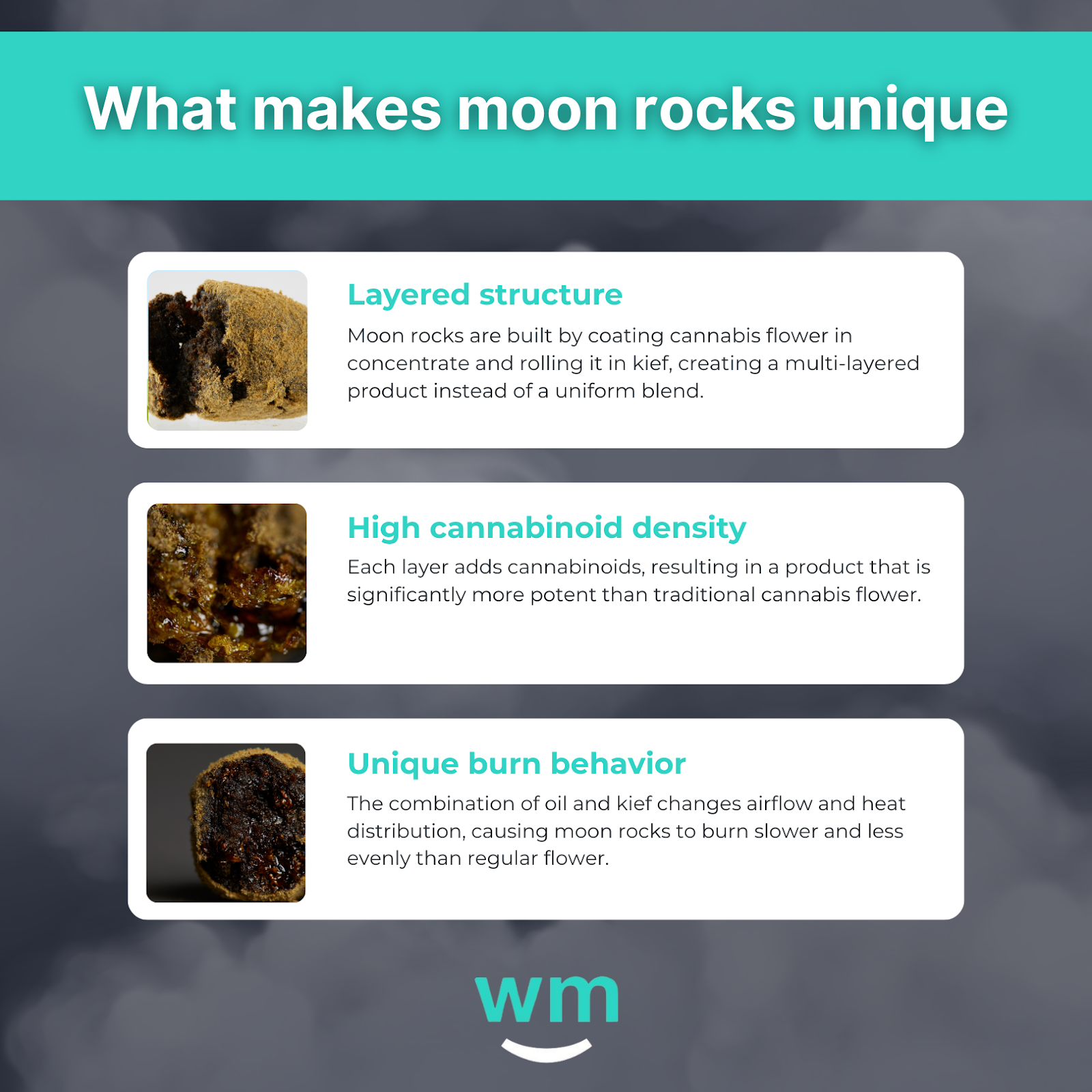
Image lightbox
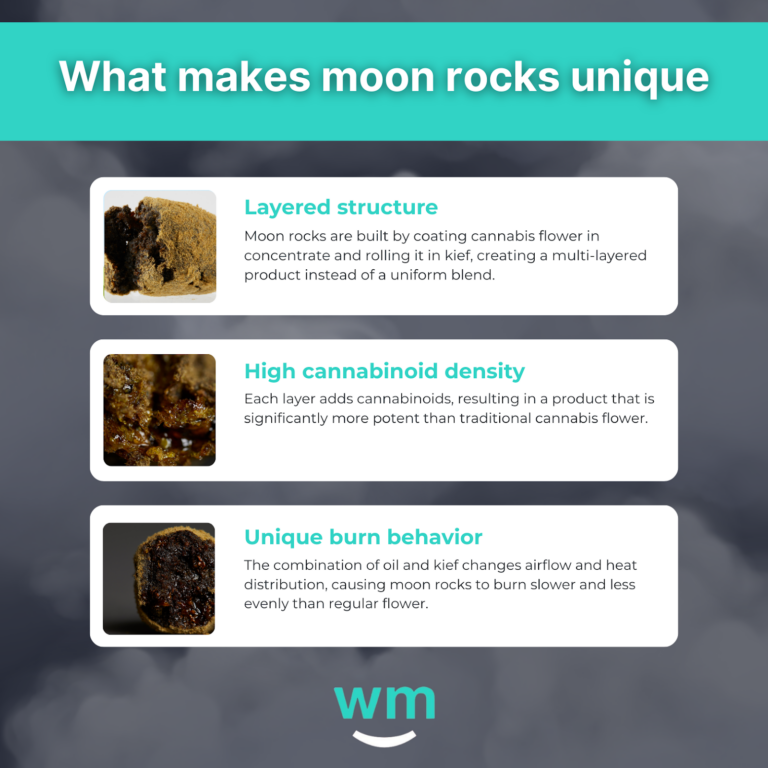
How layering affects potency and burn
Each layer, flower, concentrate, and kief, contributes cannabinoids. When combined, they create a product with significantly higher total potency than flower alone.
But layering doesn’t just affect strength. It also changes how the product burns.
Because the materials are not evenly mixed:
- Heat moves unevenly through the bud
- Oil can slow combustion
- Kief can ignite quickly on the surface
This combination can lead to a slower, less uniform burn compared to standard flower. For consumers, that means moon rocks often require a different approach to packing, lighting, and smoking to perform as expected.
Why moon rocks burn differently
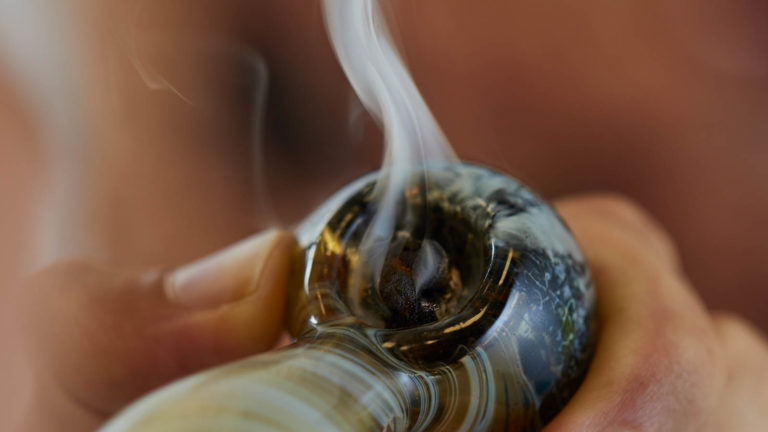
Image lightbox
Moon rocks don’t burn like standard flower because of their layered structure.
The concentrate coating slows airflow and combustion, while the kief layer can ignite quickly on the surface. This creates an uneven burn where some parts heat faster than others.
As a result, moon rocks tend to:
- Burn slower than regular flower
- Require more consistent heat to stay lit
- Produce thicker, denser smoke
Because of this, they’re typically broken up and mixed with flower rather than smoked on their own. This helps improve airflow and creates a more manageable burn.
Variability: why not all moon rocks are the same
Not all moon rocks are made equally, and the term itself isn’t standardized across the industry. Some producers use kief for the outer layer; others use hash. The concentrate core might be distillate in one batch and live resin in another. These aren’t just cosmetic differences — they affect potency, flavor, and burn behavior in ways that can be significant.
Key variables include:
- Flower quality, density, cure, and cannabinoid content
- Concentrate type, viscosity, potency, and terpene content
- Kief quality, trichome purity and freshness
- Application method, how evenly each layer is applied
Because these elements aren’t standardized across producers, two moon rocks can look similar but differ in potency, texture, and burn behavior.
How to evaluate moon rocks before you buy
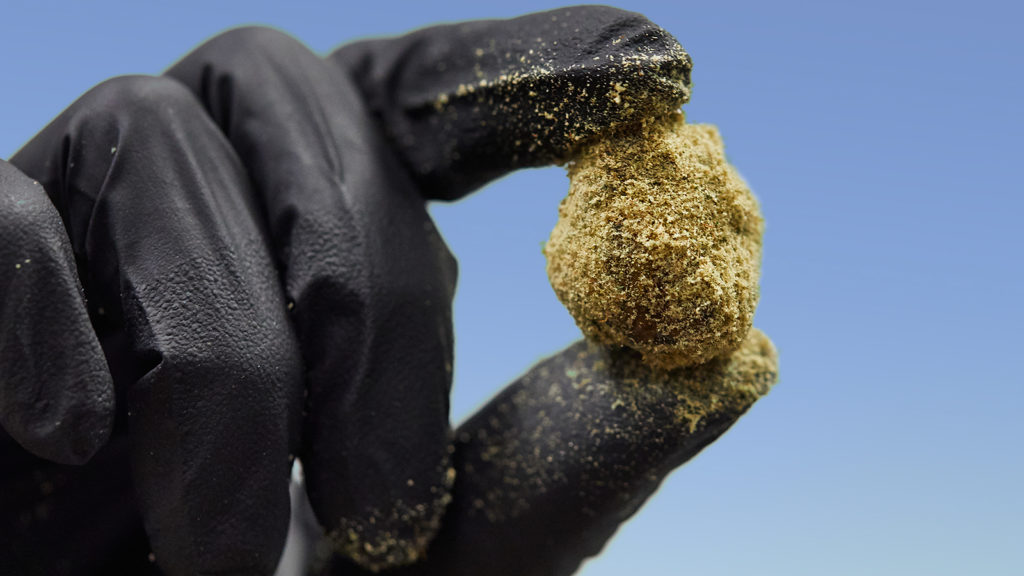
Image lightbox
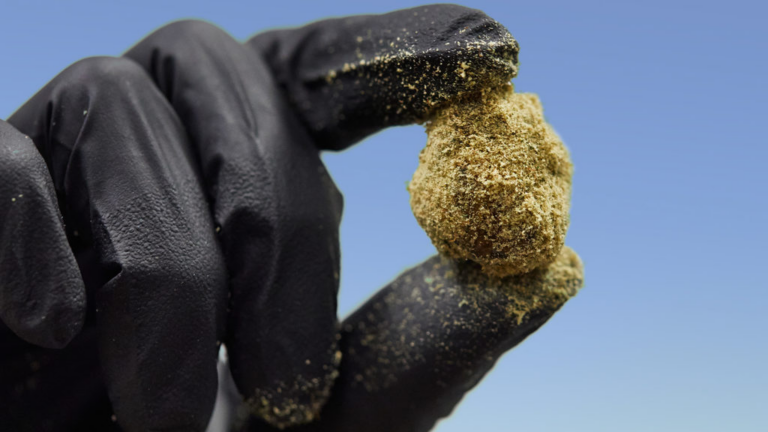
A high-quality moon rock should show clear signs of balanced layering.
Look for:
- Even kief coverage without large bare spots
- A sticky but not overly wet surface
- A dense, intact nug that holds its shape
- A batch COA that reflects combined cannabinoid content
Avoid products that appear overly saturated, crumbly, or unevenly coated, as these can indicate poor adhesion or inconsistent formulation.
The bottom line
Moon rocks are built through a simple but effective process: layering flower, concentrate, and kief to increase cannabinoid density.
Each step, from selecting the base flower to applying concentrate and kief, affects how the final product performs. The result is a high-potency cannabis product with a unique structure that influences both strength and burn.
Understanding how these layers work together makes it easier to evaluate quality and set expectations before you light up.
Order moon rocks for pickup or delivery from a dispensary near you on Weedmaps.