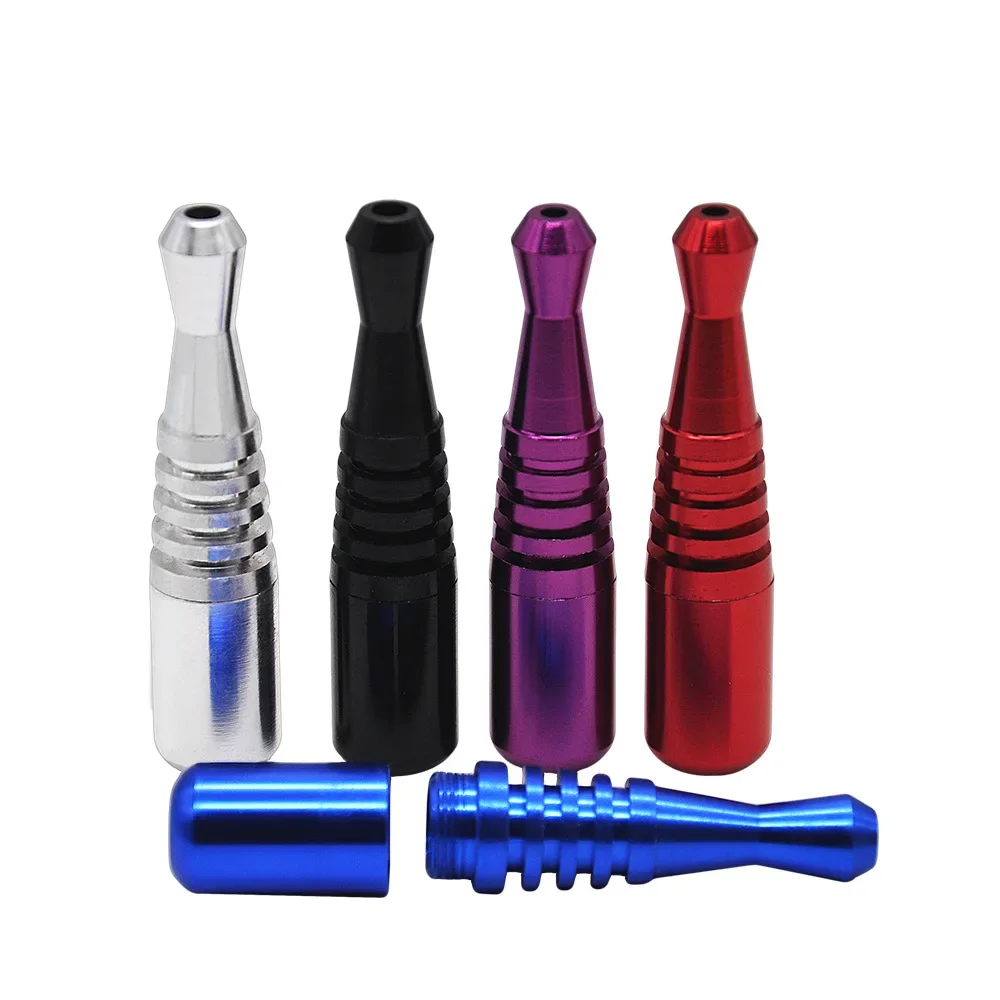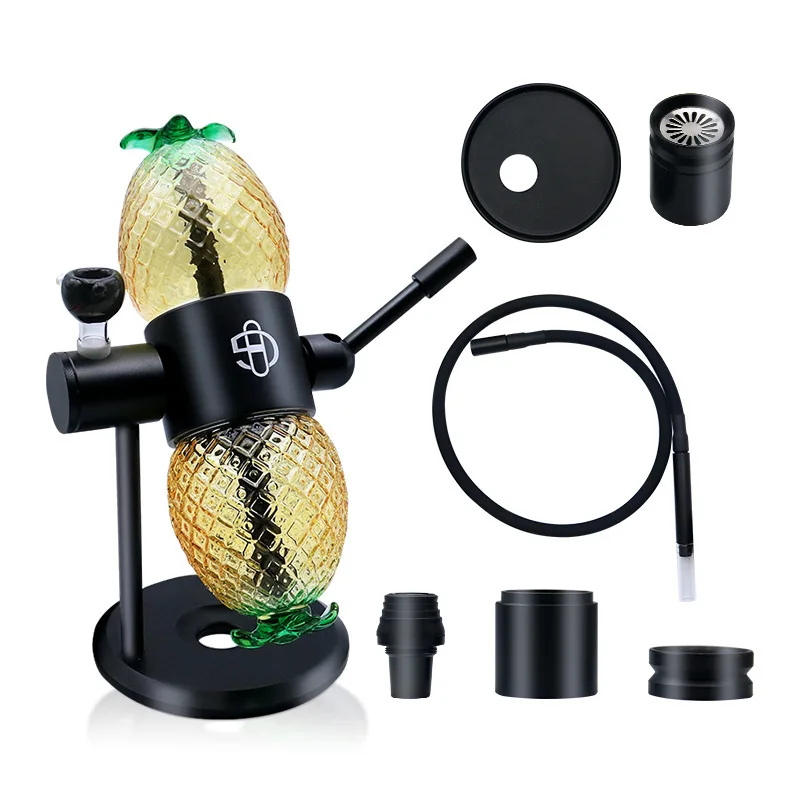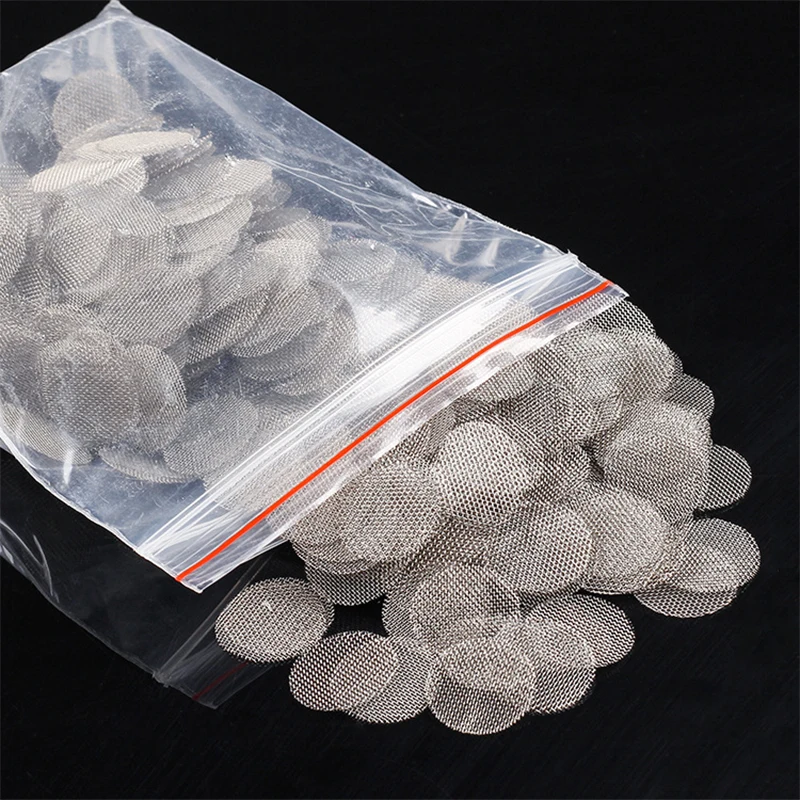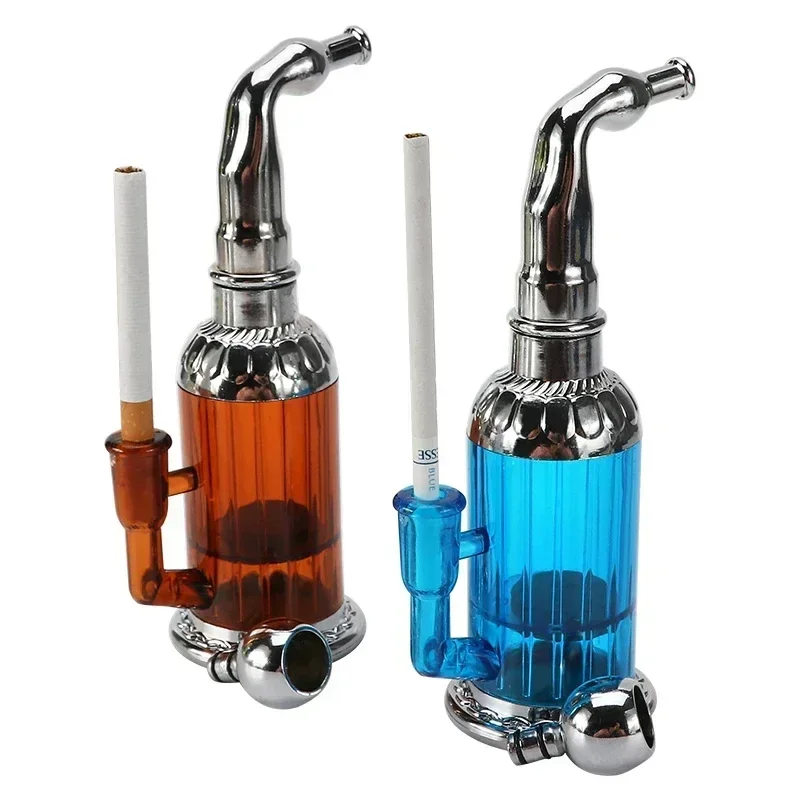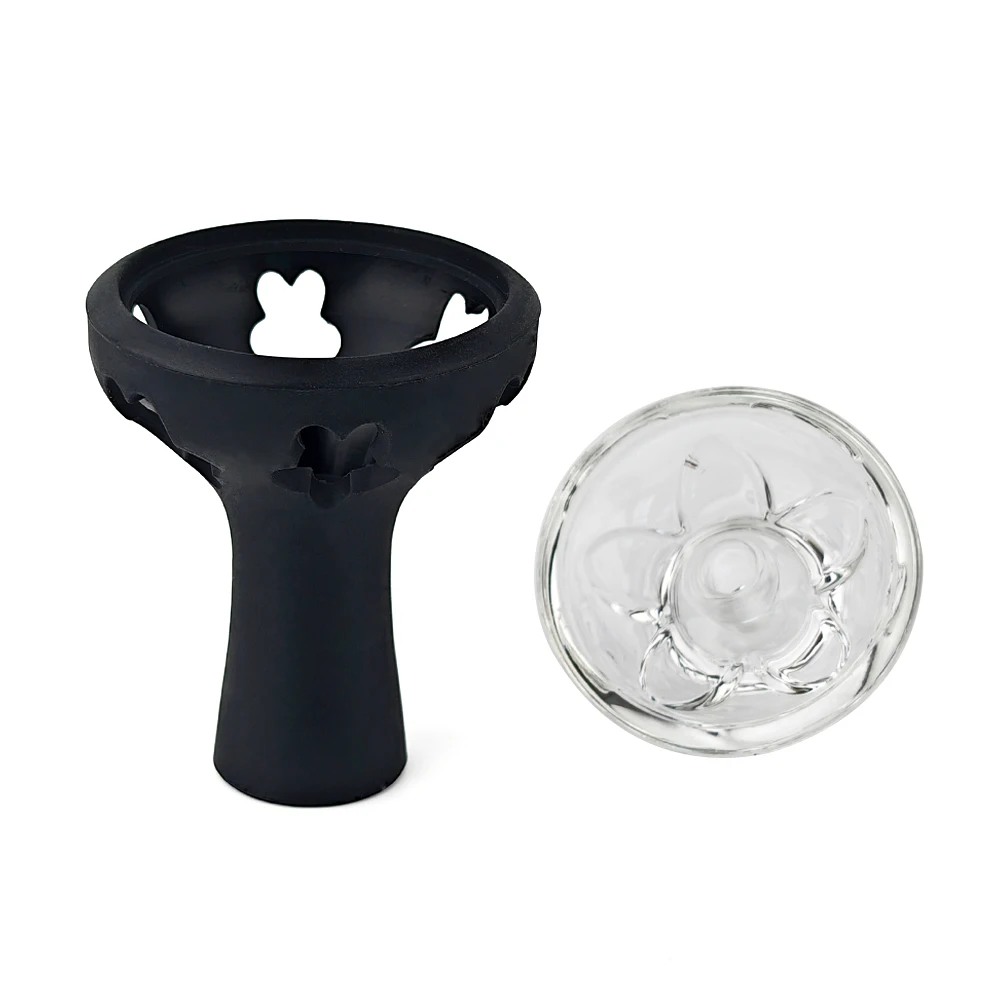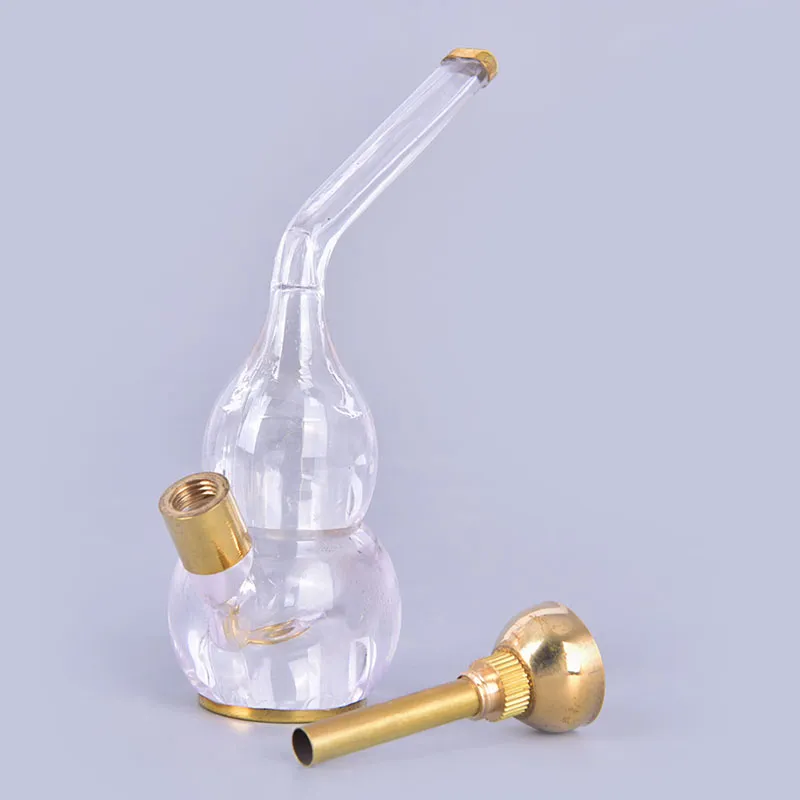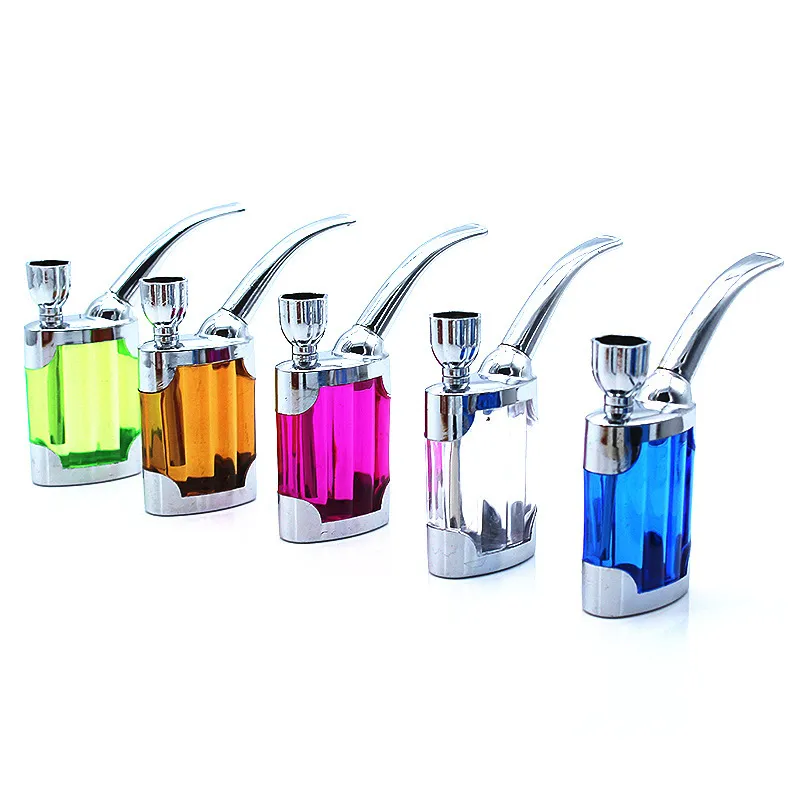






The security guard glances at our IDs, then at us, then back at our IDs.
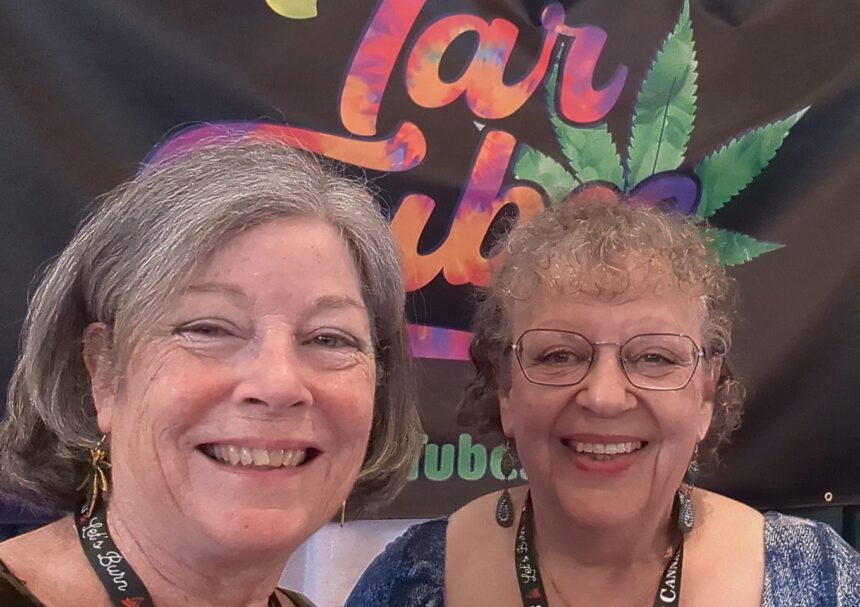
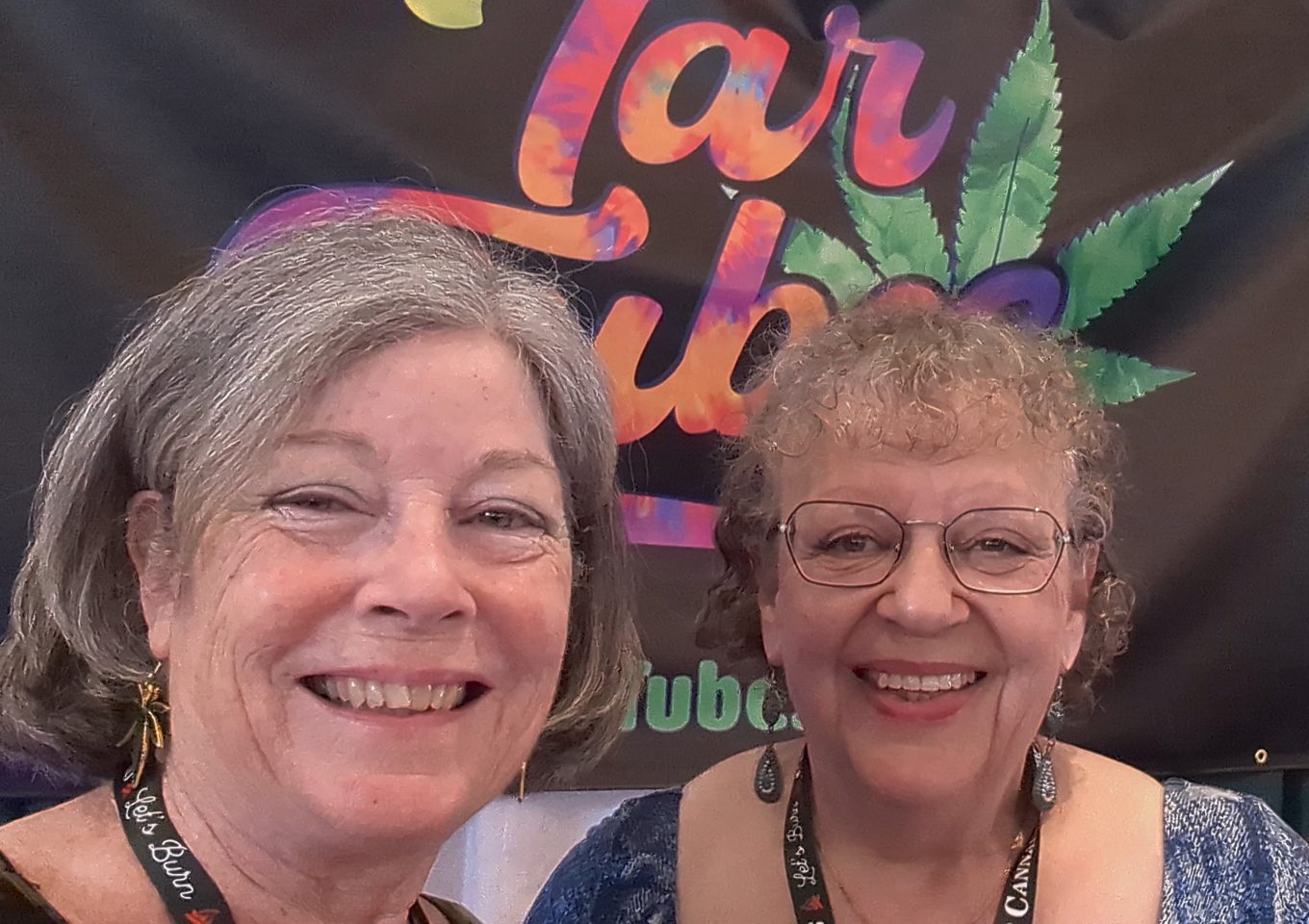
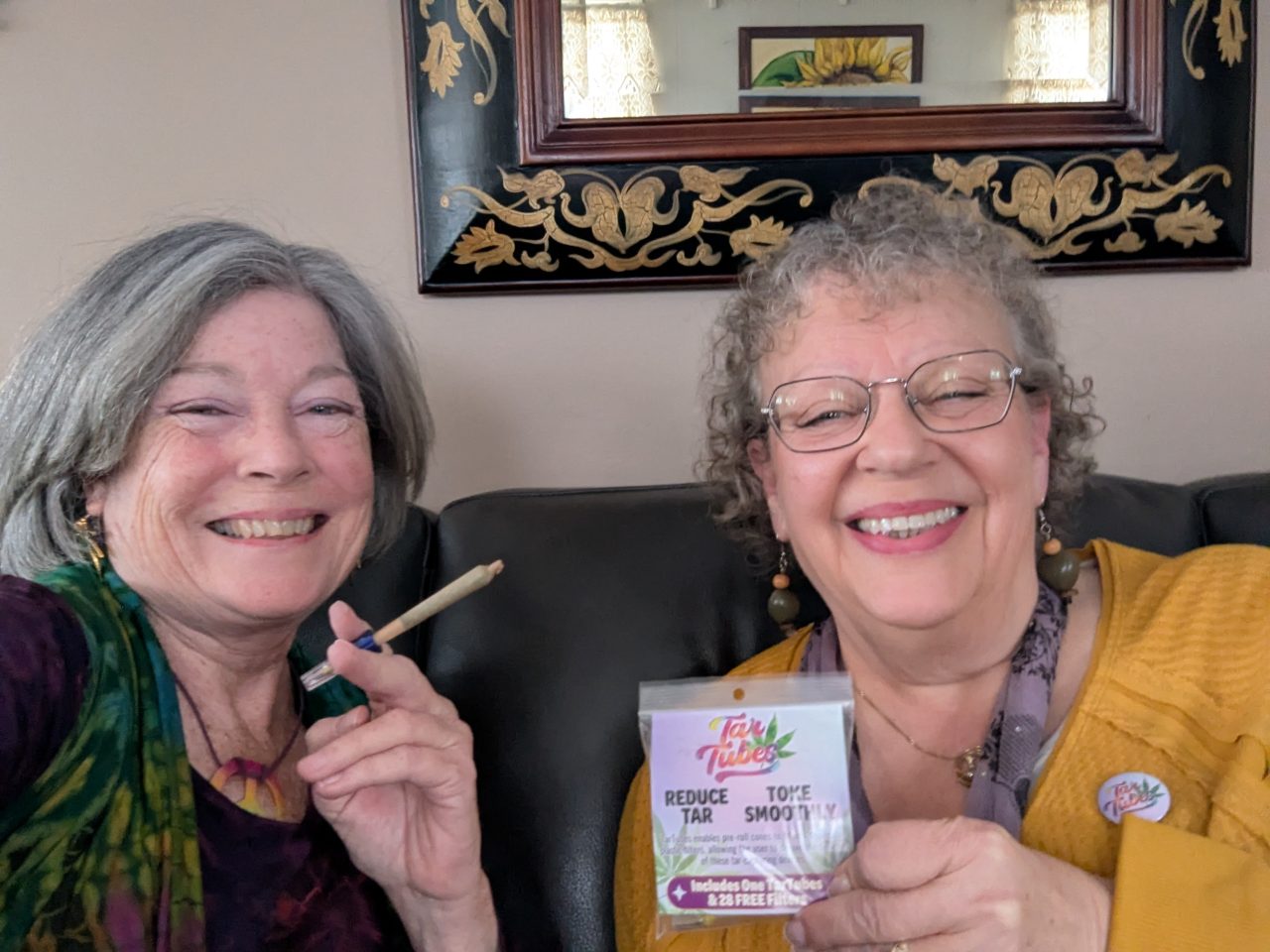
I am 67. Diana is 64. We are not the typical pair walking into a cannabis dispensary on a weekday afternoon. We come carrying a folding table, boxes of product, and the determination of women who are not done building.
Diana is my recent friend and now my business partner. We are not here to browse. We are here to sell.
We set up near the glass display cases, unfolding the table and arranging our product across its surface. Diana smooths the corners of the tablecloth without thinking. We scan shelves for placement rather than reading strain names. Most of the faces behind the counter are younger. Many are men. They carry an easy, unhurried energy that pairs surprisingly well with our more deliberate, still lively pace.
The young men we meet are kind and gracious, but their presence reminds us how seldom we see ourselves mirrored here. You might expect an industry built around a female plant, what we like to call the Ladies’ Lettuce, to look different. To skew more female.
It doesn’t.
Still, we began noticing something else.
A woman behind the counter asked a few extra questions about what we were selling. A manager who listened closely when we mentioned tar reduction. A flicker of recognition when we shared our ages.
And once we noticed them, we began to see the shape of something larger.
An Idea Sparked
Less than two years earlier, Diana and I were sitting across from each other at a neighborhood coffeehouse, the only two volunteers who showed up to write letters for a political candidate in 2024. We were strangers then, addressing envelopes in careful block print. Halfway through our shift, we discovered we lived just six blocks apart.
When 4:20 rolled around, and we both casually suggested stepping outside for a toke, we realized we shared more than political persuasion. We shared a passion for the plant, relief for our aches and pains, a sense of humor, and the uneasy awareness that life in our sixties was not winding down. It was shifting.
We began spending nearly every day together, usually over a morning sesh. It was during one of those sessions that the idea for TarTubes was conceived.
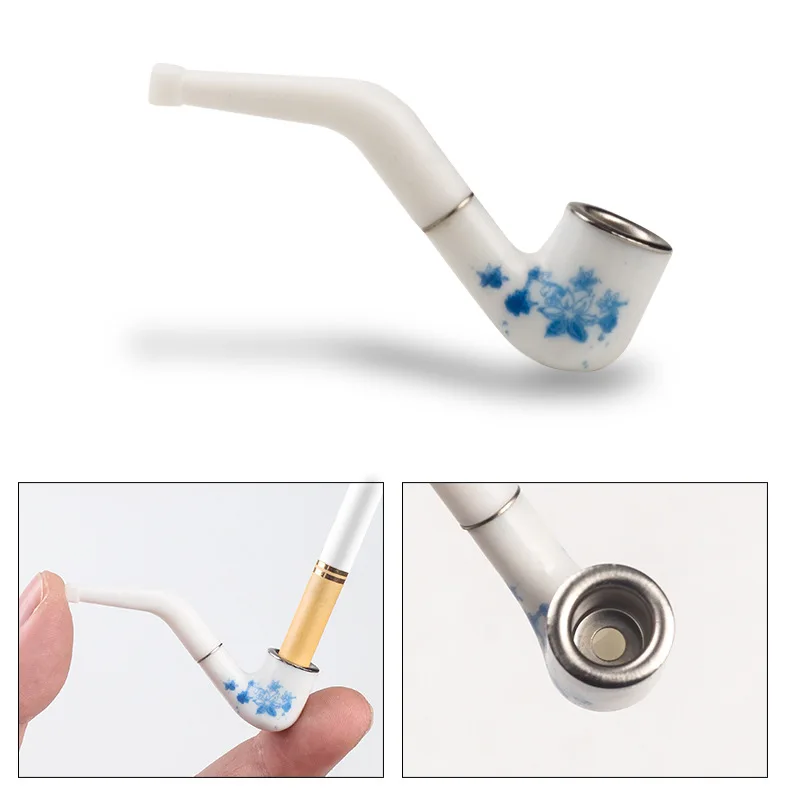
Diana, ever pragmatic, was already using disposable cigarette filters to reduce her tar intake. I found myself wondering why there wasn’t a wellness option for me, something designed to fit the narrow end of the cone-tipped pre-roll joints I preferred to smoke.
We started improvising. Tissue first. Then cardboard. When those hacks proved promising, we designed a small adapter that finally made the pairing seamless.
That small invention did more than filter tar. It pulled us into dispensaries.
A Generation That Wasn’t Invited
Women our age did not grow up walking into bright dispensaries with digital menus and loyalty programs. For us, weed usually came through whoever knew someone. We found ourselves in unfamiliar dorm rooms and questionable apartments because someone’s roommate knew someone who “had a guy.” An added price was hanging around to smoke him up.
Weed was something we schemed to get in high school and college, something passed between friends in parked cars and cramped apartments. Later, we folded it quietly into our adult lives as we built careers, raised families, and cared for everyone else.
It was not marketed to us. It was not curated for us. It was not framed as wellness. We learned discretion early.
By the time legalization reshaped the landscape, the industry was already forming its identity. Marketing leaned young—imagery centered on men or hyper-sexualized young women. The tone emphasized recreation at a time when many of us were seeking relief.
The result is not hostility. It is absence.
Older women are rarely imagined in cannabis marketing. Rarely pictured. Rarely assumed to be innovators. And yet we have decades of lived experience with this plant.
We were not invited into the early rooms where this industry took shape.
But here we were, setting up our table.
Finding the Women Inside the Industry
When we entered the “industry” in a more formal sense, the women we met were not waiting to be invited. They were already making space.
A Lesson in Risk
The first woman to make space for us was Carol, the matriarch of Wonderland Cannabis. We walked in expecting to deliver a pitch. Instead, we found ourselves in conversation.
Carol listened carefully as we described how our idea began during a morning smoke session and how we had turned that ritual into a simple invention. She didn’t interrupt. She didn’t gush.
When we finished, she asked a question no one else had asked so plainly: Why take this kind of risk at this stage of your lives?
For a moment, we paused. Until then, we had been moving on momentum, focused on solving a problem rather than calculating the risk.
Carol didn’t offer applause. She offered perspective.
The Women Who Open Doors
Karen, one of our closest friends and an early adopter of TarTubes, helped get us into our first dispensary: The Verb Is Herb. At 61 and a mighty 5’2″, she works security at the door—greeting customers with an easy smile and the Grateful Dead streaming from her phone. Warm, but unmistakably in charge.
Behind the scenes, Karen was quietly advocating for us. She slipped our early prototypes to colleagues and talked us up to the people who mattered.
By the time our company soft-launched at the New England Flower Expo, the groundwork had already been laid. When The Verb became the first local dispensary to carry our invention, it didn’t feel accidental.
It felt like the quiet work of someone who understands how doors really open.
Trust Is the Real Currency
On my first solo sales call, I stood awkwardly off to the side of a dispensary floor, waiting for the manager to finish with a customer. Across the room, a vaguely familiar woman caught my eye—leather boots, faded jeans, a black tee beneath a fringed Grateful Dead vest.
It clicked. Staci Smith.
We had met years earlier at a Dead & Co. show, where she handed me one of her Strangers Stopping Strangers stickers—still stuck to the back of my phone. She noticed it immediately and laughed.
After 25 years in wine and spirits sales, Staci entered cannabis in 2019, before wholesale even existed locally. Beneath the fringe and tie-dye is a seasoned sales professional who understands margins, inventory, and the long game of relationship-building.
Through Staci, doors opened we didn’t even know existed. Not because she pushed
Cannabis Meets Science
Exploring cannabis communities online, we came across Mia Garlock, whose relationship with the plant deepened after a devastating accident left her searching for relief beyond conventional care.
What began as coping became study. What began as relief became a relationship.
Today, through her online work, Mia teaches the neurobiology behind cannabis use—how the plant interacts with the body, not just mood. She often points out that both women’s health and cannabis remain under-researched, leaving a wide gap between lived experience and scientific understanding.
Through Mia, we began to see that what our generation learned through instinct and discretion could also be articulated through science. Where we learned quietly, Mia learned fluently.
She wasn’t waiting to be invited into authority. She was building it.
Building a Network
We met Addison Morris, founder of the Women’s Cannabis Chamber of Commerce, through LinkedIn. I expected a brief exchange. Instead, she had Diana and me on Zoom the very next day.
A septuagenarian with the energy of a startup founder, Addison speaks about cannabis not as counterculture but as infrastructure—moving easily between feminism, leadership, ownership, and policy.
Within weeks, she invited us onto her interview series, ClipNotes, where she amplifies women’s voices across social platforms. She didn’t position us as curiosities. She positioned us as contributors.
What had once felt like isolated encounters began to look more like a network. Women weren’t just finding their way into cannabis. They were building it.
Making Cannabis Navigable
Addison introduced us to Liz Quinn—a breast cancer survivor whose relationship with cannabis is deeply lived and shaped by treatment, recovery, and the long negotiation with a body that has endured trauma.
While much of the industry markets potency and novelty, Liz speaks to seniors in a different language. She understands hesitation, the uncertainty of walking into a dispensary for the first time, and the fear of getting it wrong.
Through her work with older adults, Liz focuses on clarity and care—translating jargon, explaining dosage in plain language, and encouraging people to listen to their bodies.
She also founded LizLightsUp and welcomed us to W.E.C.A.N., the Women Empowered Cannabis Advocates Network. This community connects women of all ages and backgrounds to share knowledge and support one another.
Through Liz, we began to see something clearly: older women weren’t just entering the cannabis space. They were helping make it navigable for everyone who followed.
Feminine Energy and the Ladies’ Lettuce
We had been calling her the Ladies’ Lettuce from the beginning, half playfully, half reverently. What we did not realize was how much the women around us were already embodying that same energy.
What we began to see was not just age. It was a way of moving through the space.
Mia rooted cannabis in the body. Liz translated it into reassurance. Carol made us pause and measure risk. None of them separated the plant from lived experience.
Relationship-based power.
Karen worked the door. Staci built trust over decades. Addison connected women across states and screens. Influence did not come from volume. It came from familiarity and follow-through.
Care.
Not softness. Not sentimentality. Care as discipline. Care as attention. Care to make sure the next woman does not enter alone.
This is the feminine energy we recognize around the Ladies’ Lettuce.
The next time we walk into a dispensary with our folding table and boxes of product, the security guard still checks our IDs. The faces behind the counter are still mostly younger.
But we no longer look for a mirror.
We look for connections.
We find it in conversation. In questions asked carefully. In women and men who care about access, safety, education, and getting it right.
We are not late to this industry.
We are arriving as we are, with decades of embodiment, relationship, and care already intact.
This article is from an external, unpaid contributor. It does not represent High Times’ reporting and has not been edited for content or accuracy.