






Plastic pots are the default choice for most growers, but they may be quietly limiting your yields, stressing your plants and stunting your roots. Here is what to do instead.
Growing top-quality cannabis involves time, love and care, but the pots you use play a bigger role in root development than most growers realize. This piece is not meant to give plastic pots a bad name. It is about the benefits of aerating your growing medium to encourage root pruning, and what happens when you do not.
I will cover how and why plastic pots promote root-bound growth, walk through the different types of roots and their roles, and lay out several pot solutions to help you avoid root-bound plants for good.
How Plastic Encourages Root-Bound Plants
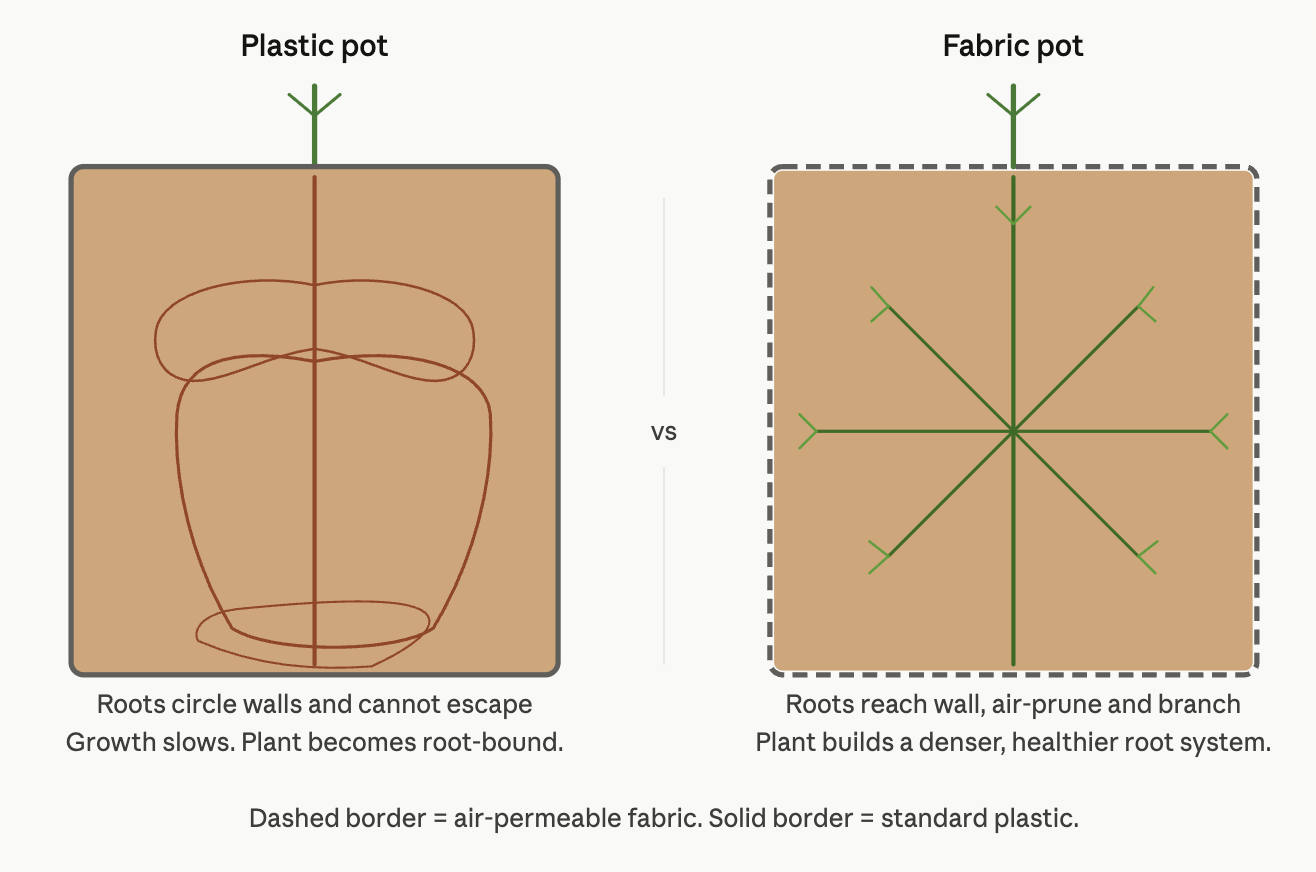
We have all been there when repotting. You pick up your plant, turn the pot upside down, and check the roots, only to find them jam-packed, white, tangled and healthy, growing in the exact shape of the pot. In some cases, roots are already pushing through the drainage holes at the base.
It can look impressive. But root-bound cannabis plants come with real problems.
The Signs of Root-Bound Cannabis Plants
If your plants seem off, check this list before assuming it is something else.
Is Your Plant Root-Bound? Check These Signs
- Stunted growth: Plants stop vegetating at their usual pace. During flowering, bud development slows and yields drop.
- Constantly watering: Growing medium dries out unusually fast after watering.
- Roots through the holes: Roots pushing out of drainage holes mean you need to repot immediately.
- Nutrient deficiencies: Root-bound plants consume nutrients faster, leading to nitrogen, calcium, magnesium or trace element deficiencies.
- Wilting leaves: Root-bound wilting looks almost identical to overwatering. If you have ruled out water issues, check the pot.
- Tall, lanky structure: An unstable, stretched plant that needs canes for support can signal root-bound growth.
The Benefits of Fabric Pots
Having grown with thousands of plastic pots over 20 years, I can say without hesitation that fabric pots are a genuine upgrade. Unlike plastic, fabric allows air to pass through the container walls, which changes how roots develop entirely.
What Is Root Pruning?
Root pruning happens naturally in fabric pots. As roots grow outward and hit the fabric wall, they come into contact with air. The tip stops elongating and instead branches into new lateral roots. The result is a denser, more efficient root system.
- A more prolific root system overall
- Greater nutrient uptake capacity
- No root-bound formations
- Better air circulation through the growing medium
- Faster drying, which reduces the risk of pathogens
The Different Types of Roots
Understanding what each type of root does will make you a more effective cultivator.
Taproot
The first root visible during germination. It grows downward and anchors the plant in the growing medium.
Fibrous Roots
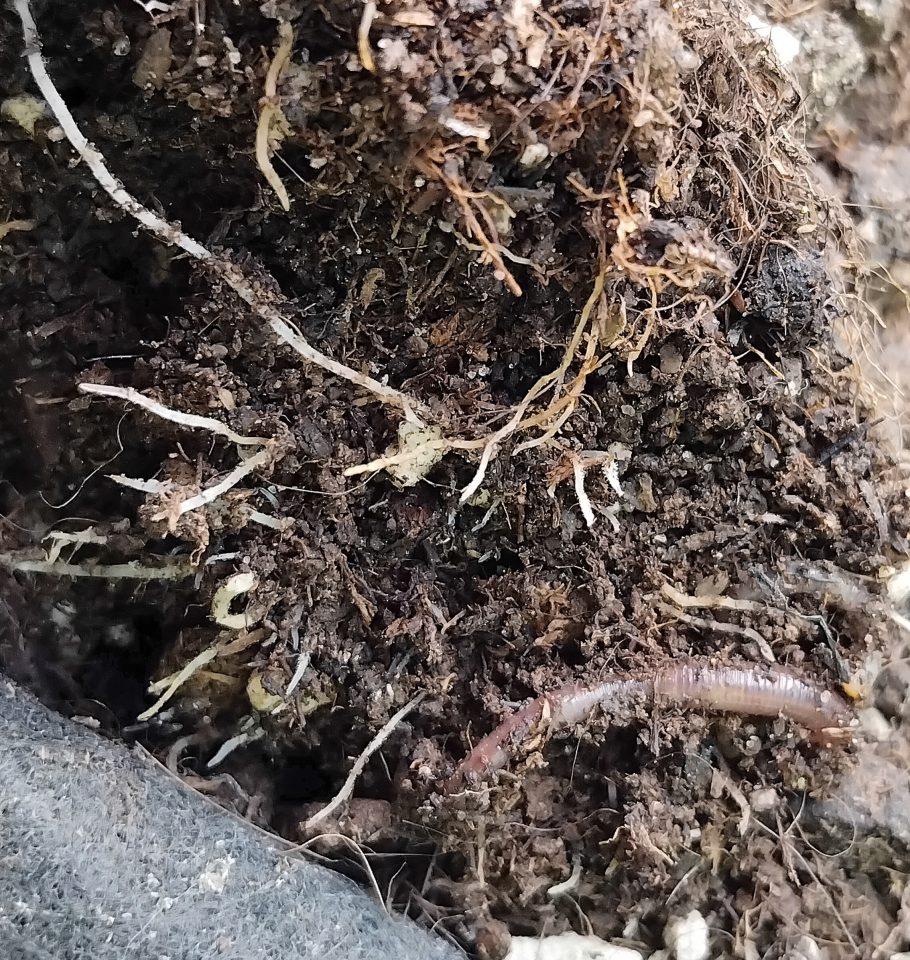
Extensions of the taproot with a thin, fishbone-like structure. Fibrous roots grow horizontally to increase surface area. Fabric pots are particularly effective at encouraging abundant fibrous root development.
Adventitious Roots
These grow on the stem above the soil rather than below it. Most common in high-humidity environments, you may also notice them on freshly rooted clones.
Other Ways to Avoid Root-Bound Plants
Fabric pots are not the only option.
- Air pots use the same air-pruning principle and work well, though they tend to cost more than fabric
- Fabric pots remain the most affordable air-pruning solution
- Drilling 1cm holes into the sides of existing plastic pots is a low-cost workaround
- Net pots are a good choice for air-pruning young plants in early stages
Three Tips Worth Knowing
Repot on a Schedule
If plastic is more practical for your setup, build a repotting schedule and stick to it. Consistent repotting encourages strong root development and prevents plants from outgrowing their containers.
Make Your Own Air-Pruning Pots
A drill and some old plastic pots are all you need. Holes around the sides and base turn a standard pot into a functional air-pruning container and keep plastic out of landfill.
Inoculate Your Growing Medium
Whatever pot you are using, adding beneficial bacteria and mycorrhizal fungi to your growing medium will have a significant impact on root health and nutrient uptake. It is one of the highest-return moves you can make at the start of a grow.
“Regardless of whether you are growing in plastic or fabric pots, inoculate your growing medium with beneficial bacteria and mycorrhizal fungi. The roots of your plants will thrive.”
Once you see what air-pruning does for root development, plant structure and yields, switching from plastic to fabric becomes an easy call. If you are still not convinced, run a side-by-side test: one plant in plastic, one in fabric, same conditions. By harvest, the difference will speak for itself.
This article is based on the author’s 20 years of hands-on cultivation experience.