







By Luis Fernando Campos — Educannabis
On May 2nd, the Global March for Cannabis Decriminalization hit Mexico City, Medellín and Santiago at the same time. A firsthand chronicle from the street.
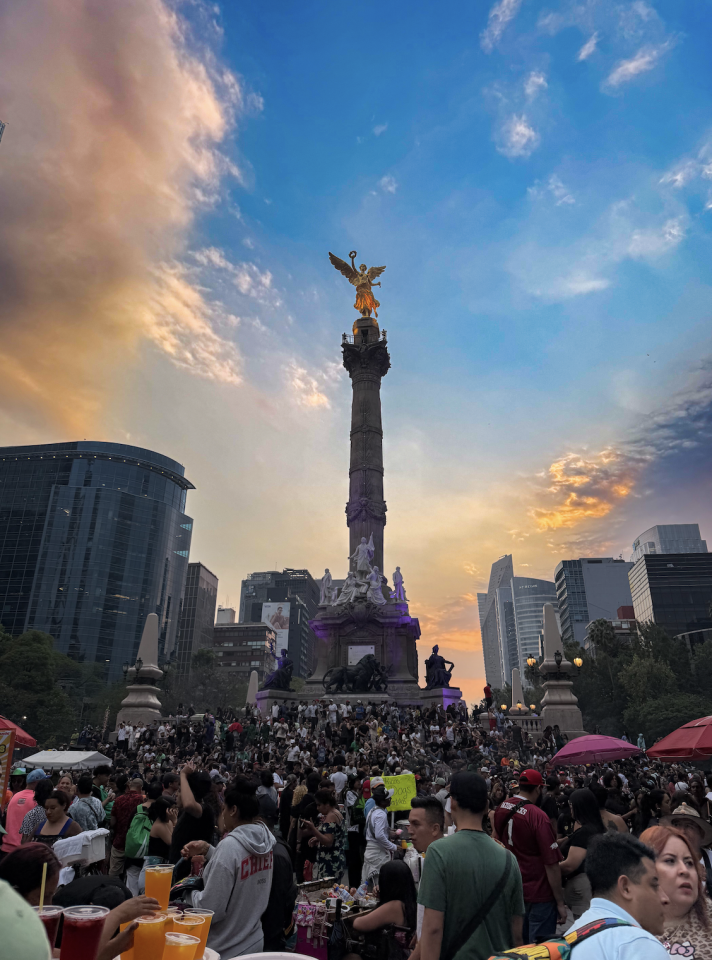
On May 2nd, Paseo de la Reforma stopped being the avenue of political agreements and became something far more uncomfortable for those in power: a question that can no longer be ignored.
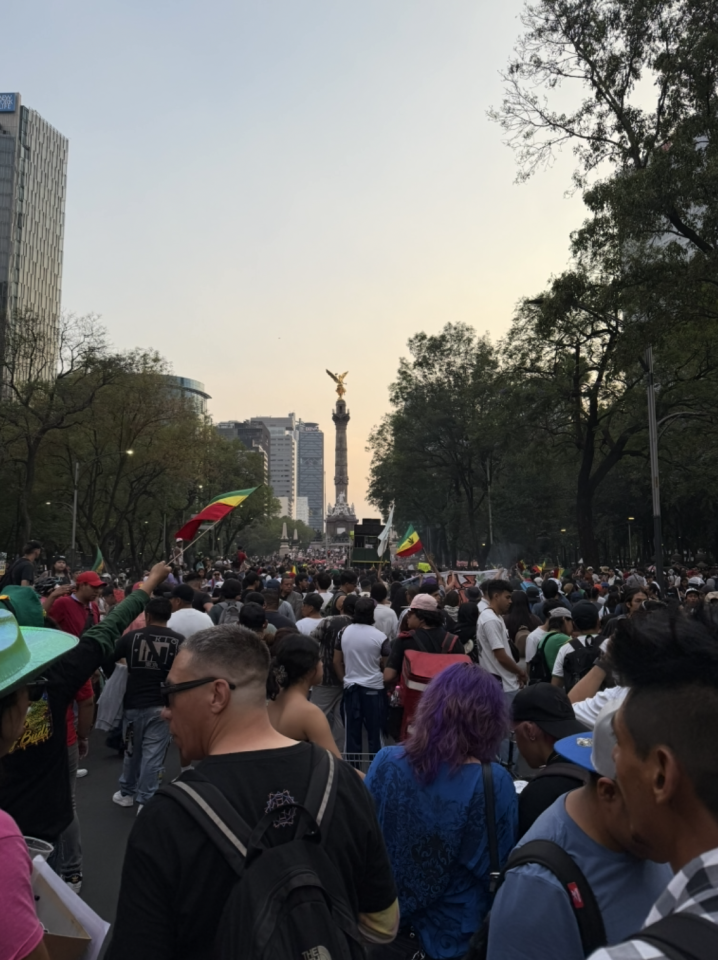
15,000 people marched from the Palacio de Bellas Artes to the Angel of Independence, while Guadalajara, Monterrey, Mérida, Tijuana, Pachuca and Toluca joined from their own streets — making this the first time in recent memory that the movement spilled beyond the capital. At the same time, another column was moving through Medellín. In Chile, where authorities denied the permit to march on public streets, the cannabis community found its own way to show up regardless. Three countries. One day. One demand.
What happened that day was not just a protest. It was proof that Latin America’s cannabis movement has stopped asking for permission to speak in a single voice.
What’s happening with cannabis in Mexico? Where is the law?
To understand why 15,000 people march, you first need to understand what hasn’t happened.
The ruling Congress keeps ignoring: in 2021, Mexico’s Supreme Court declared the prohibition of recreational cannabis use unconstitutional — a landmark ruling that legally obligated Congress to legislate. Four years later, Congress still hasn’t.
In the meantime, Mexico has accumulated over 12,000 individual authorizations for personal cultivation and consumption issued through court injunctions, a grey market of storefronts operating without a regulatory framework, and users who grow and consume knowing their fate depends on whichever police officer finds them and whatever mood they’re in. The Instituto RIA puts it plainly: the country lives a daily corruption, where arrests are discriminatory and fall disproportionately on racialized people and youth. The law never came. The void did. And on May 2nd, 15,000 people filled it.
Who marched, and what did they demand?
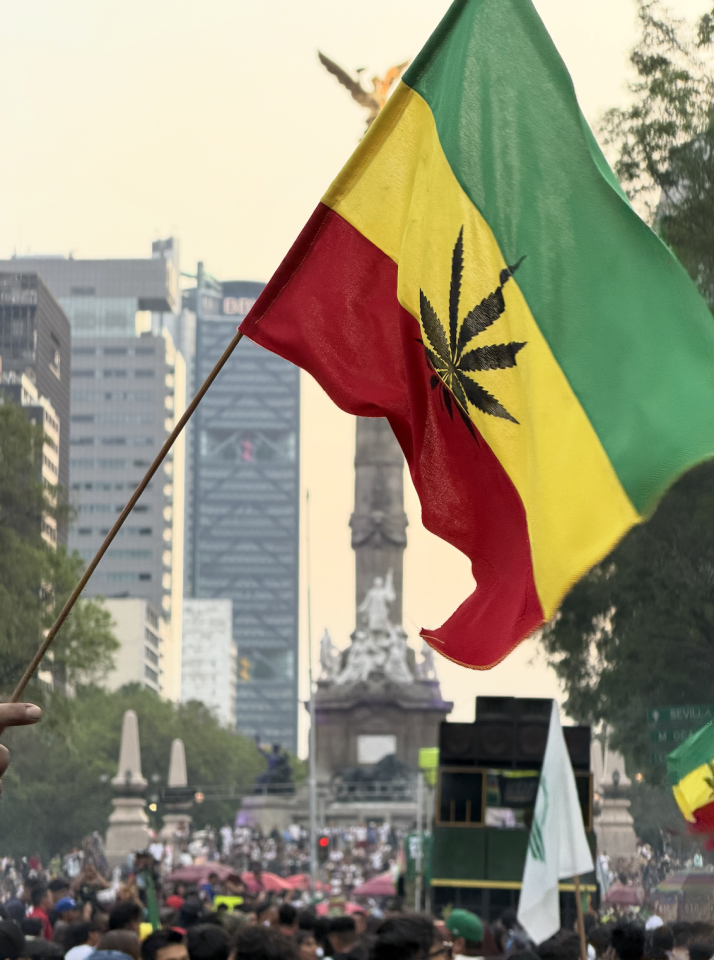
Walking through that crowd, it was impossible to reduce it to a single profile. Activists who have spent years in courtrooms, business owners operating in legal limbo, patients who rely on cannabis as a documented medical alternative for chronic pain, epilepsy and anxiety, and entire families who have been navigating this legal uncertainty with no guidance — all of them were there. National and international media covered the march from early morning, documenting a demonstration that remained peaceful from start to finish.
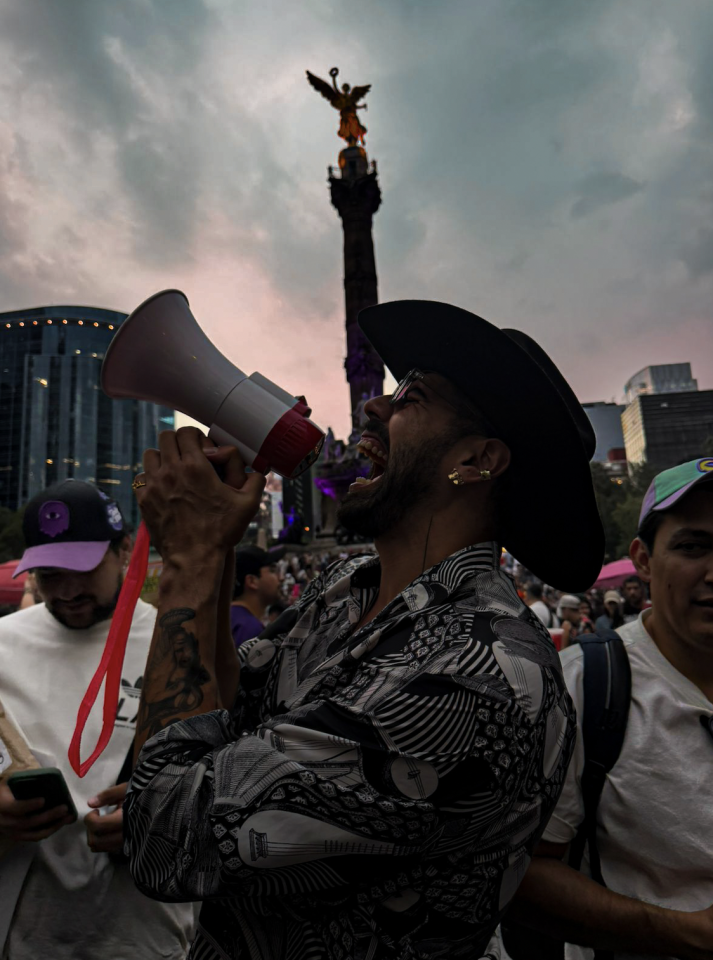
The petition delivered to the Senate days earlier — on April 20th, the iconic date on the cannabis calendar — was signed by 420 civil society members. Among its leading voices: Zara Snapp, director of Instituto RIA and one of Mexico’s most recognized architects of cannabis policy reform.
Snapp demanded that regulation be treated as a priority, arguing that reactivating this agenda is “not just about addressing a pending legislative debt, but about taking responsibility for a social reality that already exists.”
The demands were three, and they are the same as always precisely because Congress has always ignored them: legislation that generates formal jobs outside the criminal market, full recognition of users’ human rights, and real access to cannabis as a therapeutic alternative.
Why did Chile and Colombia march too?
Because we understood something that isolated movements always learn too late: alone, we are one day’s news. Together, we are a precedent.
The May 2nd march was the result of months of coordination across three fronts — Simón Espinosa and the Envola team in Chile, Martín Santos leading La Mata No Mata in Colombia, and in Mexico the combined effort of Instituto RIA, Educannabis and dozens of civil society organizations. The goal was to align message and ideology, to demonstrate that the demand for fair cannabis regulation is not a Mexican peculiarity or a consumer’s whim — it is a position held by Latin American people.
What May 2nd produced will stand as a turning point in the history of cannabis activism in the region. Not because it marks the end of the road, but because it proves that regional coordination works — and that what comes next no longer depends on whether they choose to listen, but on how consistently and loudly we make it impossible not to.
What happened in the streets
Reforma filled up with floats, live music and a crowd that defies every stereotype prohibition has spent decades building. There were elaborate costumes and precise slogans, humor and exhaustion, creativity and hard data printed on signs. Walking through it made one thing clear: this movement stopped being only about cannabis users a long time ago. It belongs to anyone who understands that without a law, there is arbitrary criminalization, jobs lost to informality, and patients buying their medicine in fear.
Not everything was celebration. At various points along the route, passersby approached the march shouting, visibly outraged. The marchers’ response was the same every time — smiles, waves, and keep walking. It was perhaps the most eloquent image of the day: a protest that didn’t need to answer with anger because the strength of its argument was already doing that. The afternoon ended without a single incident.
Into that atmosphere stepped one of the march’s most memorable moments. El Zurdo, from Positronics — a Spanish seed company with global reach — gave away over 300 seeds to the Mexican cannabis community on the spot. Not as a commercial gesture, but as a message: somewhere on this same continent, with people not so different from us, this fight has already been won.
The data backs it up. Canada legalized in 2018 and in the first three years, cannabis-related criminal incidents among adults dropped between 70% and 80%, preventing over 101,000 police-reported crimes, according to Callaghan et al. in Drug and Alcohol Dependence (2023). Germany followed in 2024. Uruguay was first in the world, in 2013. Mexico has the court ruling. It has the social demand. It has the international evidence. What it doesn’t have yet is the political will.
What comes next?
That is the question the movement leaves for Congress to answer.
Marches don’t end when people go home — they end when the agenda that drove them stops being urgent because it was addressed. This agenda has spent four years being the most urgent and the most ignored. On May 2nd, 15,000 people in Mexico City, alongside those who marched in Guadalajara, Monterrey, Mérida, Tijuana, Pachuca and Toluca, and those in Medellín and Chile who found their own way to show up, reminded the legislatures of three countries that the clock doesn’t stop just because they choose not to look at it.
Until the green victory.
Luis Fernando Campos is the founder of Educannabis, a cannabis harm reduction and education platform with over two million followers across Latin America. Follow him at @educannab_ / @educannab