





Cannabutter keeps its strength when THC stays bound to fat and isn’t exposed to too much heat for too long. Most potency loss happens when that balance breaks — during cooking, during storage, or when heat stacks on heat across multiple steps.
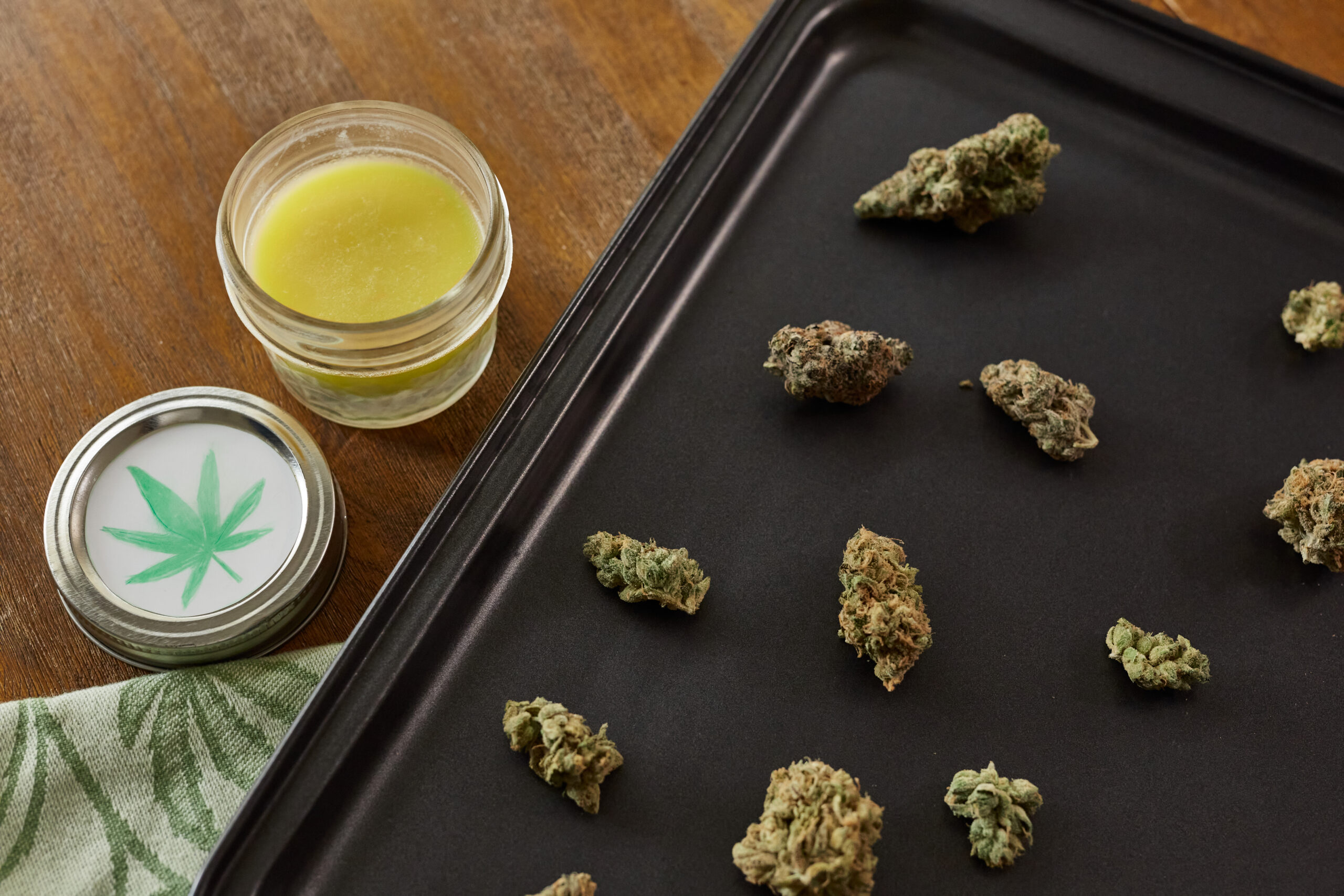
Photo by: Gina Coleman/Weedmaps
Image lightbox
Cannabutter is a delivery system. THC dissolves into fat, and that fat carries it through cooking, storage, and digestion. Damage the fat system, and you lose THC. That’s the whole equation.
Why THC binds to fat during infusion
THC doesn’t mix with water — it locks into fat. During infusion, heat pulls cannabinoids out of plant material and dissolves them into butter or oil, where the fat holds onto them.
That binding depends on staying within a controlled heat range, giving the extraction enough time to complete, and using enough fat to hold everything in suspension. Under-infuse on time, and you don’t extract fully. Push the heat too hard, and you start breaking down what you extracted before you ever cook with it.
Heat has two separate roles: activation vs degradation
This is where most potency loss happens, and why.
To convert THCA into THC, you need heat — specifically, sustained exposure in the 220–245°F range during decarboxylation.
No conversion, no effect. But once THC is active, heat becomes the enemy. Push past 392°F (200°C) and THC begins breaking down into CBN, a less psychoactive compound.
Same tool, opposite outcomes depending on where you are in the process.
Time and temperature control how THC behaves
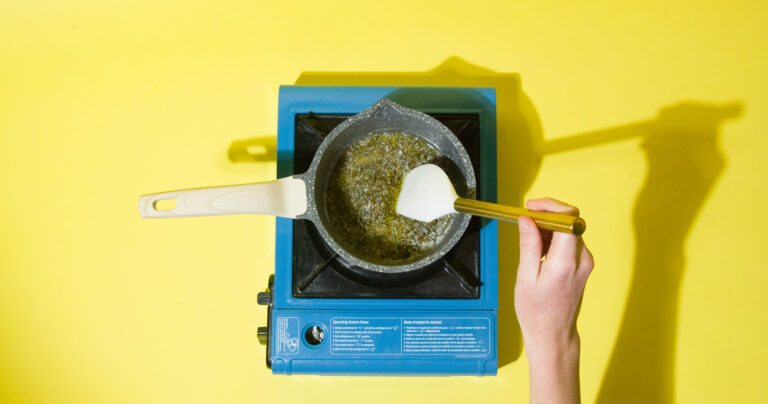
Image lightbox
It’s not just how hot — it’s how long. Low heat sustained over time stays stable. A fast spike into high heat starts losing THC quickly.
During infusion, there’s a window where extraction peaks. After that, you’re not gaining potency — you’re cooking it down. More time past that threshold doesn’t mean stronger. It means weaker.
The three stages where potency is affected
Potency is determined in sequence:
- Decarboxylation sets how much active THC you actually have to work with
- Infusion determines how much of that THC gets captured in fat
- Cooking determines how much survives into the final dish
Lose a meaningful percentage at each stage and the final result hits far lighter than the starting material suggests. Every step compounds.
How cannabutter behaves when added to food
Once you cook with it, cannabutter doesn’t stay put. It melts, spreads, and redistributes into flour, sugar, and water — and THC moves with the fat as it goes.
Some areas of the dish end up with more. Others get less. And everything is now exposed to whatever heat the recipe applies. You’re reprocessing the entire system.
Cooking method determines THC exposure

Image lightbox
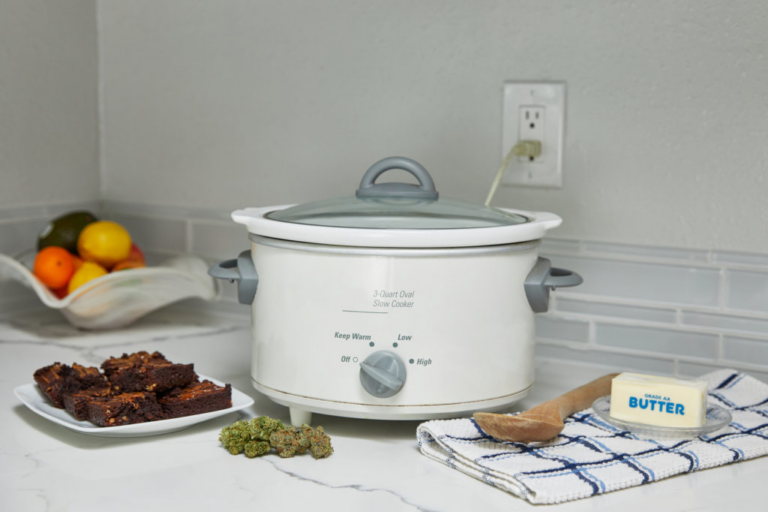
The difference comes down to how much heat reaches the fat, and how fast.
Direct heat — frying, sautéing, pan cooking — pushes temperatures up fast and keeps them concentrated on the fat. Degradation accelerates once you cross into the 392°F+ range, and stovetop cooking gets there quickly. Frying with cannabutter almost always underdelivers. The THC breaks down before it reaches the plate.
Baking changes the dynamic. Fat gets mixed into batter or dough, so heat has to move through the entire structure before it reaches the THC. Even at higher oven temps, internal food temperature stays well below surface heat. That buffer gives THC a better chance of surviving the cook.
The most controlled approach: add cannabutter after cooking, or stir it into warm food off heat. Minimal additional heat means minimal additional breakdown. The THC that survived infusion stays intact.
How these mechanisms affect final potency and consistency
Now it all stacks.
- Activation determines how much THC exists
- Infusion determines how much gets captured
- Cooking determines how much survives
Shift any one of those, and the result changes.
- Weaker effects when cannabutter gets overheated
- Inconsistent strength when recipes use uneven heat
- Stronger, more reliable results with low-heat methods
Using cannabutter in ways that preserve potency

Image lightbox
Now that the system is clear, the moves are obvious.
Stick to:
- Low-temperature cooking
- Baking within moderate heat ranges
- Adding cannabutter after cooking when possible
Avoid:
- Frying
- Blasting it with direct heat
- Reheating it over and over
The rule is simple: Don’t keep cooking the THC once it’s already been cooked.
Keeping potency consistent across servings
Even well-made cannabutter can deliver uneven results if fat distribution is inconsistent. THC moves with the fat — if the fat spreads unevenly through a batter or mixture, so does the dose. Thorough mixing, even incorporation, and consistent portioning are what separate a reliable batch from one where every serving hits differently.
Choosing recipes that actually preserve strength

Image lightbox

Some recipes work with the system. Others fight it.
Better options:
- Baked goods with controlled temps
- Sauces or spreads added at the end
- Low-heat dishes
Riskier options:
- Fried foods
- High-heat stovetop cooking
- Anything that keeps the butter on direct heat
The recipe controls how much THC survives.
The bottom line

Cannabutter potency comes down to a simple chain:
- THC binds to fat
- Heat activates it
- More heat slowly breaks it down
- Time determines how much you lose
Every step, from infusion to final dish, either protects that system or chips away at it. Explore infused products at nearby dispensaries for pickup or delivery.
The post How do you use cannabutter without losing potency? appeared first on Weedmaps.