





Cannabis has long been judged at the point of cultivation. Genetics, lighting, nutrients, and environmental controls dominate the conversation. Yet the final character of the plant, its flavor, stability, and commercial value, is determined after it leaves the grow room.

David Sandelman, CTO and co-founder of Cannatrol, has spent his career working in industries where that reality is taken for granted. Wine, cheese, and dry-aged meats are defined by post-harvest discipline. Cannabis, he argues, is still catching up.
“A winery is basically all about post-harvest,” Sandelman said. “That industry spends 90 plus capital on building a winery post-harvest. And then we get into cannabis, and it’s an afterthought in the closet very often.”
That imbalance is beginning to shift as legal markets mature. The consumer is becoming more discerning. Operators are facing tighter margins and the science behind drying, curing, and storage is moving from intuition to repeatable systems.
Food Science to Cannabis
Cannatrol’s origin story sits outside the traditional cannabis arc. Sandelman and his team began as engineers working in food science.
“We originally developed a technology for the cheese industry, which then moved into charcuterie and dry aged meats,” he said. “It was that aha moment. Gee, would this work for a cannabis flower?”
The underlying principles translated directly. Shelf stability, moisture migration, and water activity govern whether a product holds its quality or degrades. Cannabis flower presents the same variables, just in a different form factor.
The first prototype was a test, but the response was immediate.
“And a week or two later, they said, ‘This is some of the finest flower they ever produced,’” according to Sandelman.
That feedback triggered a deeper dive into the mechanics of post-harvest cannabis. Terpene retention, trichome integrity, and yield preservation became measurable outcomes, eschewing anecdotal claims based on taste tests only.
Controlling the Variables
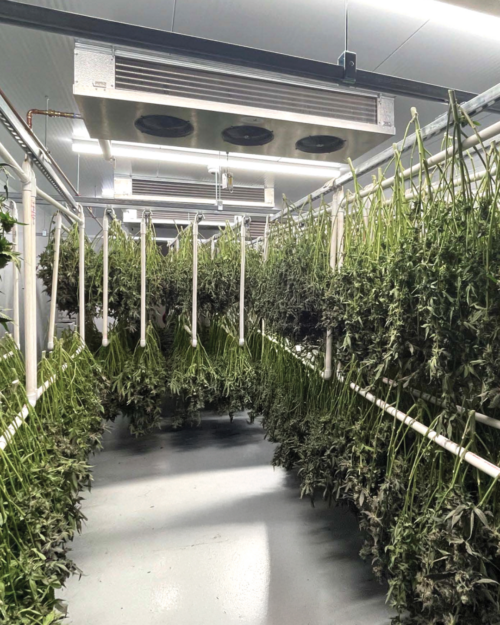
Traditional cannabis drying relies on environmental cycling. Air conditioners and dehumidifiers remove moisture in bursts, often overshooting the target. Operators intervene manually, moving product, burping containers, or adjusting conditions to avoid overdrying or mold.
Sandelman sees that process as fundamentally unstable.
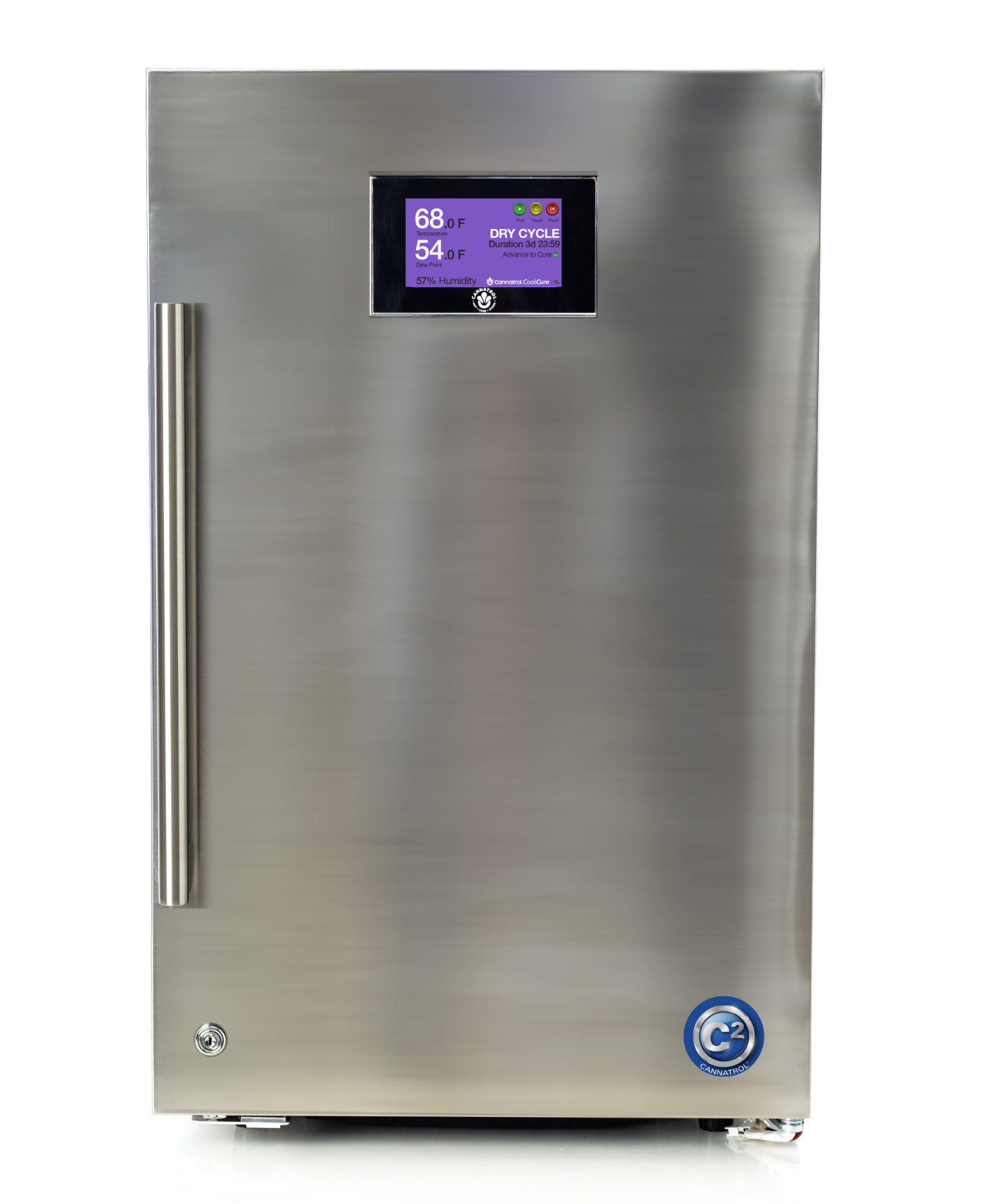
“Every time they cycle on, the vapor pressure drops, it removes moisture from the product, and that’s a continuous process,” he said. “If you leave the flower in a room with air conditioners and dehumidifiers, it’s going to dry it to dust.”
Cannatrol’s approach centers on maintaining constant vapor pressure. Instead of forcing moisture out, the system allows the flower to reach equilibrium.
“What we do is we maintain a constant vapor pressure in the space so that it’s constantly drying until it gets to equilibrium and then stops drying because it’s at equilibrium,” he explained.
The Economics of Moisture
Cannabis, like cheese and meat, is sold by weight. Every percentage point of moisture lost beyond the optimal range is product that cannot be sold.
“If you overdry the product, you degrade the quality… and also you’re losing revenue,” Sandelman said. “That’s money coming right off your top line.”
This is where engineering and economics merge. A controlled dry and cure process protects both the sensory profile and the bottom line. The industry is starting to recognize that connection, particularly as margins tighten and competition increases across mature markets.
Rethinking Standards
One of the more technical, and consequential, debates in cannabis regulation centers on how product stability is measured.
Most jurisdictions rely on percent moisture. Sandelman argues that metric is insufficient.
“Definitely the percent moisture should be done away with, and it should just be about water activity because it’s water activity that determines when mold and microbes can grow,” he said.
Water activity measures the availability of free water that can support microbial growth. It is a standard used across food science. In cannabis, it offers a more accurate picture of shelf stability.
“What we’re finding and learning is that the percent moisture will vary based on the cultivar,” he added.
That variability creates risk. A one-size-fits-all moisture target can lead to underdrying in one strain and overdrying in another. Water activity provides a consistent benchmark across cultivars. As legal markets mature, these kinds of technical adjustments are likely to shape both compliance frameworks and product quality.
The conversation around post-harvest inevitably loops back to the industry’s origins. Before legalization, quality control was inconsistent at best. Storage conditions were unknown and contaminants were common.
“Let’s go back to the old days when you were getting bricks out of Mexico with stems, seeds, twigs, and everything else,” Sandelman said. “Who knows what kind of chemicals they were using… you had no idea.”
Legalization has introduced testing, traceability, and baseline standards. The product is cleaner, safer, and more consistent.
Read more: Electric Haze: Why Real Sativas Refuse to Rush
Extending Quality to Retail
Packaging is only one step in post-harvest. Storage at the retail level is emerging as a critical control point.
“You would never manufacture ice cream and then ship it to a retailer who leaves them out on the shelf in a non-refrigerated space,” Sandelman said.
Cannabis has historically done just that. Product moves through distribution and sits in dispensary vaults under inconsistent conditions. By the time it reaches the consumer, the original quality has degraded. Controlled storage systems are starting to close that gap.
“When I buy the same flower from the same producer at other dispensaries, it isn’t as good as when I buy it at your dispensary,” Sandelman recalled from customer feedback.
That observation reframes the retail environment as part of the production chain. Quality is maintained, or lost, all the way to the point of sale.
A More Informed Consumer
For years, the cannabis market has been driven by a single number. THC percentage dominated packaging, marketing, and purchasing decisions. That is finally beginning to change.
“The consumer is going to get away from, ‘give me your highest THC,’” Sandelman said. “People are going to start understanding the terpene profile, flavor, taste, a lot more.”
This shift aligns with broader trends in food and beverage. Consumers are moving toward complexity, nuance, and experience. Cannabis is following a similar trajectory. Post-harvest plays a central role in that evolution. Terpenes are volatile and flavor is fragile. Without controlled drying and storage, those attributes degrade quickly.
As consumers become more educated, the market will reward operators who can preserve those characteristics.
Scaling Across Markets
Cannatrol’s recent expansion into Europe, partnering with Dutch Garden Supplies highlights adaptability as another dimension of post-harvest technology. Germany’s social club model favors smaller-scale cultivation. Other markets may lean toward medical production under strict GMP standards. Each framework requires different infrastructure.
“Each country is going to be different how they roll out,” Sandelman said.
The common thread is consistency. Whether the system is serving a home grower or a pharmaceutical-grade facility, the expectation is the same. The product should perform predictably.
That expectation is pushing the industry toward standardized processes, even as regulations vary across jurisdictions.