






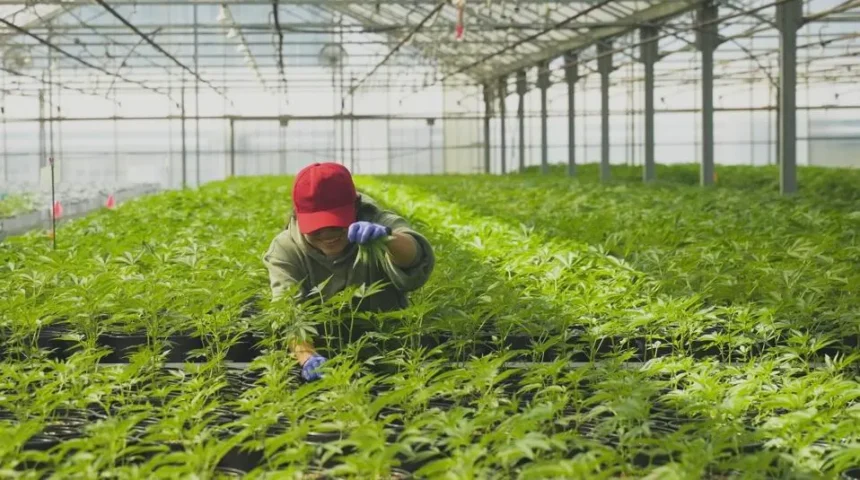
Triploid cannabis has been around for years. Outdoor growers are increasingly putting it to the test, and the results are complicated.
For outdoor growers, pollen is the enemy. One rogue male, one stressed hermaphrodite at the wrong moment, and an entire field seeds up. Premium sinsemilla becomes something you can barely move. The industry has tried feminized seeds, aggressive male elimination, tight protocols. The threat never fully disappears.
Triploid cannabis offers a different answer: a plant so genetically scrambled it can barely reproduce at all.
That’s the idea driving a quiet but accelerating movement in cannabis genetics. Companies like Humboldt Seed Company and Mavericks Genetics have spent years developing triploid seed lines, and by 2026 the category has spread from California into the EU, Morocco and Latin America. More seed companies are entering the space every season. The technology is no longer a breeder’s experiment. Growers are running it in the field, comparing notes and pushing back on the hype in equal measure.
What Three Chromosomes Actually Do
Most cannabis is diploid: two sets of chromosomes, one from each parent. Triploids have three. That odd number disrupts meiosis, the cell division process that produces gametes, making it extremely difficult for the plant to generate viable pollen or seeds, even under direct pollen pressure. Think of it as a genetic dead end, by design.
“No more worrying about rogue males ruining your harvest,” says Pablo Miguel Gomez, CEO of Mavericks Genetics. “It translates into denser, seedless flowers and better quality.”
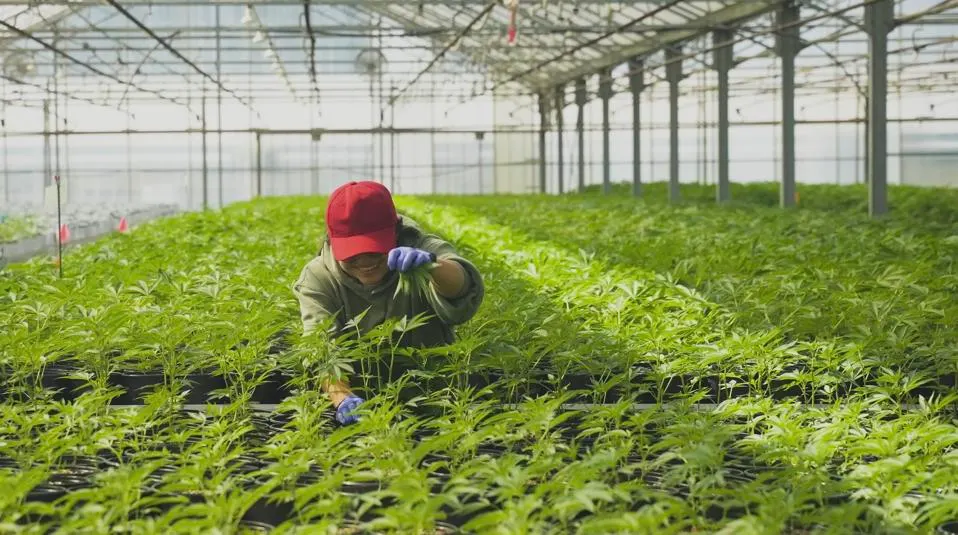
Beyond sterility, triploids show increased vigor, faster flowering and potentially heavier yields, though results vary by strain and environment. A peer-reviewed study in Plants (Philbrook et al., 2023) confirms that triploid cannabis can occur naturally and may offer real production benefits. Researchers at Utah State University found enhanced biomass and cannabinoid concentration in field trials, though they caution that outcomes depend heavily on genotype and growing conditions (Crawford et al., 2021).
“Triploids flower in six to eight weeks,” says Benjamin Lind, co-founder and chief science officer at Humboldt Seed Company. “We’ve had California Octane flower in as little as 37 days.”
Faster cycles mean real savings: less water, fewer inputs, a shorter pest-management window. “Triploids are faster to market and more resistant to pests,” Lind adds. “That translates to fewer inputs and a smaller carbon footprint.”
For growers chasing potency and novelty, there’s more. “Those focused on higher THC will get what they’re looking for,” Lind continues, noting that some triploid strains express rare cannabinoids and terpenes not typically found in diploids. “The extra chromosome unlocks flavors we hadn’t seen before.”
Not everyone sees the upside applying equally across the board. Sergio Martínez, CEO of Blimburn Seeds, is direct about the limits. “The game changer is in large-scale outdoor cultivation, not home grows,” he says. “Most homegrown growers grow indoors and there are no male flowers anywhere. This is really about commercial farms that need predictability and uniformity.”
The Rogue Male Problem, Mostly Solved
Accidental pollination is one of the oldest problems in cannabis cultivation. A single rogue male can release enough pollen to seed an entire crop, turning high-THC flower into something diminished and hard to sell. For outdoor growers in states like Oregon and California, where multiple farms operate side by side with varying genetics and practices, the risk is seasonal and real.
Triploids offer a structural buffer. By producing flowers that are sterile, not just feminized, they could give outdoor growers reliable protection against stray pollen. Even hermaphroditic plants, which occasionally throw pollen sacs under stress, would have a harder time compromising a triploid crop.
The science supports the mechanism. A 2019 study by Canopy Growth and Carleton University successfully induced tetraploidy in a drug-type cannabis strain and observed roughly a 40% increase in trichome density on sugar leaves, along with a statistically significant 9% increase in CBD concentration in buds, though researchers found no significant difference in total dried flower yield or THC levels (Parsons et al., 2019).
That study focused on tetraploids, plants with four chromosome sets, but the principle carries over. When a diploid is crossed with a tetraploid, triploids often result. In agriculture, that’s exactly the outcome breeders want: the sterility and performance potential, without the instability of tetraploidy itself.
Sterile By Design. Mostly.
Here’s where growers should read carefully.
In theory, triploid plants are sterile because their odd chromosomal count makes viable gametes difficult to form. In practice, sterility isn’t absolute. The evidence has gotten more nuanced as more growers have run these genetics at scale.
A peer-reviewed study in Agronomy Journal (Reyes et al., 2023) confirmed that triploid cannabis substantially reduces seed production but is not fully immune to pollination. Field trials by Cornell University and Oregon CBD found that under heavy pollen pressure, triploids still generated some viable seed, just far fewer than diploids.
More recently, some triploid lines on the market have shown an above-average tendency toward hermaphroditic traits, a meaningful concern for growers betting on sterility as the main selling point. Not all lines behave the same way, and genetics matter enormously. But it’s a variable worth factoring in before committing a full outdoor run to triploid stock.
“The triploid era has just begun,” says Gomez. “It’s an ongoing revolution, but only a few growers have had the chance to try them so far. We’re confident that as they expand and improve, these genetics will pave the way toward even more advanced seeds.”
Lind puts the real-world value in grower terms. “Triploids could very well become the best choice for farmers in places like Morocco, which experience a huge amount of pollen drift,” he says.
For indoor cultivators, the math is different. Male plants are already eliminated by protocol, and pollen drift is a non-issue. But for sun-grown farms where that control is harder, even 80 to 90 percent sterility is a meaningful edge over nothing.
What You Gain, What You Give Up
The upside is real: faster cycles, fewer inputs, reduced pollination risk and, for some strains, genuinely novel terpene and cannabinoid profiles that don’t exist anywhere else in the catalog.
“Adding a pair of chromosomes to the classic OG caused it to morph from a knockout OG to candy gas,” Lind explains. “That translated to new flavors we hadn’t tasted before, and a new favorite among both growers and consumers.”
Gomez frames it as a fundamental shift in how growers think about genetics. “These plants grow with more force, generate more biomass and yield significantly denser flowers, which improves total production,” he says. “It’s a more robust, stress-resistant structure overall.”
Not everyone is ready to rewrite the playbook.
“We already have concerns with feminized seeds,” says Martínez. “Triploids will add a new layer to that. We’re saving time and money, but we could face future issues with biodiversity. Male plants are already hard to find. It could get worse.”
That tension between efficiency and genetic diversity isn’t new in cannabis. And it’s not a North American issue alone.
“In South America, we’re not just catching up. We’re adapting cannabis genetics to meet the realities of the Global South,” says Nicolás José Rodriguez, M.A. in Cannabis Public Policy from The New School and High Times contributor. “At La Huerta del Diablo in Argentina, breeders are developing triploid and polyploid strains that are resilient, high-yielding and discreet, ideal for small-scale and outdoor growers facing legal gray zones and extreme climates. These innovations aren’t just about potency or profit; they’re about sovereignty, accessibility and building a cannabis future that works for our conditions, not just North America’s.”
Gomez adds that Mavericks is focused on keeping access open. “We’re not patenting these genetics or locking them down,” he says. “Our goal is to empower growers everywhere, not restrict them.” The company’s triploids are produced by crossing diploids with colchicine-derived tetraploids, a classic agricultural technique with no genetic modification involved. “We’re selecting for traits like biomass, resilience and stability, especially for regions where growing conditions can be extreme.”
Triploid genetics are spreading. The technology is documented. The production benefits are measurable. The long-term effects on breeding diversity, market access and cultivation ecosystems are still playing out.
For the outdoor grower who’s ever lost a season to a rogue male, a plant that won’t seed isn’t a gimmick. It’s the whole point.
An earlier version of this article appeared in Forbes on June 2, 2025.