





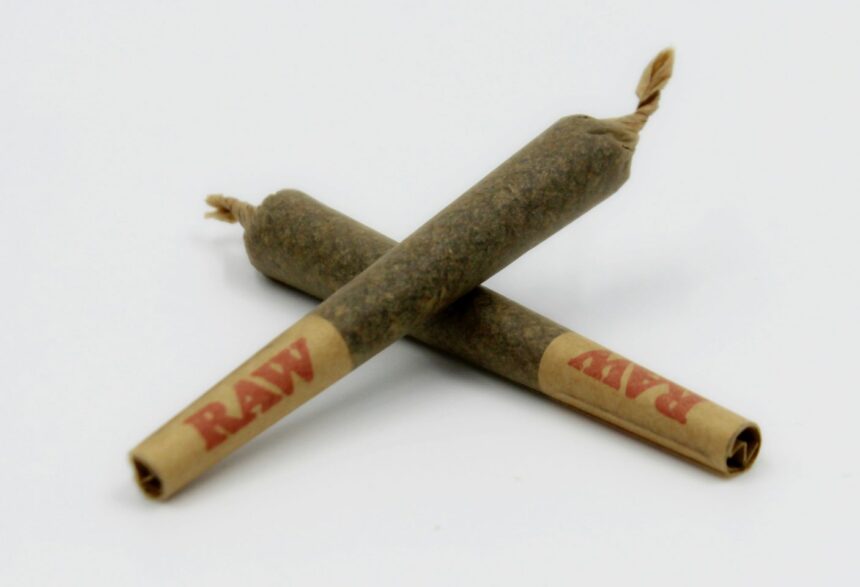
A High Times reader asked why his cones burn evenly and his straight joints canoe. Josh Kesselman has a theory involving the Venturi effect, a whiteboard and a lot of arrows. The real answer involves airflow, packing density and the fact that cones forgive what cylinders punish.
“Please tell me why cones usually burn pretty straight and good but standard cylindrical doobies often burn uneven?”
That came in over email this week from a reader, Joe Pipe. It’s a good question and a more interesting one than it looks. The short answer is that a cone’s shape does real work that a straight joint asks the roller to do manually. The long answer involves Josh Kesselman, a whiteboard full of arrows and the limits of what we can honestly call science.
Josh has a theory
The founder of RAW and Publisher of High Times recently posted a video walking through why cones outperform straight rolls. He drew two joints on a whiteboard. One tapered. One straight. Same weight on both.
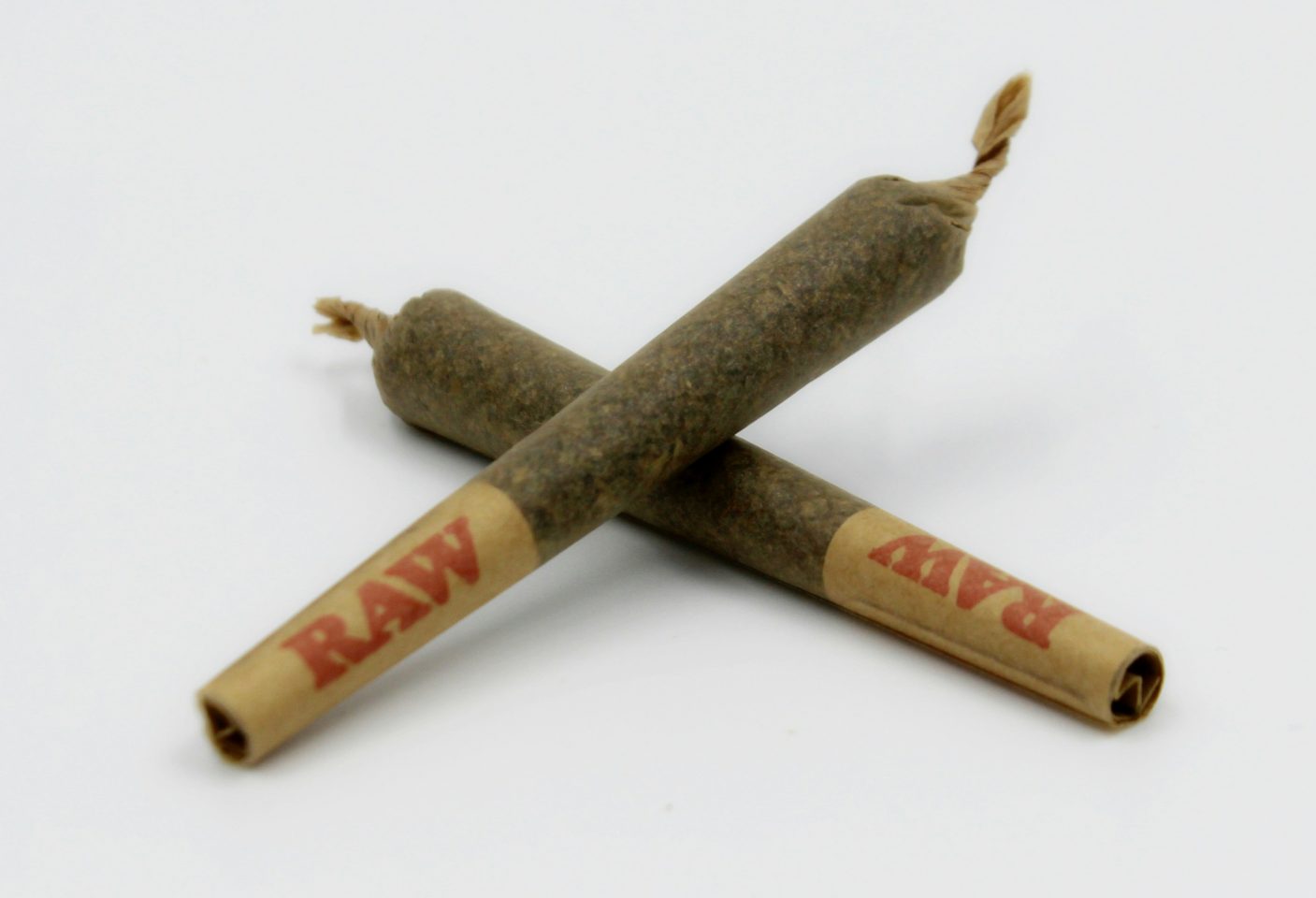
His pitch: a straight tube lets air pass through too quickly, which dilutes the draw. A cone narrows the flow, slows it down and concentrates what reaches the smoker. He invoked the Venturi effect, drew arrows showing rotational airflow, and landed on a number: “Cones = 18% more yield.”
An asterisk on the slide reads, in his own words: “Guestimated according to ChatGPT and my own personal experience.”
Josh built the disclaimer in. We’re going to respect it.
“Cones = 18% more yield. *Guestimated according to ChatGPT and my own personal experience.”
Josh Kesselman, founder of RAW
What’s actually happening in there
A joint is a small piece of combustion engineering. Air gets pulled through a column of shredded plant material wrapped in permeable paper, while one end of that column is on fire. Every variable in that sentence matters.
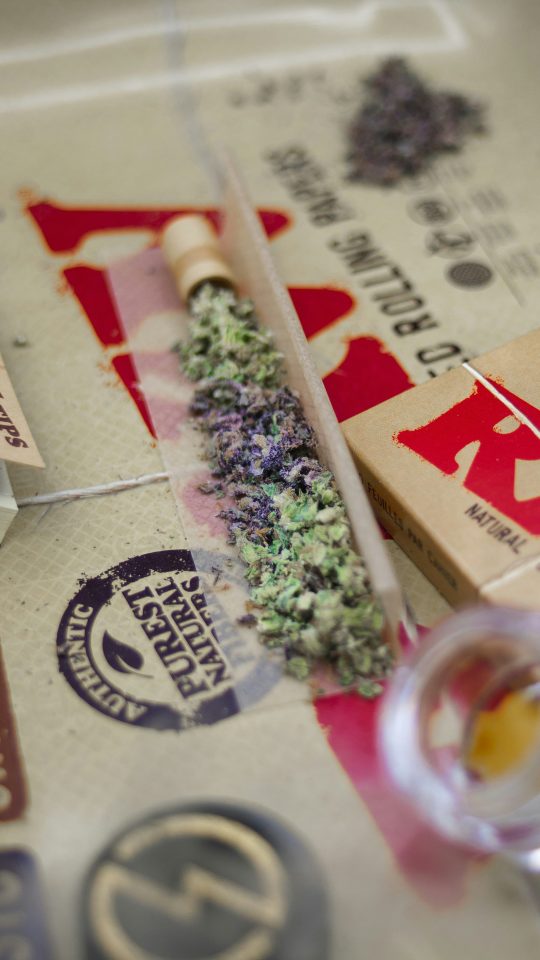
Decades of cigarette engineering research have established the principles. Paper porosity affects how much air enters from the sides. Rod diameter affects ventilation rate and combustion efficiency. Packing density affects pressure drop and draw resistance. Airflow concentrates near the burning char-line, not just at the lit tip. Tiny differences in any of these variables can change how a joint burns.
Joe Pipe’s canoeing problem lives inside that list. When a straight joint burns down one side faster than the other, it’s because the cherry found an easier path. Loose packing on one side. A wet spot on the other. A grind that’s too coarse in one section. A paper seam that’s a little tight. The fire follows the airflow, and the airflow follows the path of least resistance.
Why cones forgive what cylinders punish
A quick note before the mechanics. “Cone” here mostly means a pre-rolled cone, the factory-made kind you find behind the counter. A skilled hand-roller can shape a cone manually and get some of the same benefits, but most of what’s coming next leans on the consistency a pre-rolled cone delivers out of the pack.
Three mechanical things help a cone burn straighter, and only one of them is exotic.
The taper concentrates the burn. A cone’s cherry moves from a wide end toward a narrower body. The geometry pulls the ember toward the center as it travels. A straight joint has the same diameter the whole way down, so any unevenness in grind, moisture or packing keeps pulling the burn off to one side.
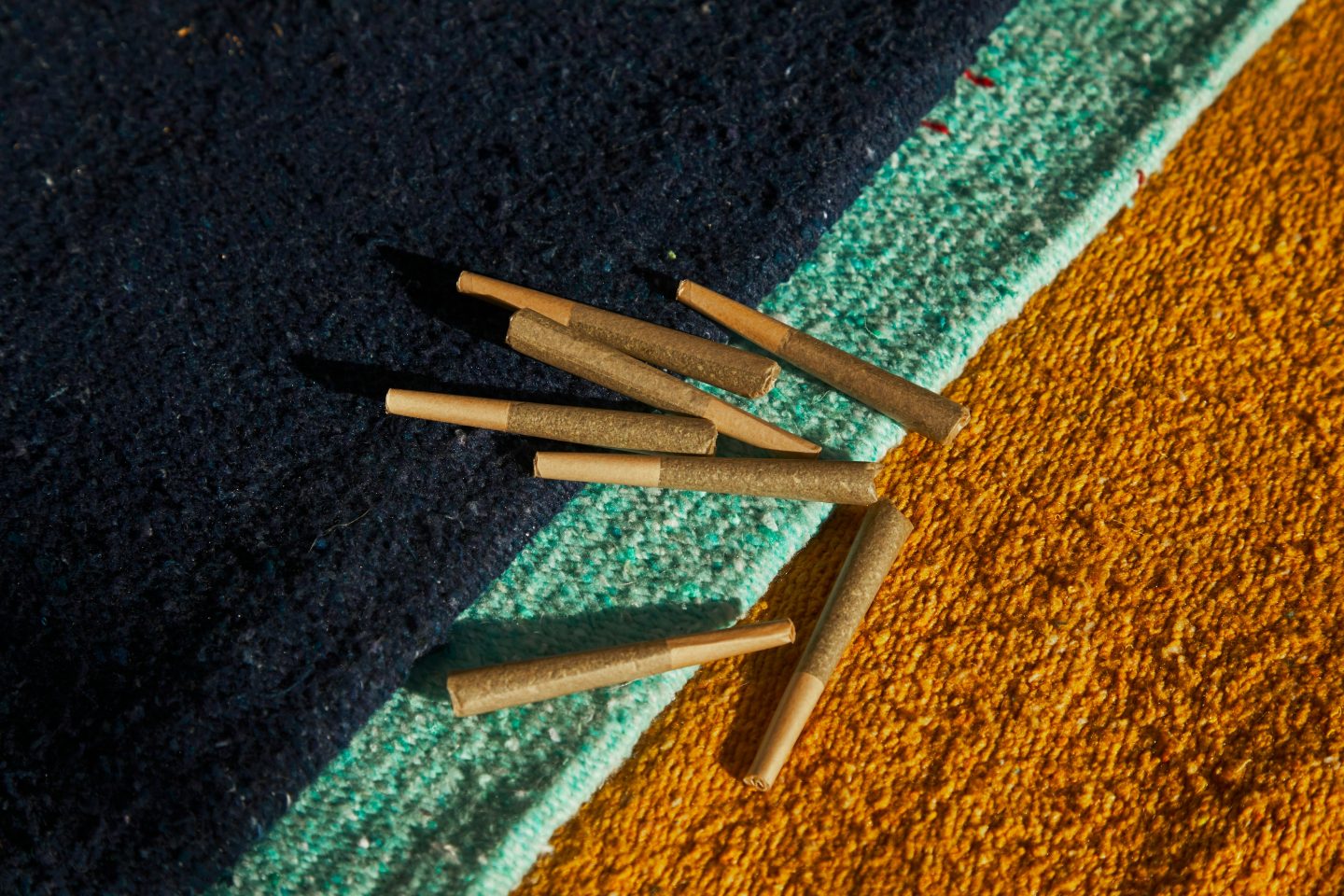
The packing gradient is built in. Most cones end up denser near the filter and looser toward the open end. That gradient gives the burn a forgiving path. A straight joint demands uniform packing from end to end, which is harder than it sounds. Pack the front too tight and the draw fights you. Pack the back too loose and the cherry runs.
Pre-rolled cones hide mistakes. A factory-made cone is identical to every other cone in the pack. Paper tension is consistent. The seam is sealed. The shape is pre-formed. The smoker only has to fill it. A hand-rolled cylinder asks the roller to control every variable in real time, with tobacco-style precision most people don’t have.
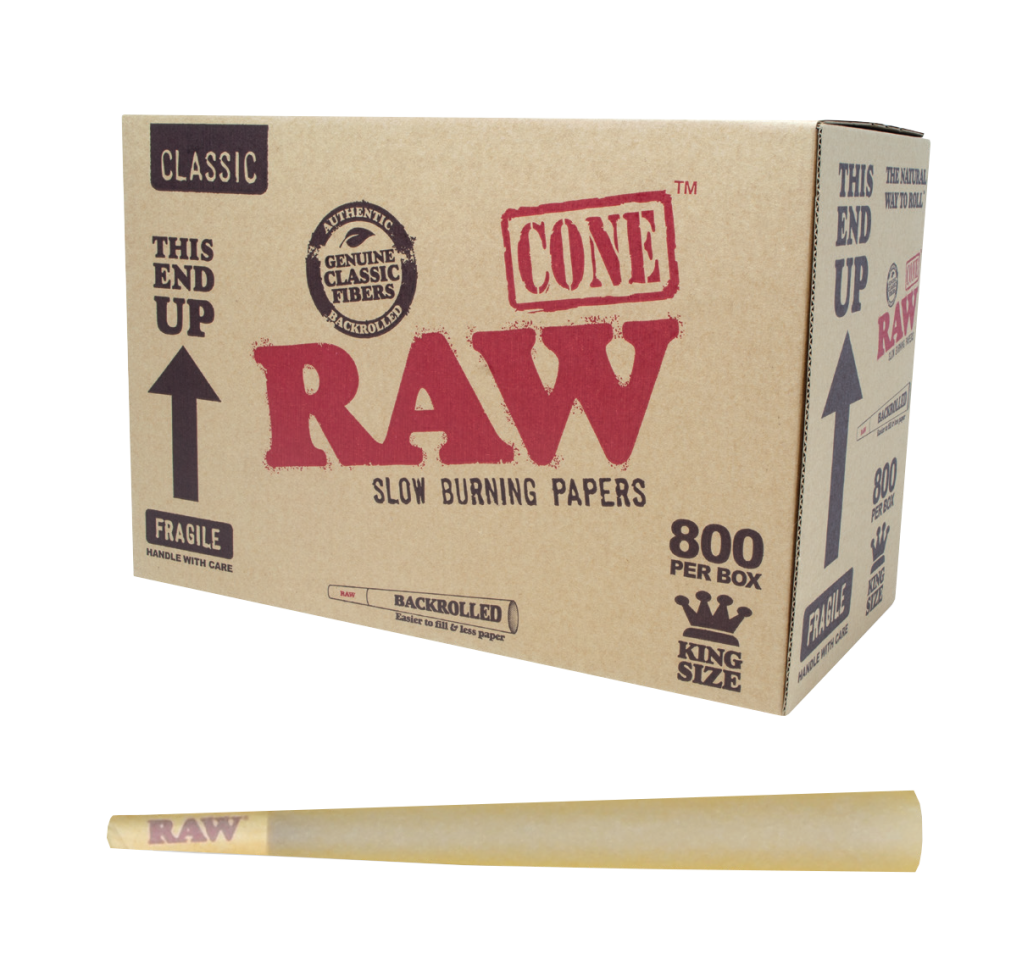
There’s one more variable riding along with the format. Most pre-rolled cones ship with a built-in crutch or filter tip. Many hand-rolled cylinders don’t. The filter controls airflow at the mouth end, keeps the cherry from running into your lip and catches loose particles. Some of what people experience as “cones burn better” is actually “joints with proper filters burn better.”
That last point is doing a lot of the work in Joe Pipe’s situation. Cones burn better in part because cones are easier.
The Venturi effect, fairly
The Venturi effect is real physics. When a fluid moves through a narrowing passage, velocity increases and static pressure drops. Plumbers use it. Carburetors use it. Atomizers use it.
A joint is not a clean pipe. It’s a porous, burning, deforming column of plant matter wrapped in permeable paper. Some air enters through the lit end. Some enters through the paper itself. The cross-section keeps shrinking as the cherry consumes material. Calling the whole system a Venturi tube is a useful metaphor, not a proof.
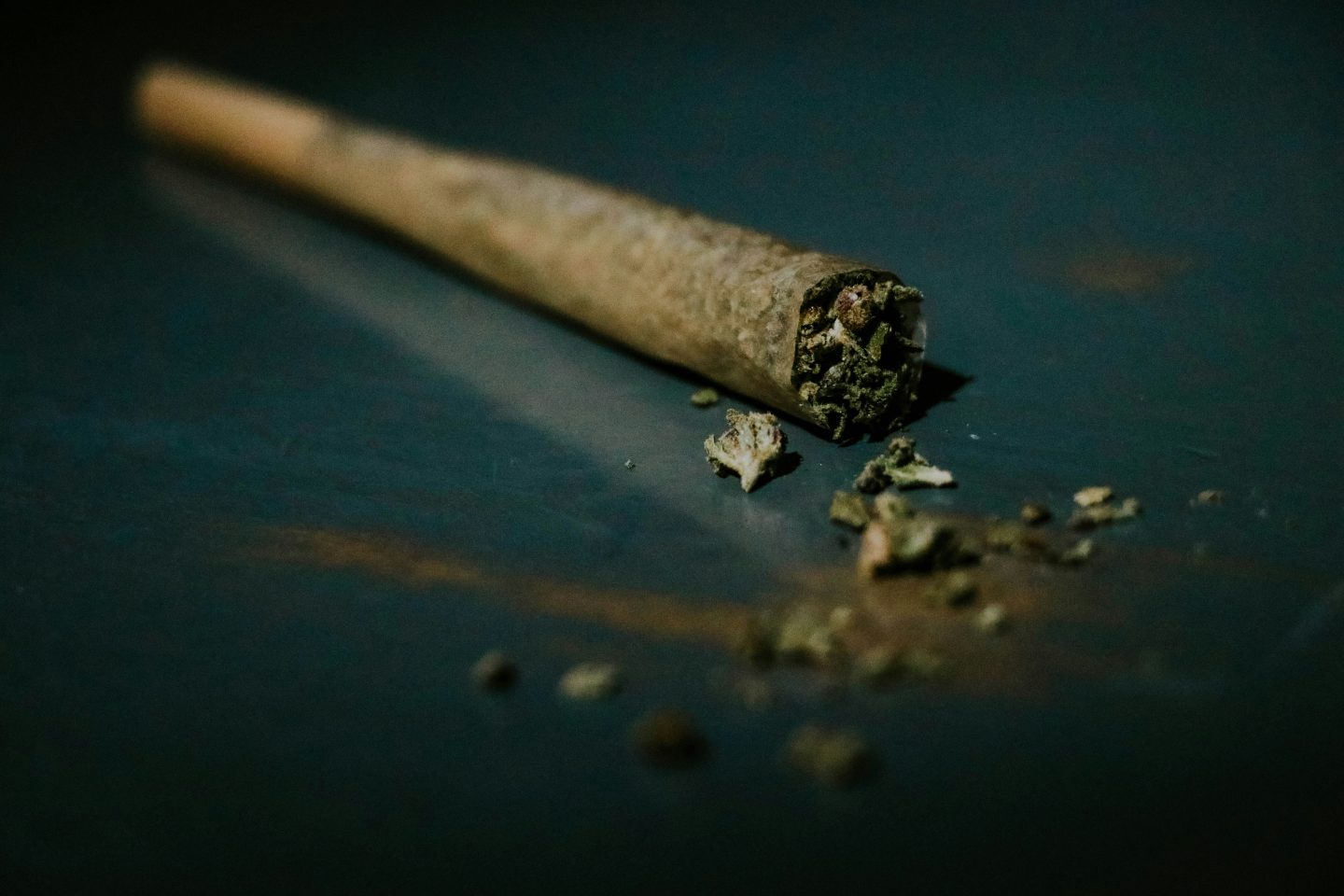
What’s true: a cone’s narrowing geometry does change airflow velocity and pressure as the smoke travels toward the filter. What’s not established: whether that change produces measurably more cannabinoids reaching the smoker per gram of flower burned. To prove the 18 percent number, somebody would need a controlled test with the same material, same grind, same moisture, same weight, same paper, same pack density and the same puff protocol on both formats, with cannabinoid delivery, sidestream loss and remaining waste all measured.
Nobody has published that test. The number is an estimate with an asterisk, and Josh said so.
What we know
Airflow affects the burn front, and the burn follows the path of least resistance
Packing density affects pressure drop and draw resistance
Diameter and paper ventilation affect combustion behavior
Uneven packing creates channels, and channels cause canoeing
What we don’t know
Whether cones universally deliver more cannabinoids than cylinders
Whether any yield difference can be measured under controlled conditions
Whether the Venturi effect alone explains the difference
Whether the advantage comes from cone geometry or just easier packing
Joe Pipe, here’s the real answer
Your cones burn straight because their shape stabilizes the airflow, their factory build hides packing variance and the built-in filter does some of the work too. Your cylinders canoe because they expose every flaw in your roll. The fix, if you want to stay with cylinders, is grind consistency, moisture control, even packing density, a paper tension that doesn’t pinch on one side and a proper crutch at the mouth end.
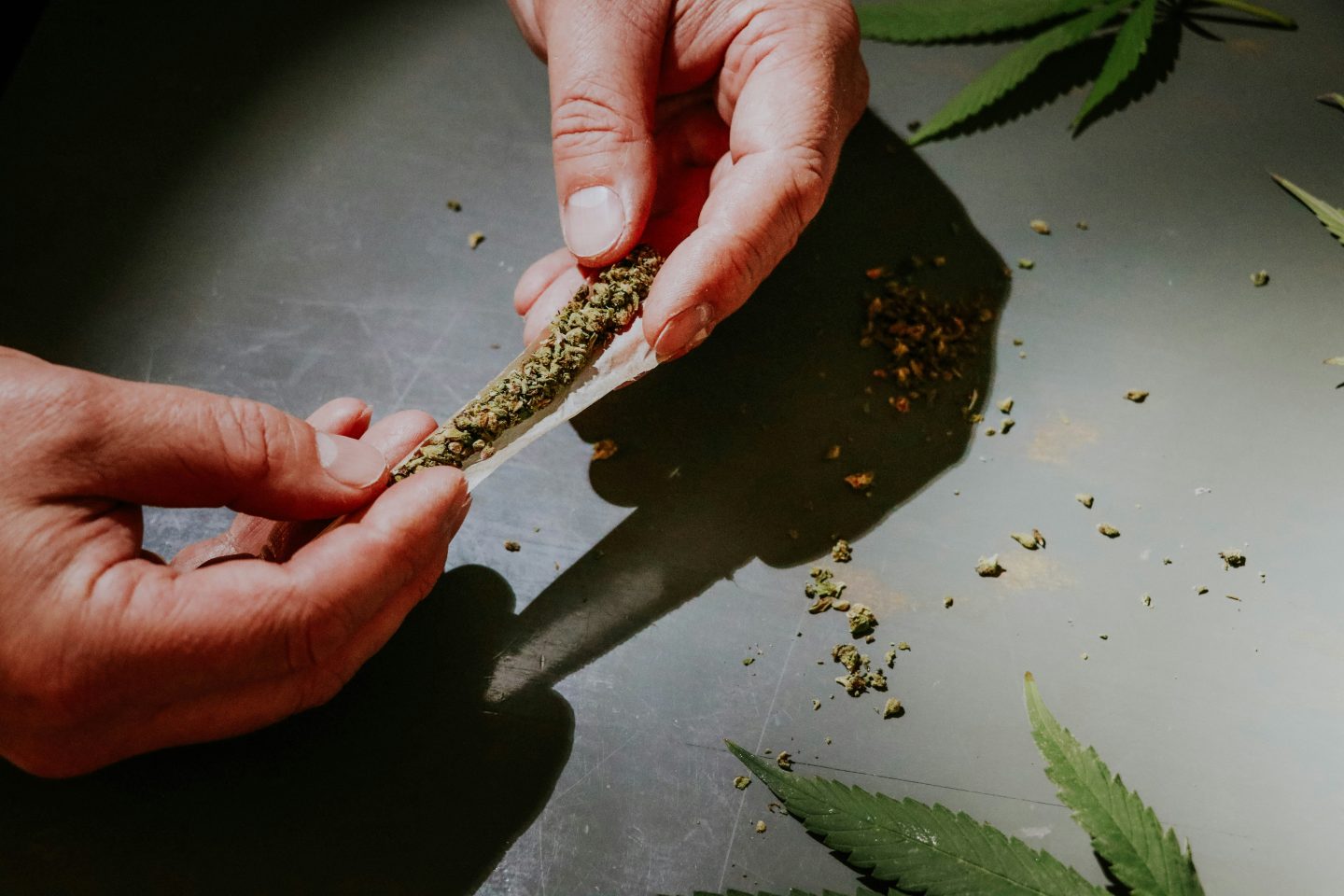
Or you can do what most of the cannabis market has been doing for a decade and reach for a cone.
Cones may burn better not because they violate physics, but because they’re kinder to bad rolling.
Josh is right about the shape
The taper does work. The narrowing geometry does change airflow. The packing gradient does stabilize the burn. Where the video gets ahead of the science is the specific number and the cleanness of the Venturi analogy. Where it nails the intuition is everything else.
Have a smoking science question you want us to chase down? Send it to 420@hightimes.com.
Josh is right that the shape does work. The science is just that some of the work cones do is covering for the roller.