



Every paper mill in the world still runs on the continuous-web design a Frenchman patented in 1799. His name was Louis-Nicolas Robert. You’ve never heard it. That’s about to change.
The Short Version
- A French accountant invented the machine that made modern paper possible.
- His employer sent the design to England behind his back.
- Two English brothers paid for the development and got their name on it.
- Everyone involved died broke. Including him.
The rolling paper in your hand exists because of a guy who died broke, running a small school in a village outside Paris. His name should be on every paper machine in the world. It isn’t. We’re going to talk about why.
Louis-Nicolas Robert was born in Paris in 1761. In 1799, working as an accountant at the Essonnes paper mill outside the city, he invented the first machine capable of producing paper in continuous rolls instead of single hand-pressed sheets. Read that again. Before Robert, every piece of paper in human history had been made one sheet at a time, by hand, dipped from a vat of pulp and hung to dry. Every book ever printed up to that point came off that workflow, one sheet at a time. After Robert, paper became infrastructure.
The machine he invented runs in every paper mill on earth. It has his patent. It does not have his name.
It’s called the Fourdrinier.
How the credit got sold
Robert filed his French patent in 1799 while working at a mill owned by Saint-Léger Didot, and the two men fell out almost immediately over who owned the invention. The fight was bitter and short, and Robert lost the partnership, his claim and most of his leverage in one stretch. Welcome to inventing things while broke.
Didot couldn’t develop the machine in France. The country was post-Revolution, industrial capital was scarce and the political situation was a mess. So he looked across the Channel. Didot had an English brother-in-law named John Gamble, then in Paris running prisoner-of-war exchanges for the British. He put Robert’s drawings in Gamble’s hand and sent him to London.
How Fast They Moved
1799 — France
Robert files French patent for the continuous paper-making machine.
March 1801 — London
John Gamble arrives from Paris carrying Robert’s drawings.
October 20, 1801 — London
Gamble granted British patent #2487. Robert’s name not on it.
1803 — Hertfordshire
First operational Fourdrinier-built machine runs at Frogmore Mill.
1806–1807 — London
Refined version patented in the Fourdriniers’ names. The eponym is born.
Seven months from Paris drawings to British patent. Two years from French invention to “English” machine.
Gamble landed in London in March 1801, and seven months later, on October 20, he was granted British patent number 2487 for “a machine for making paper in continuous lengths.” The diagrams attached to his English patent are essentially the same drawings Robert had filed in France two years earlier. Same machine, same drawings, different name on top.
Robert’s name does not appear on the British patent.
Enter the Fourdriniers
Gamble needed money to build the thing, and he found it in two London stationers, brothers Henry and Sealy Fourdrinier. They ran a wholesale paper business and saw exactly what continuous paper production would do to their bottom line, so they bought a one-third stake in Gamble’s patent and put up the cash to develop it.
The Fourdriniers brought in Bryan Donkin, a skilled mechanical engineer, who improved Robert’s design substantially. The first operational machine ran at Frogmore Mill in Hertfordshire in 1803, and a second, refined version was patented in the Fourdriniers’ names in 1806 and 1807.
Here’s where the credit story gets messy. Donkin’s improvements were real, and the version that scaled commercially worldwide was not Robert’s exact prototype. It was Robert’s design substantially refined by English engineering. The Fourdriniers and Donkin did real work, and credit is owed where it’s due.
France invented it. England industrialized it. England named it.
What the machine actually does
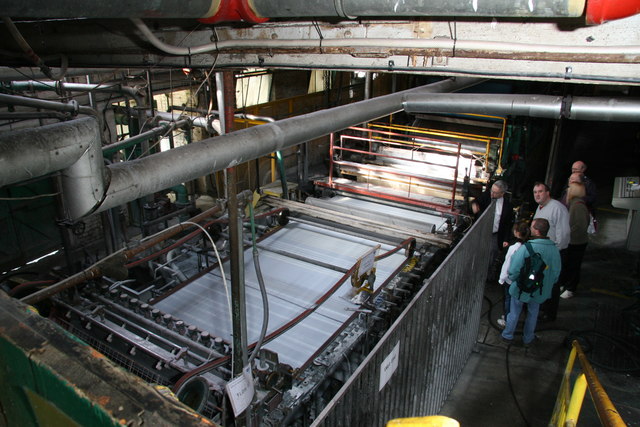
Quick precision check, because the language matters. The Fourdrinier doesn’t produce a finished rolling paper. It produces continuous webs of paper that mills then cut, treat and pack into the products you use. Pulp slurry goes in one end, and paper comes out the other, dried, smoothed and ready to be cut into whatever shape and size the downstream market wants.
What Comes Off That Machine
All of it. From the same basic machine. With his patent.
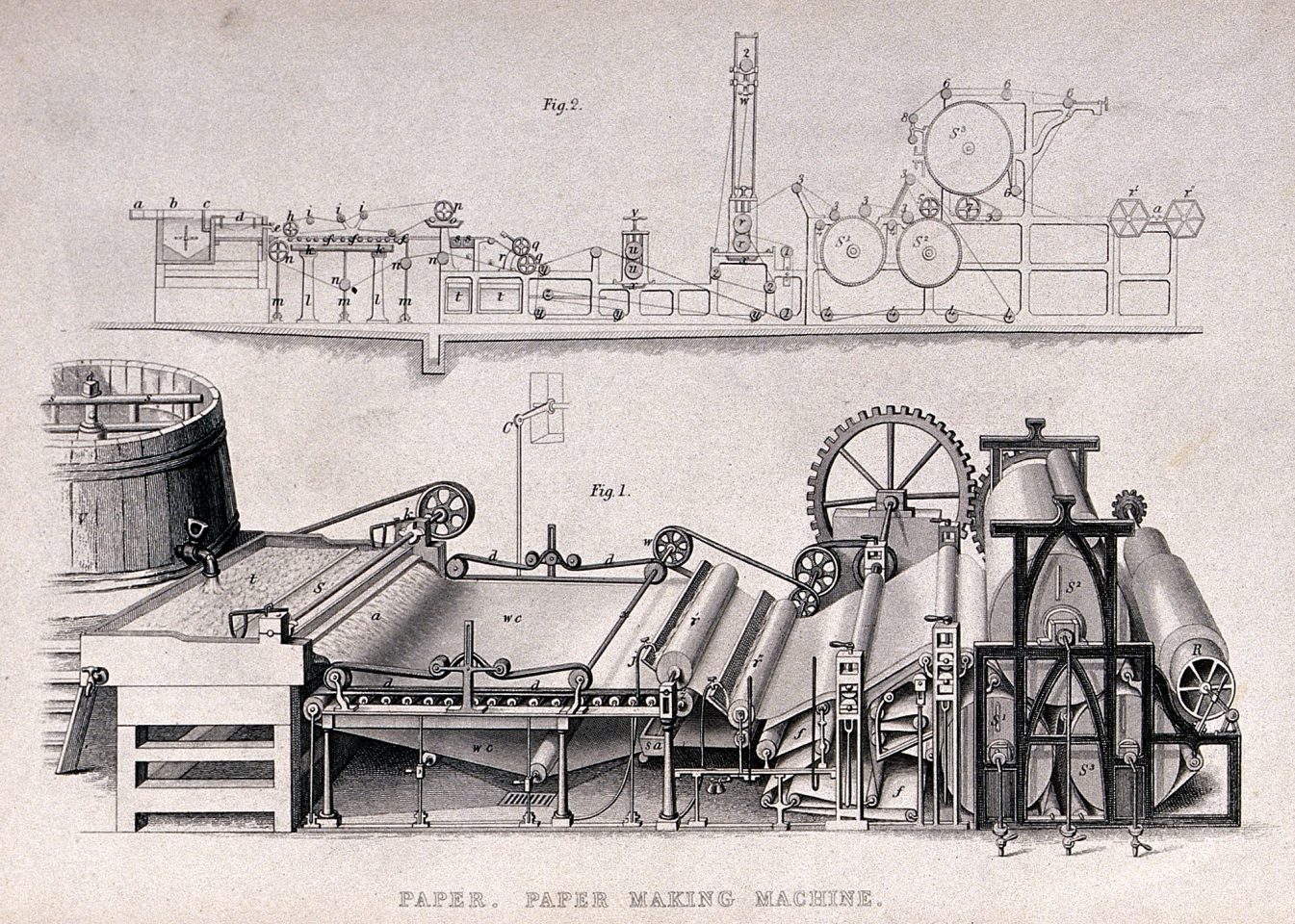
What Robert invented is the foundation that made every one of those downstream products possible at scale. Before his machine, paper was a craft good produced one sheet at a time. After his machine, paper became a raw material the industrial world could pour into anything, and books and newspapers exploded with it. None of that happens without Robert.
Everyone went broke
The story doesn’t have winners. Watch this.
The Scoreboard
What everyone got for inventing modern paper.
Louis-Nicolas Robert
Inventor
8,000 francs
~$350,000 in 2026 dollars
Died running a village school, 1828. Wife and six children.
Saint-Léger Didot
Robert’s employer
Lost everything
Lost his paper mill. Returned to France. Died 1829.
John Gamble
The courier
Lost the mill
Got a corn mill at St. Neots as reward. Lost it. Died in poverty.
The Fourdriniers
Financiers
−£60,000 → £7,000
Bankrupt. Got a Parliamentary grant 40 years later. Got the name.
Final score: nobody.
The Fourdriniers spent over £60,000 developing the machine in its first decade, roughly £6 million in today’s money, and the investment broke them. They went bankrupt. Forty years later, after the machines they built were running across England, Parliament gave the Fourdrinier family a £7,000 grant in compensation. Do the math. £60,000 in. £7,000 out four decades later, plus the privilege of having the machine named after them.
John Gamble was given two of the Fourdriniers’ machines and a corn mill at St. Neots as his reward for bringing the design over from France. He lost the mill and died in poverty. That was Gamble’s cut.
Saint-Léger Didot, who started the whole thing by sending Gamble across the Channel, lost his paper mill and his business, returned to France and died there in 1829. That was Didot’s cut.
Louis-Nicolas Robert, the man who invented the machine, never made it to England, never saw the machines running at Frogmore and never received a share of the British patent. The French government paid him a one-time bounty of 8,000 francs for the invention, roughly $350,000 in 2026 dollars. That was the entire commercial return on his life’s work.
8,000 francs. Roughly $350,000 in 2026 dollars. Whole life’s work.
He spent his last years running a small school in Vernouillet, a village west of Paris, and died there on August 28, 1828, at age 66, leaving a wife and six children.
Why every paper mill still bears the wrong name
The machine that came out of Frogmore Mill is the direct ancestor of every industrial paper production setup operating today, whether the end product is newspaper, cardboard, receipt paper, cigarette paper or the base paper that becomes a rolling paper. The continuous-web paper machine, with refinements added over two centuries, still runs on the principle Robert patented in 1799. Two and a quarter centuries later, his design is still working.
Years his design has been running
226
Still in every paper mill in the world. Still not named after him.
The industry calls it a Fourdrinier machine. Mill operators talk about “the wire” and “the Fourdrinier section,” and engineering textbooks use the term. The brothers got the eponym they paid for. The Frenchman got 8,000 francs and a teaching gig.
There’s no clean villain here. The Fourdriniers paid for the engineering improvements that made Robert’s design industrially viable, Donkin did real work, and the patent system in 1801 didn’t have international protection, so Robert had no legal mechanism to claim the British market. France was broke and unstable. England had the capital and the engineers. The machine got built where the money was. That’s how it usually goes.
But here’s the part that bugs me. The next time you roll one up, look at the paper. The machine that produced it has somebody’s name on it. Just not the right name.
Say his name
Louis-Nicolas Robert
Essonnes, France. 1799.
Now you know.