





Different cannabis consumers want different outcomes. Some prioritize recovery and routine, others chase flavor, novelty, or symptom-specific relief. Understanding your cannabis consumer type makes it easier to choose products, doses, and formats that actually fit the experience you’re looking for.

Photo by: Gina Coleman
Image lightbox

The dispensary menu doesn’t care why you’re there. It just asks what you want — and if you don’t know the answer to that yet, the options stop making sense fast. The problem isn’t lack of options anymore. It’s figuring out which cannabis products actually fit the reason you’re using them.
Most cannabis consumers fall into one of four types. Not by how much they use, but by what they’re actually asking the plant to do. Your cannabis consumer type shapes everything: format, dose, timing, terpene profile, and which products are actually worth buying versus which ones just look good on a shelf.
Some cannabis users want consistency. Some want novelty. Some want relief. Others just want something that fits the moment without wrecking the next day.
Knowing which kind of cannabis consumer you are makes the menu a lot easier to navigate.
The Functional Consumer
Who they are
This is the daily driver. Cannabis is infrastructure — a tool that fits into a routine the same way coffee or a workout does. They’re not chasing an experience. They’re managing something: stress, sleep, chronic discomfort, recovery, or a body that won’t stop holding tension.
Functional cannabis consumers tend to prioritize predictability over intensity. The goal is usually to feel better without feeling derailed.
What they reach for
Low-to-moderate THC flower, CBD-forward tinctures, balanced THC:CBD products, and edibles dosed for consistency rather than intensity. Microdosing is common here — not as a trend, but as an outcome. When the dose is right, it disappears into the day.
Functional consumers often gravitate toward cannabis products with:
- predictable onset,
- manageable potency,
- and repeatable effects.
Where it gets complicated
Tolerance builds quietly. Functional consumers often don’t notice it happening until the baseline dose stops working and the effect they relied on is gone.
The fix isn’t always a higher dose. Sometimes it’s:
- a format switch,
- a cannabinoid ratio adjustment,
- lower-frequency use,
- or a short tolerance reset.
The recovery overlap
Active functional consumers — the ones using cannabis alongside training, outdoor work, or physically demanding jobs — are the same people the Four Elements framework was built for.
The Earth category maps directly: cumulative physical stress, localized recovery needs, and cannabis as a maintenance tool rather than an event.
The Social Consumer

Photo by: Gina Coleman/Weedmaps
Image lightbox

Who they are
Cannabis is context for them. It makes the concert better, the dinner more interesting, the hike worth talking about afterward.
Social cannabis consumers might go weeks without touching cannabis products and then use them multiple times in a single weekend. The pattern follows events, invitations, and environment — not routine.
What they reach for
Mid-potency flower, pre-rolls, infused joints, vape carts, and low-dose edibles built for flexibility and portability.
Format matters here because the setting changes constantly. Social consumers need cannabis products that work:
- at a concert,
- in a parking lot,
- around a campfire,
- or in someone’s kitchen at midnight.
Where it gets complicated
Inconsistent use means inconsistent tolerance, which means inconsistent outcomes.
The edible that felt manageable last month can land completely differently after a long break. Social consumers are especially prone to overshooting dose in environments where there isn’t an easy reset button.
The recovery overlap
After the festival weekend, ski trip, concert run, or river float, recovery becomes the real need.
Wind and Water sports in the Four Elements breakdown reflect this pattern directly: high-output activity followed by physical and neurological fatigue that doesn’t fully resolve overnight.
The Explorer
Who they are
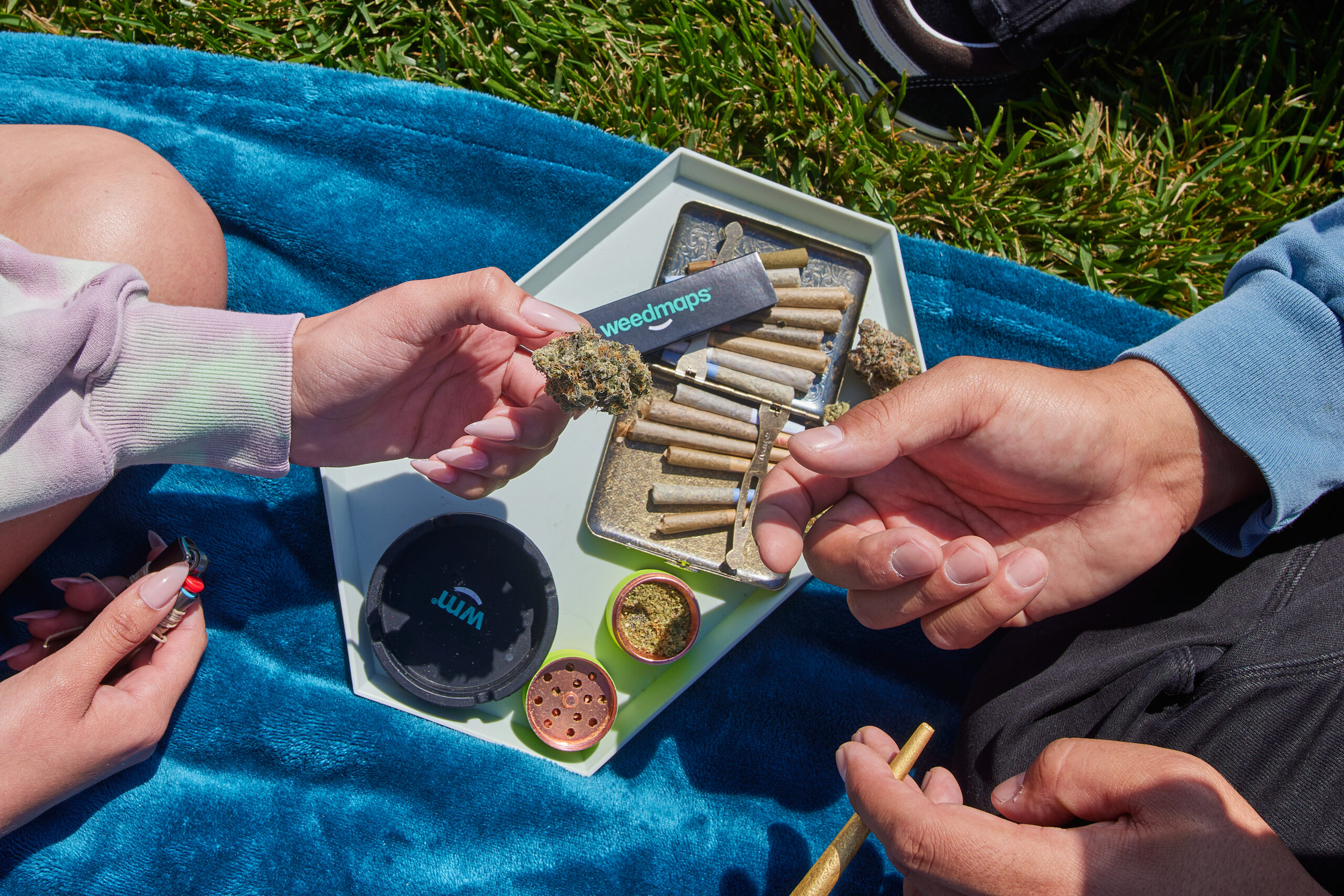
Photo by: Gina Coleman/Weedmaps
Image lightbox
For this cannabis consumer type, the menu is a research project.
They’re in it for the range: new strains, new formats, rare terpenes, fresh drops, limited washes, obscure cannabinoids, single-source rosin, regional genetics.
They’ve usually moved past THC percentage as the main purchase signal. At this point, they’re sourcing by farm, extraction method, terpene profile, and production quality.
What they reach for
Small-batch flower, solventless concentrates, limited releases, experimental cannabinoid products, and premium hardware.
COA literacy is assumed. Batch-to-batch variation isn’t an inconvenience — it’s data.
Explorer consumers often care about:
- cultivation method,
- harvest timing,
- cure quality,
- extraction style,
- and terpene preservation.
Where it gets complicated
Chasing novelty makes consistency difficult.
Explorers often keep moving before a product has enough time to prove whether it actually works for them. There’s also a tendency to overcomplicate the process by stacking variables when the factor that matters most is usually dose and timing.
The recovery overlap
Explorers who train hard or push themselves physically are exactly the kind of cannabis consumers who end up experimenting across every category in the Fire framework.
The product-testing mindset maps naturally here. These are consumers who will verify whether a patch is actually transdermal or just topical before building a recovery routine around it.
The Intentional Medical Consumer
Who they are
The outcome is specific.
These cannabis consumers are managing pain, sleep disruption, anxiety, inflammation, appetite issues, or diagnosed medical conditions. Many have already cycled through conventional options before arriving at cannabis.
This is less recreational experimentation and more treatment calculus.
What they reach for
High-CBD products, balanced cannabinoid ratios, tinctures with precise dosing, cannabinoid isolates, capsules, and longer-duration edibles.
Consistency matters more here than anywhere else. Potency variation isn’t just annoying — it changes outcomes.
Intentional medical consumers often prioritize:
- lab testing,
- reliable dosing,
- repeatable effects,
- and symptom-specific product selection.
Where it gets complicated
The research is still evolving.
Cannabinoids interact with CB1 and CB2 receptors involved in pain signaling and inflammation response. Sleep regulation appears connected to ECS activity as well, though the mechanisms are less clearly understood than cannabinoid interactions tied to pain signaling and inflammatory response.
Many medical cannabis consumers end up building their own evidence base through documented trial and error. It works, but it takes time, consistency, and money.
The recovery overlap
The science sections of the Four Elements article — cannabinoids, pain signaling, inflammation response, and sleep quality — map directly to this consumer type.
The difference is that athletes optimize recovery around performance, while intentional medical consumers optimize around quality of life. The cannabinoid toolkit is often the same.
Most Cannabis Consumers Are a Blend

Photo by: Gina Coleman/Weedmaps
Image lightbox
Most people move between these cannabis consumer types without thinking about it.
The functional consumer becomes social on a Saturday. The Explorer eventually finds a routine that works. The social consumer starts paying attention to recovery. The medical consumer experiments with formats until consistency finally shows up.
What stays constant is the use case: what you’re asking cannabis to do right now, in this moment, for this reason.
Once you understand the job cannabis is doing for you, half the menu stops mattering.
Compare cannabis products, potency, and reviews from dispensaries near you on Weedmaps