






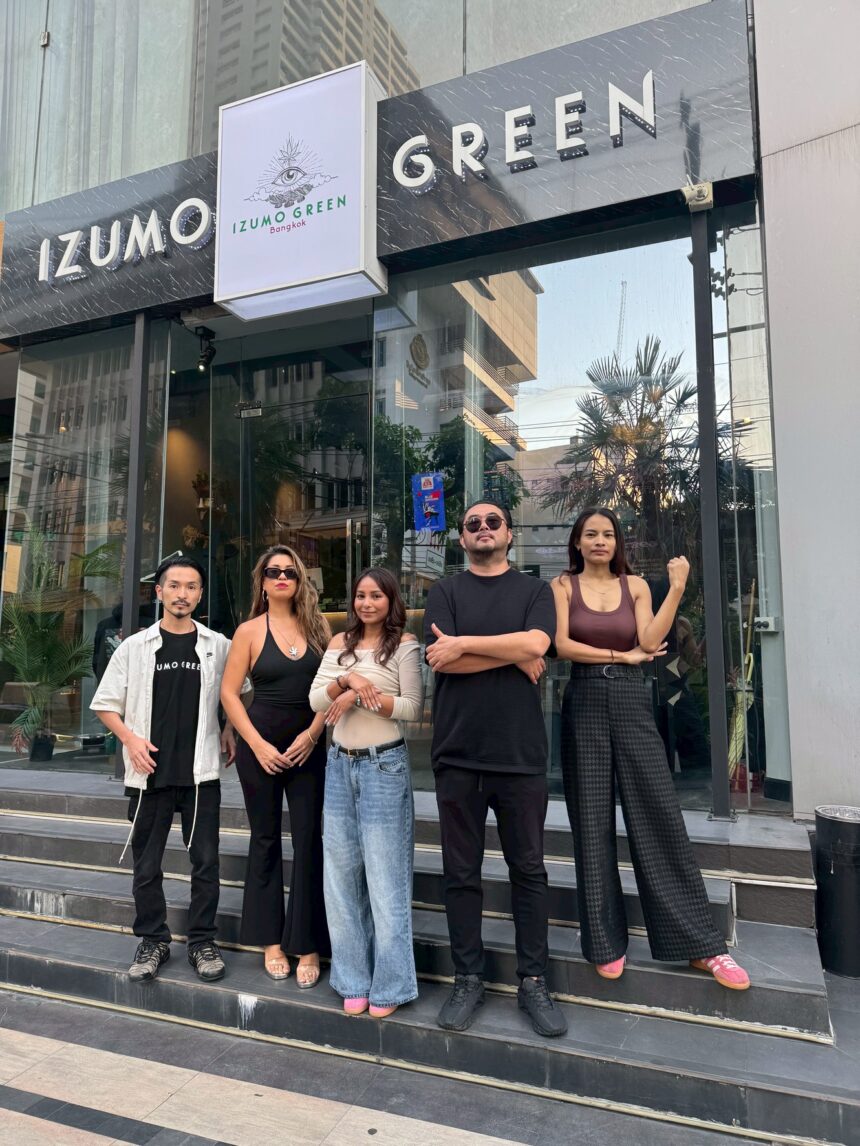
Walk down Khao San Road, one of Bangkok’s main tourist hubs, and you’ll find dispensaries lining the street within just a few hundred meters. Their density exceeds that of convenience stores. And yet, only a handful are actually busy. Even on the same street, the gap between winners and losers is obvious.
In 2025 alone, around 7,000 dispensaries shut down. The shakeout is already underway.
A saturated market, constant regulatory shifts—Thailand’s cannabis retail scene is operating in turbulent waters.
Simply selling weed is no longer enough.
In a Saturated Market, Standing Out Is Everything
In the early days, opening a dispensary was easy. Countless undifferentiated shops flooded the market. Today, oversupply has intensified competition, costs have risen, and weaker players are being pushed out. Shops with strong capital backing—or recognizable brands from places like the U.S. or Amsterdam—are the ones that remain.
At the same time, the customer base has changed. In tourist areas, foreigners make up the majority, and they are far more selective—paying close attention to price, quality, and service. Unlike the early legalization phase, convenience alone is no longer enough to win customers.
Many operators I spoke with pointed to the same shift: the market has entered a phase where customers understand and actively choose. It’s no longer just about being a place to buy—it’s about having a reason to be chosen.
What’s now required is something beyond cannabis itself.
Experience as the Product at Izumo Green
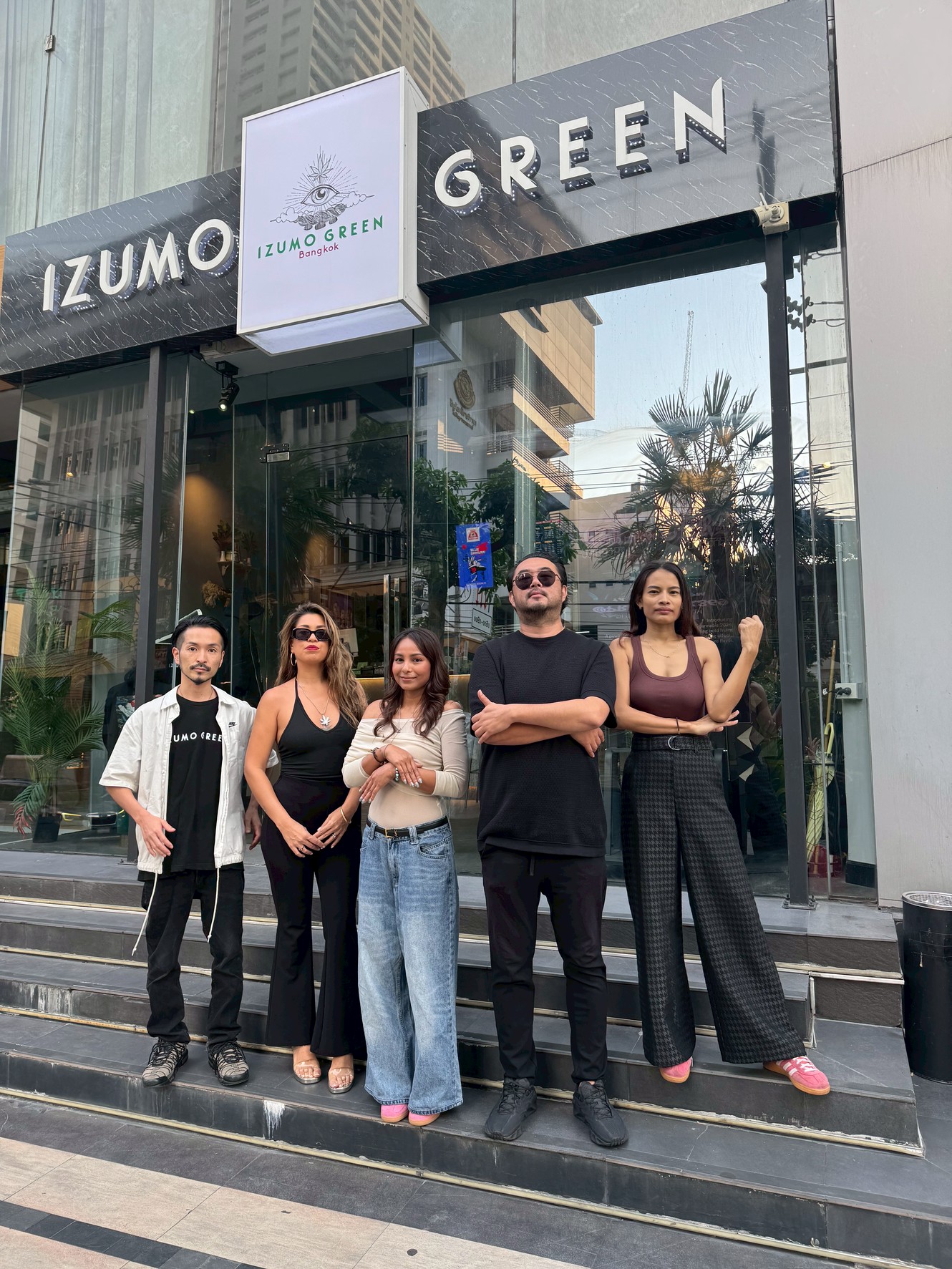
When it comes to concept design, Izumo Green Bangkok stands out. Located in the heart of Asok’s tourist flow, the shop is not built around simple retail.
It features a spacious lounge and serves alcohol. More importantly, it is designed as a space where both smokers and non-smokers can enjoy themselves. Cannabis is the starting point, but the experience extends far beyond it.
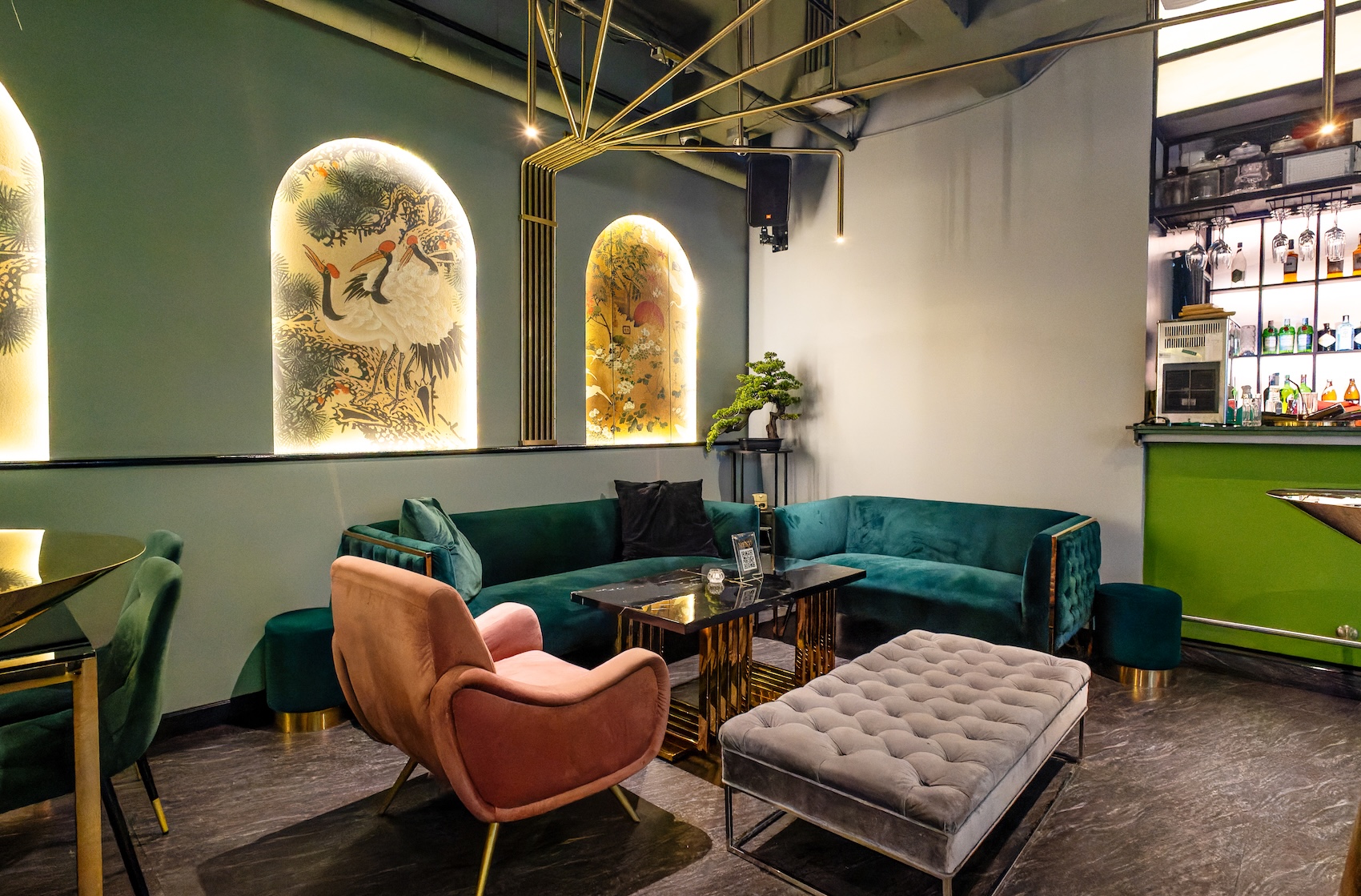
Its defining direction is “cannabis × wellness.” Through collaborations with bodywork specialists, the shop offers massage and stretching services, along with products like essential oils that emphasize physical sensation and well-being.
This approach has also been recognized within the industry. Izumo Green has won the Phuket Cannabis Cup, an award that evaluates not just products but overall spatial design and customer experience, for two consecutive years.
“We’re working with our own wellness team to offer services like massage and stretching. Beyond cannabis, we want to develop products that make use of the benefits of various plants,” said Kenji Horikoshi, owner of Izumo Green.
The shop also emphasizes organic cultivation and personalized recommendations based on each customer’s condition. Rather than treating cannabis as a casual product, it frames it within health and wellness.
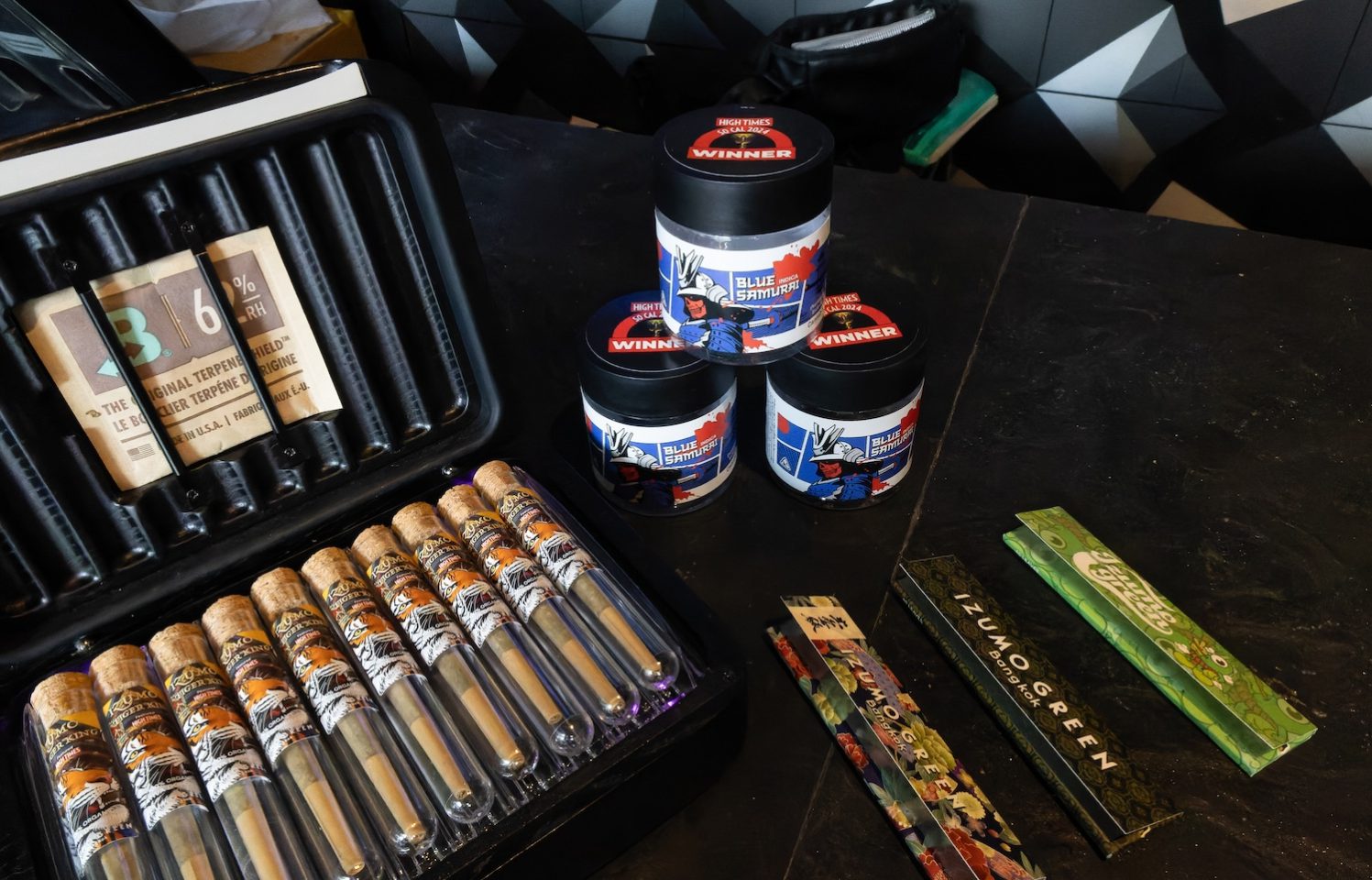
“Cultivation methods are extremely important. We focus on producing cannabis as naturally as possible, and on providing products that match each customer’s condition,” Horikoshi added.
From a place that sells cannabis to a place that delivers physical experiences—Izumo Green represents that transition.
Winning on Price and Selection at Choo Choo Hemp
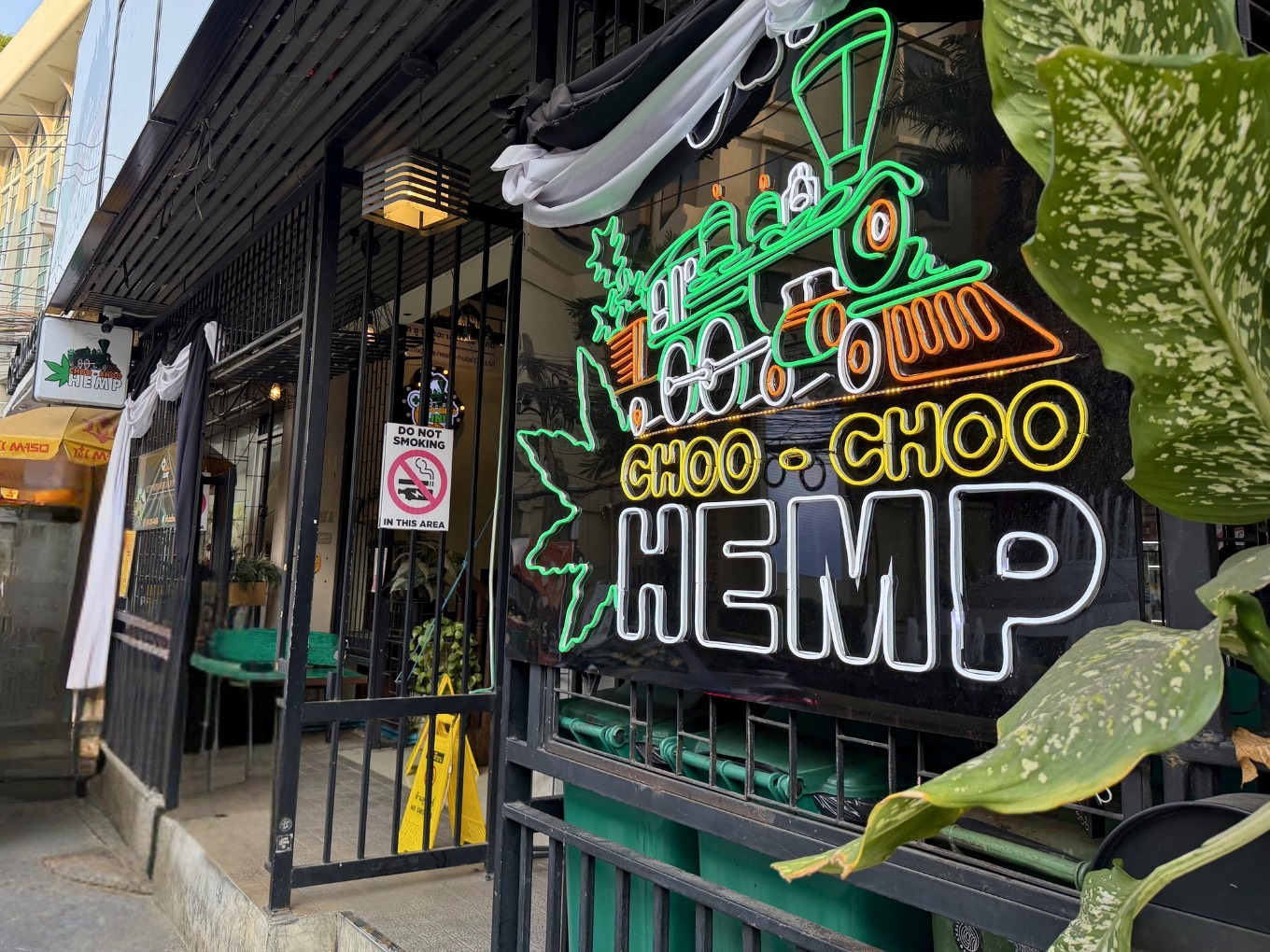
Some shops compete head-on with price and variety. Choo Choo Hemp has built its strategy on exactly that—simple, but difficult to replicate.
The shop offers some of the lowest prices in Bangkok, alongside an overwhelming range of strains. GACP-certified cannabis is available from as little as around 45 THB per gram. In comparison, shops in tourist areas typically start at around 300 THB per gram.
With nearly 100 varieties available at any given time and a wide price spectrum, it has positioned itself as a reliable “go-to” destination.
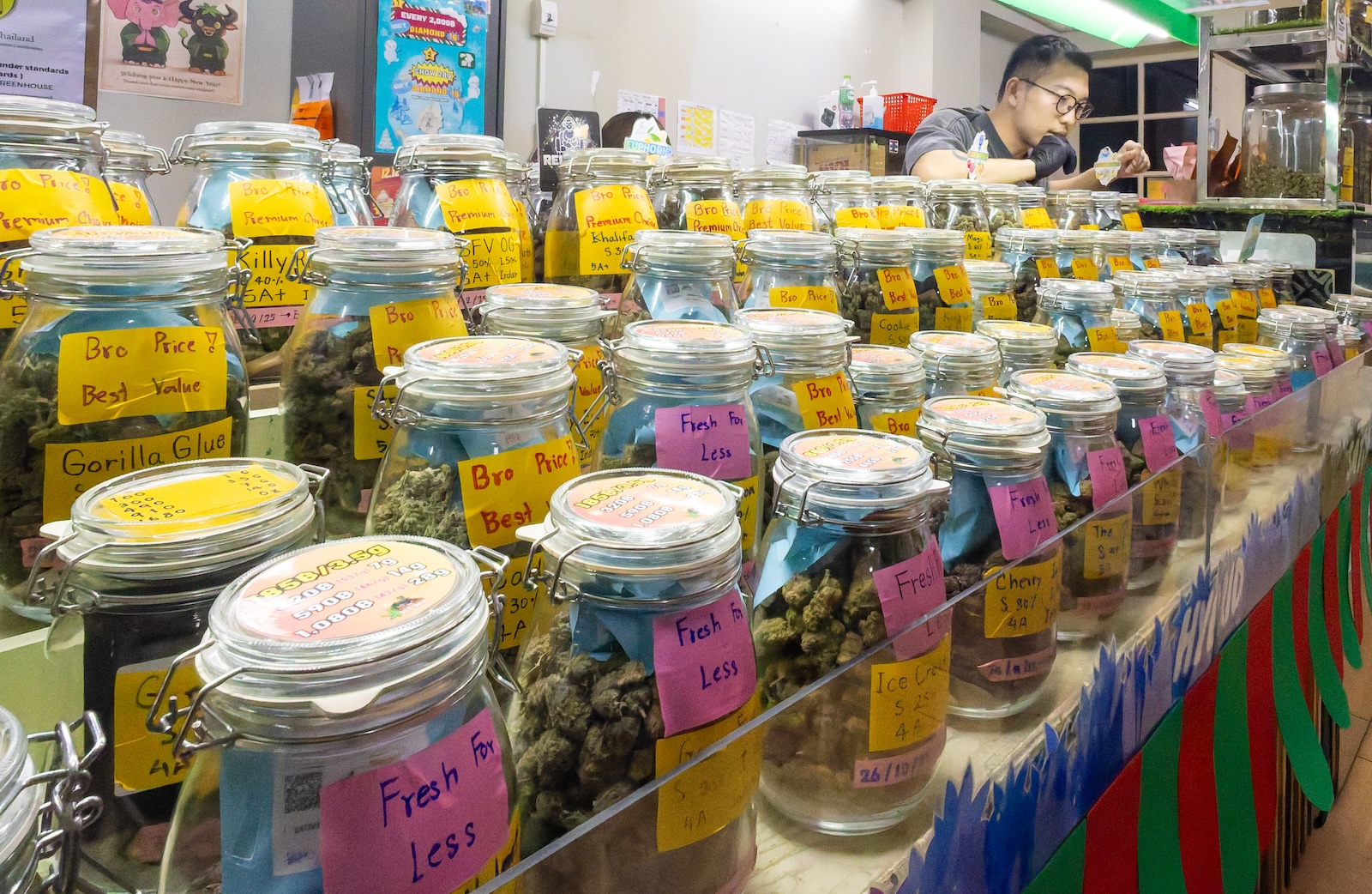
Most tourists don’t come in with a specific strain in mind. With limited time, they make decisions based on price and options. In that context, affordability and variety become the clearest value propositions.
While the market is changing, its fundamentals remain the same. If anything, price, quality, and selection have become even more important.
There’s nothing flashy about this model. Through disciplined sourcing and pricing, it creates an environment where any customer can find something worth buying, aiming to establish itself as a trusted brand.
In a market driven by price competition, being cheap alone isn’t enough. But combining affordability, quality, and scale can itself become a brand.
Choo Choo Hemp is a clear example of that.
Vape Mania × Samurai Weed Built Their Strategy on Transparency
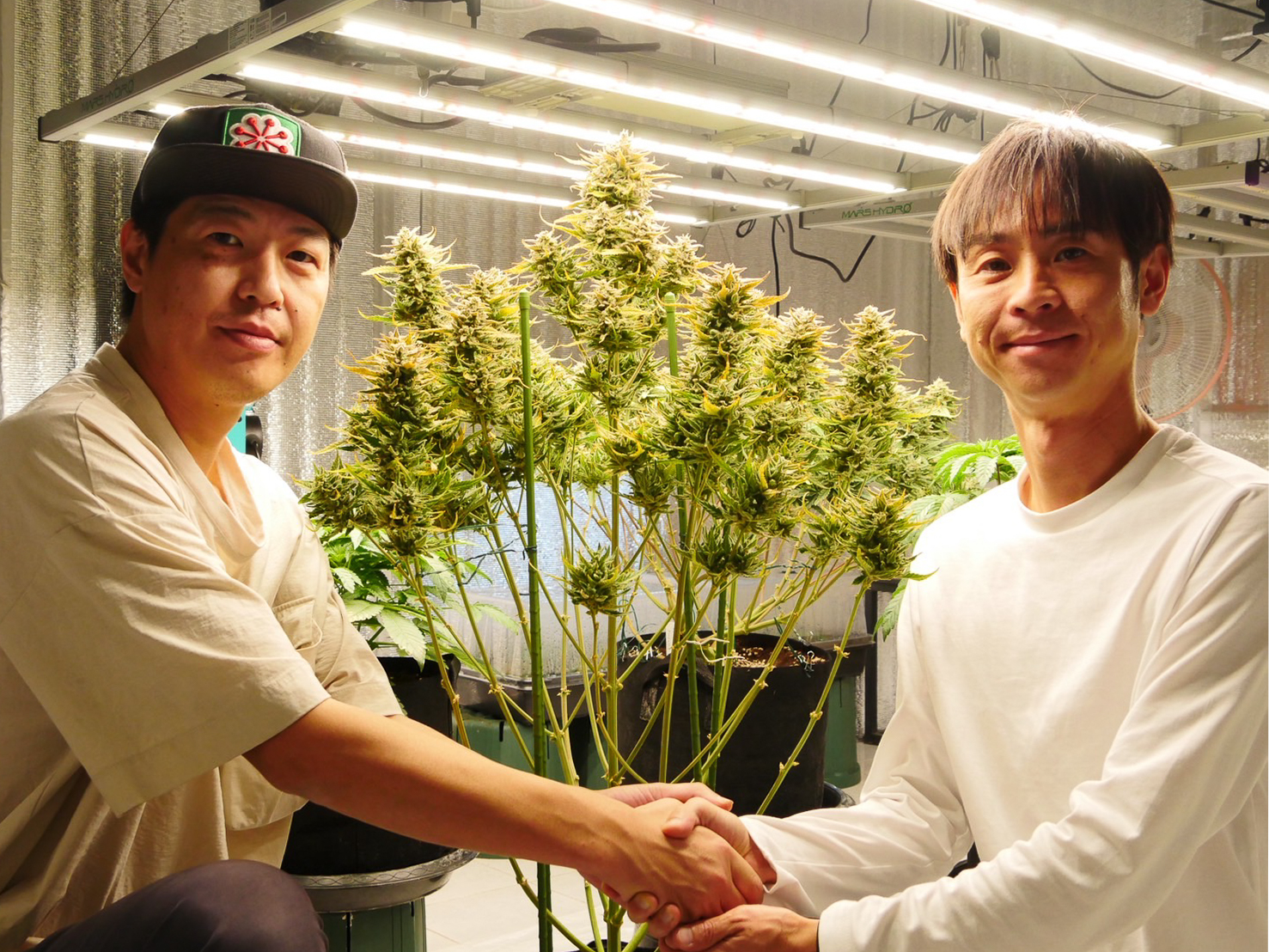
Not every shop is thriving. Vape Mania × Samurai Weed represents a different model—one built on a process of restructuring after failure.
From early on, the shop positioned itself as a medical-focused dispensary, even partnering with a university-affiliated medical team to operate an on-site clinic. But the business struggled. Revenue fell short of expectations, while rent, labor, and licensing costs piled up. After two years, the shop had yet to turn a profit. At its peak, monthly revenue reached 460,000 baht, while costs climbed to 620,000 baht.
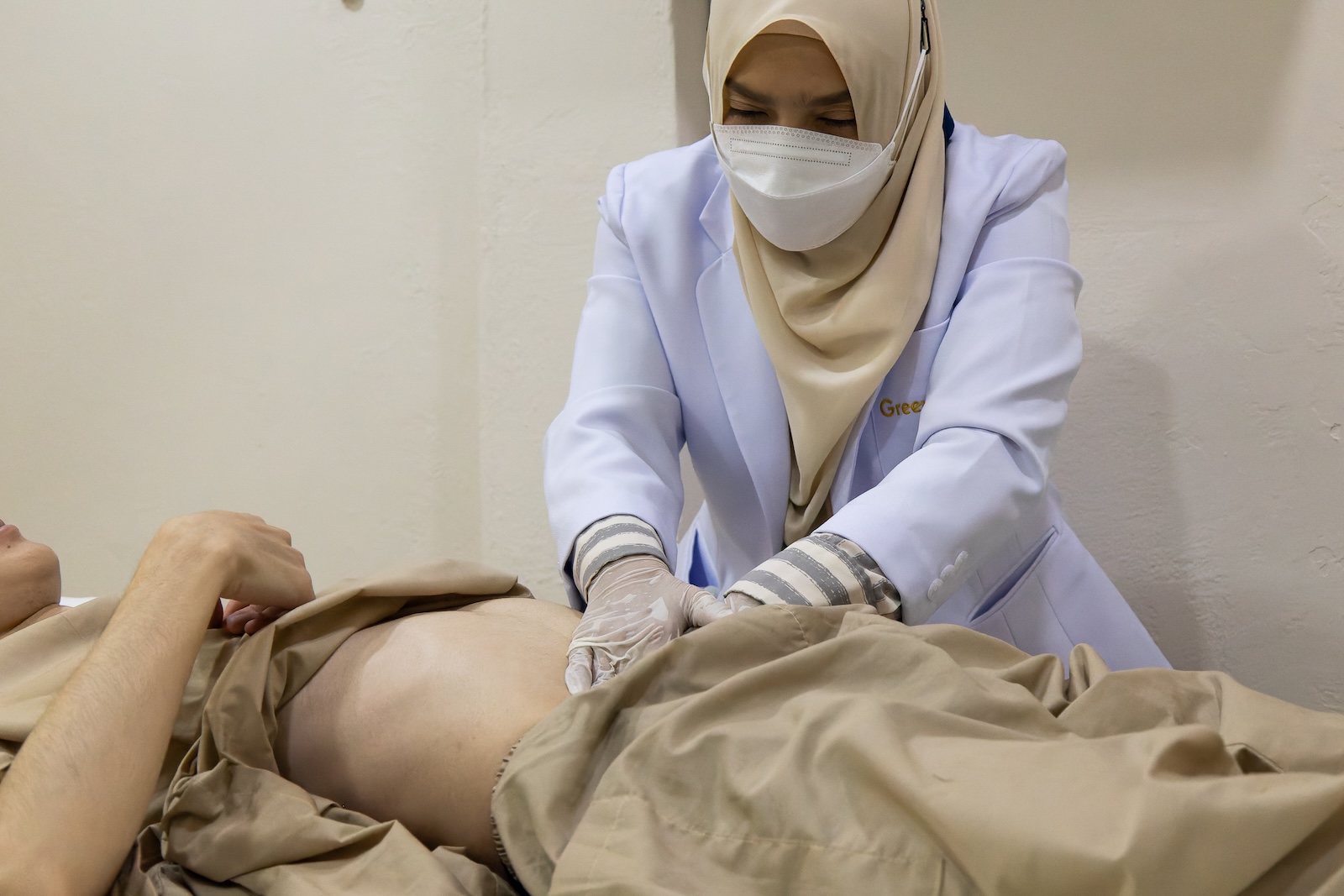
The concept wasn’t entirely wrong. Some patients did see improvements through medical cannabis. But the model itself didn’t align with market realities.
So the shop pivoted.
Its new approach: making the entire operational process public. Losses, decisions, and changes are openly shared on social media, with feedback from followers actively shaping the business.
In other words, failure itself became content.
This strategy has significantly increased attention, and sales are now recovering. More importantly, it created a structure in which customers are not just buyers but participants in the process.
What makes this work is that it’s not just a publicity stunt. The shop already had a strong reputation for product quality. By lowering the barrier to entry and giving people a reason to visit, it could convert attention into real experience.
Instead of hiding failure, Vape Mania puts it on display. In a saturated market, this represents an alternative survival strategy.
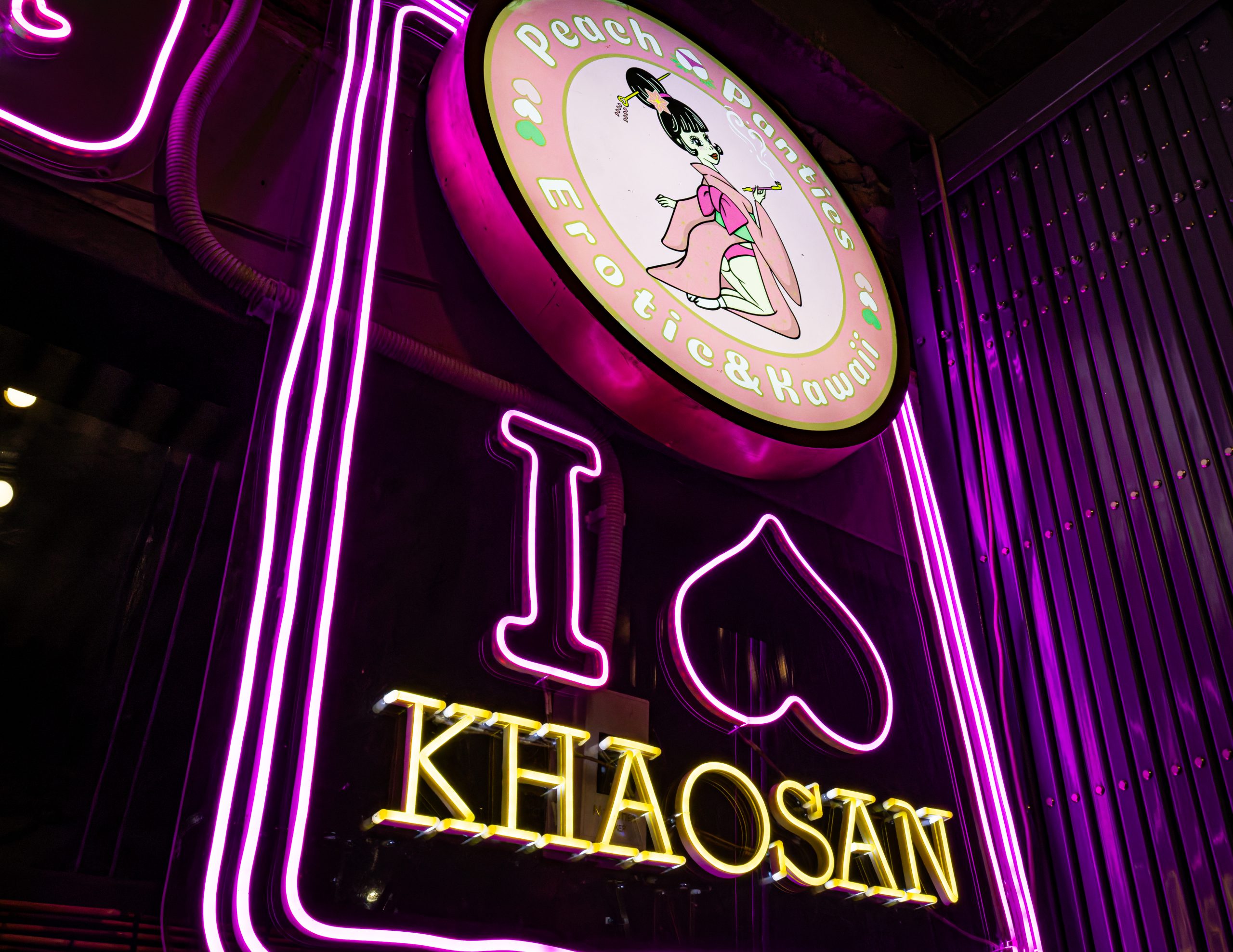
Some shops are shifting away from selling cannabis altogether, toward building communities. Peach Panties, located in the Khao San area, is one of the clearest examples.
Originally positioned as a brand “for female stoners” (a rare concept in Thailand), it gained attention for its niche focus. But in a hyper-competitive tourist market, it faced the same challenges: price competition and the limits of selling cannabis alone.
Its response has been to build a community. By collaborating with nearby bars, restaurants, and shops, it creates a network where women take the lead in shaping events, products, and the brand itself.
“Our goal is to reach a point where we don’t need to sell cannabis at all. If the brand can stand on its own through events and products, that’s success,” said Kensuke Aoki, manager of Peach Panties.
At the core of this strategy is a simple idea: people matter more than products.
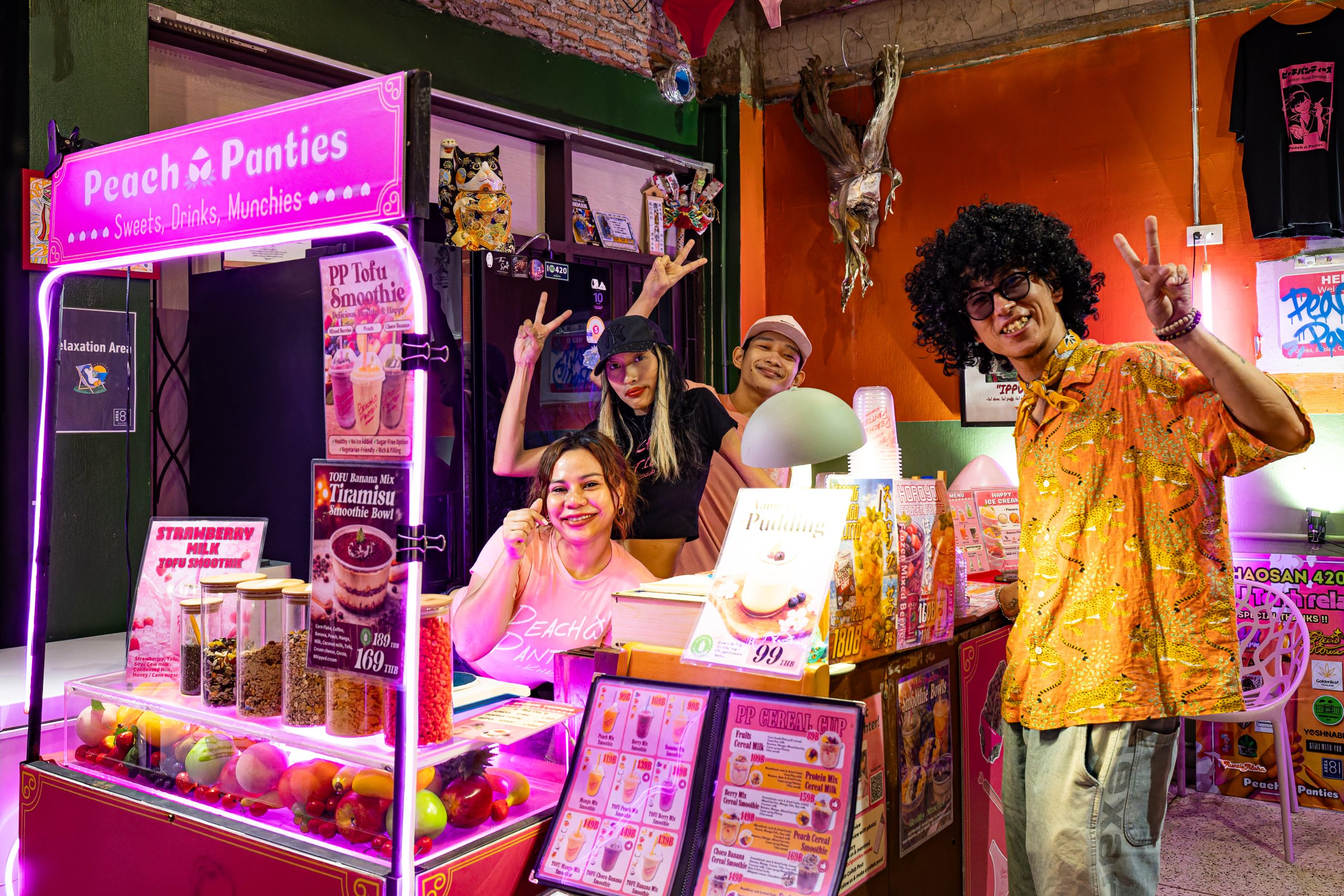
“In the end, it’s about people. You can get cannabis anywhere. What matters is who you’re with and where you spend your time. That’s why we need to create a reason to come here,” Aoki added.
Cannabis is just the entry point. What matters is the experience and relationships built around it.
Peach Panties is pushing that model further than most.
Demand Isn’t Going Away—but Survival Is Changing
Thailand’s Ministry of Public Health has announced plans to strengthen medical cannabis policies, gradually reclassifying dispensaries as medical facilities. Over the next three years (2026–2028), the market is expected to move toward stricter regulation.
As a result, further consolidation is inevitable. Some estimates suggest the number of shops could shrink to around 2,000. But one thing is clear on the ground: demand for cannabis is not disappearing.
What’s changing is not the existence of the market, but its structure.
As regulations tighten, Thailand’s cannabis tourism sector is being reshaped into a more selective, regulated ecosystem. It will no longer be a market where anyone can enter. Only shops with clear concepts and strategies will survive.
Shops that simply sell will disappear.
Those that can deliver value—through experience, pricing, reinvention, or community—will become stronger.
Cannabis tourism in Thailand isn’t going away. But the businesses that support it are changing fundamentally.
All photos courtesy of Ryoji Ito.
This article is from an external, unpaid contributor. It does not represent High Times’ reporting and has not been edited for content or accuracy.