





Separated vape oil means the formula stopped staying evenly mixed under changing temperatures. Cold thickens the oil, heat accelerates degradation, and unstable ingredient blends can split into visible layers inside the cartridge.

Image lightbox
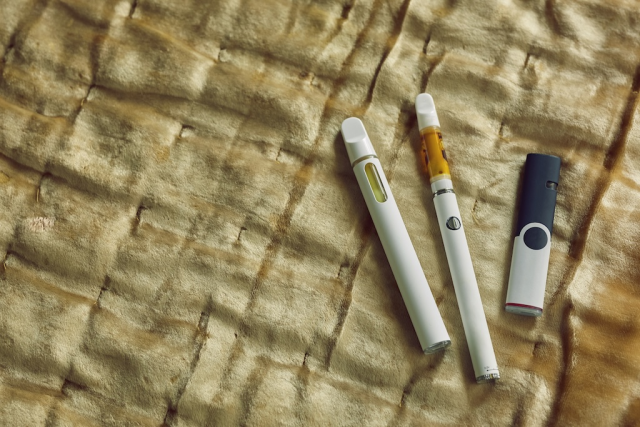
One layer sits on top of another. The oil turns cloudy. Tiny crystals start forming near the glass or around the coil. Suddenly, the cartridge that looked perfectly smooth yesterday feels questionable today.
That separation is not random.
Vape oil is a blend of cannabinoids, terpenes, and sometimes additional thinning agents or additives. Those ingredients respond differently to temperature, gravity, and time. Once viscosity changes enough, parts of the formula can stop staying evenly mixed and begin separating into visible phases.
That’s why some carts split after a cold night while others stay stable for months.
The behavior depends on both the environment and the formulation itself.
Once you understand what layering, haze, and crystallization actually mean inside the tank, the separation starts looking less mysterious and much easier to interpret.
What separation inside a vape cart is actually telling you
Separation inside a cart usually reflects chemistry and temperature behavior, not instant contamination or counterfeit oil.

Image lightbox
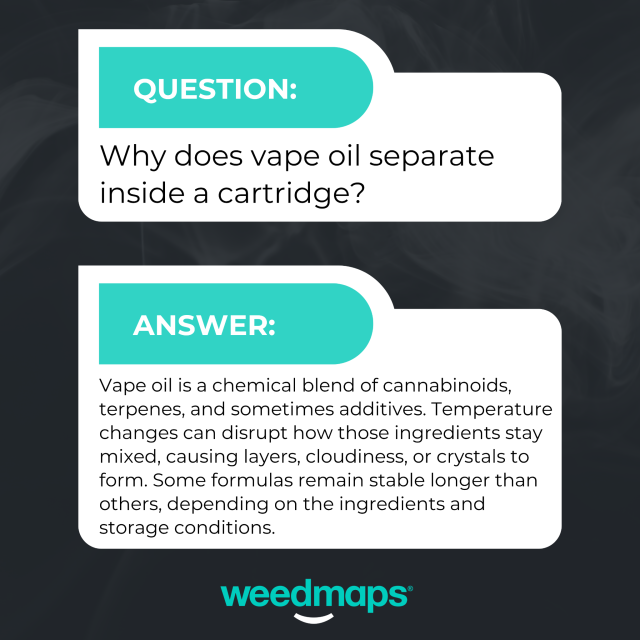
The visual pattern matters because different kinds of separation point toward different underlying causes.
Layering appears as visible liquid bands sitting on top of each other inside the tank. That happens when parts of the formula differ enough in density or viscosity that they stop blending evenly over time.
Cloudiness has a different cause. Instead of distinct layers, the oil develops a foggy or milky appearance throughout the cartridge. This happens after cold exposure because some compounds partially fall out of solution and scatter light differently through the oil.
Crystallization looks more dramatic. Instead of haze or smooth bands, solid particles or shard-like structures begin forming near cooler sections of the cartridge or around the coil area where repeated heating and cooling occurs.
Those patterns matter because they point toward very different physical processes happening inside the oil.
Why separation starts affecting performance
The moment separation changes how oil reaches the coil, the issue stops being cosmetic.
A stable vape cartridge depends on consistent oil flow toward the heating element. Once the formula separates unevenly, different parts of the oil feed the coil at different speeds.
If thicker cannabinoid-heavy portions settle near the intake, airflow can tighten and vapor production may weaken because dense oil moves slowly through the wick system.
If thinner fractions collect near the atomizer instead, the opposite can happen. The coil suddenly vaporizes lighter material faster, which can create unusually hot or harsh pulls.
Crystallization creates another problem entirely.
Solid particles can partially block intake pathways, forcing the cart into inconsistent cycles where airflow alternates between restricted pulls and sudden bursts of vapor once oil flow temporarily clears again.
That’s why separated carts feel inconsistent even before the flavor noticeably changes.
Temperature controls viscosity, and viscosity controls stability
Temperature is one of the biggest forces controlling whether vape oil stays stable inside the tank.

Image lightbox

As oil gets colder, viscosity increases quickly. The thicker the oil becomes, the slower ingredients move and remix naturally. That gives heavier and lighter parts of the formula more time to separate into visible layers.
A cart that looked perfectly uniform at room temperature can suddenly show sharp separation lines after sitting overnight in a cold car or near an air conditioner.
Cold slows everything down.
Heavier portions of the formula settle lower in the tank while lighter fractions remain higher up. Once the oil thickens enough, remixing becomes extremely slow even after temperatures rise again later.
Heat does the opposite.
Warmer temperatures lower viscosity and temporarily make the oil appear more uniform because ingredients move more freely through the cartridge. But that comes with a tradeoff.
Higher temperatures also accelerate cannabinoid and terpene degradation over time. The oil may look smoother temporarily while quietly becoming chemically less stable underneath.
That’s why repeatedly overheating carts creates new stability problems later.
Why temperature swings make separation worse
Repeated hot-to-cold cycles create ideal conditions for recurring separation.
When the oil warms up, lower viscosity allows ingredients to move freely and begin redistributing inside the tank. As the cartridge cools again, viscosity rises and those newly shifted layers become trapped in place. Then the cycle repeats.
Each new warm-up lets the oil move again, but it starts from an increasingly uneven baseline. Over time, visible banding becomes stronger and the cartridge begins feeding the coil less consistently from session to session.
This is why carts stored in constantly changing environments tend to separate faster than carts kept at relatively stable room temperature.
The oil is repeatedly being forced to remix and re-separate.
Why cannabinoids, terpenes, and additives stop staying compatible
Vape oil is not one ingredient. It is a chemical blend, and blends only stay stable when their ingredients remain compatible under changing conditions.
Cannabinoid ratios matter a lot here.
High concentrations of cannabinoids like CBD or THCA can increase the chances of crystallization because those compounds naturally prefer forming organized solid structures under certain temperature conditions.
Terpenes complicate the system further. Terpenes behave partly like solvents inside the formulation, but different terpene blends interact with cannabinoids differently. Some mixtures stay stable for long periods while others separate more easily once temperatures fluctuate.
That’s why two carts with similar potency can behave completely differently in storage.
Additives can create even more instability. Some thinning agents temporarily improve flow and viscosity but create fragile blending conditions where ingredients stay mixed only within a narrow temperature range.
Once the cartridge repeatedly heats and cools, the formula can begin separating into visibly different phases again. The oil is basically revealing that its ingredients no longer want to behave like one stable mixture.
The safest way to remix separated vape oil
If a cart separates after cold exposure, the safest first step is simply returning it to room temperature.
Cold oil resists movement because viscosity rises sharply at lower temperatures. Trying to force thick oil through the coil too early creates clogs, uneven saturation, or burnt pulls.
Letting the cartridge warm gradually indoors gives the formula a better chance of naturally loosening again before you attempt remixing.
Once the oil becomes more fluid, gentle rolling works better than shaking.
Slow rolling helps recombine separated layers without aggressively forcing oil into the airflow chamber or atomizer pathways. Shaking tends to introduce bubbles and uneven movement instead of stable remixing.
The goal is gentle recombination, not violent agitation.
If the oil becomes mostly uniform again and the cart produces normal airflow and vapor afterward, the separation was likely temporary and temperature-related.
If strong layering returns quickly at room temperature, develops persistent crystals, or continues affecting airflow and vapor consistency, the formula itself may no longer be stable under normal use conditions.
What your cart is telling you

Separated vape oil usually comes down to temperature, viscosity, and ingredient compatibility interacting inside a small cartridge.
Cold thickens the oil and slows remixing. Heat lowers viscosity but accelerates degradation. Additives, terpenes, and cannabinoid ratios can all influence whether the formula stays stable or splits into layers over time.
Once you understand those mechanics, separation becomes easier to interpret instead of instantly looking like contamination or failure.
If a cartridge keeps separating repeatedly, develops crystals that do not dissolve, or starts affecting airflow and vapor consistency, the oil is telling you the formula may no longer be stable under normal use conditions.
Find vape carts, live resin extracts, and compatible batteries near you on Weedmaps.