





Those orange hairs on weed are pistils, and they reveal far more than simple maturity. Their shape, density, and progression can expose how a flower is developing, whether it experienced stress, and how close it actually is to finishing.

Photo by: Gina Coleman/Weedmaps
Image lightbox
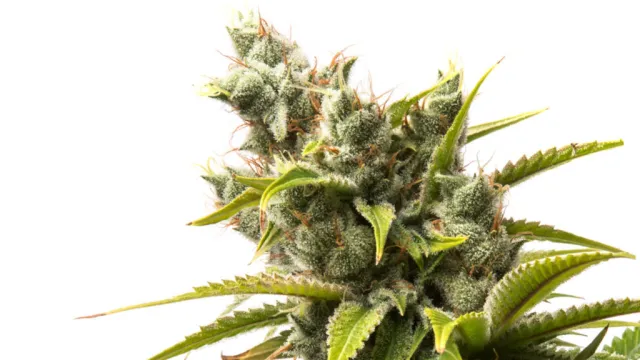
A flower covered in orange pistils can still be immature. A flower with fresh white pistils can still be producing cannabinoids actively. Environmental stress can even darken pistils early and fake a “ready” look before the plant actually finishes developing.
Experienced growers treat pistils like timing clues, not quality trophies.
Once you understand what pistils are actually signaling, the orange hairs stop being decoration and start becoming useful information.
What pistils actually do on cannabis flower
Pistils are the thin hair-like reproductive structures growing from cannabis calyxes.
Their biological job is simple: catch pollen.
On unpollinated female cannabis plants, pistils continue emerging throughout flowering as the bud develops and stacks new calyx growth. That ongoing cycle makes pistils one of the easiest visible indicators of where the flower sits in its maturation process.
Early in flowering, pistils usually appear bright white and stand upright from the surface of the bud. As the flower matures, older pistils begin darkening into orange, amber, or reddish tones while slowly curling inward toward the calyx structure.
What matters is whether the flower is still actively producing fresh white pistils or transitioning into a slower maturation phase overall.
Why pistils change from white to orange

Photo by: Gina Coleman/Weedmaps
Image lightbox
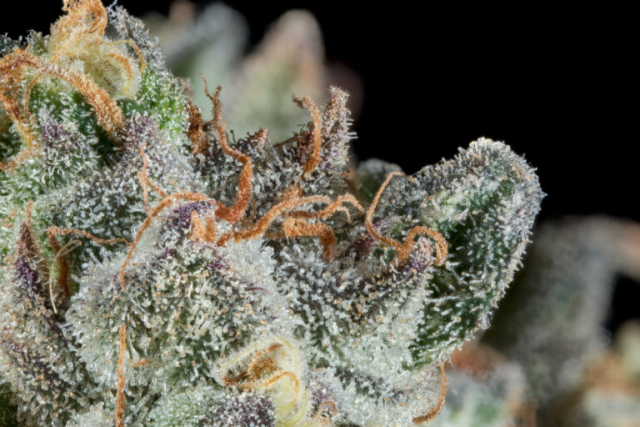
Pistils darken as they age and lose reproductive viability over time.
As flowering progresses, the plant gradually redirects energy toward swollen calyx development and resin production instead of constantly generating fresh pistil growth. Older pistils dry slightly, oxidize, and begin curling inward as that transition happens.
That’s why mature flower often looks less “hairy” than younger flower. The pistils start receding into the bud structure instead of projecting outward aggressively.
Most pistils gradually shift from bright white into cream, orange, amber, or reddish-brown tones as the flower matures. But that timeline varies heavily between cultivars, which is why pistil color works better as a relative maturity clue than a universal harvest clock.
Some cultivars naturally darken pistils earlier than others. Some stay unusually pale deep into flowering.
Why orange pistils do not automatically mean high potency
Pistils are not cannabinoid storage structures.
Trichomes handle most cannabinoid and terpene production, while pistils mainly function as reproductive tissue. That’s why pistil color alone cannot confirm THC concentration, terpene expression, or overall flower quality.
A flower can show heavily darkened pistils while still lacking fully developed resin production underneath. The opposite can happen too.
Some terpene-rich flower still produces fresh white pistils late into maturation even while trichome development looks strong. That overlap is normal because cannabis flowers rarely mature in perfectly synchronized stages.
This is where the whole “orange hairs = stronger weed” myth starts collapsing.
Pistils can help estimate maturity directionally, but they cannot independently prove how potent or flavorful the flower will actually feel once consumed.
How mature flower structure changes alongside pistils
The flower structure itself usually tells a more reliable maturity story when paired with pistil progression.
Earlier-stage flower often looks longer, airier, and fuzzier because fresh pistils continue projecting outward evenly across the surface. As maturation continues, calyxes begin swelling and stacking more tightly together. That changes the entire shape of the bud.
At the same time, pistils appear shorter because they’re gradually getting pulled back into the expanding flower structure itself. That’s why experienced growers rarely judge pistils alone.
They usually look at whether the calyxes are swelling properly, resin production still appears healthy, the flower density looks fully developed, and the overall structure seems like it’s finishing naturally instead of maturing unevenly.
The flower should look like it’s finishing structurally, not just changing hair color.
Why stress can make pistils turn orange early

Image lightbox
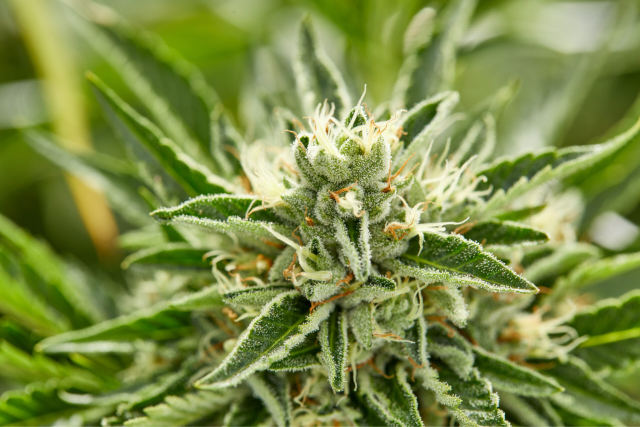
Not all orange pistils signal natural maturity.
Heat stress, intense airflow, rough handling, humidity swings, and physical contact can all darken pistils prematurely. When that happens, the flower can appear further along than it actually is.
This usually shows up unevenly. One side of the bud may suddenly develop orange or shriveled pistils while neighboring sections still produce fresh white growth normally. That patchy pattern is a strong clue that environmental stress caused the color shift rather than true maturation.
Physical handling is a common culprit. Touching buds repeatedly bruises delicate pistil tissue surprisingly fast. Strong direct fan airflow can create similar damage by drying and abrading exposed pistils continuously over time.
Growers avoid excessive handling during flowering because pistils react surprisingly fast to environmental disruption.
How pollination changes pistil behavior
Pollination changes pistils differently than normal maturation does.
Once pollen reaches a female flower, pistils often darken and shrivel rapidly because the plant shifts from attracting pollen toward seed production instead.
The timing is usually much faster than standard maturity progression.
Instead of gradually changing across the flower over weeks, pollinated pistils can collapse suddenly in localized clusters. You may also notice pistils darkening from the tips inward rather than transitioning evenly across the entire structure.
That distinction matters because once pollination starts, the plant stops prioritizing aggressive flower and resin expansion the same way. Energy starts shifting toward seed production instead.
So while pistils can help reveal pollination risk, the color shift itself still needs context before it means anything useful.
The bottom line

Orange pistils can reveal a lot about how cannabis flower developed, but they only make sense in context.
Stress can darken them early. Pollination can collapse them suddenly. Some cultivars keep throwing fresh white pistils deep into maturation while resin production still looks strong underneath.
Once you stop treating orange hairs like a simple “ready or not” switch, they become a much more useful way to understand how cannabis flower is actually developing.
Find fresh flower, verified lab results, and strain reviews near you on Weedmaps.