





Ana Bacigalupo left her office job in Argentina and flew to California to trim cannabis. What she found was the part of harvest season nobody brags about.
“I remember crying inside the tent at night, saying: ‘What am I doing here? I’m completely alone. If something happens to me, where do I run? Where do I go?’”
California trim season has its own folklore: cash, freedom, plants, mountains, community. Ana Bacigalupo lived the other version.
This article does not suggest that every cannabis farm in California operates this way. Many do not. But Ana’s story reflects a side of trim-season labor that is real, recurring and far less publicly documented than the mythology that surrounds it.
She was a secretary at a private medical clinic in Buenos Aires, Argentina. She did her nails every day. Stable job, neat life, nothing about her profile that said she was built for six months in a tent in the Central Valley. But the story was convincing. She crossed.

What she found was the part nobody tells you before you buy the ticket.
Night One
The hotel reservation had fallen through by the time she landed in Los Angeles. No room. They tried to rent a car. That didn’t happen either. They waited on the floor of the Greyhound terminal from three in the afternoon until midnight, when the first bus toward the Central Valley left.
They arrived at two in the morning at a town in California’s Central Valley, forty minutes from the ranch where she was supposed to start work the next day. At that hour, in that area, there is no Uber, no taxi, nothing. A man they didn’t know saw them standing there and offered to drive them.
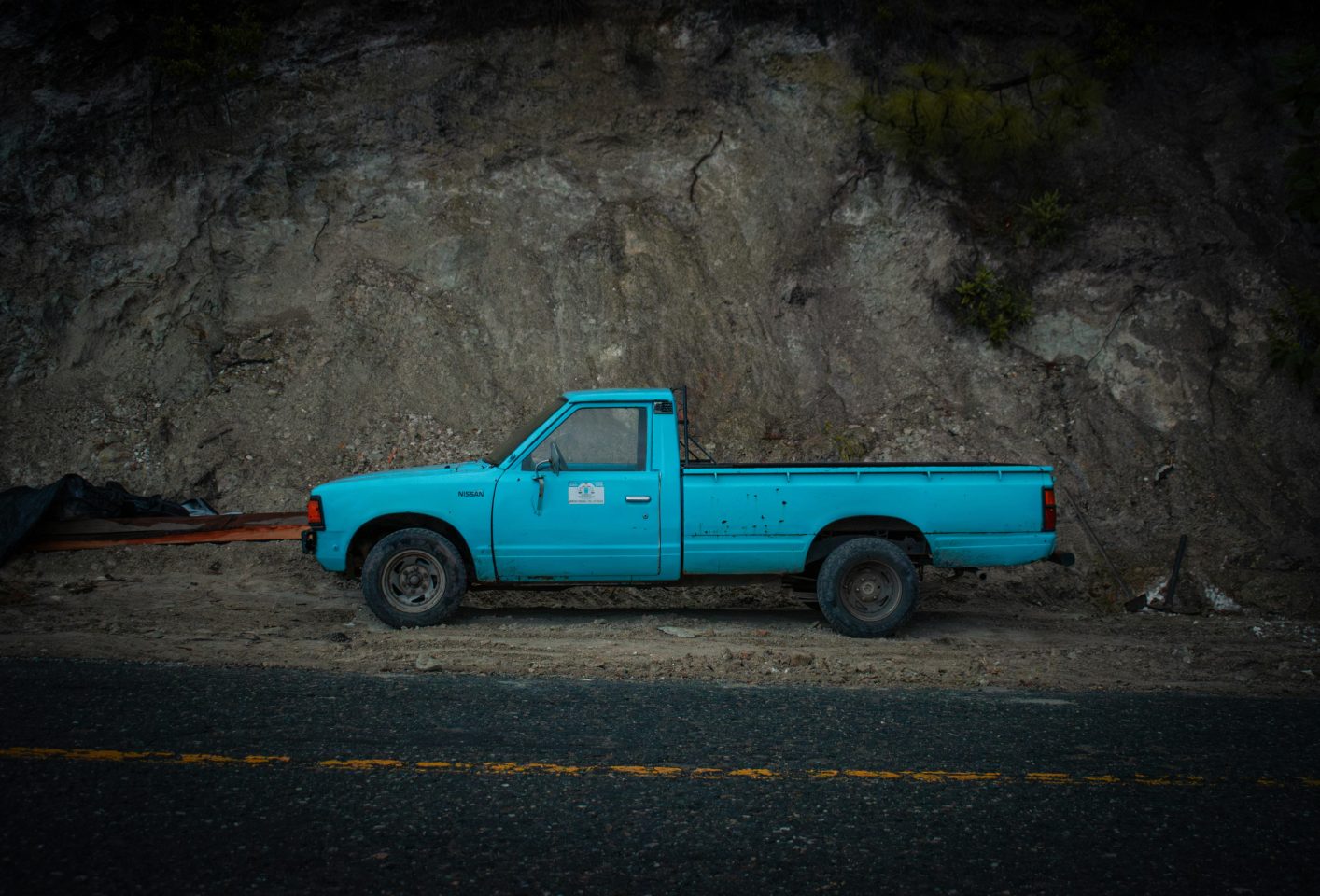
“I told him: ‘I’ll pay you whatever it takes for you not to kill me,’ because I didn’t know who he was,” Ana says. “I’ll give you whatever you want, just please take me to the place.” He didn’t charge anything. He drove them there and left.
The ranch appeared in the darkness: a fence, open field, a lantern over empty tents. The boss’s house was locked. Everyone else slept in the brush.
That was night one of the dream.
Six Months
For months, that was life: a tent, the dark, the cold, the middle of nowhere. Coyotes circling at night. Bears. Getting up at three in the morning to go to the bathroom outside, as a woman, alone, in the dark. Part of the routine.
“You get used to it,” Ana says. And that’s the problem. What seems impossible to endure becomes normal. One day, you realize nothing surprises you anymore.
It is solitary work. You show up with your tent and it is you against everything else. And out there, “everything else” can get very large very fast.
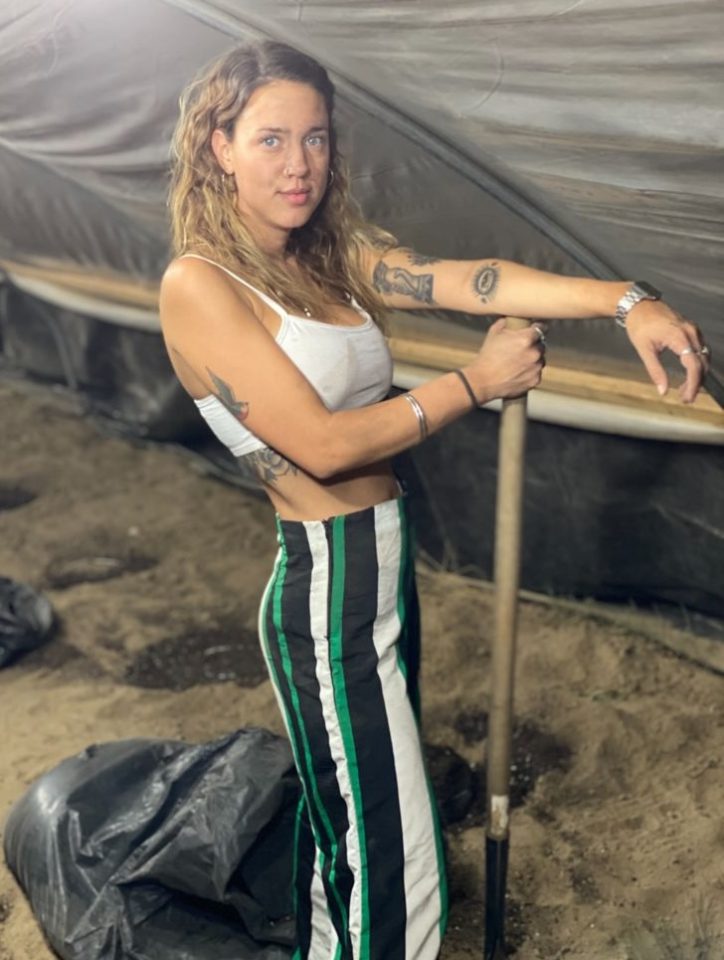
When the offer to become a grower came, she said yes without thinking. A boss offered four greenhouses, a hundred plants each, no fixed salary but a house, a shower, a bed and twenty percent of the harvest. After months in a tent, a bed was a real luxury. She signed up.
What she found inside that world rarely makes it into the mythology of trim season.
The world Ana describes moved across the legally precarious edges of California cannabis: a mix of informal work, unlicensed grows, unstable arrangements and, at times, legal operations. The point is not that every licensed workplace looks like this. It is that this labor ecosystem has long included forms of risk and precarity that rarely make it into public-facing cannabis storytelling.
“You wake up for breakfast and you see five Mexicans and four Americans talking about missing pounds, making plans, saying the cops are coming. And you never live in peace.”
Ana Bacigalupo
That’s the part the folklore leaves out.
Being a Woman Out There
She ended up living with seven men she didn’t know. Fourteen hours a day in the fields with men who didn’t care if she was menstruating. No privacy, no minimum conditions, nothing designed with a woman in mind.
“As a woman you have a terrible disadvantage,” she says. From the body. From the days when something as basic as hygiene became a problem with no solution.
And underneath that, always, something heavier.
“You’re in the middle of nowhere and you’re on someone else’s territory. They can do whatever they want with you.”
Ana Bacigalupo
There are things Ana still can’t talk about. Her voice doesn’t let her. Maybe she hasn’t finished processing them. “There are many things that to this day are hard for me to process,” she says. “And many others I still can’t bring myself to think about.”
The Ferrari and the Fall
The first harvest came out well. Twenty percent of the crop. Enough to go home comfortable. Then the pandemic hit and the borders closed. The math was simple: spend the money waiting, or go back to cultivating. She went back.
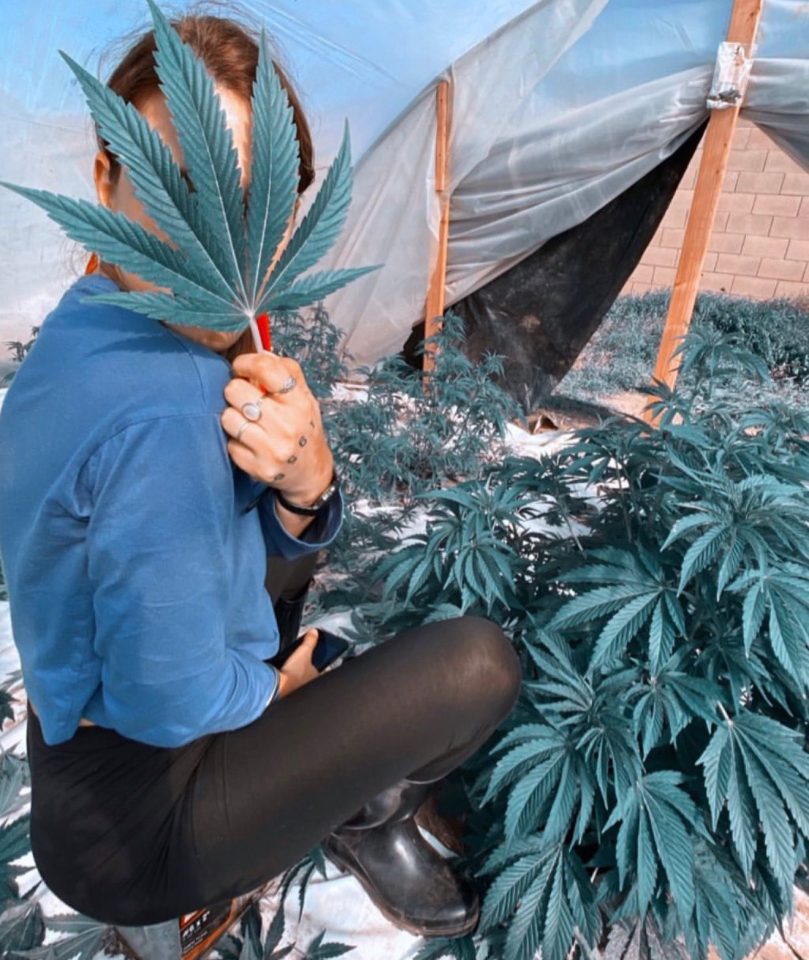
This time with her own grows. Knocking on doors, offering to rent a backyard, plant, harvest, give a percentage at the end. By hand. The neighborhoods where this happened were not what anyone pictures. “Usually very rough. It’s very common for them to have crack or meth operations nearby,” she says.
In the middle of that came an offer to work the farm of Ky-Mani Marley, Bob’s son. Legal operation. 89,000 autoflowering plants outdoors. Head trimmer position. She took it.
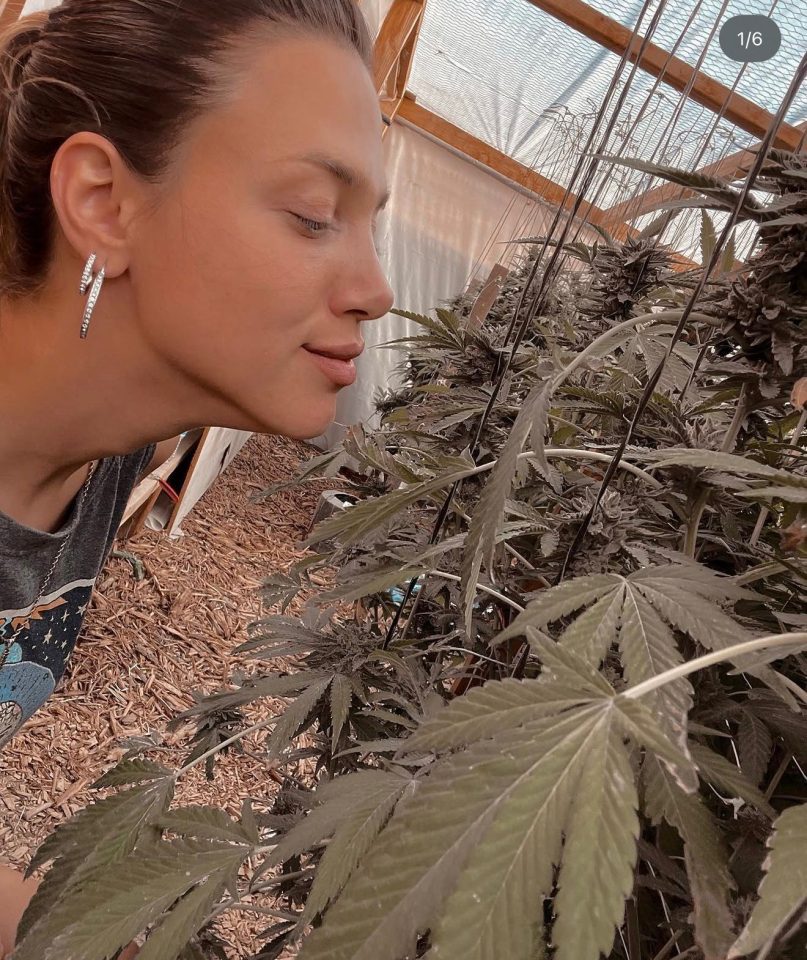
Up at four in the morning. Marley farm until midday. Then her own grows until ten at night. “I felt like I was in a Ferrari,” she says.
It didn’t last.
She was about to harvest one of her plots when the caretaker called. “Ana, they’re raiding everything. I just escaped running through the field. They came in with a bulldozer.” When she got there, police were everywhere and a truck was waiting to haul everything away. Plants left on the ground with bulldozer tracks across them.
She harvested two of the remaining plots. The partner who took the product was also her boyfriend. He came back four hours later empty-handed.
“We got robbed,” he said.
“I believed him because he was my partner,” Ana says. The people who’d also been ripped off told her afterward they weren’t going to do anything to her because they knew she hadn’t realized who she was dealing with. That she was a good person.
He went to Canada. He bought a Lamborghini.
She held on to the one grow she had left. Two days before the final harvest, she opened the greenhouse door and found every plant beheaded. Four guys, two trucks, one night. They left only the smallest buds on the floor.
She went to Miami broke. Christmas 2021. And it was there, alone, that she found out she was pregnant.
The Way Back
Her family told her to fly straight home. Ana said no. Her situation was already very fragile and leaving directly could close doors she might need later. She found another way out. Through Mexico.
Pregnant, alone, broke. From San Diego to Tijuana on foot. From Tijuana to Mexico City. From there to Bogotá. From Bogotá to Buenos Aires.
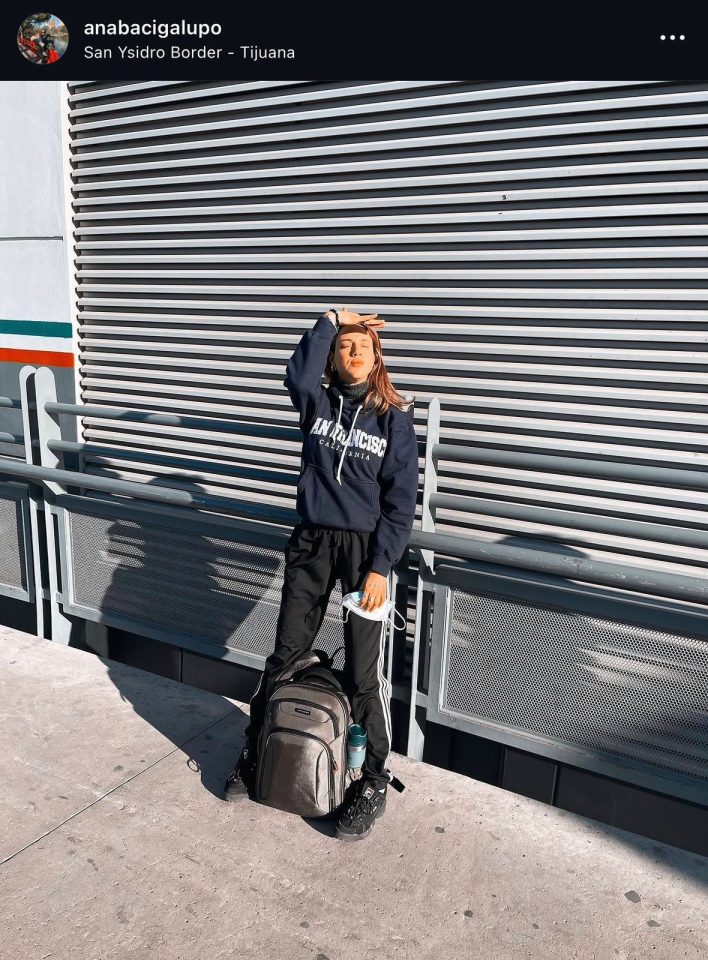
She describes herself in that moment as “a tiny being who can’t even drag a single suitcase.”
“Wow. I’m thirty minutes from stepping on home ground, from being safe and hugging my mom.”
Ana Bacigalupo, when the pilot announced forty minutes to landing in Buenos Aires
That pregnancy didn’t make it. Her body had already been through too much. “That baby was lost along the way,” she says. Today, she has a son who she says is the best thing that ever happened to her.
What Nobody Calculates
The market doesn’t pay what it used to. When Ana was in California, a pound went for $1,500 to $2,000. Today it’s $200 to $400. The market broke.
The price of a pound of cannabis in California
When Ana was there: $1,500 to $2,000
Today: $200 to $400
The market broke. The math no longer works.
“There’s no point going to trim for $15 or $20 an hour. You end up with tendinitis for years, your back wrecked, your eyes wrecked, and your heart broken on top of it.”
And then, simpler: “The time you lose doesn’t come back. The time away from the people you love, the emotional damage, the body broken from such a brutal pace — it’s not worth it.”
‘I Try to Save Them the Trip’
Today Ana has a son. She watches her mother be a grandmother every day. She went back to working with the plant, legally, in Argentina, from a healthier, more honest and safer place.

Every time someone messages her on Instagram asking how to go trim or grow in California, she tries to respond. If she knows someone who needs workers and the person is already there, she tries to get them somewhere safe. If not, she tells them directly: don’t go. “I try to save them the trip.”
She knows not every story ends like hers. She knows people who came back fine, with money, with good memories. But she also carries years of messages from strangers writing from the other side of the world to tell her the same thing in different words.
And there is something else, she says now. It’s not only that people lived something similar and never told it. There may be people who never made it back to tell anything at all.
“After the experience, we all come back a little broken.”
Ana Bacigalupo
Have a story about working in a cannabis farm? Send it to javier@hightimes.com.
Ana’s story first appeared in an interview with Argentine cannabis channel Doña Huana. This piece is based on an in-depth interview conducted for High Times.
Editor’s note: This publication shares stories and information about real-life events, including criminal activities. Everything you read here is based on reliable sources, public records, or personal accounts, but it is not meant to be the final word on what happened. Only a court of law can decide someone’s guilt or innocence. We do not support or promote any illegal actions, and we encourage readers to approach these topics with care and respect.