





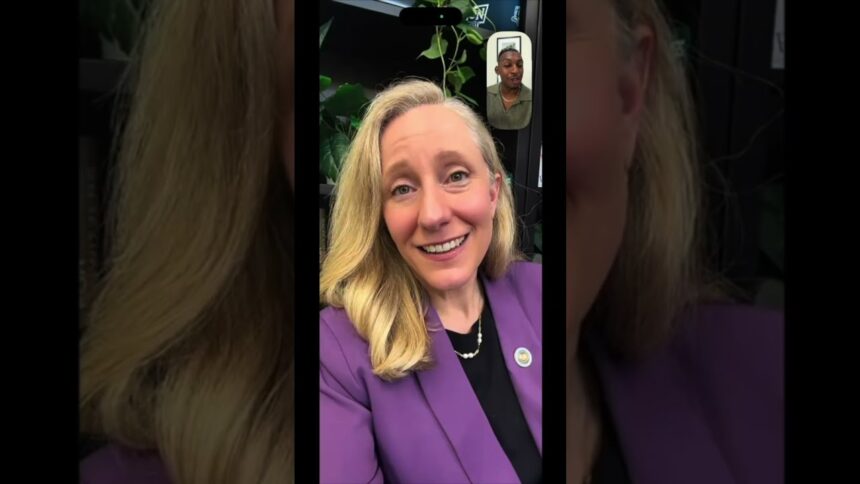
A recent poll showed that most Virginia voters disagree with Gov. Abigail Spanberger’s (D) veto of legislation to legalize recreational marijuana sales—but the disappointment in the move extends to members of her own family, the governor says.
“I know a lot of people are not pleased with that veto,” she said in an interview with actor and content creator Tevin Davis that was posted on Monday. “Friends and family are displeased as well.”
“I do think it’s an obligation to get it right, and I can’t overstate the fact that I was really dug in on the details on this bill—and it’s all about making sure that it is a market that prioritizes public health, public safety, kids’ safety,” Spanberger said. “I recognize the disappointment that the timing of this decision has made, but it’s on the question of the principles of it.”
Lawmakers passed the cannabis sales bills in March, but the governor then suggested changes to the legalization proposal—including delaying the start date for sales by six months, increasing taxes and instituting new criminal penalties for cannabis consumers. The legislature last month declined to take up the amendments during a one-day reconvened session, however, effectively rejecting them. Spanberger then issued a veto last week.
In the new interview, the governor acknowledged that “some people are angry” about her veto and “it’s entirely possible that the things I’m worried about, maybe I’m worried about too much.”
“But it is also my responsibility to worry about the implementation, because it is a substantial change to an entirely new type of retail business in Virginia,” she said. “And I have an obligation to get it right, and I take that obligation seriously. And it is the details that really truly matter, and I am a fine-tooth comb, detail-oriented person.”
When the governor sent lawmakers her amendments to the bill, she proposed them as an entire substitute rewrite of the legislation instead of suggesting specific discrete changes they could easily consider individually.
She told Davis that if the legislature had “chosen to sever the amendments and take them on a more individual basis, then you know that would have been additional conversations to be had” rather than the resulting veto.
A recent survey found that bipartisan majorities of Virginia voters wanted Spanberger to sign the cannabis legislation into law, and that they specifically disagreed with her desire to slow the launch timeline for legal sales.
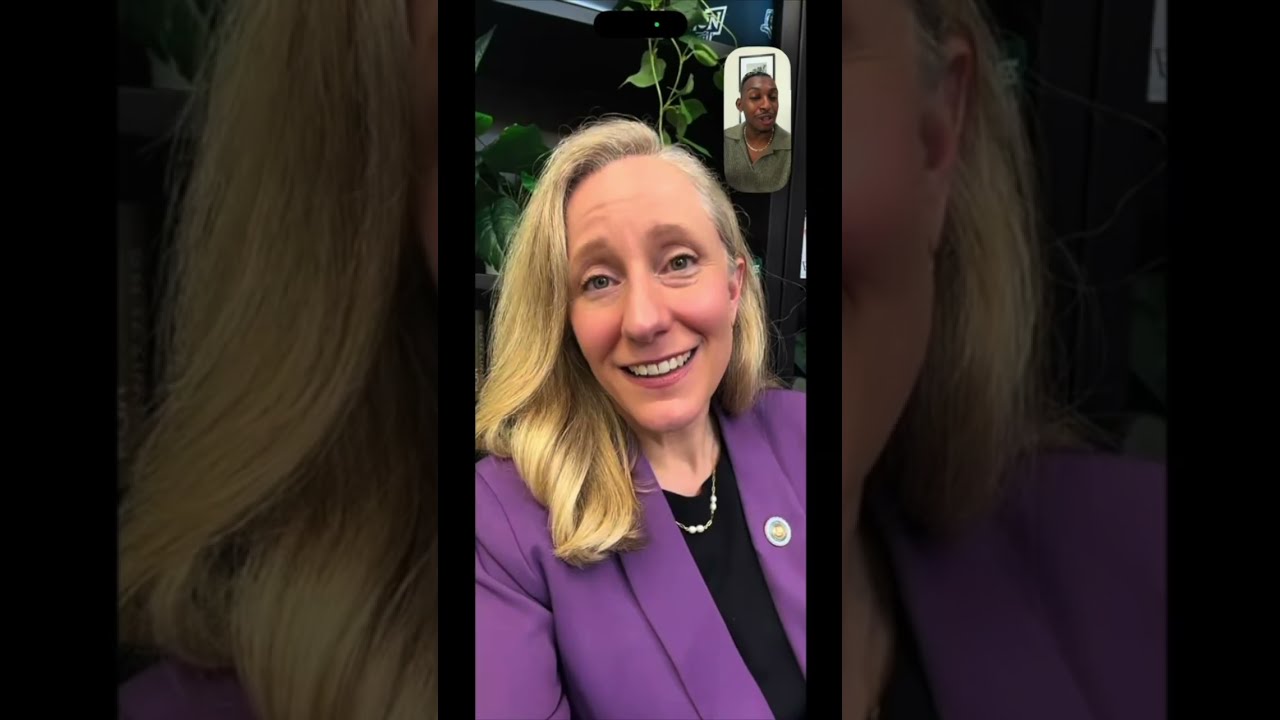
To that end, the governor also sought in the new interview to explain her thinking on timing for the launch of the market and the licensing of businesses.
“If we let all the licenses go at one point in time, as soon as the market opens, it’s going to be people who have greater access to the capital and people who can move quickly to find a space, to rent the space and to be ready to establish a business,” she said. “The learning curve that might occur that would then allow for additional entrants into the market—you’ve already saturated the market and really made it a challenge for people who might choose to enter that space as an entrepreneur, precluding them from doing so.”
Additionally, she again said that her position on marijuana policy was shaped by speaking to leaders of other states that have enacted legalization.
“My team did a lot of outreach to other states—some that have newer cannabis markets, some that have been cannabis markets that have been there for quite some time,” she said. “What are the lessons learned? What do they wish they had known when they were just getting started? And we got a lot of really great feedback from governors, from their policy folks, and I brought that to my review of the legislation.”
The governor has repeatedly responded to criticism of her cannabis amendments from the bill sponsors and advocates by saying the suggested changes came after she spoke to the leaders of other states that have already implemented adult-use marijuana markets.
A spokesperson for Spanberger was not able to name any other governors she talked to about cannabis in response to a question from Marijuana Moment last week, however.
The governor separately recently sought to explain her veto in an earlier interview last week, reiterating that she supports launching a legal cannabis market but worried about what she called a “rushed timeline” and “far more stores across Virginia” than she thinks are appropriate.
Prior to vetoing the cannabis commerce bill, the governor did sign separate legislation to provide resentencing relief for people with past cannabis convictions.
Personal marijuana possession and home cultivation of marijuana has been legal in Virginia since 2021, but then-Gov. Glenn Youngkin (R) twice vetoed bills to provide consumers with a way to legally purchase regulated adult-use cannabis.
Sen. Lashrecse Aird (D), and Del. Paul Krizek (D), the sponsors of the legalization bills, had urged colleagues to vote against the governor’s amendments last month—even if that meant risking a veto from Spanberger when the legislation returned to her desk, which has now occurred.
Lawmakers will now have to start the push for reform over again with new bills in the 2027 session.
Here are the other key details of the cannabis bills—SB 542 and HB 642—as approved by lawmakers and with the governor’s suggested amendments:
- Lawmakers voted to allow adults to be able to purchase up to 2.5 ounces of marijuana in a single transaction, or up to an equivalent amount of other cannabis products as determined by regulators. That would represent an increase from the limit in current law of 1 ounce. The governor, however, wanted the amount increased to only 2 ounces.
- Under the legislature’s plan, legal sales could begin on January 1, 2027, but the governor proposed to push that back to July 1, 2027.
- Lawmakers voted to impose an excise tax of 6 percent on cannabis sales as well as a 5.3 percent retail sales and use tax, while allowing municipalities to set an additional local tax of up to 3.5 percent. The governor’s plan was largely the same, though it would have increased the excise tax to 8 percent starting on July 1, 2029.
- Under the legislation as approved by lawmakers, revenue would have been distributed to the Cannabis Equity Reinvestment Fund (30 percent), early childhood education (40 percent), the Department of Behavioral & Developmental Health Services (25 percent) and public health initiatives (5 percent). The governor, however, wanted to put all revenue into the general fund while earmarking it “for purposes such as early childhood education, behavioral health, public health awareness, prevention, treatment, and recovery services, workforce development, reentry, indigent criminal defense, and targeted reinvestment in historically disadvantaged communities.”
- The Virginia Cannabis Control Authority would have overseen licensing and regulation of the new industry, and would have also taken on oversight of hemp, which is currently under the Department of Agriculture and Consumer Services.
- Local governments could not have opted out of allowing marijuana businesses to operate in their area.
- Delivery services would have been allowed.
- Serving sizes would have been capped at 10 milligrams THC, with no more than 100 mg THC per package.
- The governor proposed to make public marijuana use a class 4 criminal misdemeanor instead of civil violation punishable by a $25 fine as under current law. She also wanted to make possessing cannabis by people under the age of 21 a class 1 misdemeanor, punishable with a mandatory minimum fine of $500 or 50 hours of community service, as well as the suspension of drivers licenses for at least six months. Illegally selling or distributing 50 pounds or more of marijuana would have been a class 2 felony punishable by life in prison.
- The governor sought to eliminate support for the Cannabis Equity Reinvestment Fund.
- Existing medical cannabis operators could have entered the adult-use market if they pay a licensing conversion fee that was set at $10 million.
- Cannabis businesses would have had to establish labor peace agreements with workers.
- As passed by lawmakers, the bill would have directed a legislative commission to study adding on-site consumption licenses and microbusiness cannabis event permits that would allow licensees to conduct sales at venues like farmers markets or pop-up locations, but the governor proposed to remove that language.
A coalition of cannabis reform organizations sent the governor a letter this month urging her not to veto the sales legalization legislation even though her amendments were rejected.
“Together, these bills address the real issues surrounding cannabis in the Commonwealth today: an already-existing, unregulated marijuana market operating openly across the state while consumers, communities, and law enforcement are left without the protections of a legal framework,” the groups wrote.
“Let’s be clear: these bills do not create a marijuana market in Virginia. That market already exists,” the letter said. “What these bills do is replace today’s predatory and unaccountable illicit operators with a regulated marketplace, enforceable rules, oversight, product safeguards, age verification, and the strict consumer safety standards already in use for Virginia medical cannabis.”
The letter was signed by Virginia NORML, Marijuana Justice, Virginia Cannabis Association, Marijuana Policy Project and other groups.
Separately, a coalition of hemp businesses that joined with a major alcohol retailer in asking Spanberger to veto the marijuana bill before she did so said the move presents an “opportunity” to craft better cannabis policy.
Meanwhile, the governor signed several other reform bills last month—including measures to protect the parental rights of marijuana consumers and allow patients to access medical cannabis in hospitals.
Marijuana Moment is made possible with support from readers. If you rely on our cannabis advocacy journalism to stay informed, please consider a monthly Patreon pledge.