




Virginia’s governor and key lawmakers have announced the details of a plan to legalize recreational marijuana sales through budget legislation this month following the veto of a previous proposal to enact the reform.
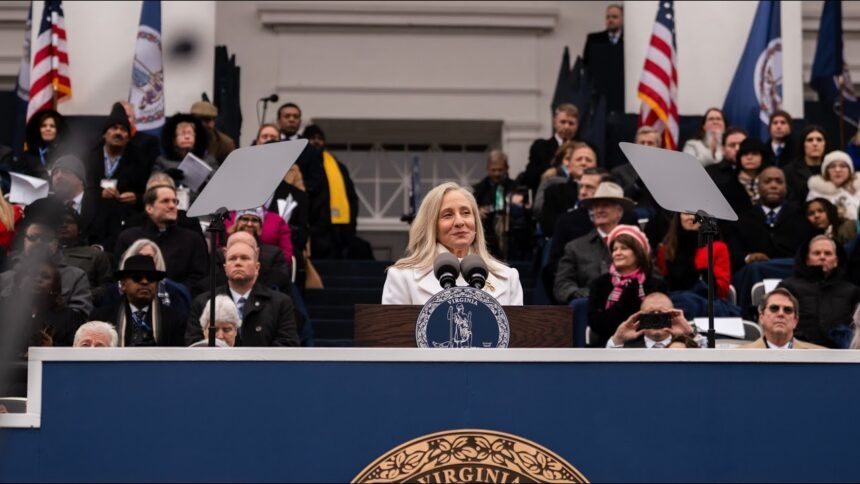
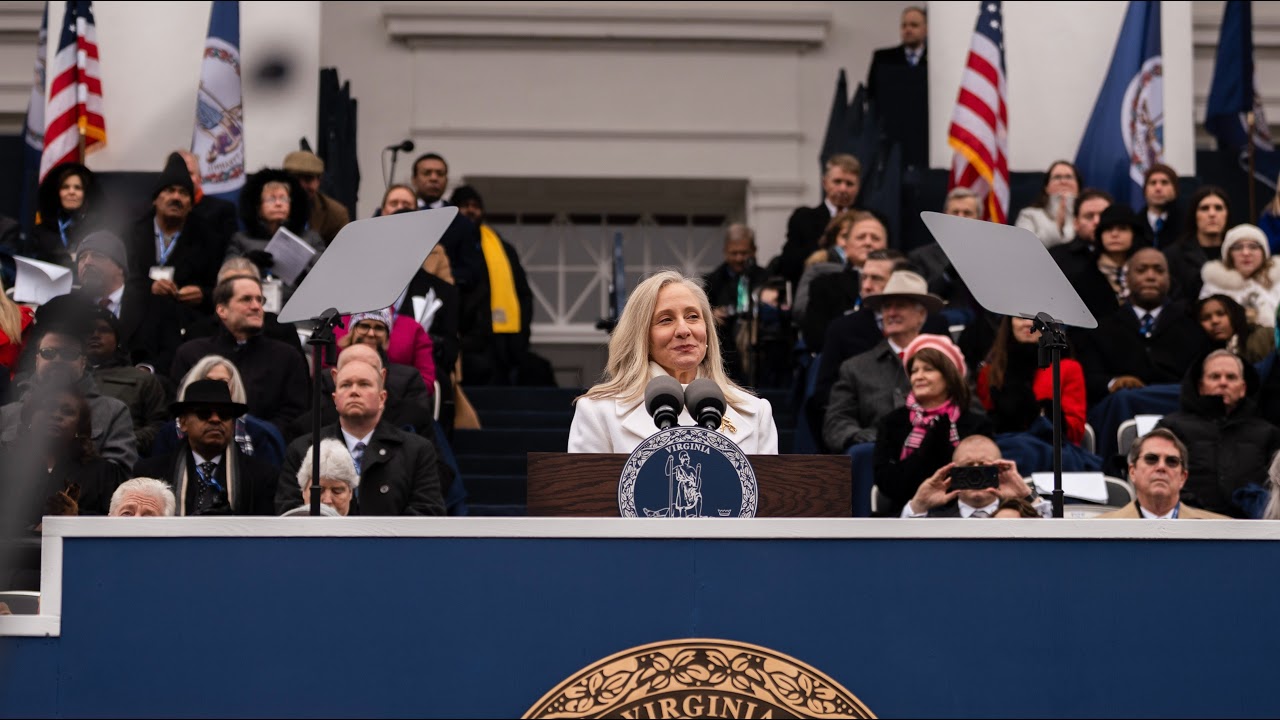
Gov. Abigail Spanberger (D) on Tuesday appeared at a press conference alongside legislators who sponsored bills she rejected earlier this year to unveil a new compromise approach that they have agreed on.
“We have agreed to a proposal that will create a safe, legal and well-regulated cannabis marketplace here in the commonwealth of Virginia—with recreational sales beginning on July 1, 2027,” the governor said. “We will do it in a way that protects consumers, tamps down with the goal of eliminating the illicit market with clear enforcement and regulatory authority and creates a more competitive market for small businesses and farmers.”
“This is what good governing and collaboration looks like—bringing people together, listening carefully and focusing on solutions that are practical, enforceable and in the best interest of Virginians,” she said. “In the end, we all wanted to deliver a marketplace that the commonwealth could implement effectively for the long-term. We have always had this same end goal—an end goal that has been years in the making—so I am proud to stand alongside these dedicated legislators and to be working alongside alongside them to deliver a marketplace built to last.”
Sen. Lashrecse Aird (D), the lead sponsor of the Senate version of the previous cannabis measure Spanberger vetoed, said she believes the newly negotiated deal “strikes the right balance.”
“Virginians deserve to know that they are buying items that are accurately labeled, properly tested and sold in a secure environment,” she said. “This framework gives us a real path to move demand out of the illicit market and into a regulated system built around safety, accountability and consumer protection.”
Del. Paul Krizek (D), who sponsored the House of Delegates version of the earlier marijuana legislation, said the goal is to “create a cannabis market that is responsible” and that gives small businesses “a real chance to succeed.”
“For decades, cannabis enforcement created real consequences for individuals, families and documented disproportionate impact to communities,” he said. “A legal marketplace should not lock those same communities out of the economic opportunity created by reform.”
“Part of the responsible legalization that we have before you today is recognizing that those past cannabis policies did not affect every community equally as we move into a legal marketplace,” Krizek said. “We have an obligation to make sure opportunity is not limited only to those who already have access to capital and political connections.”
The new plan differs significantly in several ways from the earlier legislation that lawmakers passed earlier this year and that the governor vetoed.
For example, it sets the launch date for recreational marijuana sales at July 1, 2027, which is what Spanberger proposed in contrast to the January 1 date in what lawmakers had passed.
It also sets the legal public marijuana possession and per-transaction purchase limit at 2 ounces, an increase from the current legal limit of one ounce. The legislation lawmakers passed earlier this year would have allowed adults to possess up to 2.5 ounces.
The bill also cedes to Spanberger on language to increase a marijuana excise tax from 6 percent to 8 percent after two years of legal sales.
By way of compromise, the new agreement would make public consumption of marijuana punishable by a civil penalty of $250—a significant increase from the $25 in current law but less harsh than the class 4 criminal misdemeanor the governor sought in her proposed changes to the previous bill. The penalty increase would not take effect until July 1 of next year, however, raising the possibility that lawmakers could pass legislation next session to rescind it.
Lawmakers passed the initial cannabis sales bills in March, but the governor then suggested changes to the legalization proposal—including delaying the start date for sales by six months, increasing taxes and instituting new criminal penalties for cannabis consumers. The legislature in April declined to take up the amendments during a one-day reconvened session, however, effectively rejecting them. Spanberger then issued a veto.
Spanberger said last week that she was having “really productive” and “incredible” conversations with lawmakers about crafting a compromise approach to legalizing adult-use cannabis sales, and Marijuana Moment previously reported on the ongoing talks.
Following Spanberger’s veto, top lawmakers have been openly discussing the possibility of including provisions to legalize adult-use cannabis sales in still-outstanding budget legislation that they are due to pass by July 1.
The effort to keep the issue alive was a topic of discussion at the first meeting of the legislature’s Joint Commission to Oversee the Transition of the Commonwealth into a Cannabis Retail Market since the governor’s move to kill the previous proposal to regulate adult-use marijuana sales.
The governor, meanwhile, has tried publicly explain her veto—including by saying it is her view that “taking a little bit longer” to launch the market is not something she sees as “negative” because it is more important to get the details right than to do it fast.
A recent survey found that bipartisan majorities of Virginia voters wanted Spanberger to sign the cannabis legislation into law, and that they specifically disagreed with her desire to slow the launch timeline for legal sales.
The governor recently acknowledged in a separate interview that “a lot of people are not pleased” with her veto of the cannabis legislation. “Friends and family are displeased as well,” she said.
Spanberger has repeatedly responded to criticism of her cannabis amendments from the bill sponsors and advocates by saying the suggested changes came after she spoke to the leaders of other states that have already implemented adult-use marijuana markets.
A spokesperson for Spanberger declined to name any other governors she talked to about cannabis in response to a question from Marijuana Moment, however.
The governor separately recently sought to explain her veto in an earlier interview, reiterating that she supports launching a legal cannabis market but worried about what she called a “rushed timeline” and “far more stores across Virginia” than she thinks are appropriate.
Prior to vetoing the cannabis commerce bill, the governor did sign separate legislation to provide resentencing relief for people with past cannabis convictions.
Personal marijuana possession and home cultivation of marijuana has been legal in Virginia since 2021, but then-Gov. Glenn Youngkin (R) twice vetoed bills to provide consumers with a way to legally purchase regulated adult-use cannabis.
Aird and Krizek, the sponsors of the legalization bills, had urged colleagues to vote against the governor’s amendments—even if that meant risking a veto from Spanberger when the legislation returned to her desk.
Here are the key details of the new cannabis plan and how it compares to legislation that Spanberger vetoed—SB 542 and HB 642—as well as her previously proposed amendments to those measures:
- Adults would be able to purchase up to 2 ounces of marijuana in a single transaction, or up to an equivalent amount of other cannabis products as determined by regulators. That would represent an increase from the limit in current law of 1 ounce. Lawmakers previously proposed setting the amount at 2.5 ounces and the governor only wanted 2 ounces.
- Legal sales could begin on July 1, 2027. Lawmakers previously set the date for January 1, 2027, but the governor wanted it pushed back to July 1.
- There would be an excise tax of 6 percent on cannabis sales as well as a 5.3 percent retail sales and use tax, and municipalities would be allowed to set an additional local tax of up to 3.5 percent. Starting on July 1, 2029, the state excise tax would increase to 8 percent, in line with the governor’s previously proposed amendments.
- Revenue would be distributed to the Cannabis Equity Reinvestment Fund, early childhood education, the Department of Behavioral & Developmental Health Services and public health initiatives. The earlier measure passed by lawmakers would have allocated specific percentages to each, but the new language doesn’t specify what portion of revenue will go to each program. The governor, in her amendments, wanted to put all revenue into the general fund while earmarking it “for purposes such as early childhood education, behavioral health, public health awareness, prevention, treatment, and recovery services, workforce development, reentry, indigent criminal defense, and targeted reinvestment in historically disadvantaged communities.” Her amendment also sought to eliminate support for the Cannabis Equity Reinvestment Fund.
- The Virginia Cannabis Control Authority would oversee licensing and regulation of the new industry, and will also take on oversight of hemp, which is currently under the Department of Agriculture and Consumer Services. The body would be governed by a five-member board of directors appointed by the governor, whereas the bill previously passed by lawmakers contemplated a seven-member body with four appointed by the governor, two appointed by the speaker of the House and one appointed by the Senate Rules Committee.
- The definition of what constitutes a legal hemp product would be narrowed by removing a provision from current law that allows those containing more than 2 milligrams of total THC per package if they also have a ratio of CBD to THC that is 25:1 or more.
- Up to 350 retail marijuana stores would be allowed to be licensed to operate across the state, the same number that lawmakers had approved and greater than the 200 the governor had proposed.
- Local governments would not be able to out of allowing marijuana businesses to operate in their area.
- Delivery services would be allowed.
- Serving sizes would be capped at 10 milligrams THC, with no more than 100 mg THC per package.
- Public use of marijuana would be a civil violation punishable by a $250 fine. That is ten times more than the $25 fine under current law, but less harsh than than the class 4 criminal misdemeanor crime the governor had proposed. Possession of cannabis by people under the age of 21 would be punishable by a $25 fine and mandatory participation in a substance abuse treatment or education program or both. The governor had suggested treating underage possession as a class 1 misdemeanor, punishable with a mandatory minimum fine of $500 or 50 hours of community service, as well as the suspension of drivers licenses for at least six months.
- Existing medical cannabis operators could enter the adult-use market if they pay a $10 million licensing conversion fee.
- Cannabis businesses would have to establish labor peace agreements with workers.
- A legislative commission would be directed to study adding on-site consumption licenses and microbusiness cannabis event permits that would allow licensees to conduct sales at venues like farmers markets or pop-up locations. That provision was also included in the earlier legislation lawmakers passed but was suggested for deletion by the governor.
Marijuana reform advocates cheered the fact that a legal sales deal is coming together, but they expressed concerns about some of the penalty increases in the bill.
“This compromise represents a meaningful step toward bringing Virginia’s cannabis laws in line with public opinion and moving the commonwealth closer to a marketplace that consumers have long demanded,” JM Pedini, development director for the advocacy group NORML and executive director for Virginia NORML, said. “Although NORML has deep concerns about provisions in the bill to increase the civil penalty for public cannabis consumption, we are encouraged by other areas of broader agreement. This bill establishes a consumer-friendly regulated marketplace, improves public safety and provides clear rules for everyone involved.”
Meanwhile, the governor signed several other reform bills this session—including measures to protect the parental rights of marijuana consumers and allow patients to access medical cannabis in hospitals.
Marijuana Moment is made possible with support from readers. If you rely on our cannabis advocacy journalism to stay informed, please consider a monthly Patreon pledge.