





A closer look at the past, present, and future of that tiny thing at the end of the joint you’re either totally ignoring or celebrating as high art.
There was a time when the business end of your joint — the part that touched your lips — consisted of nothing more than rolling paper material wrapped around the weed, tapered and twisted off. If (but only if) you’d had enough practice, you’d manage to smoke that hand-rolled number all the way down to its roach without inhaling little bits of errant herb or burning your lips or fingers or both. Then things changed.
Somewhere along the joint’s evolutionary timeline, the tip — aka the crutch, but not a filter, that’s a different beast altogether — a tiny, stiff piece of paper tucked between plant and pout emerged from the primordial pot-party ooze and went on to profoundly change the joint game forever.
The 1980s: The Murky Origins of the Paper Tip
Nobody knows precisely when and where the Scooby-snack-stopping, burnt-lip-preventing piece of paper came on the scene, but a dip into the High Times archives finds that this magazine was running print ads for joint tips as far back as the 1980s. And RAW Rolling Papers founder, joint historian (and High Times owner) Josh Kesselman remembers trying to problem-solve his own joint issue somewhere in that same decade.
“I naturally have big lips,” Kesselman recalls, “and, even with a roach clip, I kept burning my lips and my friends used to call me ‘Kessel Lips’ and make fun of me.… After getting made fun of enough times, I had the idea to create a spacer as I was rolling up a joint, and I grabbed some piece of paper that I had [on hand], and I made a spacer to keep it further away from my lips, and I thought I was so smart.”
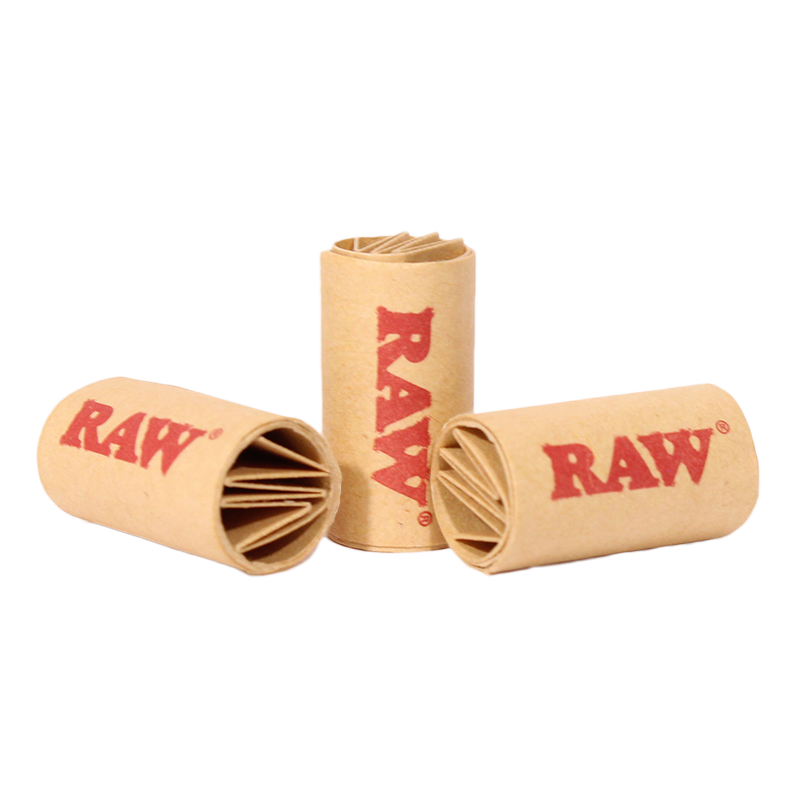
“I did not invent joint tips,” Kesselman takes great pains to emphasize. “But I thought that I did. And I bet you there are thousands of other stoners of a similar age that also think that they did.”
Whether the first joint tips were invented by a single inspired stoner somewhere or, as is more likely, midwived out of necessity by legions of them, that little piece of paper turned out to be a big hit. By the late 1990s, Kesselman says, he was importing them to sell wholesale, and to date, those little rolled pieces of stiff paper betwixt joint and lip have made him, in his own words, “millions and millions of dollars.”
The Art of the Fold
Noah Rubin, author of the book How We Roll: The Art and Culture of Joints, Spliffs and Blunts says that while the paper tip might have originated simply as a utilitarian hack to prevent Scooby snacks, avoid burned fingers and improve airflow, it long ago moved beyond simple M-shaped paper folds or rolled spirals (two of the four shapes he teaches readers how to craft in his book).
“Tips have become this whole creative ecosystem,” he said. “We’ve obviously all heard about creative joint rollers, but there are creative tip rollers too, who are doing hearts and letters and all kinds of shapes. Creative tip rolling is a whole subgenre of creative joint rolling.”
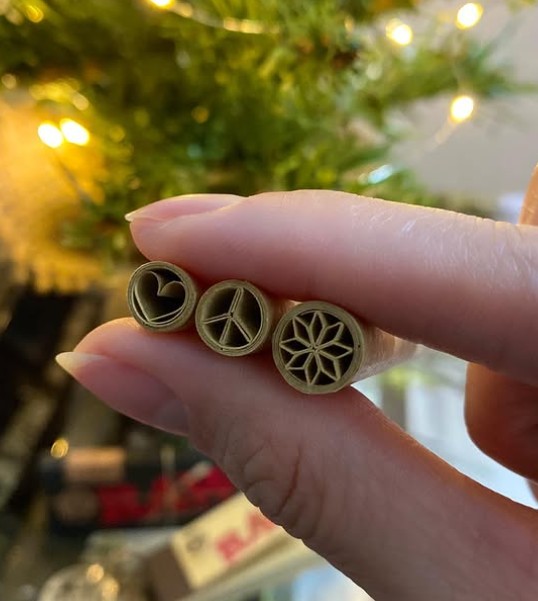
A subgenre where, unlike wild and whimsically crafted joints, the creativity is literally under wraps, all but hidden until one peers inside. That’s when you might discover designs like miniature peace signs, hearts, pointed stars or even pot-leaf shapes (how meta) staring back.
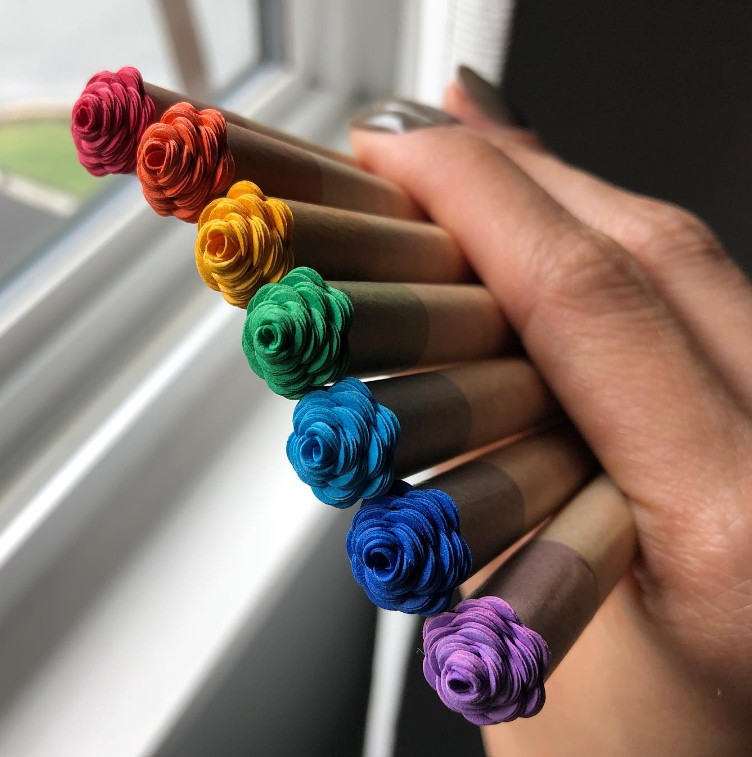
Some talented tip crafters, like the Vancouver-based creative who goes by the Instagram handle @findjoyintheordinary, have pushed the lip-end of the joint to incredibly intricate heights by creating genuine works of smokable art. The meticulously crafted tips showcased on her Insta resemble lotus flowers, dahlias, Pennsylvania Dutch hex signs, mandalas and more. One of her designs — a delicate floral rose shape — even extends beyond the rounded boundaries of the traditional tip, allowing the toker to purse their lips and actually puff through the petals.

Start With a Simple Spiral
If you’re thinking about baby-stepping into the DIY paper tip game, How We Roll’s Rubin suggests starting with the simple spiral shape. For starters, he says, it’s easy to master (roll the paper tightly in one direction, he writes, then release and repeat by rolling it in the opposite direction). It also, he points out, affords maximum flexibility.
“The diameter of your tip dictates the diameter of your joint,” he explained. “If you want to roll a little pinner, you’re going to use just one piece of paper for the tip and make it a small spiral. But, if you’re thinking about rolling something fatter, you can just [layer in] multiple pieces of paper — up to five — adding spiral to spiral to spiral to get a big, chunky, fat-diameter [tip] that will serve as the foundation of your joint.
As with sculptural, art-level joints, some of what makes the creative, hand-crafted tip special is its fleeting, ephemeral existence; once the joint is sparked, the countdown clock starts ticking. In a matter of minutes, those intricate rose petals, mandalas, peace signs and spirals — all that handicraft and hard work — literally go up in smoke. This also holds for the rest of the options in the steadily expanding universe of throw-away tips made from things like hemp (again, how meta), birch, bamboo, corn husks and even 100% pure beeswax.
2009: The Rise of the Glass Tip
The good news is, there are cool, creative joint tips that’ll last longer than the lifespan of a sand-burrowing mayfly. The most popular of these are made of glass (often borosilicate) and are designed to be rolled into joints over and over again.
As with the paper joint tips, if there’s a specific inventor, their identity remains a glassy-eyed history mystery. But all three of the joint-tip cognoscenti I interviewed for this story — Rubin, Kesselman and Proper Doinks co-founder Adam Pain — agree that there’s one man who gets credit for catapulting them to popularity.
“I think [Cypress Hill rapper] B-Real is really the creator of glass tips within the culture,” Adam Pain said. “There are some patents that go back older than that, but in terms of who put it on the map, that’s B-Real and his Phuncky Feel Tips.“
Pain is referring to the 2009 launch of B-Real’s own brand of glass tips in collaboration with German glass brand ROOR. And Rubin points out that the rapper was in the perfect position to quickly spread the gospel of the glass tip far and wide.
“If you look back at Cypress Hill and B-Real” Rubin said, “those guys had so much to do with the popularization of these styles. Because they were traveling around the country for decades on end with the best weed in their tour van, they ended up being a big part of the cultural proliferation [of the glass tip]. He was very early out of the gate.”
As the glass tip trade took off, brands like Rek Tipz, RipTip and Proper Doinks (which Pain launched with Paul Chrismon in 2021) stepped into the scene, each trying to refine and perfect the slug of perforated glass.
“People say glass cools the smoke,” Proper Doinks’ Pain said when asked what borosilicate brings to the table. “It doesn’t. What it really does is minimize oxidation.” According to Pain, it’s helpful to think about a bong.
“No matter how clean and brand new it is, [a bong] always has a kind of stale taste. And the longer it sits, the more stale it gets in that neck. That’s because the smoke is oxidizing in that big air chamber. With a doink, you’re getting tiny little airways through the particles of weed and then you get what’s in the tip before it hits your palate. Paper tips — and glass tips that just have a single, big hole — act like miniature bongs [and] the bigger that chamber in the tip is, the more oxidation is going on.”
True to their name, Proper Doinks has embarked on a never-ending quest to find the holy grail of joints by varying every single element that goes into twisting one up, from weed cultivar and grind coarseness to rolling paper, grinder, roll tightness and tip choice (all chronicled, bracket-by-bracket like a sports league on their Proper Doinks TV YouTube channel). Their verdict as of this writing?
“A 15-hole, 12-mm [in diameter] glass tip” delivers the best airflow and smoothest, tastiest toke, according to Pain. (The rest of the recipe for Proper Doinks’ perfect doink? An eighth of an ounce of weed ground with a Santa Cruz Shredder hemp grinder and rolled in an Elements King Size Wide rolling paper.)
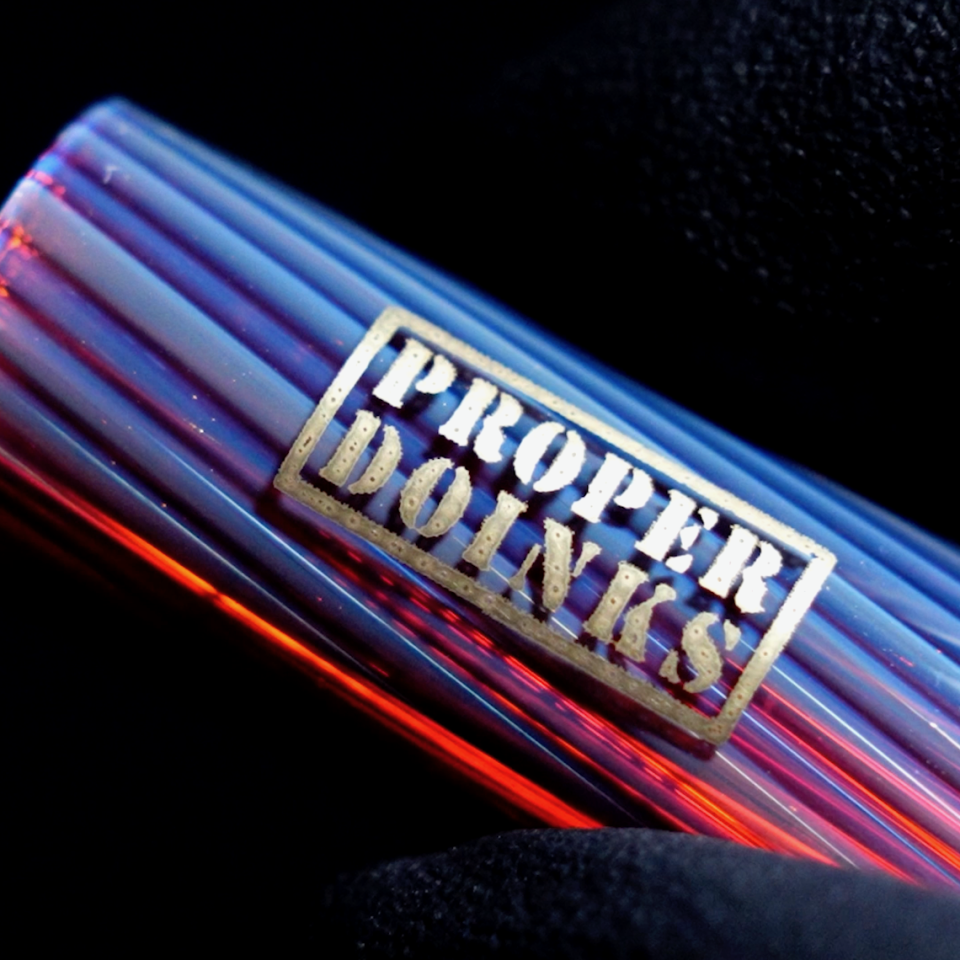
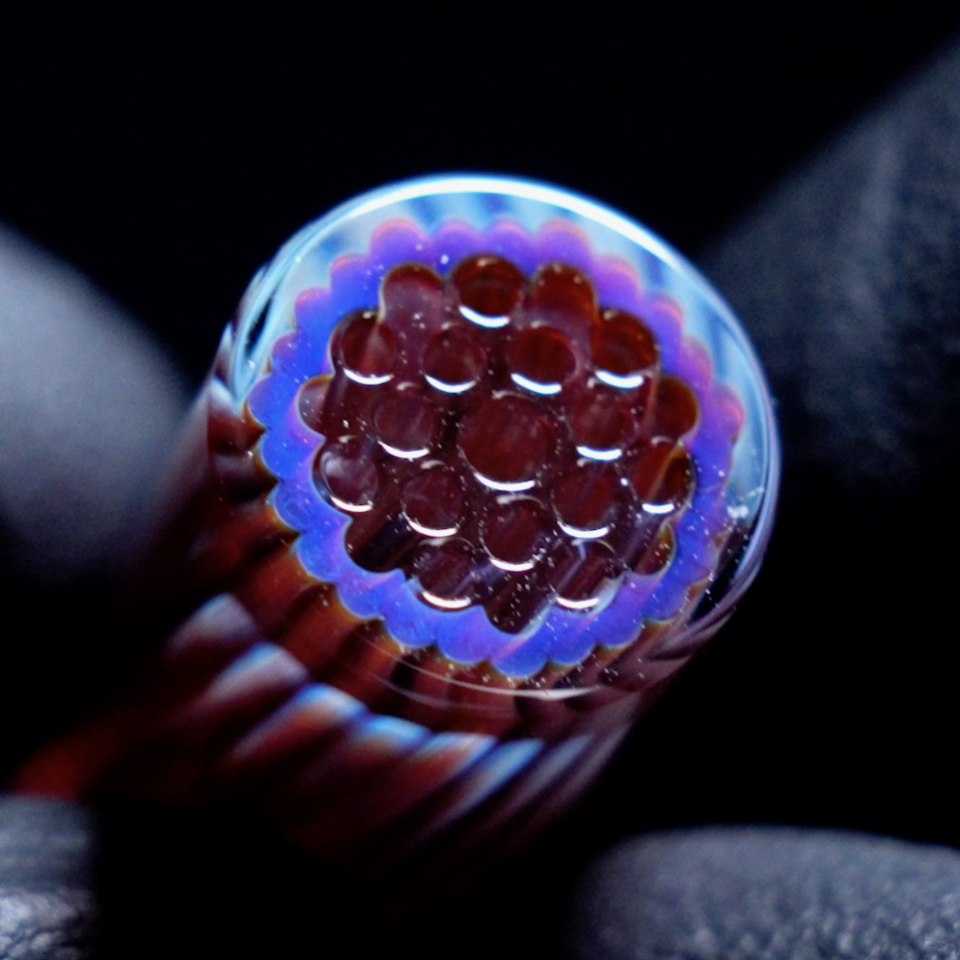

But Pain admits that the glass-tip game has become about much more than just perfecting what he calls “bro science.” Their limited-edition drops, most of which he says sell out in three to five minutes, vary only in their colorways (Watermelon, Glacier and Pink Cadillac are just a few of the sold-out styles on display at their website).
“That’s on purpose,” Pain said about the limited drops in cool colorways. “We want them to be special and collectible. Bong smokers, dab smokers and pipe smokers, all get to have their nice things and we don’t. So this gives us a collectible, heady niche.
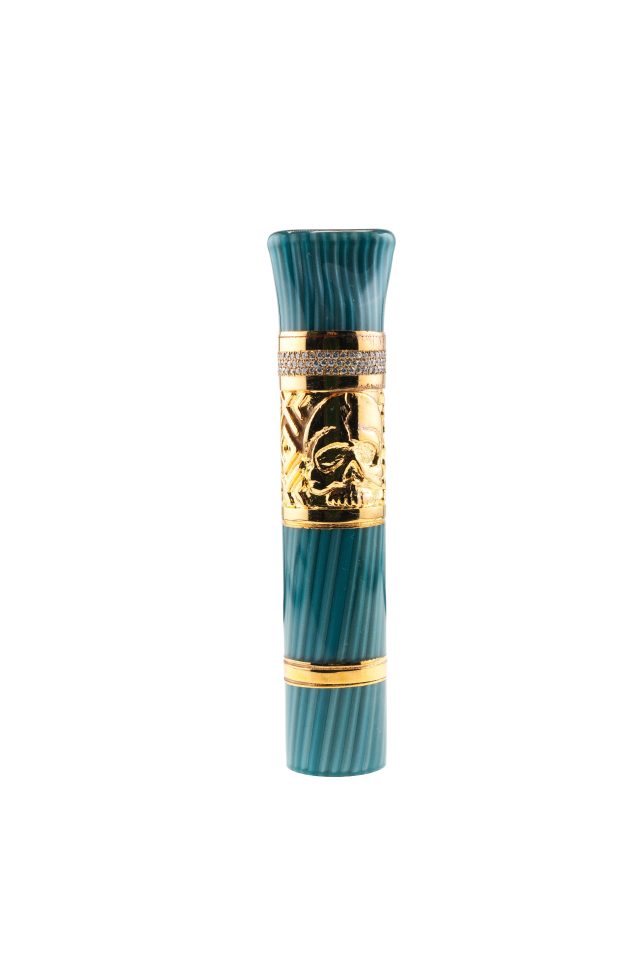
Pain isn’t kidding; some of their over-the-top collab pieces can cost as much as (if not more than) the monthly rent in a Manhattan apartment. He pointed to a Tony Kazy X PF Glassworks Shenron dragon tip that fetched a record-setting $8,250 at a Proper Doinks online auction in early 2025, only to be outdone, just months later, by a Phuncky Feel Tips/B-Real/Ryan Fitt/Toro Glass/TraxNYC/PF Glassworks collab tip that included 18K gold plating and an encrusting of diamonds that sold for a world record $12,600, pictured below.
Next Stop: E-Holes?
Now that the joint tip has evolved from stiff paper hack to over-the-top paean to self-expression, what’s next? To get help with that, I circled back to Old Kessel Lips and asked him to gaze into his crystal ball.
“It’s an electronic vaporizer tip that you roll into your joint,” Kesselman said without a moment’s hesitation. “So you smoke your joint, the smoke passes through a rosin-filled vaporizer and you end up getting a double hit of cannabis — the flower from the joint and the rosin from the tip. Essentially, it’s a built-in electronic hash hole.”
He said that the e-hole tips (let’s make that a thing) are just starting to hit the market now and added that he hopes to have a RAW version ready to retail by the end of the year.
Less than an hour after I interviewed Kesselman, a message from a random weed-world friend landed in my Insta DMs. It included a short video depicting a thick, handrolled joint married to a turquoise-colored, tank-like cylinder. The caption? “POV: Your first ever Hash Hole with an electronic Rosin filter.” The brand was EFLO Vape, which describes itself as “the world’s first electric filter tip.”
A B2B company founded by Michigan brothers and glass-tip aficionados Bailey and Christian Hannawa, the EFLO Vape hardware has been available at retail only since last spring when they launched with partner brands in three states, said co-founder and CEO Bailey Hannawa. Today, the tips have expanded their footprint into 11 U.S. states and in Canada.
So here’s a tip: It seems like Kesselman — and the Hannawa brothers — might just be on to something.