Muck Sticky, the Memphis rapper who has lived in pajamas for 24 years, opens up about weed, creativity and radical self-acceptance. As he prepares to launch his own cannabis brand, the independent artist reflects on comfort and resisting a culture obsessed with productivity.
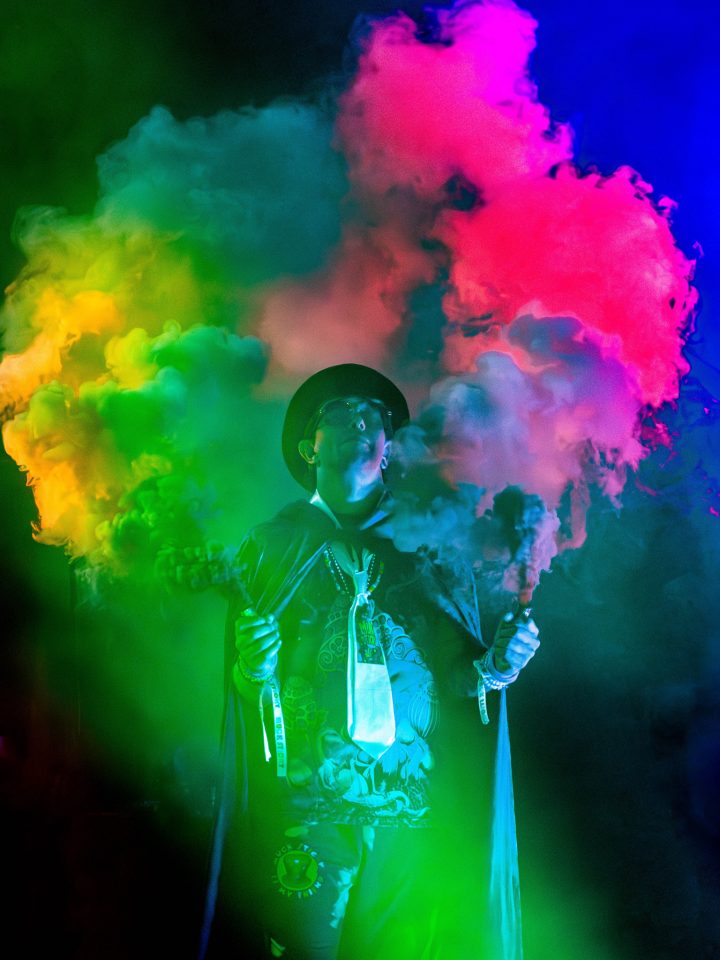
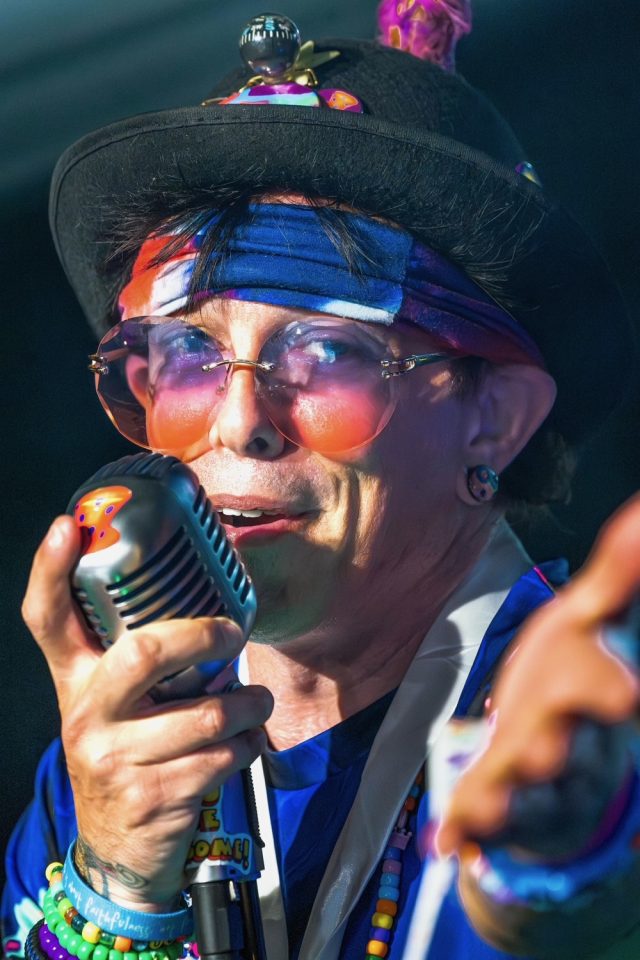
In a world seemingly governed by algorithmic cynicism, the mind-numbing laconicism of young people raised on “Brain Rots,” and the normie pose (the more “normal,” the better), encountering a guy who has been, hold on to your horses, living in pajamas for twenty-four years is not just an eccentricity: it is, also, an act of resistance. Someone who one day got up and said “no.” Someone who, twenty-four years later, continues to get up to say “no” and “no.” In fact, here’s a truism: Muck Sticky, the man placidly dressed in the pajamas in question, is not a conventional artist. His music blends Memphis hip-hop, absurdist comedy, and a symbiotic relationship with weed.
Meanwhile, while the rest of humanity squeezes itself into tight jeans, succumbs to the anxieties brought forth by hyper-productivity, and falls prey to the banal sentimentality of gym bros and finbros, Muck Sticky floats effortlessly. “I’m totally cool with people making fun of me because I don’t care what they think,” he declares immediately. He doesn’t give those people the time of day.
His aesthetic, which he himself defines as a “world record” for comfort, serves as the wrapping of a philosopher of well-being who understands that true rebellion today is, simply, being happy. Or as happy as one can be. And this article could end right here, and that would be fine. It would be enough. But his is a conscious and cultivated happiness. An architecture of optimism that is felt even in the face of adversity.
Muck seems like an honest and down-to-earth guy. He greets people with “bud” and treats everyone kindly, minus the LinkedIn-style arrogance. However, he admits that it’s not always easy to stay upbeat in a world where everyone seems focused on the negative. He says, “I often find myself wondering if it really makes any difference to spread love and good vibes… Just knowing I can help people in some way keeps me optimistic about life and the future.”
That impact is what brings things full circle for him. And in this framework, weed ceases being just recreational and becomes a frequency regulator. “Cannabis has a major impact on my ability to choose what I focus on in life, and helps me connect with others,” he confesses. He doesn’t ignore the world’s tragedies, but prefers not to be held hostage by them. A wise decision, one might say. “Choosing a brighter outlook is so important, and it’s easy to get distracted by all of the horrible things going on in the world. I don’t ignore the fact that there are a lot of problems in life, but our ability to look for the good things and have hope for better days is essential to good mental health,” he maintains.
People from all walks of life should be able to enjoy cannabis without having to explain themselves to others.
Muck Sticky
A Connection With The Plant, Now A Brand
He also feels a deep connection with the plant, which has been evolving into a tangible project that will be launched this year. “We’re actually working on that right now,” he says about launching his own cannabis brand, a process where he personally makes sure every detail is authentic. “I have ‘Final Cut’ when it comes to choosing the details. I have such a wide appreciation for so many different tastes, smells, and effects. It’s difficult to say which elements are my absolute favorites. So I’m excited we are going to have a few different options to select from,” Muck explains.
“Hopefully our pre-rolls will be exclusively wrapped in RAW papers,” he envisions. His cannabis palate is a blend of sophistication and nostalgia: “I’m a big fan of stinky cheese and fruit/berry strains. I remember getting the old school Blueberry back in the late nineties. It was so tasty and made me feel so good. So whatever we release will bring good feelings, because that’s what the music does.”
And so, as he deepened his relationship with cannabis, he understood that the reasons it was considered “forbidden” didn’t really hold up. For him, exploring one’s own psyche is a right, and weed was the conduit that allowed him to connect with his creative source. Although he acknowledges that different strains produce different effects, he believes the secret lies in letting go of the gaze of others. “My particular experience has taught me that letting go of external opinion is the root of making good art,” he states.
“I make music and art because I like the way it sounds or looks. If other people dig it, that’s cool too. But I don’t care if they do or not. In fact, I know some aren’t going to,” he continues. This philosophy of absolute independence defines him as a “loner stoner,” a solitary smoker who finds sanctuary in the early hours, with headphones on and a joint lit. “No distractions. Just me and the music. Connecting to the spirit of the music, for me, is usually a solo adventure,” he explains.
The Most Independent Man In Hip-Hop
This autonomy is not only artistic but also structural: Muck is a pioneer of independent production who owns 100% of his catalog, a privilege that began in the MySpace days, in 2004, and led him to play at the legendary Cannabis Cup in Amsterdam. Furthermore, his ultra-independent approach led him to break records in 2024 when he earned a Guinness World Record for, wait for it, “the most albums released on the same day by a single artist.” Fun fact: that meant releasing around ten albums in a single day. Today, that same intense dedication has led him to launch his own cannabis brand, where he seeks to recapture classic sensations like those of Blueberry from the late nineties. “I do miss the days of CDs.”
But his message goes beyond a product. It’s a proclamation against the “guilt” that still lingers around cannabis culture. “There seems to be a lot of rules and terms you have to use amongst some people in the cannabis community, or else they consider you a bad stoner who is setting a negative example,” he criticizes. For him, all cannabis use is preventative medicine, even if its sole purpose is to alleviate stress, because stress itself is detrimental to physical and mental health. “People from all walks of life should be able to enjoy cannabis without having to explain themselves to others,” he maintains.
The Pajamas Are The Point
Born and raised in Memphis’s musical heritage, the grandson of a musician who played with legends like Elvis and Johnny Cash, Muck has rhythm in his blood, but he’s filtered it through a lens of absolute freedom. Moreover, his uniform, his pajamas, is no joke. They are, indeed, his second skin, a commitment to comfort he’s maintained for twenty-four years and a thousand pairs of pants. Especially that favorite pair with the face of his cat Sugarpuss printed on them, who now accompanies him in his creative processes from somewhere beyond.
The pajamas are also a functional tool for his explosive live shows. And he insists he couldn’t pull off his “famous flying kicks” under the tyranny of jeans: “Have you ever seen my leg kicks when I run and jump around on stage? There’s no way I could do that in jeans.” Muck Sticky is a constant reminder that authenticity is the most potent stimulant. If a guy in pajamas, singing rhymes that celebrate life, could build an empire of positivity, maybe the rest of us can too. “My goal has always been to make music that inspires people to not only laugh and have fun, but to also love and believe in themselves and their ability to make a good life. I hope people will recognize that if this goofy dude wearing pajamas and singing silly songs can make something of himself and enjoy his life, that they can make something of themselves and enjoy their lives as well,” he adds.
Meanwhile, Sticky’s resistance isn’t against the system (oh, the system!), but against the obligation to optimize ourselves to the point of exhaustion. As the South Korean philosopher Byung-Chul Han, widely quoted these days by Generation Burnout (the burnt-out millennials and Gen Z), points out in The Burnout Society: “Today we don’t exploit ourselves for others, but for ourselves under the illusion of freedom.” In this scenario, Muck’s pajamas stand not as a mere sleepwear garment, but as the armor of someone who decided to reclaim true freedom: the freedom to be nothing more than oneself, to move at one’s own pace, and to “clean the filter,” perhaps the best of all the truths he deals in.