






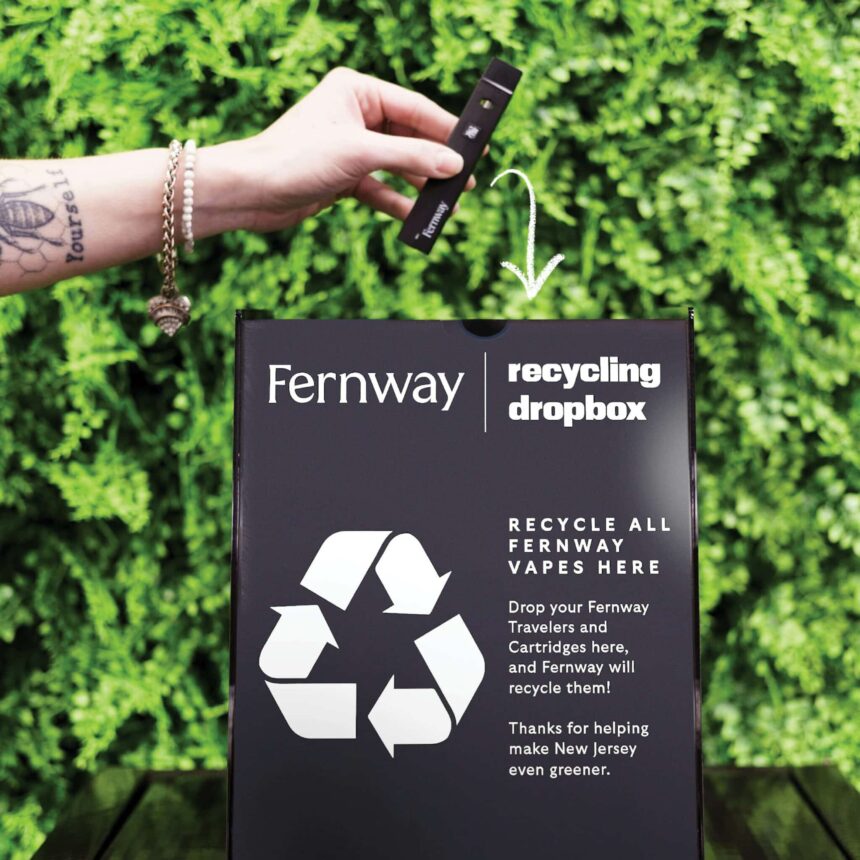
Vape hardware is one of the cannabis industry’s most persistent waste problems. Fernway launched the first take-back program in 2022, and this summer opened its dropboxes to any brand’s device.
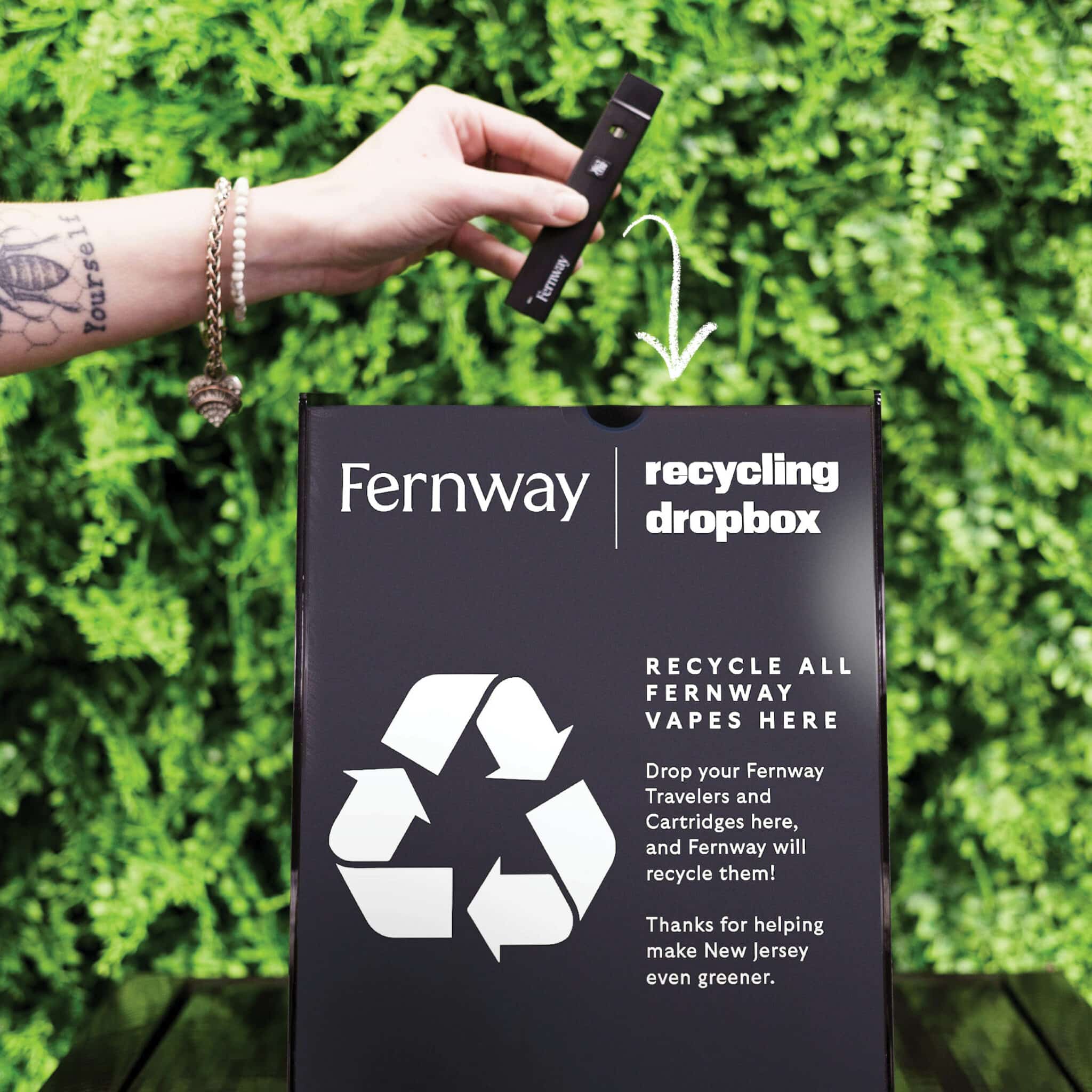
The New York episode of Kicking Back, High Times’ World Cup road series, includes a brief stop at The Travel Agency on Fifth Avenue, where a member of the Fernway team walks the crew through a recycling dropbox positioned near the register. Many participating retailers offer incentives to customers who recycle, and Fernway collects the devices for processing.
The moment passes quickly in an episode built around soccer and cannabis culture in New York City, but it points to one of the more persistent operational problems in legal cannabis: what happens to vape hardware once the oil runs out?
The Waste Problem Behind the Vape Category
A used cartridge or all-in-one device is not made of a single material. It combines a lithium-ion battery, a metal housing, a heating element, and trace amounts of cannabis oil. That mix places it in a regulatory gap, because battery waste is governed by one set of rules and cannabis waste by another, while a spent vape qualifies as both.
The consequences are practical. Most curbside recycling programs will not accept these devices, and many consumers are unsure how to dispose of them, so the hardware ends up in household trash. Beyond landfill impacts, lithium-ion cells can ignite when they are crushed in a compactor or on a sorting line, making proper disposal a workplace safety issue as much as an environmental one.
The industry has been asking whether vape pens can go green and dispensaries have been experimenting with incentive-based take-back and retailers have built recycling programs from scratch in the absence of industry standards. The assessment has remained consistent. The materials are recoverable, but the collection infrastructure has not kept pace with the category’s growth.
How the Fernway Program Works

According to Fernway, the company launched the cannabis industry’s first vape recycling program in 2022 and has collected more than 250,000 used devices since then. Dropboxes are placed in participating dispensaries across New York, New Jersey, Massachusetts, Illinois, and Missouri. Collected hardware is transported to a certified facility, where component materials including steel, lithium, cobalt, and nickel can reenter the supply chain rather than a landfill.
Fernway also cites a broader statistic. Roughly 95% of the world’s rechargeable batteries are thrown away in household trash. The cannabis industry did not create that problem, but a product category built on small lithium-ion cells has inherited a portion of it.
The program is designed to ask very little of the consumer. A return trip to the dispensary is already part of the purchase cycle, finished devices are small enough to carry, and retailer incentives supply a direct reason to bring them along. Removing friction, rather than raising awareness, is the variable most take-back programs are built around.
Why New York Matters Now
New York is where the collection question has moved from voluntary to institutional. The state has launched a pilot collection program for e-cigarettes and vaping devices, developed through the Product Stewardship Institute and SUNY ESF’s Center for Sustainable Materials Management and scheduled to run through August 2026.
The pilot supports a Department of Environmental Conservation target of recycling 85% of the state’s waste stream by 2050, and its premise aligns with that of the dropbox. Disposal has to be made at least as convenient as throwing a device away.
The timing coincides with an unusual moment for the city. New York is hosting World Cup matches in the largest sporting event in the world while operating a retail cannabis market roughly three years old. Visitors are arriving from countries where cannabis remains illegal and purchasing it legally in Manhattan dispensaries. In the episode, a French fan tells host Ethan Zohn that consumers in France still conceal their use, while in New York it is possible to consume openly.
Those customers are unlikely to receive any guidance about disposal at the point of sale. The Travel Agency has built its identity around addressing exactly that kind of gap. From the beginning, a member of the shop’s team explains in the episode, the goal has been to destigmatize cannabis through the retail experience itself, presenting the store as a place that invites customers in and encourages them to learn something rather than one they should approach with caution. A recycling dropbox placed beside the register extends that approach past the sale and into what happens after it.
Reusable Hardware and the 510 Standard
Collection addresses only part of the issue. The other part is hardware that does not require replacement as frequently.
Fernway’s cartridges use a universal 510 thread, which allows them to work with most standard batteries, and the company’s STYLUS system is a rechargeable battery intended to outlast the cartridges that attach to it. A rechargeable battery that stays in service for years reduces the volume of hardware entering the waste stream, and it lowers long-term cost for the consumer.
Recycling accounts for the remainder. Fernway’s flavor line has produced a range of releases, including the pickle vape featured earlier in the series, and every device eventually reaches the end of its useful life. The dropbox exists for that stage.

Both efforts sit alongside Squad Goals, Fernway’s summer program, which is built on the premise that cannabis is a social product and that shared occasions, from watch parties to cookouts to pickup games, are worth returning to. A company organized around repeat gatherings has a corresponding interest in the condition of the places where they happen.
What It Would Take to Solve
A single take-back program will not resolve the problem. Regulations remain inconsistent from state to state, many consumers are unaware of the rules in their own jurisdictions, and the volume of hardware leaving dispensary shelves continues to increase.
The elements of a broader solution are already established, however. They include take-back programs that accept hardware regardless of brand, reusable hardware that outlasts a single cartridge, and state collection pilots that make disposal convenient enough to become routine. Collecting more than 250,000 devices does not represent a solved problem, but it does demonstrate that the model functions when the infrastructure is made available.
Consumers who want to participate can ask a budtender whether their dispensary hosts a dropbox, and bring their finished devices along on the next visit.
Photos courtesy of Fernway
Sponsored Content Disclosure: This article was published as part of a paid commercial arrangement with Fernway and is not independent editorial content. Information about Fernway’s vape take-back program, collection totals, participating retailers, recycling process, customer incentives, reusable hardware, and related brand initiatives was provided by Fernway and has not been independently verified by High Times. Broader information about vape disposal, battery waste, and New York’s collection pilot is included as contextual reporting based on the sources cited in the article.