







Researchers gave people 5 mg of inhaled THC and rated the high at 34 out of 100. They doubled it to 10 mg. The high went to 39.
Cannabis’ most plentiful and active ingredient, the cannabinoid molecule Delta 9 THC, first isolated in 1964 by legendary Israeli chemists Raphael Mechoulam and Yehiel Gaoni, creates a beautiful, intoxicating experience for most consumers.
But as more consumers get access to it, the plant’s complicated chemistry results in human efficacy complications inside the brain where THC affects the body’s endocannabinoid system.
What that effect is to different people, why it happens the way it does, who enjoys the sensation and who doesn’t is still a moving target for researchers while cannabis product developers push their best-selling product: anything with higher potency THC.
The Cannabis Landscape Today
Amidst all the state and federal kerfuffling about cannabis that at times seems solvable, but continues nonetheless, cannabis today feels safer. It feels better understood. It’s become an accepted part of the cash crop landscape.
A handful of multi-million-square-foot grows prove it’s positioned for mass sales. One of the largest, Glass House, began trading on the New York Stock Exchange in June.
And revenue streams demonstrate solid consumer demand.
In 2025 alone, according to the Marijuana Policy Project, legalized states collectively generated more than $4.57 billion in cannabis tax revenue from adult-use sales, which is the most revenue generated by cannabis sales in a single year.
But cannabis is caught in a standoff. Science is making progress but doesn’t have all the answers about cannabis because legal and societal pressures won’t clearly enable a deeper dive.
THC, the stuff that gives a consumer that positive stoner glow, and the go-to measure of a cannabis product that consumers still prefer to use, has come under more scrutiny as more products with greater levels of THC hit the market.
THC potency has become an increasingly polarizing issue: THC potency creates emergency room visits – sure, because of underage use. THC potency causes mental health problems – well, those consumers already had issues. THC potency creates addiction – but addiction is a chronic brain and behavioral disorder, you know, like the 27 million alcohol addicts in the U.S. consuming a substance that’s somehow not on the DEA controlled substance list.
So what is Delta 9 THC – a goddess, a demon, or a market blockbuster? Turns out it’s a dodgy misunderstood often overbred molecule working in an arrangement of other cannabinoids that science needs to properly figure out.
The Potency Problem
Studies and statistics show that somewhere in the range of 30-40% of cannabis consumers buy their product based on THC potency.
The concentration of THC in cannabis has increased steadily over the past 25 years in the United States and elsewhere, according to a March, 2025 article in the American Journal of Psychiatry. “Before 2000, the average potency of herbal cannabis seized in the United States was
Over the last ten years, there has been a significant rise in extremely high-potency cannabis products, such as infused flower with up to 60 % THC (such as moonrocks), and solvent-based concentrates that have as much as 99% THC (such as THCa diamonds).
THC by product type
Seized flower, pre-2000
under 5%
Infused flower (moonrocks)
up to 60%
Solvent concentrates (THCa diamonds)
up to 99%
Sources: American Journal of Psychiatry (March 2025); product-category figures as reported.
THC is one of the more than 500 compounds in cannabis, with 125 being cannabinoids. And while many cannabinoids have been discovered over the years, beginning in the mid-1960s using various chemical and chromatography processes, with some getting more attention lately—chief among them CBD, CBG, Delta 8 THC, THCA—it’s the Delta 9 THC, the main cannabinoid constituent of the plant, that has come back into the discussion loop.
What we now know is that the effect of cannabis is not all about the Delta 9 THC chemical molecule.
According to Duncan Mackie, the director of pharmacology and experimental therapeutics at Bud & Mary’s, formerly MedPharm, a medical and adult use cannabis cultivation and research facility, a consumer just inhaling dry raw ignited flower is experiencing a whole lot of other things in that flower that are going to have effects beyond THC. “There’s terpenes, taste, flavor, the whole entire holistic view of the plant,” he told High Times. “So I think that we’ve seen at least with flower users a move away from just THC potency.”
Mackie’s recent research is about the effects of CBD and other non-psychotropic cannabinoids in potentially treating neuroinflammation-associated neurodegenerative diseases such as Alzheimer’s, Parkinson’s, multiple sclerosis, and Huntington’s disease. “We’ve seen CBG, we’ve seen CBC, we’ve seen all these minor cannabinoids become of interest for their different effects,” Mackie said.
Years ago, breeders began breeding for higher THC once the active compounds in the plant were identified, Mackie said. “Because then we could analyze it and say, oh yeah, this is at X amount, if we cross these, we get an extra increase,” he said. Doing that affected other cannabinoids. “From a genetic standpoint, we silenced a lot of these early genes that would have made really diverse cannabinoids. CBC is an example. It was a gene that was silenced at one point and then unsilenced through breeding. I think that if we started from scratch today, the smart breeders would prioritize a diverse panel of cannabinoids. But you would always have somebody chasing the highest THC.”

“From a genetic standpoint, we silenced a lot of these early genes that would have made really diverse cannabinoids.”
Duncan Mackie, director of pharmacology and experimental therapeutics, Bud & Mary’s
If a cannabis product has five times or 10 times the amount of one molecule such as THC, with only trace amounts of CBG and CBC in the plant, the brain receptors “are going to just be occupied by THC,” he said. “It’s a well-known factor that if you’re 10, 15, or 20 times one molecule versus another, that one molecule that’s 20-times is going to just obliterate the receptors in the brain. There’s not even a chance for the other compounds to interact with the receptors and give you an effect.”
Another researcher working on the chemical composition and effects of cannabis is Ryan Vandrey, an experimental psychologist at the Department of Psychiatry and Behavioral Sciences at Johns Hopkins University School of Medicine. In the process of increasing THC concentration and decreasing the concentration of CBD, it’s a little unclear where a certain percent THC is going to functionally change in a reliable and meaningful way, he said. “People usually have a target dose of THC to achieve their kind of preferred level of drug effect,” Vandrey said. “Now, as you increase the percent of THC concentration up and up and up, maybe the successive titration becomes a little more challenging and more difficult for the user. So it makes it a little more challenging to fine-tune the dose, and you might overshoot your dose a little bit and then the consequence of the reduced CBD and other phytochemicals remains a little bit unclear.”
CBD may affect how a certain concentration of THC affects the consumer. “The science on whether CBD mitigates some of the adverse effects of THC when the drug is inhaled is a little bit mixed,” Vandrey said.
For example, he said, if you get a really high dose of THC, it can induce anxiety. CBD by itself can reduce anxiety in some individuals. “There’s a thought that the higher concentrations of CBD might help reduce the anxiogenic effects of inhaled THC. So that’s one potential functional consequence of these increasing concentrations of THC – you don’t get much meaningful CBD in those products anymore.”
Current testing of retail inhalable cannabis products show that CBD concentrations are very low, he said, and that’s really a function of how THC and CBD are produced by the plant. “It’s the same mechanism in the plant that produces both THC and CBD. So when you breed these plants to overexpress THC, a reduction of CBD is a natural consequence of that process. Your THC is going to drown out the signal for other chemicals.”
THC and the Role of Other Compounds
Emerging research points to other compounds in the plant, such as esters or thiols or aldehydes, that modulate the effects of THC while providing other benefits. Esters are being studied for nausea and anxiety; aldehydes are being investigated for antibacterial and antifungal medical potential.
Russ Hudson is the director of research at the Phyto Science Research Group in Texas, and a cannabis phytochemical researcher. “A very common terpene in almost all cannabis strains is beta myrcene,” he told High Times. “This is a very potent sedative on its own. Another very common terpene is humulene. This is the number one constituent of hops. It’s what makes beer and other alcohol made from hops very sedative. There are many cannabis strains that have myrcene and humulene in high concentration, which means that it’s going to make you sleepy. And for the average smoker, that’s just going to feel like they’re really stoned. A lot of that feeling isn’t happening because of THC at all.”
A strain listed as having high THC or low THC doesn’t really tell the consumer much, he said. Take Marinol, for example. It’s a synthetic form of THC introduced and approved by the FDA in 1985. “There was nothing else but THC in it,” Hudson said. “What happened is people did not have a good time when they took that medication. They felt racy, they felt anxiety, they felt paranoia. So I view looking at THC numbers as being a very incomplete part of the picture.”
Capping the THC Level: ‘It will be folly.’
Regulators are rushing to develop better ways of controlling levels of THC. A bill in California now working through the legislative process, AB2532, would put a 10 mg cap on THC content per container on beverages. Opponents say that policy would have “severe and immediate unintended consequences” that “far outweigh any purported public health benefit,” adding that the policy would “wipe out over 93% of the legal beverage market overnight.”
Vermont and Connecticut have THC caps for flower—30 % and 35% respectively. Most other states where recreational cannabis is sold limit THC content in edibles.
| Jurisdiction | Cap | Applies to |
|---|---|---|
| Vermont | 30% THC | Flower |
| Connecticut | 35% THC | Flower |
| California (AB2532, pending) | 10 mg per container | Beverages |
| Most other adult-use states | Varies | Edibles only |
Hudson said that he thinks that THC caps like this are going to continue. “But the problem is that for instance with alcohol, you’re just talking about alcohol. You’re not talking about all these secondary metabolites and all that crap like in cannabis. It’s clearly known what alcohol does. With cannabis, you have too many unknowns. While I do think regulators are going to try that at first, it will be a folly. What will inevitably happen is cannabis is going to be treated like botanical medicines.”
There are only a few botanical medicines approved by the FDA, he said, and even the FDA knows with these products you cannot talk about one molecule. “That is not how botanical products work,” Hudson said. “You have to know the chemical profile. You have to do chemical fingerprinting, and eventually we will get there. The truth is that organic chemistry is hard. It’s notoriously one of the most difficult subjects on earth. Lawmakers have a very specific skill set and method of organization of their thinking, and often they just can’t quite get it. Even talking about how to calculate THC percentage, you lose them very quickly. So lawmakers will often go with whatever the last state did.”
“Even talking about how to calculate THC percentage, you lose them very quickly. So lawmakers will often go with whatever the last state did.”
Russ Hudson, director of research, Phyto Science Research Group
Lawmakers don’t want to get into the liability of calculations that then inform consumer purchases for cannabis, such as THC percentages. “Nobody’s done this before, so it does look like the United States is going to be left with figuring this out,” Hudson said. “How do we calculate THC? What does that mean? And then how do we account for the other things?”
If a strain has 30% THC and its number one terpene constituent is myrcene, and its number one sesquiterpene constituent is humulene, that’s a potently sedative strain that could have really serious medical uses for some folks, he said. “But it could have serious liabilities for other folks. So I think there is a level of fear that lawmakers just don’t want to go to. And so far nobody has really gotten it right.”
THC Marketing and the Schedule III Question
That complicated chemical composition of the plant is something a majority of people don’t pay much attention to, Vandrey said, and that comes back to the intent of the user in consuming cannabis. “If the intent is to get intoxicated and to get high, then THC is rightfully the focus,” he said. “I believe that that’s why the market drifted in this direction. THC is unquestionably the driving force in intoxication and the reinforcing and rewarding effects of cannabis use as a recreational drug. From a marketing standpoint, having the flower with the highest THC concentration is a marketing tool, and that’s driven a lot of this.”
“If the intent is to get intoxicated and to get high, then THC is rightfully the focus.”
Ryan Vandrey, experimental psychologist, Johns Hopkins University School of Medicine
That marketing attracts the heavy, hardcore daily consumer, which parallels the alcohol consumption patterns of people, Vandrey said. “So the heaviest consumers tend to kind of steer towards higher alcohol concentration products. It’s really no different for cannabis in that way. Heavier consumption can result in neurobiological adaptation in the user. Your CB1 receptors in your brain get downregulated, and therefore you need to continually increase the amount of THC you consume to get your targeted drug effect. The consequence of that is that when you don’t use THC, you go through withdrawal, and it’s a perpetual cycle of chasing the desirable effects and avoiding the adverse effects of withdrawal. That can escalate in users over time.”
There’s evidence that higher potency products like concentrates with 80-90 percent THC in them can speed that process up, or can exacerbate that process. “When you look at cannabis users, the folks that are using the really high THC concentrates at higher amounts tend to have more symptoms of cannabis dependence and more severe cannabis withdrawal,” Vandrey said.
Issues about cannabis products have been a top agenda item for Jonathan Caulkins, a professor of operations research and public policy at Carnegie Mellon University’s Heinz College, and a member of the National Academy of Engineering.
Caulkins says that there are two things driving the marketing and sales of higher THC products. The first is the core problem for companies in the cannabis space, which is the free fall of prices. “The product just isn’t that hard to make, and there’s a lot of competition,” he told High Times. “Prices go down, prices go up, which is actually related to the price per milligram of THC, to be clear. There’s the premium of trying to differentiate your product to get away from that intense price competition, and folks do all sorts of things to try to make their products different and worthy of a customer paying more for their product than the competitors. There’s an amazing variety of flavors we go through in the menu, and it also includes making claims about cannabinoids other than THC. So some of this broadening of the discussion to other components of the product, I think, is driven by companies attempting to differentiate and say, ‘Hey. This is what’s different about our product. Therefore, you should pay more than the minimum price for a given THC.’ And I do think that this is playing to a very willing audience.”
There is a percentage of consumers who think of their consumption of cannabis as a part of their identity, he said. “That creates sort of a willing audience for trying to make the product be a more complicated thing.”
Cannabis is already partway there. In April, the Justice Department placed FDA-approved marijuana products and cannabis sold under a state medical license into Schedule III, while leaving everything else, adult-use included, in Schedule I. Whether the rest of the market follows is still open, and the April order is under challenge in the D.C. Circuit. If it does, there are a host of issues that the complicated plant presents to researchers and regulators. “If we’re going to treat it like every other Schedule III drug, you have to sell a consistent dose that is well labeled, regardless of what that dose is,” Caulkins said. “It could be 7% THC it could be 17%. But it’s just not okay for any other seller of any other FDA-approved drug to have such terrible quality control.”
For example, when you buy an aspirin, there is a certain number of milligrams of that molecule in each pill, with quality control production following a very tight tolerance, he said. “If it does go as Schedule III, and the FDA treats it the way it does every other Schedule III substance, that will really shake up the industry because the industry does not meet the quality control standards that the FDA demands. It would totally upend the industry.”
THC and a Cannabis Addiction Explainer
Just mentioning “cannabis addiction” can cause an uproar among both cannabis proponents and opponents. In an interview published in the Harvard University Gazette, Kevin Hill, associate professor of psychiatry at Harvard Medical School and director of the Division of Addiction Psychiatry at Beth Israel Deaconess Medical Center, said that there is a lot known about both the benefits and the risks of cannabis use, “although I would say that the rate and scale of research has not kept pace with the interest,” he said. “But our increased knowledge pales in comparison to the intense public interest. So one of the issues we often encounter is a growing divide between what the science says and what public perception is.
“At the end of the day, a lot of what people hear about cannabis is either incomplete or flat-out wrong because both sides are promoting polar opposite views of cannabis.”
The greatest example is when you talk about the addictive nature of cannabis, he said. “You can become addicted to cannabis, though most people don’t. Yet invariably, when people hear about what I do, they say, ‘Oh, you’re an addiction psychiatrist? Well, cannabis is not physically addictive; it’s psychological.’ So there are fallacies about cannabis. And they continue because people are invested in trying to get people to vote one way or another on issues like medical cannabis or legalization of recreational cannabis. That is a major problem. Every single day we have patients come in who are interested in using cannabis as a medication or they’re using it recreationally or are interested in cannabidiol, and they have beliefs about cannabis that they’ve held for years that aren’t true. And that becomes a major barrier. It’s hard to dispel those beliefs in the office.”
That is just a taste of the far-ranging discussions about THC potency and its role in addiction. More pro-con evidence is piling up, and more data on both sides is giving researchers a better understanding of THC potency and its potential as an addictive substance.
Amir Englund is a researcher in cannabinoid psychopharmacology at the Institute of Psychiatry, Psychology and Neuroscience, King’s College London. He studied the effects some of the prevalent cannabinoids—THC, CBD and THCV—have in healthy human volunteers. He reported on the cognitive, psychological, and neurophysiological effects both in THC isolation and when combined with other cannabinoids.
His research showed that there was almost a fourfold increase in the average potency of cannabis in Denmark during a 23-year study period. “It went from near 8% all the way to north of 30,” he told High Times. “At the time of the analysis (2022), it was the strongest hash in Europe. We found that when this big increase happened, it was also followed by an increase in people showing up to hospitals with either addiction problems or cannabis-induced psychosis.”
The study tracked those increases at the population level, which cannot establish that one caused the other. “But it’s really complicated data. The interesting thing when the rates of these outcomes become less frequent, we don’t really know why. One reason can be that because of this increase in potency, people don’t really like it, and they kind of switch to other products perhaps, and the incidence of these outcomes becomes rarer.
“What we have with legal cannabis markets, as well as the illegal ones, is that the marketing is often heavily geared towards the really heavy users, the people who use a lot or the people who have a problem with it, which could potentially be an addiction. They’re the ones who are using about 80% of all the high THC products, and they make up sometimes just 10% of all the people who use cannabis.
“That’s why often you see markets geared towards that small user base as opposed to the broader whole population of cannabis users.”
Englund said that he and other colleagues did a meta-analysis of studies on cannabis consumption involving giving THC to healthy people who were mainly infrequent users. “The cannabis consumption allowed was once a week or less. So they had very little tolerance.” They wanted to see what the most common effects people experience from THC, based on the dose people got.
“What we saw was, let’s say, how high people got from inhaling THC of five milligrams compared to placebo,” Englund said. “We subtracted the placebo effect. So even when people inhale a placebo joint, you get a little bit of a high from just the belief that you’re using cannabis, although there’s no THC. We subtracted that and found that the average rating of how high people got was about 34 out of a 100-point scale. When you doubled the amount, from five to 10 milligrams, you only came up to 39 on the scale. So 100% more cannabis only gave you 15% more high. We found this sort of dose-response plateauing, where it goes up first at the low amounts, gets you high, and then it kind of stops getting you high.”
Double the dose, five more points
Self-reported high in infrequent users, placebo effect subtracted, on a 100-point scale.
Twice the THC bought five more points of high. The curve flattens early.
Source: meta-analysis described by Amir Englund, King’s College London.
So more THC is not necessarily going to give you more bang for your buck, he said, but it’s still causing an effect on the brain and your CB1 receptors.
The more you hit the CB1 receptor with THC, the more the endocannabinoid system will respond to it. “What happens is a downregulation,” he said. “It’s where the brain withdraws the receptor, so you have fewer available to you. To compensate for that, you need to keep increasing the amount to get to where you’re going, and eventually you kind of get to a place where you’re not really getting that much from it.”
Englund said that after two days of staying off cannabis, these receptors started coming back. “The brain and the cannabinoid system is a very fluid system,” he explained. “If you put a lot of THC in there, it will respond and sort of take receptors away. Then if you give it a break, they kind of come back. So I think the whole thing about potency and stronger products, because it’s geared towards these really heavy users, creates a bit of a negative circle where people are taking more THC than they actually need. The likelihood of negative things from cannabis use, like potentially addiction and potentially psychotic experiences and psychotic syndromes, can be partially explained by the fact that people don’t have as many of their cannabinoid receptors available to them anymore.”
What we know / What we don’t know
What we know
What we don’t know
- Whether higher potency causes psychiatric harm at the individual level, or tracks it.
- At what percentage the experience changes in a reliable, meaningful way.
- Whether CBD meaningfully offsets inhaled THC. The evidence is mixed.
- What most minor cannabinoids and terpenes actually do in people.
The End of the THC Chase
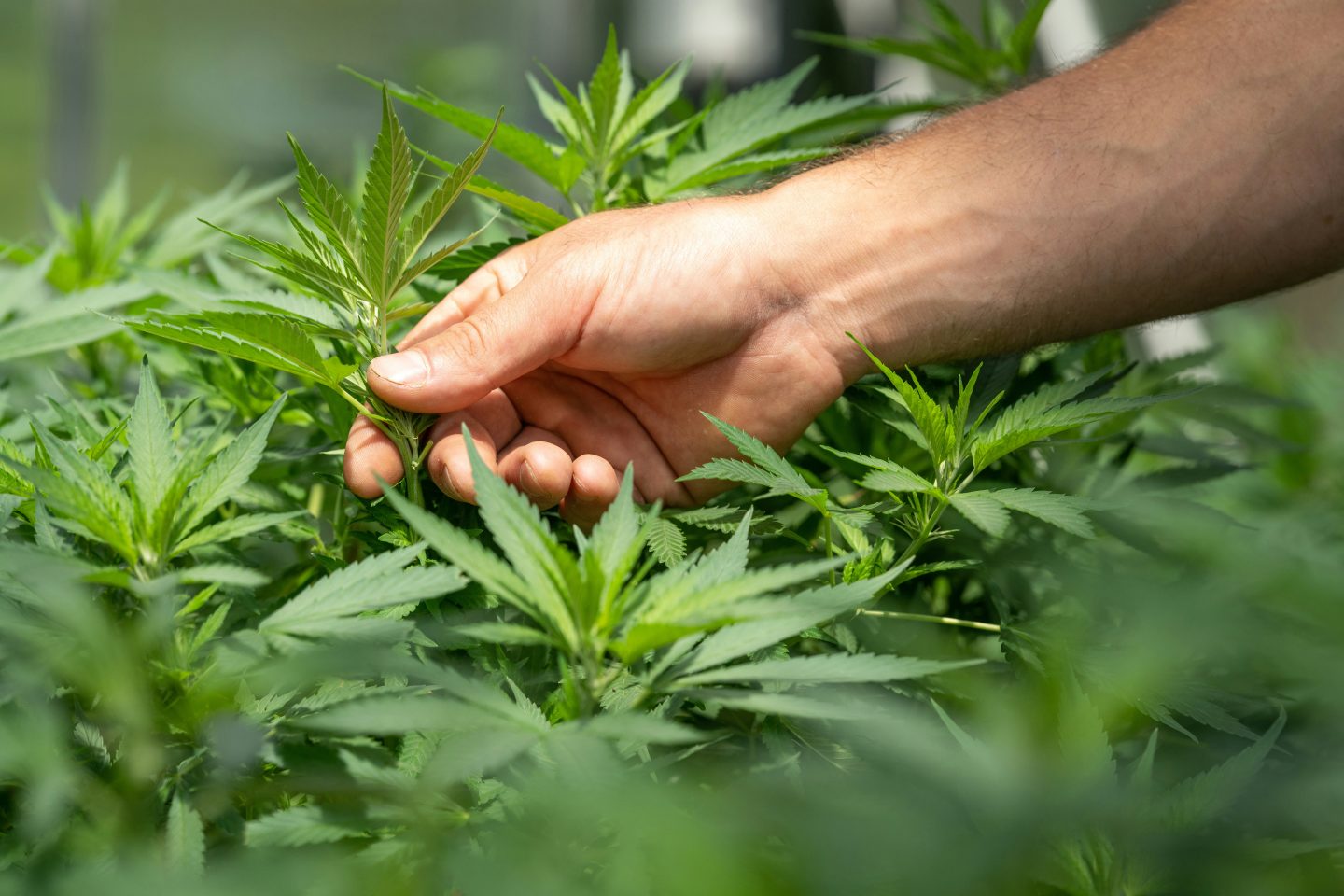
Growers are in the process of evolving their understanding of the plant and the subsequent marketing of the product.
The role of Delta 9 THC as the main active ingredient in the plant is being redefined.
In a study at Wageningen University published in the April 2026 issue of Plant Biotechnology Journal, researchers discovered more about the chemical profile of the plant, and how today’s cannabis is the result of an evolved ability to make compounds such as THC, CBD and CBC.
In a nutshell, researchers identified some of the molecular switches that determine what cannabinoid a plant makes from the same starting material.
The most provocative implication is that cannabis breeding might eventually become less about breeding a plant and more about engineering a metabolic factory. Today’s breeder might say: “I want a plant that produces 20% THC.” A future medicinal-cannabis breeder might instead say: “I want a plant whose flowers consistently produce this particular constellation of cannabinoids.” The relevant trait might not even be THC concentration. It could be something like CBD + CBG + CBC + a particular minor cannabinoid + very low THC.
“Nobody’s going to be chasing THC anymore,” Hudson said. “As a baseline metric, maybe they want to keep it at 10%. But what’s already happening is a lot of the growers that I consult with now want to know what chemical profiles are.”
One of the companies he consults with has built an algorithm to determine the phytochemical content of the plant—what would make it good versus just average, or what would make it bad for a particular individual user. “What’s happening already is that breeders and geneticists and cultivators are trying to figure out what chemical profiles are actually valuable and why, and then they’re going back to the drawing board to make phenotypes and do selections that express those in different ways.”
Hudson said that cannabis can be manipulated past the genetic level to get the desired phytochemical content. “That’s already happening now. Soon we’ll stop talking about stupid things like calling strains names like Dog Shit or AK 47. We’ll be talking in more chemical terms.”
What to look at besides the number
- The terpene profile: myrcene and humulene are sedating on their own. Some of what reads as potency is not THC.
- The minor cannabinoids: CBD, CBG and CBC in trace amounts behave differently than they do at meaningful doses.
- The format: inhaled, oral and topical are different drugs in practice, whatever the label says.
- The lab report: confirm the batch matches the package, and look at what the panel covers beyond potency.
- Your own tolerance: two products at the same percentage will not land the same way on the same person.
Hudson thinks the future of cannabis purchases won’t be about how much THC is in a certain strain. “Consumers will be walking into a dispensary saying things like, ‘I don’t care what you call it, because that’s mostly a lie anyway. I need a chemical profile that is high in limonene and beta caryophyllene’ or what have you,” Hudson said. “That’s eventually where we’re going to go. Myself and many of the scientists and researchers that I work with are having these conversations every day. It’s going to happen like that, unless, of course, we go back to the dark ages, which I think is always a possibility.”
Hudson and colleagues are building a chemical fidelity matching engine, he said, which will give consumers the ability to go to the dispensary, search by chemical content, and learn what that chemical content is.
This plays right into their hands of being able to “dork out” on the thing that cannabis consumers already love—science and chemistry. “A lot of people have scolded me and said, ‘Hey, why can’t you just let cannabis be magic?’ My response is the science is the magic. That’s where it is. If you want to be a magician, you can be. The secret is what’s in this elixir.”