




Gallup’s new numbers hold a small, awkward pattern: the Americans most convinced cannabis is bad for people are, group for group, the ones least likely to use it.
17% of American adults told Gallup this summer that they smoke cannabis, tying the highest figure the pollster has recorded on that question and more than double the 7% it found in 2013. Another 15% say they eat edibles. Asked what effect the plant has on most people who use it, the country split 47% positive to 46% negative.
That split has been picked over all week. The more interesting number is buried in the crosstabs, where you can set each group’s cannabis use next to its verdict on cannabis.
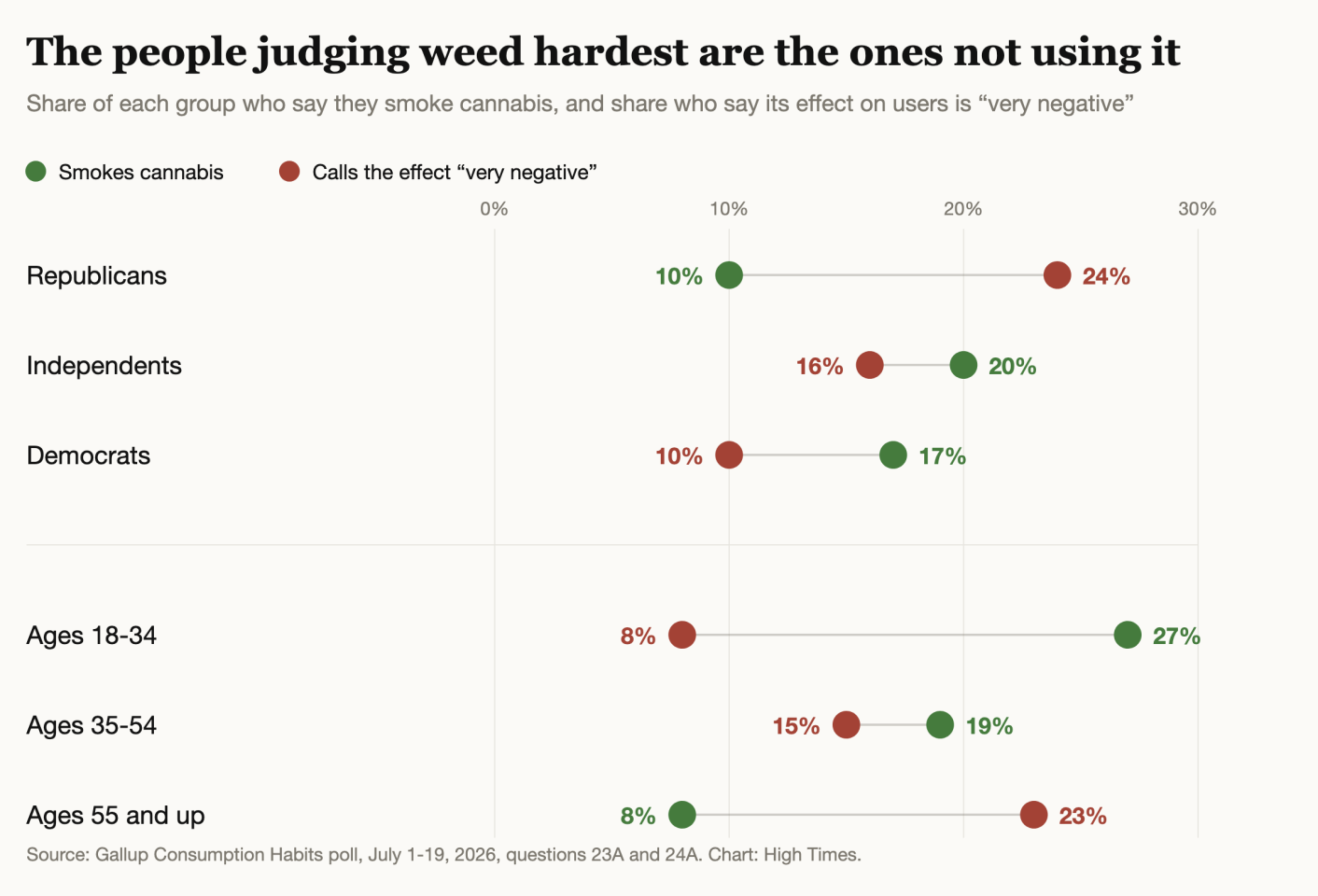
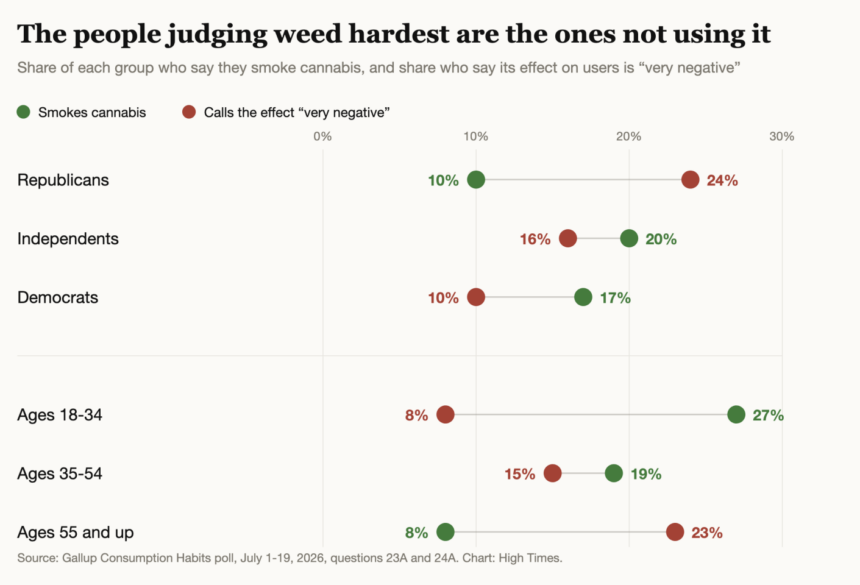
10% of Republicans say they smoke cannabis, and 24% say its effect on users is very negative. Among Democrats, the numbers nearly invert: 17% smoke, 10% call the effect very negative. Independents smoke the most of the three, at 20%.
Age pulls the same way, harder. 27% of adults 18 to 34 smoke cannabis and 8% call its effect very negative. Among those 55 and older, 8% smoke and 23% call it very negative. The two lines cross cleanly. Where use is highest, condemnation is lowest, and the reverse.
None of this proves what people should conclude from it, and the poll won’t help you there. Gallup asked whether respondents use cannabis and what they think it does to users. It did not ask whether they know anyone who uses it, where they get their information, or what changed their mind if anything did. Plenty of nonusers have watched a family member struggle. Plenty of users have never thought about it.
What the crosstabs do show is that the debate over what cannabis does to people is not being held between users and former users. It’s being held largely between people who use it and people who don’t, and the second group is the one supplying most of the harsh verdicts.
One more thing worth noticing, since the 47-46 keeps getting read as a country hardening against weed. It isn’t, at least not lately. In 2024 Gallup had the negative number at 51% and the positive at 43%. Two years on, it’s 46 and 47. The gap closed while the harm coverage got louder, which is its own puzzle for another day.