



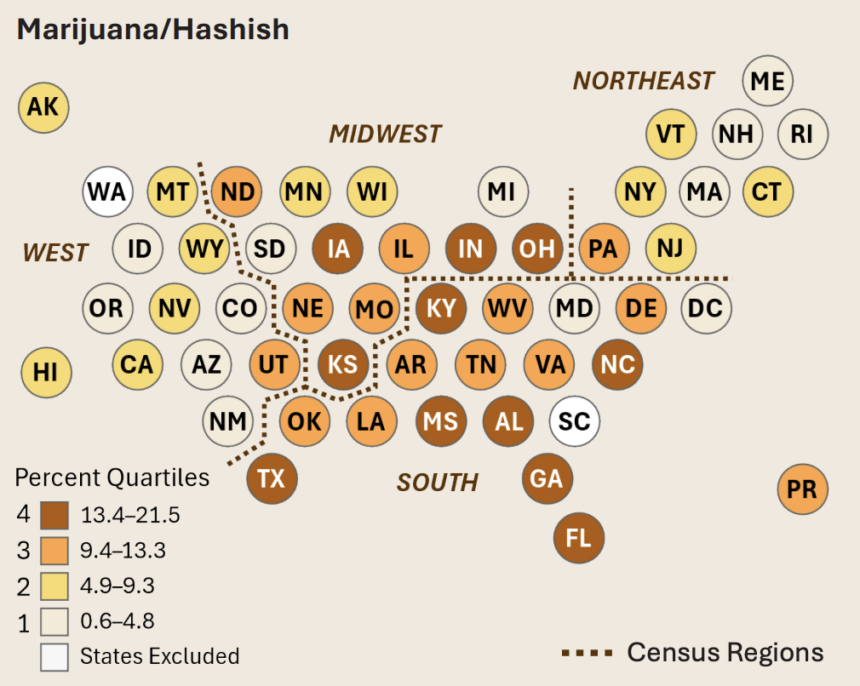
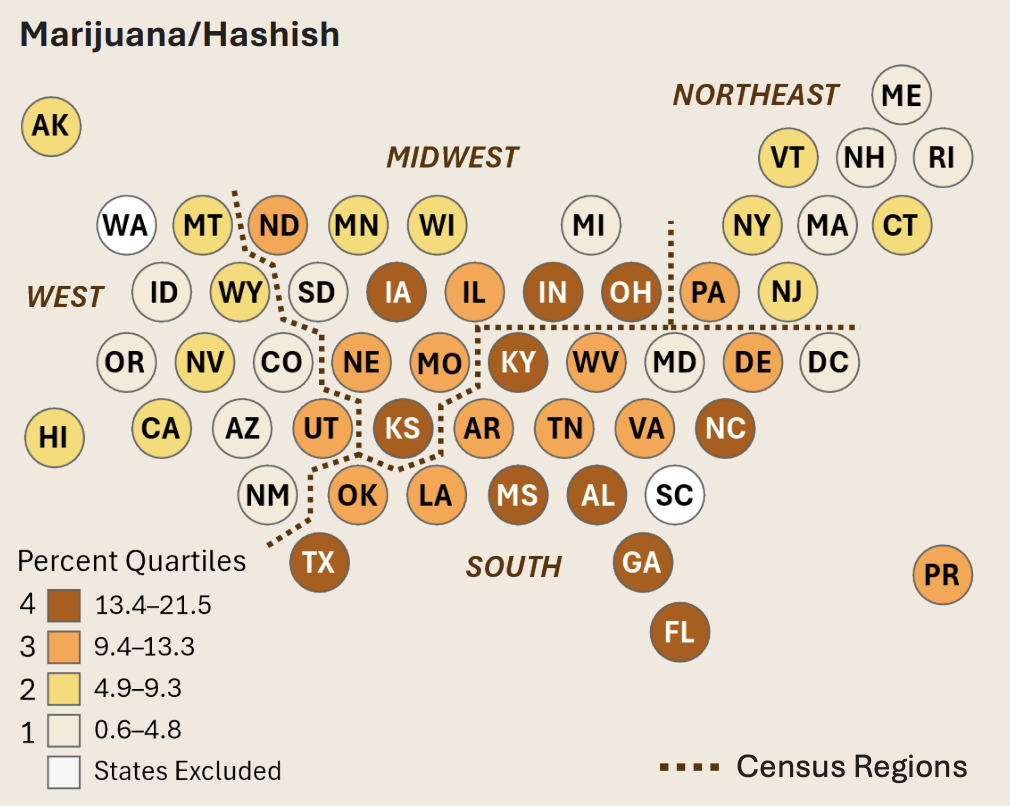
“Cannabis-related treatment admissions are largely driven by the criminal justice system.”
By Paul Armentano, NORML
While the mainstream media—The New York Times in particular—is sounding the alarm about a purported rise in the prevalence of problematic cannabis use, newly released federal data undercutting this narrative has largely gone unreported.
How Is Problematic Use Defined?
Problematic cannabis use, typically referred to as cannabis use disorder, is defined as a pattern of cannabis use behaviors leading to physical, social or occupational difficulties—but not necessarily addiction. People are defined as suffering from cannabis use disorder (CUD) if they meet two out of 11 possible criteria.
Notably, these diagnostic criteria have been revised on multiple occasions during the past four decades, making comparisons with previous years’ data murky at best.
Included among the current criteria are “withdrawal” and “tolerance”—two experiences that are typically associated with more habitual use. Importantly, no exceptions to these criteria are made for the tens of millions of patients who regularly consume cannabis for therapeutic purposes, almost all of whom are improperly classified under the current standards.
By contrast, patients taking opioids medically are not classified as suffering from ‘opioid use disorder,’ even if they meet both criteria.
Are more
Read full article on Marijuana Moment