





Shopping for cannabinoids used to present a clean little fork in the road: THC if you wanted the high, CBD if you did not. The modern shelf is less binary and a lot more interesting.
Today’s formulas pair major and minor cannabinoids around a desired experience. THCV shows up in daytime products. CBC gets folded into mood-minded blends. CBG often rides with CBD in body-focused formulas, while CBN owns the night shift. Some combinations include THC for a noticeable mental lift. Others leave it out entirely.
That means the new skill is not memorizing a wall of acronyms. It is learning to read the combination. Pick the category first, check the cannabinoid amounts and THC content second, and treat the promises on the front of the package as an invitation to inspect the back.
Why Cannabinoid Combinations Are Everywhere
A cannabinoid blend usually has an anchor and a supporting cast, but that anchor is not always CBD or THC. Some formulations begin with one of those familiar cannabinoids and add smaller amounts of rarer ones. Others put a rare cannabinoid in the headline position and use CBD or THC as supporting ingredients.
CBD does not produce a THC-style high by itself. THC changes the equation because it is impairing and mind-altering. That distinction matters more than how many cannabinoids appear on the label.
The rarer cannabinoids increasingly take center stage in product formulation. THCV commonly appears in daytime-positioned products, CBC in mood-focused blends, CBG in body-focused formulas, CBN in nighttime products, and CBDV in newer, less established lines. Those categories describe how products are formulated and marketed. They are shorthand for a shopping aisle, not a promise about what any cannabinoid will do for a particular person.
Rare Cannabinoid Company has built much of its lineup around putting these less familiar cannabinoids at the center of the formula, an approach covered in a previous article.
Many multi-cannabinoid products are also built around the concept of the entourage effect, the idea that cannabinoids, terpenes, and other cannabis compounds may interact when consumed together. It remains a theory under study rather than a settled rule, and more cannabinoids on a label does not automatically mean a stronger or better result.
Understand the Formula, Not Just the Acronym
The easiest way to make sense of the modern cannabinoid shelf is to start with the kind of experience a formula is built around, then look at which cannabinoids are doing the heavy lifting. The acronym matters, but so do the dose, the supporting cannabinoids, the presence of THC, and the product format.
That is especially true with rare cannabinoids, where the marketing often moves faster than the science. Read the blend as a whole, not as a promise attached to one ingredient.
When CBD Leads the Formula
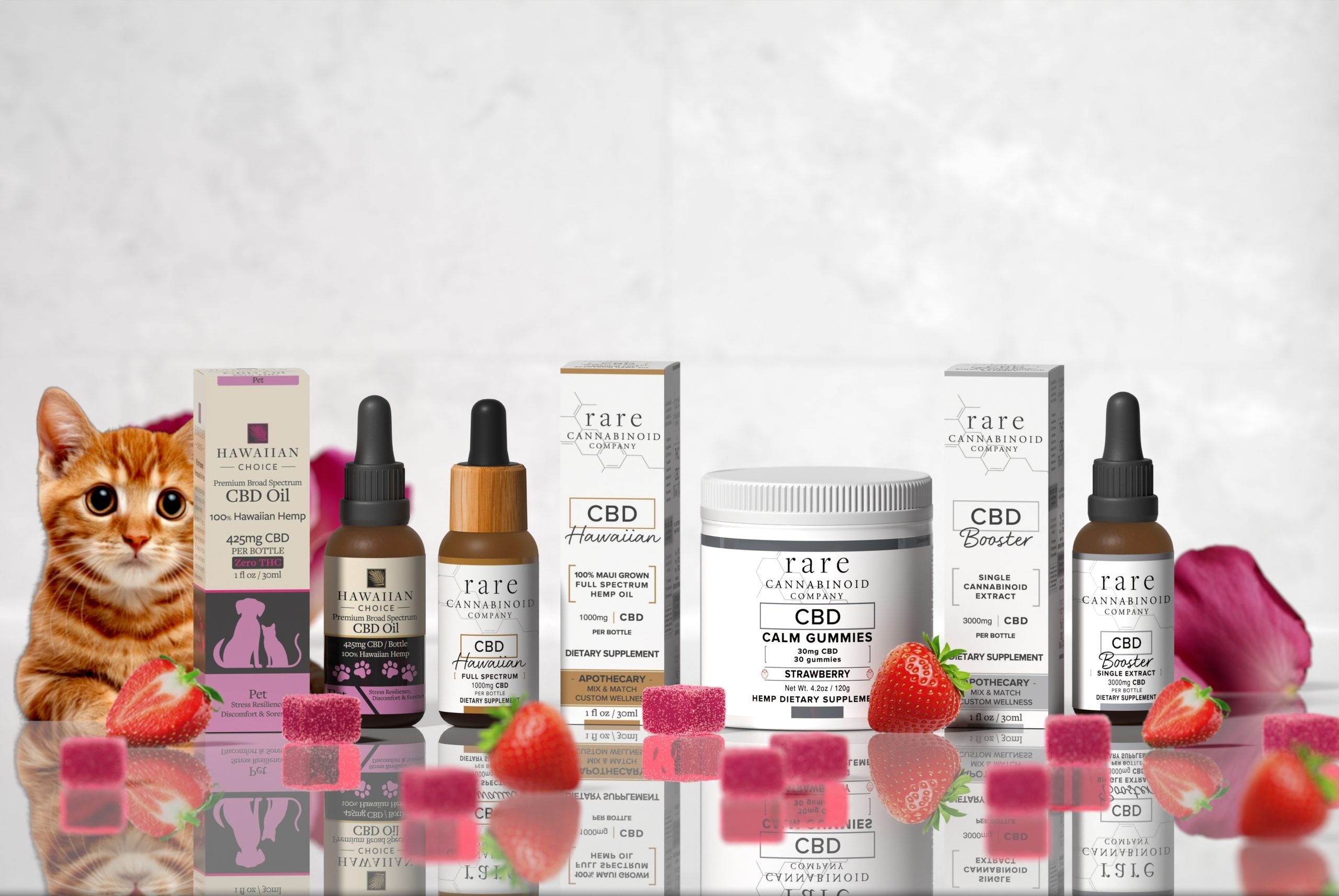
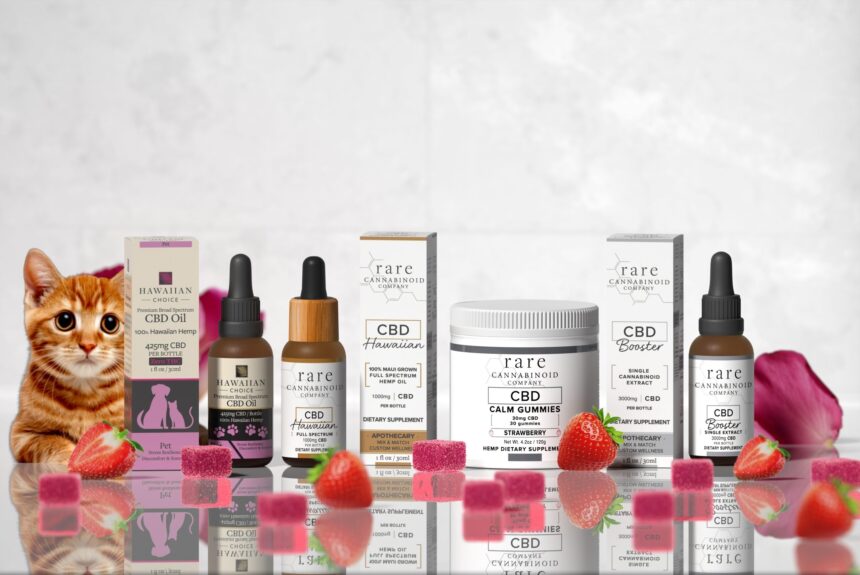
CBD is the most widely available cannabinoid on the shelf and the familiar starting point for consumers who want to avoid THC-style intoxication. It appears in more formats and more price tiers than anything else in this category, which is why it turns up as both a headline ingredient and a supporting one.
Rare Cannabinoid Company’s CBD Gummies contain 30 mg of CBD per gummy, making CBD the primary cannabinoid in that formulation.
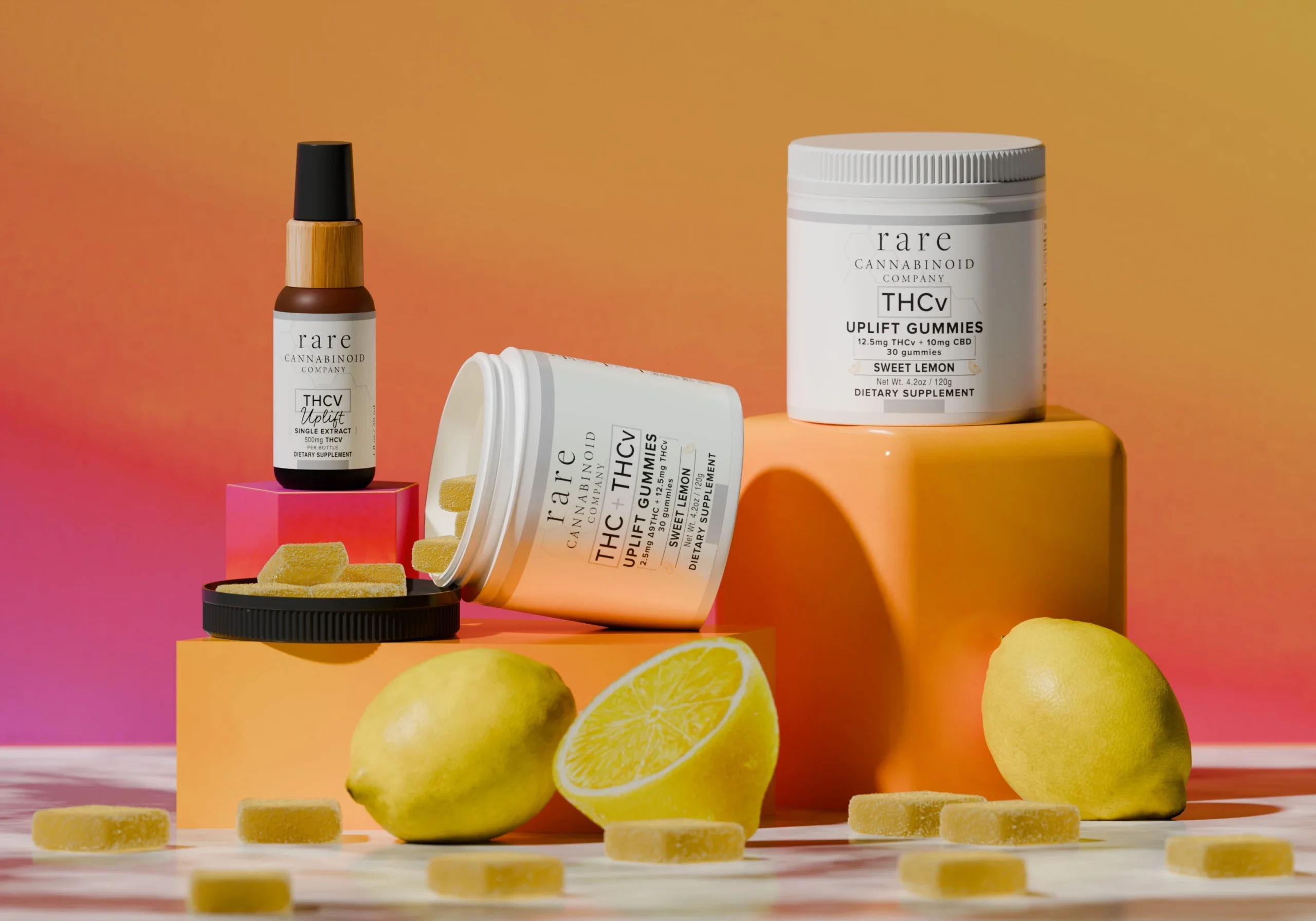
CBD does not always take center stage, though. Rare Cannabinoid Company’s current THCV Uplift Gummies contain 12.5 mg THCV and 10 mg CBD per gummy, while its CBG Relief Gummies and CBN Sleep Gummies contain 30 mg of their featured cannabinoid alongside 10 mg CBD. In those formulas, CBD is part of the supporting cast rather than the headline ingredient.
That is the useful shopping distinction. Sometimes CBD is the main event. Sometimes it is one piece of a broader cannabinoid profile. The milligrams tell you which is which.
When THCV Leads the Formula
THCV is a very unique cannabinoid that does not appear as frequently as CBD or CBG. When THCV does appear, it is almost always in products for daytime use. THCV is usually positioned for morning use while CBN is for nighttime use. However, remember that individual outcomes may differ.
Rare Cannabinoid Company’s THCV lineup includes formulas with and without THC. Its THC-free Uplift Gummies contain 12.5 mg THCV and 10 mg CBD per gummy. The THC version contains the same amount of THCV and CBD plus 2.5 mg Delta-9 THC. That THC matters: a formula containing THC can be intoxicating regardless of what other cannabinoids share the gummy.
If you are comparing two THCV products, the THC line on the panel is the first difference to check, because it changes whether the product is intoxicating at all.
When CBC Is in the Mix
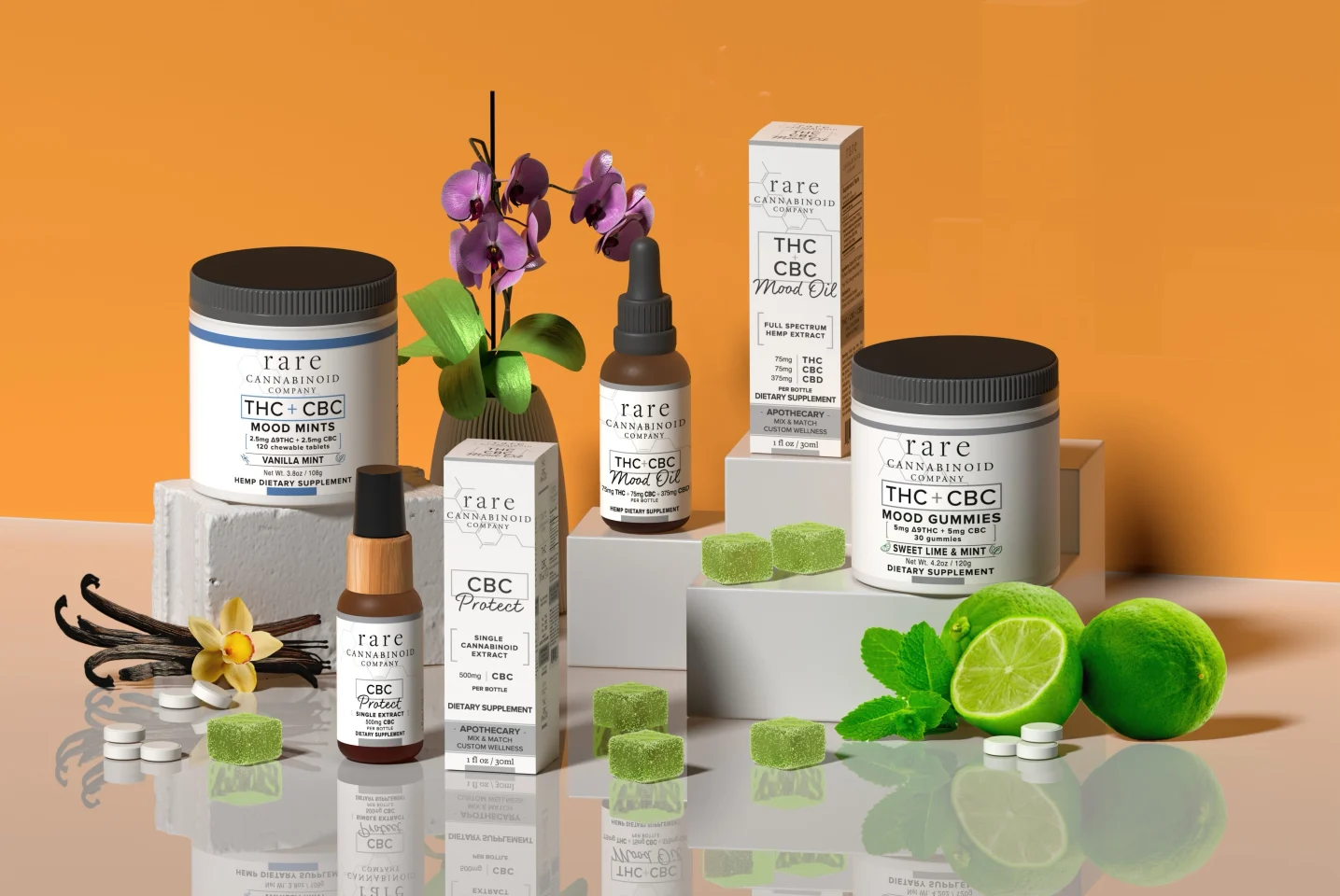
CBC (cannabichromene) shows up mainly in mood-oriented lines.
Rare Cannabinoid Company offers the CBC cannabinoid alone in CBC oil tinctures, with CBD in a one-to-one gummies blend, and also in formulas that combine CBC with THC and CBD.
That second category is meaningfully different because THC brings intoxication into the picture. Read the formula by what is actually in it rather than by the word on the front of the package.
A previous article looked at Rare Cannabinoid Company edibles that combine THC, CBC, and CBD, an example of how one formula can pull several cannabinoids into the same product without making each cannabinoid interchangeable.
When CBG Leads the Formula
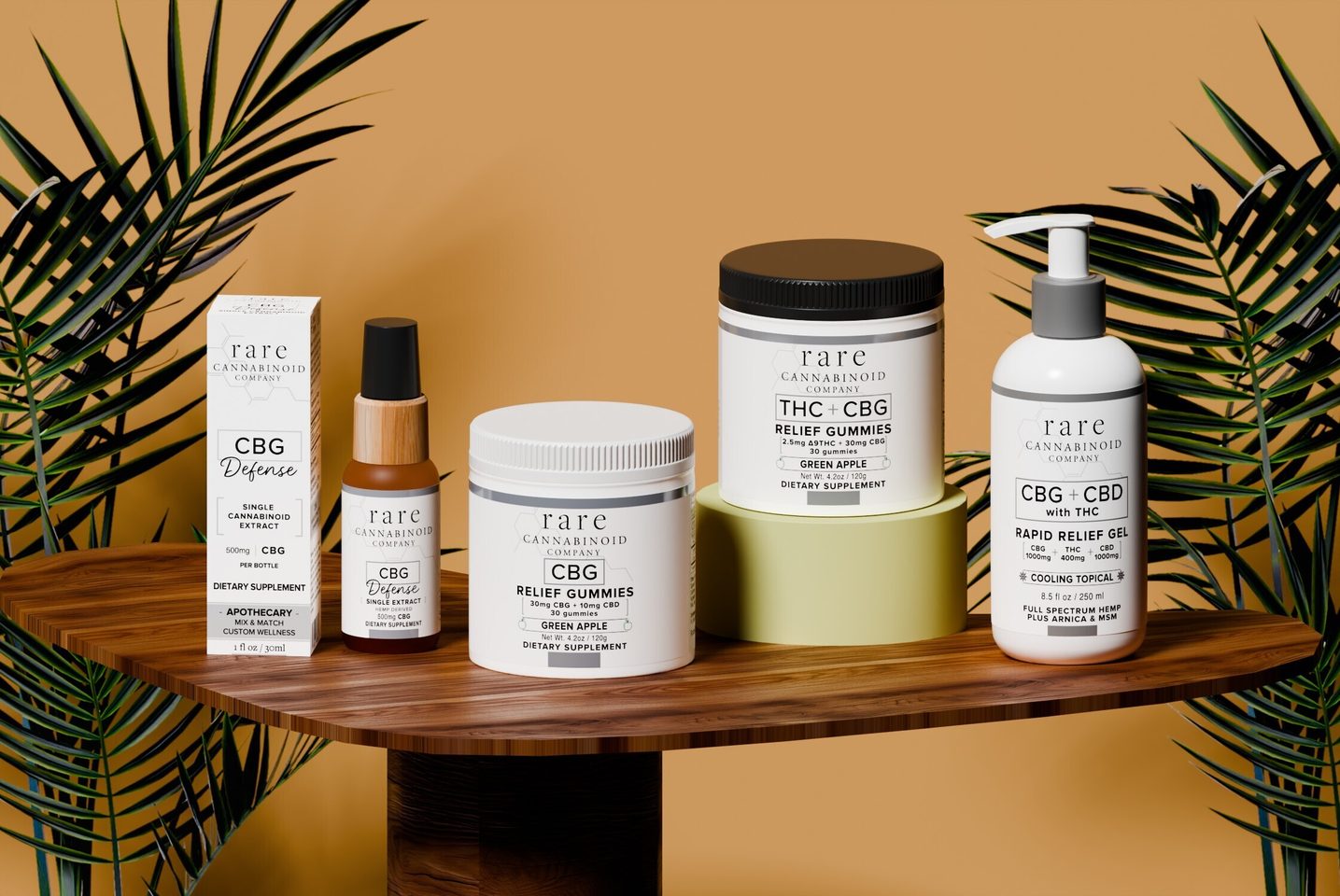
CBG is one of the few minor cannabinoids that has become common in topicals as well as in gummies and tinctures, and it tends to anchor product lines built around body-focused use. That format range is what separates it from most of the other rare cannabinoids on this list.
Rare Cannabinoid Company’s CBG Relief Gummies contain 30 mg CBG and 10 mg CBD, while its THC version adds 2.5 mg Delta-9 THC.
A previous feature covered the company’s CBG-focused topicals, which combine cannabinoids with ingredients selected for topical use. A topical is applied to the skin, while a gummy or tincture is consumed differently and should not be treated as the same product simply because the cannabinoid acronym matches. It’s important to know that THC is not intoxicating when applied to the skin but can get one high when ingested orally.
When CBN Is in the Mix
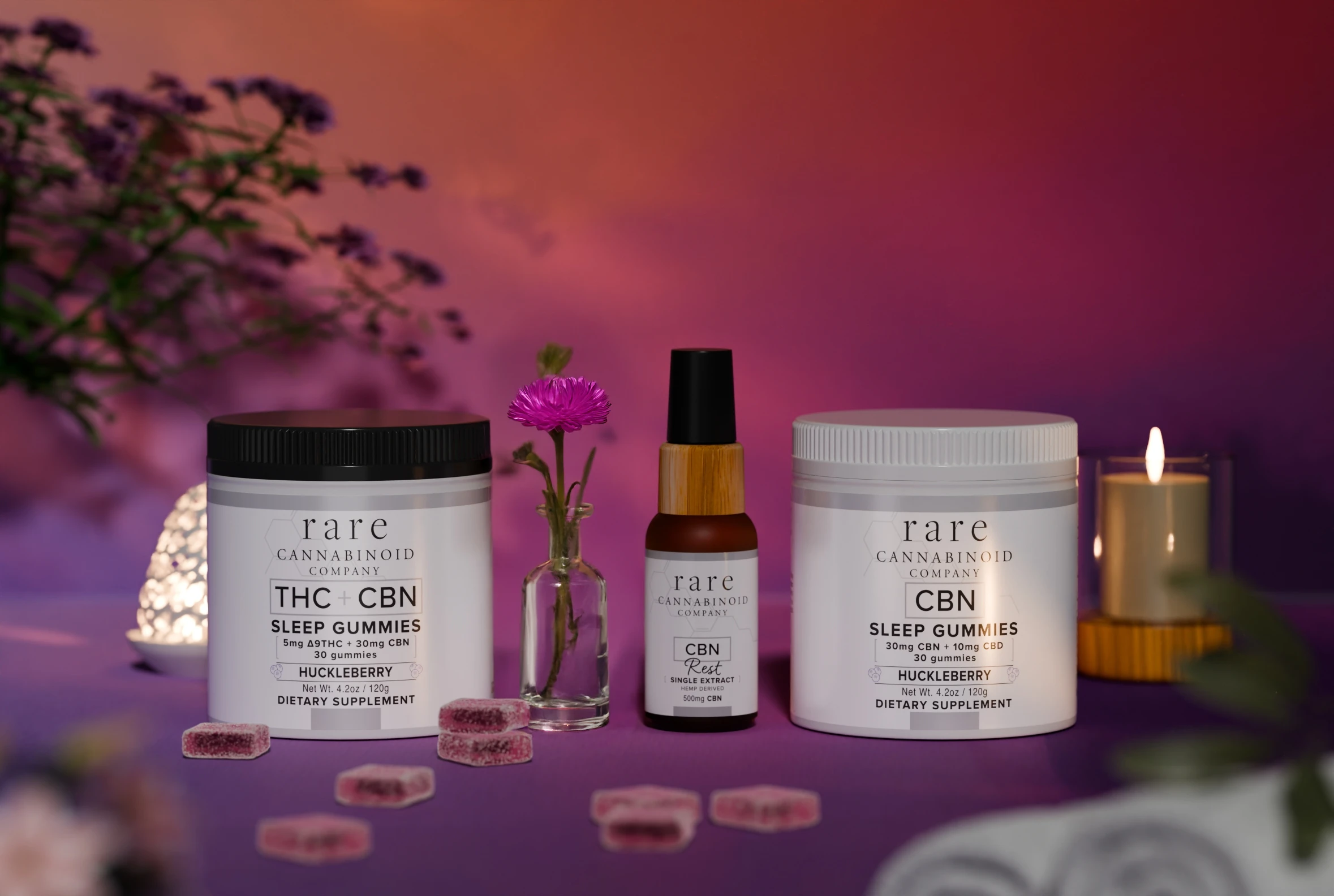
CBN is the most established of the minor cannabinoids within a single category. It has claimed a sizable chunk of the nighttime shelf, and it rarely appears anywhere else, usually in formulas that also contain CBD, THC, or both.
Rare Cannabinoid Company’s CBN Sleep Gummies contain 30 mg CBN and 10 mg CBD, and the company also sells gummies that add 5mg THC per gummy as well as a pure CBN oil tincture.
Check the full cannabinoid panel before treating any nighttime gummy as interchangeable with another. Two products can both lead with CBN and differ substantially in dose, supporting cannabinoids, and whether THC is present. If THC is present, intoxication and impairment are part of the equation.
How to Read the Formula Before You Buy
Start with the cannabinoid you are shopping for. If you are buying a THCV gummy, check how much THCV it actually contains per serving, not merely whether THCV appears somewhere on the label. The same applies to CBG, CBC, CBN, CBDV, or any other cannabinoid featured on the front of the package.
Next, look at the supporting cannabinoids. CBD and THC may be the primary ingredients in one formula and supporting ingredients in another. Some products prominently feature a rare cannabinoid on the front, but the cannabinoid panel or Certificate of Analysis may show that it is present only in a small amount. Understanding the full profile tells you more than the headline ingredient alone.
Then do the milligram math. Pay attention to milligrams per serving, not just the total in the container. A bottle advertising 900 mg tells you nothing on its own. Across 30 gummies that is 30 mg each. Across 60 gummies it is 15 mg each, and the same package looks twice as strong on the front as it is in your hand. Divide before you compare prices, and check whether a serving is one gummy or two. When comparing prices, keep in mind that THC is the most common cannabinoid and generally less expensive to produce. Rarer cannabinoids often cost more because they are less abundant and more difficult to source or produce.
THC deserves special attention because it can impair judgment, attention, and coordination. Edibles can also take longer to have an effect than inhaled cannabis, which is how people end up taking a second dose before the first one has arrived. Follow the product’s labeled serving directions, allow adequate time for an edible to take effect, and do not drive or operate machinery after consuming an intoxicating product.
Choose a format that makes sense for how the product is intended to be used. A mint, gummy, tincture, and topical are different formats even when some of the cannabinoids overlap. They differ in onset, in how long they last, and in how precisely you can control a dose.
Finally, read the Certificate of Analysis, and read it properly. A COA is a third-party lab report, and the useful ones are specific. Check that the batch or lot number on the report matches the one on the package in front of you, since a COA for a different batch tells you nothing about the product you are holding. Check the date. Check that the lab is independent of the brand. Then compare the cannabinoid panel against the label: the featured cannabinoid should appear in the advertised amount, and the THC figure should match what the packaging claims.
Look at what else the report covers. A thorough COA includes contaminant testing for things like pesticides, heavy metals, residual solvents, and microbials. If a brand publishes a potency panel and nothing else, that is a gap worth noticing. If a product puts THCV, CBG, CBC, CBN, or CBDV front and center and the lab report does not show it, the front of the package has outrun the contents.
The Best Blend Is the One You Understand
Cannabinoid combinations give consumers more choices than the old THC-or-CBD split. You can compare daytime-positioned, mood-oriented, body-focused, and nighttime formulas, then decide whether THC belongs in the mix.
The best labels make the formula legible. They tell you how much of each cannabinoid is present and give you enough information to separate the formulation from the promise.
More initials do not guarantee a better result. But once you know how to read them, the cannabinoid shelf stops looking like chemistry homework and starts looking like choices.
Photos courtesy of Rare Cannabinoid Company
Sponsored Content Disclosure: This article was published as part of a paid commercial arrangement with Rare Cannabinoid Company. It is not independent editorial content. References to cannabinoids, formulations, product features, consumer use cases, or potential effects reflect the company’s perspective unless otherwise noted and have not been independently verified by High Times.
This article is for informational purposes only and is not medical advice. Cannabinoid products can have side effects. CBD can interact with medications, and THC can cause impairment. Do not drive or operate machinery after consuming intoxicating cannabinoids. Speak with a qualified clinician when considering cannabinoids in connection with a health condition or medication.