




She photographed Owl Farm and made Hunter S. Thompson’s breakfast at eleven at night. Twenty years later, Chloe Sells talks acid, communal weed, AI and peanut butter Bloody Marys.
This article originally appeared in High Times’ Spring/Summer 2026 print edition. Get yours here.
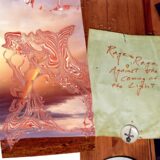
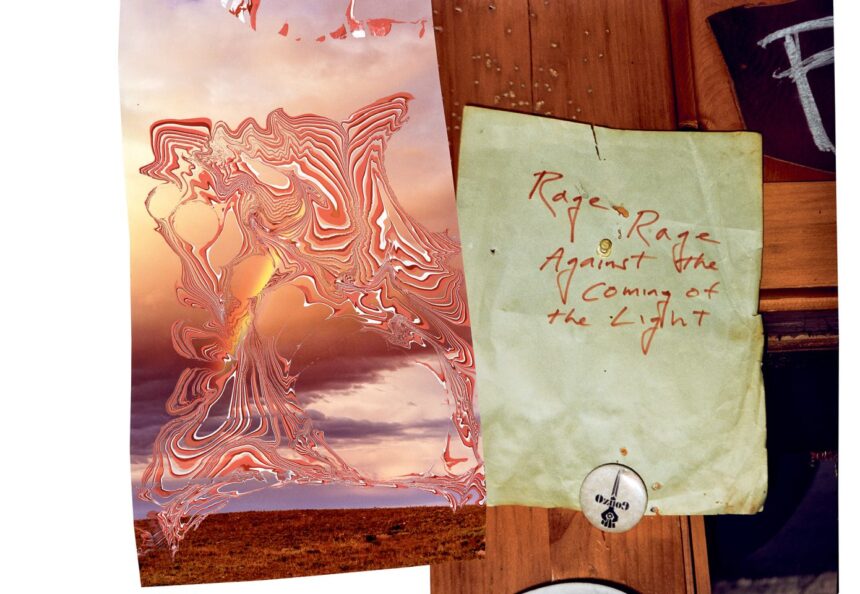
A feline skull surrounded by dark and dead leaves. Sunlight seeping through tree branches in impossible colors. A blurry desert landscape juxtaposed with vibrant halftones. A torn note that reads ‘Rage, Rage Against the coming of the Light’.
Such are the images Chloe Sells gifts us: vivid landscapes that feel both otherworldly and familiar, impossible yet natural, at once raw and carefully edited.
Born and raised among Aspen’s mountains, in the midst of a thriving psychedelic community, it’s no wonder her creations reflect a sensitivity for boundless sceneries and trippy, experimental methods. Some may know Sells for her brief (but intense) period as Hunter S. Thompson’s personal assistant at the time of his death, or for her unorthodox documentation of his home.
So we had a chat with the nomad photographer, about simple, pedestrian topics such as the power of entheogens, paths to enlightenment, the perils of AI, the politics of beauty, and her slice of time with one of the most riveting writers in history. And more importantly, his taste in breakfast.
Trips of All Sorts
High Times: Do you remember the first time you tried weed?
Chloe Sells: Not really. Kind of. I think I was 13 or 14. I didn’t get stoned the first time, I remember that… I remember thinking I would never forget, but I can’t really remember it now.
HT: And psychedelics?
CS: Same. I don’t remember the first time I took psychedelics, but I started taking mushrooms pretty extensively as a teenager. Then I started taking acid, which I prefer.
After years of traveling around the world, from Aspen, Colorado to the UK, from Bali to Botswana, Sells is currently living in Provence, France, searching for a new place to call home for herself and her two kids. And she doesn’t do drugs like she used to: now a mother and a widow, her priorities have shifted considerably.
“I don’t need cannabis and psychedelics in the same way that I did. I need to be awake and alive every single morning because my kids need me. I find that almost any substance, I barely even drink anymore, has some kind of effect on my mornings, and I really can’t afford that.”
But the artist doesn’t mourn this change of pace; rather, she accepts it like the tide. “I have a friend in Botswana who occasionally brings me a joint”, she shared. “The last time, he came back for dinner weeks later and it was still there. He was like, ‘What? It’s right here in the kitchen!’ I like having drugs around, but I don’t use them often.”
She would later admit to sharing that impulse with a certain restless journalist, but let’s not get ahead of ourselves.
Her current habits don’t imply she has given up on the culture or, god forbid, become a square: “I don’t party the same way. Life changes, but I don’t want to lose the openness psychedelics gave me. I have to cultivate it in other ways… Most of the people that I know use psychedelics or cannabis in some way or another, and rightly so. In terms of the mind space that it provokes and the community, it’s still very much a part of my life.”
And so it has been since forever, apparently. Sells grew up in a very psychedelic community, in her own words, and such experience informed not only the way she views drugs, but also the way she makes art: “My dad sold posters of graphic art; psychedelic rock & roll posters from the ’60s and ’70s. He had a head shop, there were record albums all over the house, and the covers were psychedelic. So aesthetically, I was steeped in it from a young age.”
As if by osmosis, her aesthetic has always veered toward psychedelia… and it still does, even if it’s been more than a decade since she last did acid.
In fact, she can pinpoint exactly when she stopped taking LSD: “I used to carry it around with me… I had this little container of liquid acid in something like a breath mint spray, maybe a hundred hits. It went everywhere with me in my camera bag. Then my camera got stolen. I got the camera back with my wallet and passport… but not the acid. I like to think about someone downing those ‘breath mints’ in Botswana, of all places, where that is not a thing. Since then, and that was 12 to 15 years ago, I haven’t taken acid.”
But don’t be fooled by that great gap in time: Sells absolutely loves the stuff. “I swear by it,” she stated, hands down. “I think everybody should do extensive amounts of acid at least once.”
(Is she wrong, though? We don’t think so.)
You Can’t Control the Cosmos
HT: Do you think these substances have helped you grow as a person or enriched your life and your art?
CS: Absolutely. Look, if you’re born some kind of saint (I’ve traveled all around India and Asia, following the footsteps of gurus and saints, some of whom were born enlightened) you don’t need acid. But if you’re born like me, to a family of pretty much emotionally defunct people in a small town, acid can open you up to the cosmos. As long as you have wisdom and support, it’s an essential tool.
Nevertheless, that doesn’t mean drugs are for everyone: even the most mellow of entheogens (if there is such a thing) can trigger unpleasant experiences in people with mental health conditions, or who simply aren’t ready for such intensity. Although, at times, limitations exist primarily on the inside. Fear, as Frank Herbert put it, is the mind killer.
“So many people are afraid of hallucinogens. They’ve been manipulated to feel that way by media, politicians, and laws for so long. A lot of people say, ‘I don’t want to lose control.’ Control of what? You think you have control? That’s a farce. You have no control. Occasionally you have preferences, and that’s about it.”
So is this neurotic quest for control getting, pardon the pun, out of control? According to Sells, it very much is. She’s critical of this growing tendency, this use and abuse of substances not to expand consciousness, but to numb it. “It’s sort of sad that drugs have become so dirty and speedy and tainted and dark,” she lamented. “People have moved away from psychedelics because they want to obliterate their experience, which is what social media does and what a lot of modern drugs do. Strong strains of pot can do that too.”
Sells is right on the money on this last one: indeed, THC percentage has been increasing dramatically in the last decades, mainly due to the mistaken assumption that more THC means better weed. But the photographer doesn’t buy into this fad at all: “It is becoming a problem. I know it’s not good for me, and I don’t think it’s good for our culture. People are whacked out. Really, it’s supposed to be something light and fun. I appreciate that you can use it medicinally for sleeping, for gaining weight when you have cancer, for mitigating pain, and for having a good time, but overall, I find it too strong… That’s obviously driven by the market. People just want to be wiped out. I find that really telling about modern culture and what’s happening in communities.”
CS: People are also smoking weed in an isolated way. We used to smoke weed together, in community, listening to music, jamming with friends. Now people are at home vegging out in front of the TV or scrolling social media, just getting wiped out. I’d like to see the comeback of communal weed.
HT: Weed as a communal experience.
CS: Yeah.
Professionals, Wasted or Otherwise
“Hunter trained himself to be wasted and proficient. That was important to him.”
Chloe Sells
That was the first thing Sells told me about Hunter S. Thompson. We were chatting about the perils and advantages of working under the influence, of the intricacies of technical work and delicate procedures. “Being stoned in the darkroom doesn’t interest me, sounds like a nightmare,” she admitted.
Indeed, in such challenging settings, mistakes are bound to happen; and even more if you’re not sober, at least in Sells’ case. But not Thompson, she shared suddenly: “He practiced until he nailed being wasted and being a professional. I still lose my keys on a daily basis; I’m not that person.”
As Sells would then reveal, she and Thompson shared some personal aspects, such as being professionals who take pride in their work, even if their approach varied. And in their short but powerful time together, those differences came to play. Sells could’ve never worked with him “wasted”, as “he demanded such a high level of intellect and competency. I can’t remember the start of my sentence by the time I reach the end if I’m high. Hunter would have thrown me out straight away.”
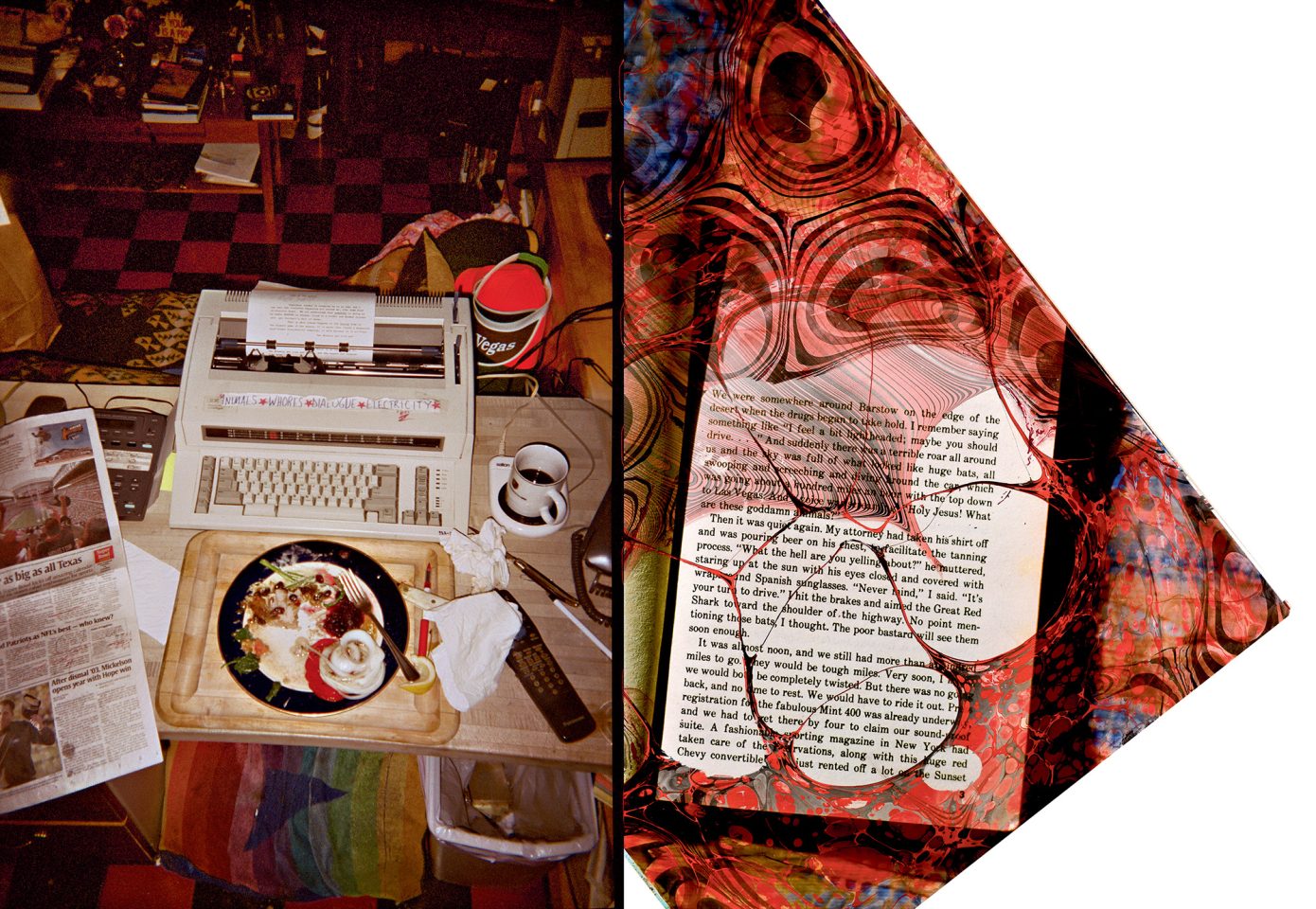
Or at least that was the case most of the time. Sells admitted that, while she doesn’t remember taking drugs while working with him, there’s evidence to the contrary. “I was reading something I’d written, an email to my late husband or a friend, the day after working for Hunter. It said, ‘Oh, Anita and Hunter and I took a bunch of tincture last night.’ Probably some kind of mushroom tincture or San Pedro, handmade by a friend. That made sense, but it surprised me, because I don’t remember really taking many drugs when I was with him. I needed to work.”
“Maybe it happened once… Oh, I’m sure it happened more than once,” she laughed. “It was part of my life then; I was in my late 20s. I was taking tincture all the time, taking ecstasy weekly, multiple times a week at that point.”
“That’s NOT how you do ecstasy,” I interrupted, my harm-reduction anxieties rudely getting in the way of my journalistic ethos.
“That’s how you do it when you’re in your twenties. High-functioning drug addicts. Extremely high-functioning, very successful, total drug addicts,” Sells countered.
But, then again, we couldn’t expect less from the professional who worked with Fear and Loathing‘s author until the end, could we?
“Hunter was the ultimate professional. He really was. He was incredibly knowledgeable, one of the most intelligent people I’ve ever come into contact with, bar none, in a place full of talented, successful people like Aspen. He stood out as a hyper-intellectual, probably had a photographic memory. He was insanely smart, inspiring to be around, and a complete gentleman.”
That’s how Sells remembers him.
Among the Mountains
CS: I look back on it and it makes perfect sense. I feel really lucky. I’d definitely do it again.
As the story goes, Sells was approached by Anita Thompson, Hunter’s wife, at an after-party for a documentary on the journalist, Breakfast with Hunter. The writer needed a personal assistant, the photographer needed work. But it wasn’t a job for the faint-hearted or for the easily shocked. Luckily, Sells was neither.
Now, what most people don’t know is that Sells was already acquainted with Thompson, not only because of his work, but because of their shared background in Aspen. “My parents knew Hunter. One of his best friends was one of my dad’s best friends. We were all in the same community, so I’d see him places,” she revealed. “I only worked for him for that short time, but I had known of him my whole life.”
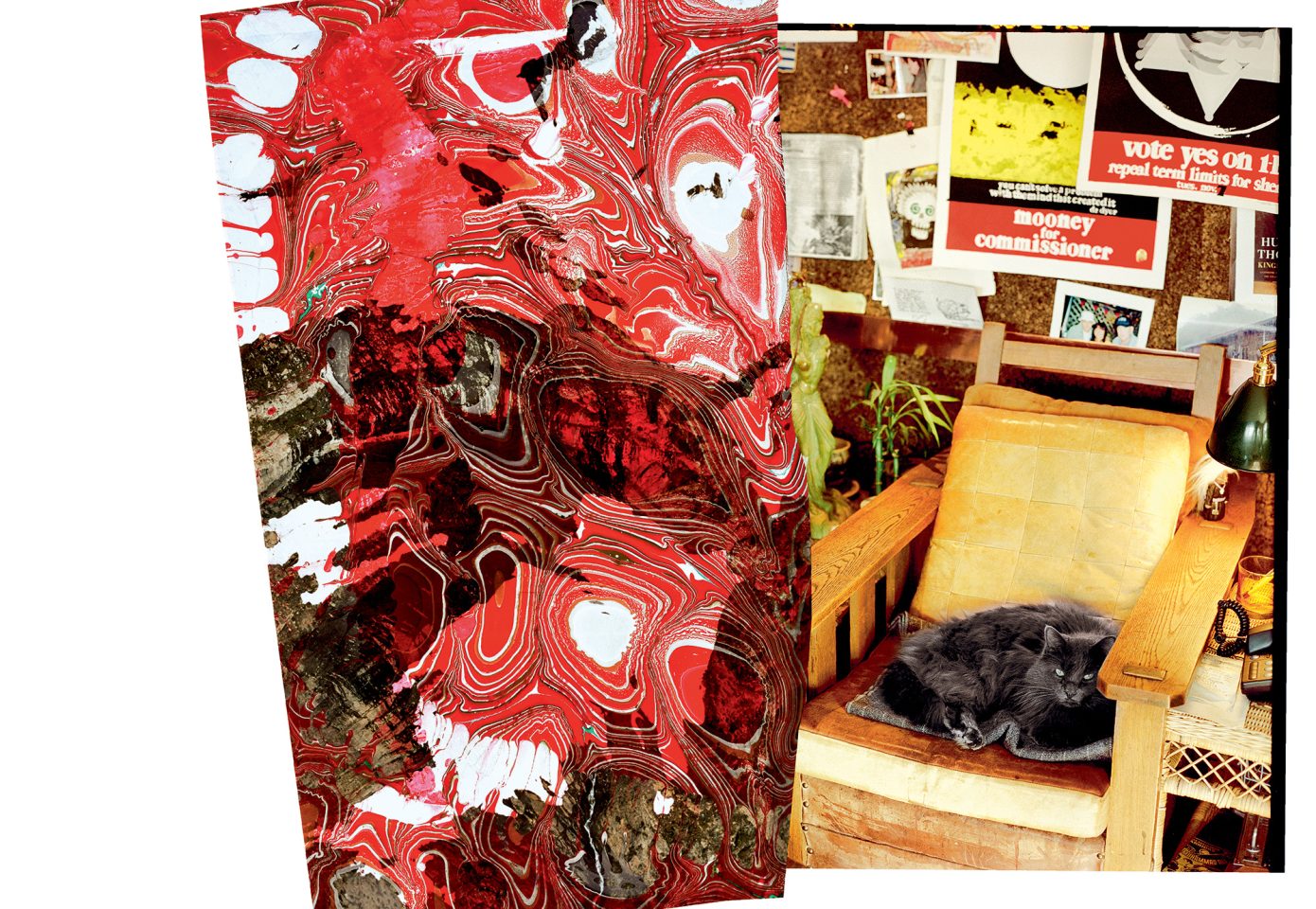
Years later, she would publish the photos she took of Owl Farm, the Thompsons’ home at Woody Creek, in her book Hot Damn!, and present them in the aptly named exhibition Drugs Before Dinner, Death Before Dishonour. She didn’t just document the home and its surroundings: she enhanced them with unusual approaches, such as suminagashi, a Japanese technique that gives the images a beautiful psychedelic vibe that was not met by accident.
As the artist explains, this body of work “was centered around bringing together images of Hunter; pictures of his home, the place where it all happened, which is also my birthplace. I have a strong connection to the mountains and valley where Hunter and I both grew up. Using that kind of visual technique made sense for him. It was tactical, but also just in me. I’ve had huge psychedelic experiences myself and grew up in the aesthetic by happenstance. It’s all influenced my work, but I also made a professional decision to make work that looked like that.”
‘Fond’ doesn’t even begin to describe how Sells sounded while recounting her time there. “I’m really thankful for the opportunity. It made sense in my life story… It came at the perfect moment, out of the blue, Anita asking me to work for them. It changed my life a bit at that time, because I stayed in Aspen longer than I would have otherwise, which was pleasant. I was having a blast anyway.”
Another factor that made her a perfect fit, besides her familiarity and ability to keep up with his idiosyncrasies, was the fact that she wasn’t there as a “Hunter freak,” in her words. She wasn’t there to pester him fishing for anecdotes or suck up to him, something the writer very much appreciated.
“One reason he found it easy to have me around was that I didn’t care about his history… Other assistants worshipped him, knew everything he’d ever written. I had read Fear and Loathing and Hell’s Angels, but the rest, The Rum Diary, Kingdom of Fear, Better Than Sex, his letters, I read during or after working for him.”
As a matter of fact, she doesn’t particularly remember the journalist sharing his past dalliances or musing over his life story: “He was constantly creating new escapades. He didn’t reminisce much; he was busy making new experiences.”
Let’s talk a bit about those.
Peanut Butter Bloody Marys and Cocaine
CS: He took drugs the whole time.
HT: What kinds?
CS: Anything and everything. He had drawers of them, depending on his mood.
We did mention earlier that working with Hunter S. Thompson wasn’t for the faint-hearted. This wasn’t only due to him being “very intellectually demanding,” as Sells put it, but because of his unconventional lifestyle and, more importantly, his world-acclaimed capacity for doing drugs.
So what did a day working as his personal assistant entail? Sells paints a picture almost as vibrant as her photographs.
“I’d go to work after my restaurant shift at 10 or 11 at night, his breakfast time. I’d make him breakfast: maybe a shot of tequila, a beer, a Bloody Mary, whiskey, and coffee on a mug heater to keep it hot. Typical Bloody Mary garnish in the U.S. is celery, but he’d fill it with peanut butter… disgusting. Sometimes chutney too. He had terrible taste in food.”
How terrible, you ask? “He also loved microwave food. I love to cook, but he wouldn’t let me, insisted on microwave turkey dinners. I’d overcook them out of spite sometimes,” she laughed.
Nevertheless, the horror goes way beyond microwave dinners. Here’s a colorful fact for you: Thompson was infamous for the, dare we say, eclectic taste profile of his breakfast menus, a meal which he once referred to as his ‘psychic anchor’. Said menus would include known players in a typical North American breakfast, such as coffee, eggs and sausages, but also more eccentric choices, like margaritas, chilies and cocaine. All in massive quantities.
But the peanut butter Bloody Marys really do set another standard, don’t they?
“He’d sip that through the night, sometimes drink it all, sometimes not. He liked to know he had everything on hand, like me with keeping drugs around. He’d smoke a pipe, do cocaine all the time, and maybe take pharmaceuticals if they were nearby… He always had a cigarette burning, constantly consuming something.”
Turns out, he ate food the same way he did drugs: ‘In a spirit of genuine excess’, as he once put it.
But for all the excess and the tremendous amounts of drugs he consumed non-stop, Sells “rarely saw him completely wasted, only a few times.”
Although, as it turns out, he might not have been all that exceptional in context. Maybe one of the most impressive facts about this scenario is not only Thompson’s proficiency for substance use and abuse, but how ordinary that seems to have been amongst the community in Aspen, Colorado.
Thompson died at 67, after decades of doing more drugs than most people would in several lifetimes. But Sells acknowledged, as a born-and-bred insider, that “for Aspen, that’s not old for someone doing that many drugs. Plenty of men outlived him doing more, including family members, but he checked out 20 years early.”
The writer checked out voluntarily in 2005, a little more than two years after Sells had started working with him. When talking about his decision, she seemed to do so from a place of respect and understanding.
“He was a procrastinator, and as he got older, it got harder. His body was in bad shape. Back surgery, hip surgery, supposed to have the other hip done. The drugs were taking a toll. He was burnt out. He went when he was ready.”
The Future Is Already Here (It’s Just Not Evenly Distributed)
HT: What do you think Hunter would have thought of AI?
CS: If you delve into his writing, I think he foresaw this. I can’t pinpoint where, but I suspect he’d think it’s terrifying, like most people do. He was old-fashioned, a Southern gentleman. He’d be in his late 80s now. I’m 40 years younger and I feel too old for this.
As our talk progressed and grew out, touching topics like the woes and benefits of anarchism and comparing presidents (United States’ and Argentina’s, specifically), Sells started pondering on what Thompson would have thought of today’s, let’s go with intense, sociopolitical climate. Turns out, there might be some clues available on that subject.
As you may know, Thompson’s published works include not only novels and a fuckton of journalistic articles, but also personal letters. “Those letters are some of his best work and very important in terms of what’s happening today,” Sells assured.
His political views were colorful to say the least: anti-establishment, pro-gun, advocate for drugs and civil rights, and a big fan of Che Guevara and 9/11 alternative theories.
Now, Sells wonders how he would feel about the current zeitgeist, and how much his views would differ from his remaining friends and community. Her personal view, which she admitted might not be the most popular one, is that liberals have become divided, with many of them “brainwashed,” and speculates on the late journalist’s possible take.
“I wonder how he’d have perceived COVID and Trump. His natural inclination would have been to hate Trump, but it’s more complex than that. He always talked about how, if you take the facade off, Republicans and Democrats in DC are the same… I’d ask Hunter: what’s the purpose of politics now? All it’s doing is stirring anxiety and fear, which get us nowhere… Fear and anxiety keep us stuck. People are more fearful of AI now, and we’ve created another ‘species.’ So what’s the point of feeding that fear? Expanding beyond it is the call to order.”
CS: I wonder if and when he would have abandoned politics as we know it, which is dysfunctional.
HT: I don’t think it was in his nature to stop being political.
CS: True.
But it’s not all about party politics and social division, no sir. There are dangers everywhere for those who see. So what does Sells see? “The problem is people are drugged out on social media and TV, and now we’ve got AI on top of it, creating its own pressure. Everyone’s looking at each other thinking, ‘This is out of control.’”
“A friend of mine has a master’s in AI and ethics. I asked her, ‘Why did we even put our energy into AI?’ She said the premise of transhumanism is that humans have reached their full potential, so to go further, we need machines to support us. My response: if humans had reached their full potential, they would have learned how to forgive.”
This brought us right back to our starting topic and the thing we’re all in this magazine for in the first place: drugs. She compared the mechanisms of social media to that of entheogens: “It’s nothing like acid. Take acid instead of scrolling, that’s control in comparison. At least with acid you’re connecting to source, spirit, imagination, creativity. AI is making us non-human.”
“Take acid instead of scrolling, that’s control in comparison. At least with acid you’re connecting to source, spirit, imagination, creativity. AI is making us non-human.”
Chloe Sells
Even so, the photographer acknowledged that psychedelics are, eventually, limited when it comes to true enlightenment. They are tools, yes, but tools only get you so far. “Any consistent spiritual practice will take you beyond them. Your experience will be psychedelic in nature because you’re communing with the wholeness of existence. That’s where human power lies. Cannabis and hallucinogens help you get beyond the other noise. They’re just stepping stones. Eventually, if you create a healthy nervous system and feel safe in your life, you’ll create those experiences without the drugs. You can still use them ritualistically or for fun, but that became less interesting to me.”
Now, as an artist in a dire political panorama, Sells does have a perspective that one can consider hopeful. Roses out of mud and so on: “You have art, literature, music, art in many forms. These are the times when people start to create, because pressure makes people need to say things.”
For some, it may be easy to overlook the place art and beauty have in our everyday lives. But not Sells: she knows they’re not only important; they’re essential, especially now.
“Psychedelics and drugs connect you to something far beyond politics: communing with the cosmic world, source, oneness. That’s more fulfilling and impactful than arguing over which politician is ‘better.’ That’s still politics. My work is about beauty. Beauty has a political resource. Especially now, when people are anxious or scared, beauty creates a pause.”
Art, politics, entheogens… In the end, it’s all about connecting, about reaching out to each other from a place that has to do more with understanding and less with judging. Here’s to softer, loving, and empathetic connections.
Editor’s note: This interview has been edited for length and clarity. The views expressed are those of the subject and do not necessarily reflect the views of High Times. The article describes personal drug use and is not guidance for anyone else.