
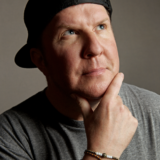




This interview by Micah Johnson originally appeared in High Times Local, produced under license by Cannapages.
Twenty years after the cult stoner classic, the “Tom Brady of vodka” has quit drinking, switched to low-dose edibles and is back with “Mini War,” a new R-rated comedy co-starring Luke Wilson and Vanessa Hudgens.
If turn-of-the-century stoner cinema had a hall of fame, Nick Swardson’s portrait would hang alongside Dave Chappelle, Kevin Smith and Ice Cube. Twenty years after co-writing and starring in the undisputed millennial cult classic Grandma’s Boy—a film that defined an era of Blockbuster late fees, couch-locked gaming and laugh-out-loud degeneracy—Swardson remains a titan of unapologetic, hard-R comedy.
From his unforgettable run as the roller-skating Terry on Reno 911! to his decades-long creative partnership with Adam Sandler, Swardson built a career on a specific, boundary-pushing comedic frequency: wildly outlandish, deeply silly, but always grounded in a surprisingly sweet, authentic heart.
Now, Swardson returns with clarity. He’s back in the creative driver’s seat with Mini War, an upcoming indie comedy co-starring Luke Wilson and Vanessa Hudgens, directed by Grandma’s Boy alum Joel David Moore. The film revives an idea Swardson first cooked up right after Grandma’s Boy, proving that his signature brand of chaos is as sharp as ever. But the road back to set hasn’t been without its hurdles. After retiring his legendary “Tom Brady of vodka” jersey following a series of harrowing health scares—including a burst appendix mid-shoot that had him issuing script notes on Percocet—Swardson has embraced a new, clear-headed chapter of life.
Trading heavy drinking for a more mindful routine (and his very own line of functional mushroom and hemp-infused “Terry’s Berries”), Swardson joins High Times to reflect on his wild ride as he turns 50. We dive into the chaotic genius of Grandma’s Boy, the fine art of writing dialogue for weed-smoking grandmas, surviving emergency surgeries on set, and why sobriety has unleashed the most productive creative streak of his career.
High Times: We’re 20 years out from Grandma’s Boy. This is a cult classic, especially for the millennial stoner. Any awesome memories stand out?
Nick: Yeah, I’ve got a lot of great memories from it. With Grandma’s Boy, it was great because I was already a screenwriter. I had a screenplay credit on Malibu’s Most Wanted, and then Adam brought me in because of jokes he saw on Comedy Central about my grandma. The greatest thing you can do as a writer is be handed a script—which I was with Grandma’s Boy by Adam Sandler and Allen Covert. They were like, “This movie is too lame and it’s PG-13, so we need you to rewrite it and make it rated R and do whatever you want.” I was like a kid in a candy store because they were like, “There are no rules.” It was a low-budget movie with no expectations. So it was super fun. I just sat down with Allen Covert—who was the lead—opened my brain up, and created my part.
They were like, “You can write yourself however you see yourself.” Then I created the robot guy and added the monkey and the lion. Like I said, kid in a candy store creatively, just doing whatever I wanted. And they let me be crazy and weird.
HT: The robot guy? It sounds like you wrote half the movie, then.
Nick: I wrote a lot of it. One of the things I love is dialogue; I like writing dialogue. The robot guy—it was funny because it was hard to audition the role, because nobody really understood the split personality of the JP character. I was the only one who knew how to execute it. There was actually a moment where nobody could get it right, and they talked about me playing that part, because nobody could get it in the auditions.
We auditioned really good actors—really great, famous people—and they just couldn’t wrap their head around the tone of it. It was pretty funny.
HT: Did you find Joel David Moore, or did he just say, “I think I’m the dude”?
Nick: He was a recommendation from the studio. Fox, who was distributing the movie, recommended him because he had done Dodgeball. I said no at first because he was too old—the role was supposed to be a teenage prodigy. But the executive, who was a friend of mine, Debbie, was like, “No, trust me, you have to read him.” So we read him and he nailed it. It was so immediate that we were like, “Oh yeah, we’ll just make him an older dude,” and it actually worked. It’s one of those serendipitous movie stories where somebody was totally wrong and then they came in and nailed it. Like Henry Winkler on Happy Days with the Fonz.
HT: The film also perfectly captured the “Stoner” versus “Geek” gamer culture that seems to be lost these days. Did you get any pushback from the geeks after Joel’s performance?
Nick: I got zero push back from Grandma’s Boy. It was this sleeper cult hit. We’re not mocking anyone. Just showing a different world. We did our best to make it authentic to the gaming world. No robots came after us.
HT: Speaking of dialogue, how was writing stoner dialogue for a bunch of grandmas?
Nick: It was super fun because you just treat them like anybody else–you just write it as dialogue for people that are stoned.
I was really hesitant at first because we made the mistake of treating them like sweet old ladies and forgetting that every old lady was once a degenerate. They kind of called us out on that. They were like, “No, we’re real people.” They loved the movie because they never get offered parts like that. They were all so excited to do it because normally they get the grandmother role and things that are very PG. So they were very excited to do this.
Mike (a friend sitting in): Doris Roberts was amazing.
Nick: She was a legend. They were all great. The credits and awards that they’ve all received are insane. If you look at their accolades throughout their career, it’s mind-blowing. They’re all legends.
HT: To those of us in our 30’s or 40’s, this is what we know them for.
Nick: Yeah, totally. That’s kind of how they’re leaving their mark in a way for the younger crowd, which is great.
HT: You’ve got another movie in development. Did you start writing this at the time of Grandma’s Boy? How did Mini War come about?
Nick: It was an idea I had in high school. After Grandma’s Boy went really well, I pitched the idea to Allen Covert and the people that paid us to write Grandma’s Boy, and they loved it. But that was before Grandma’s Boy did not do well at the box office. They bought the movie, we wrote it, and it was super funny, but nobody would make it because Grandma’s Boy didn’t do well. Then we kind of moved on, and I started working with Sandler full-time.
So I kind of forgot about it. Years and years went by, and the company, Level 1, that paid for it kept going, “Hey, what’s up with that mini-golf movie?” I was like, “I don’t know, I’m busy.” I had a TV show at the time and I was touring, so I didn’t think anything of it. Then this spring, Joel, who was JP in Grandma’s Boy, was like, “Let’s do a movie together.” I sent him that script and he was like, “This is great.” I said, “This is what I wrote after Grandma’s Boy,” and he was like, “Let’s do it.” So we quickly got money—he had filmed in Kentucky a lot—and we threw it together. It was great, but then my appendix went to shit, so I missed several days on set. That’s brutal because I’m the main writer and producer of the film.
I’m curious to get into the edit, but I know what we have and I know what the script was, so we should be in good shape. It’s fucking crazy, but it’s grounded. That’s the best kind of comedy. Grandma’s Boy is like that—a crazy movie, but there’s a real sweetness to the dynamic between Allen, his grandmother, and her friends.
HT: You talk about dialogue and going deeper and more heartfelt. When you’re the writer of these scripts, if you’re not the director, how do you make sure the tone and your vision are actually brought to life? Do you sit down with the director, or does the director have final say?
Nick: You have to establish a collaboration, and Joel is a good friend of mine. I went into it with, “This is my vision,” and Joel was like, “My job is to execute your vision.” That’s not from an ego standpoint—it’s just I know the tone of what I like in comedy, I know what my fans like, and I know the Grandma’s Boy crowd.
It was very stressful to be in a hospital while my movie was being filmed. But I gave Joel notes and I gave the actors direction from the hospital. I’m excited to see what it looks like.
HT: Did you pick Luke Wilson, or was he a studio pick?
Nick: We have no studio—it’s an independent film. I cast it on my phone, basically. Luke was a friend of mine, and I called a lot of these people up and asked, “Hey, want to do this crazy rated-R movie?” And they all trusted me. Luke Wilson, Dave Sheridan, Brett Gelman, Kevin Nealon… so many great people. The only people I didn’t really know were Vanessa Hudgens, who was amazing, and Rob Morgan, who was incredible—he was in Mudbound, he’s a legend. A lot of it was people coming together to make something fun and crazy.
HT: Are you usually on set the whole time if you wrote it?
Nick: I’m on set the whole time. I’m overseeing every line of dialogue, how the line is executed, and how the joke is being filmed. When I’m producing, I’m there 110%.
HT: That must have been super stressful then.
Nick: It was wicked stressful, and I’m trying to recover physically and not lose my mind. And I’m also on pain meds, so I’m giving notes on Percocet.
Joel’s directed several films; this wasn’t his first movie. This was like his sixth or seventh movie, so he knows what he’s doing. But I’m a control freak about my comedy so I was stressed.
HT: You’ve got a certain brand of comedy; you wrote this completely perfect thing, and unless someone interprets it the exact same way, it’s not going to be as funny.
Nick: Yeah. It’s like anybody—Wes Anderson or Tarantino or anybody that has a really clear vision of what they want, and then you hand it off to somebody else and you have to miss time.
And some people’s instincts are instincts of other movies they’ve seen, to shoot something that somebody else would have done, like Will Ferrell or Sandler or Seth Rogen. Where I’m like, “No, I have my own vision and my own style.”
HT: That might be key to your meteoric rise. You became famous pretty freakin’ quick, compared to most other people.
Nick: It happened really fast, and I also did it pre-internet. I started stand-up in 1996, so I didn’t have the luxury of any help technology wise outside of making VHS tapes and getting them to clubs. I had to sleep in my car. I had to do one nighters all over the midwest. I had to do everything I could. I got a giant cell phone in 1997. It was like a brick in your pocket.
HT: If you were starting over again today, do you think you would have the same desire?
Nick: Yes. Comedy is the only thing I could do. And ironically I always said that if I didn’t do stand up or acting professionally I’d be a bartender. You have a revolving, daily audience.
Back in the day, me and my friend Colton Dunn—who was on Superstore—we made sketches in high school, but we had a full-on VHS camcorder that was like a fucking news camera. We had to use VHS tapes and go into an edit bay in our high school. It was way more complicated, as opposed to whipping out your phone. You can edit a whole fucking feature movie on your phone.
One of the funny things, though, is I quit smoking weed in high school, so I wasn’t even smoking weed during Grandma’s Boy or anything. Yeah, I stopped smoking weed a while ago and I take edibles.
HT: You’ve overcome pancreatitis and sepsis. Do you feel like if you never got into show business we’d be having this conversation, or was that lifestyle inevitable with a Midwest upbringing?
Nick: That’s hard to say. I doubt I would have gone that extreme if I was a teacher but if I was a midwest bartender, yeah, I’d be fucked. But I just know that I did the party thing, and then I basically retired my jersey. There was nothing more I could do with drinking—I basically won drinking.
I was the Tom Brady of vodka, so there was nothing more I could do. I wanted to go into my later years getting back on camera and focusing on what I have left to say and give to comedy. I was the life of the party, and I was never a big drug guy—I just loved drinking and it was super fun. But once you’ve been there and done that, it gets uninteresting. There’s nowhere else to go.
HT: Our parents’ generation brought us up with this idea that life is hard, and you either mollify it with church or with beer.
Nick: Yeah, alcohol is a major Midwest thing. It’s a key element to a lot of people’s lives, and it was a major element to my life. The funny thing about smoking weed is I was part of that generation where I was a big weed smoker in high school and sold weed. I smoked weed in the ’90s where it was really mellow. Then I quit smoking weed because I got expelled from school for class clown shit and pulling fire alarms to smoke weed. I talked my way back in, but I was court-ordered to go to rehab for marijuana. When I dried out and decided to get back into weed years later, the weed had gotten exponentially stronger and I couldn’t function on it.
There was this weird time gap of about five years, from 1998 to the mid-2000s, where all of a sudden it was wild. Where I used to smoke a blunt, now I would be bonkers off two hits off a one-hitter. The weed went warp speed. I don’t like smoking, where I take a hit and all of a sudden, I was normal and then immediately too high within seconds. That is alarming to me.
HT: You’ve mentioned eating brownies with [former roommate] Zach Galifianakis — that sounds like an epic time! So your path has been edibles for a while then?
Nick: Yeah. I always liked it for the reasons people hate it: I actually like that it slowly creeps up on you. I think it’s cool and soothing, whereas a lot of people don’t like that. Zach and our friend Bobby ate pot cookies and then went to the grocery store. We loaded up on foods that would give us gas. Then we went back to Zach’s and had a farting contest. True story. Bobby won cause he could light them. To be an adult and be jealous of that skill makes me laugh.
HT: On Grandma’s Boy, was it a bunch of stoners on set, or was everyone professional? I heard Dante used real weed. Was it a pot party?
Nick: Unless he didn’t tell us, legally you can’t smoke real weed on set. The thing people forget is that we’re filming a movie for 20th Century Fox. They’re not paying us to have a party; we have to deliver a movie. When we would wrap, Dante and the director would smoke weed—they’re big weed smokers. But everybody else would just go home and maybe have a beer. Working with all those guys and Adam Sandler, people think it’s a party, but we have a job to do and we have to deliver. You’re working long hours.
HT: You can’t be smoking weed doing 20 takes.

Nick: That would be miserable. I’d be like, “What is that camera? Is that a spaceship?” I would freak out.
HT: Was it originally that much of a weed movie, or did you make it more into that?
Nick: Allen Covert wanted to make a stoner comedy, so he was fired up about making a weed movie that was grounded and not too crazy. He was a big weed smoker at the time.
HT: Were you thinking, “This is my big break,” or was it just fun? What was your mindset?
Nick: I was excited to meet Adam Sandler because I was a massive fan. I still am. It was a catch-22 because you’re meeting one of your heroes. He’s super cool and giving you the keys to a movie, but then you’re also like, “I don’t want to fuck this up.” There’s a lot of pressure because you want to deliver. They handed me the script and said, “Read it and come in with ideas.” I did, they liked the ideas, and then I had to sit down and execute all of it. They were nice enough and trusting enough to let me do that.
I was and am a huge film fan. And I came from a writing background cause my dad was a writer. I did a gig with Jamie Kennedy and he had this idea for a white rapper character that he did in his stand up act. He said he thought it could be a movie. I pitched him a couple scenes I saw in my head and he loved it and said “Dude, write it!” So I got a screenplay book and crashed with Jamie. What came from that was a rated R, Dumb and Dumber for me and him called Suckaz. It was super raw and crazy. We almost got it made independently but it wasn’t until he got his show on the WB, which was amazing, that the studio asked him for a movie. He gave them mine and they were basically like “this movie is too crazy. We need it PG-13.” So they got some writers to make it PG-13–and they did a great job–and that became Malibu’s Most Wanted.
HT: Between that, Jamie Kennedy Project, and Reno 911!— that was really your launchpad.
Nick: Reno 911! was mostly improv; that wasn’t writing.
HT: Did they just tell you the topic and you go? You’re coming up with that shit off the cuff?
Nick: Yeah, it’s pretty insane. I started doing improv in high school, so I was pretty savvy with it.
HT: You make it look easy, almost scripted.
Nick: Thank you. People are blown away that it was not scripted. There was never one line of dialogue ever written on Reno 911!. Never.
HT: What do the outtakes look like?
Nick: It was a lot of laughing. Our goal was to make each other laugh—to say things that were so weird and outlandish that we’d break the other cast members. We live in a world without DVDs now, but at the time there were extras that I’m sure are on YouTube. That’s where I miss DVDs—the bonus features.
On a side note, when Reno 911! got canceled, I actually wanted to do a Terry spin-off. I pitched Comedy Central a show called Terry P.I.—it was Terry as a private investigator—and they didn’t want to do it. I was really bummed out about that.
HT: I can’t imagine. That’s the kind of thing Netflix would jump at now. Do you have plans on getting Terry’s Berries into dispensaries after the hemp law changes?
Nick: Yeah, I think we’ll definitely explore that. I talk about being sober and not drinking, but there are different levels to sobriety. Edibles really help me a lot. My edibles are very minimal and mellow—they’re only 5 milligrams. They have CBD, CBN, ashwagandha, lion’s mane, and cordyceps mushrooms that help with natural calming. There’s so much anxiety in the world, and these really help me.
HT: How did that collaboration come about?
Nick: I had always thought about it, and people had approached me. Then my friend connected me with somebody in Minnesota from Nothing But Hemp—which is now NothingButCanna.net —and we talked it out and collabed on it, and they were totally down. It’s great that they’re local too, so that made me happy.
HT: They’re perfect for the aging stoner.
Nick: Edibles were a good thing for me. Whenever I’m in the mood for it to chill me out. I took one before an MRI because I was stressed, and it alleviated my anxiety. Edibles are better than pharmaceuticals and better than alcohol. You’re not going to get cirrhosis from a fucking Terry Berry.
And with edibles you have a legitimate cutoff for yourself, psychologically and for your body. You don’t want to push yourself to 1,000 milligrams, whereas people who drink push themselves to finish a whole bottle of alcohol. The repercussions are really bad for pills and alcohol.
Mike: It really is amazing what you’ve done. As a friend seeing you over the years and how you were able to kick it—you found a good medium for yourself where you can relax, it’s non-addictive and doesn’t bring you down that dark path. That message is super important.
Nick: Thanks, yeah, my goal now is just to get original comedy out there. I love going to the movie theater, and I think this generation is into going to theaters again. Look at what horror movies and original content are doing. I’m very inspired by this young generation of filmmakers across every genre. I think it’s really cool.
There was a window where I was going to retire ‘cause the business is really frustrating. To get your vision executed is really hard even with connections. I looked back and was proud of what I had accomplished and thought I’d move on and maybe write a book. Then I would run into fans and tell them I might retire, and the look on their face was completely horrified. Nobody thought it was cool. They were like, “What do you mean? You’re done making people laugh?” I felt like an idiot for saying that because why am I retiring? That doesn’t even make sense; I’m not that old.
HT: Do you have any favorite shoots or projects from throughout the years?
Nick: This is a cheesy answer but I love all the stuff I’ve done. I’m lucky to have worked with great people and people that challenge and inspire me. Logistically, Just Go With It, I love. The character was really fun and we shot in Hawaii for a couple months. Jennifer Aniston is the best. Truly.
HT: Mini War is done filming. But that’s not the only project you’ve got going on right now?
Nick: I have three original screenplays, and I created and wrote six episodes of a TV show that we’re out with now. I’m writing another stand-up hour that I think might be my last one; I’m workshopping it in the fall, called Dear Diarrhea. And then I had a meeting about an animated concept I want to pursue. So yeah, I’ve got a bunch of stuff.
HT: That’s a great lesson about sobriety: it opens your mind up to being productive. You’re more present and leaving more of a mark on the world.
Editor’s note: This interview reflects Nick Swardson’s personal experience with alcohol, prescription medication and cannabis. It is not medical advice. Cannabis affects people differently and can be habit-forming for some. Talk to a qualified healthcare professional about your own health and medications.