




Cannabis has always borrowed from the natural world. Strain names pull from fruit, animals, and faraway landscapes, and packaging across the industry leans on leaves, mountains, and jungle imagery to signal something green, earthy, and wild. For most brands, nature works as an aesthetic, and very few have tried to put something back into the places and animals behind it.
JUNGL, a Sarasota, Florida, brand that launched in June 2025, is one of the companies trying. It makes all-natural THC drinks and gummies, and it directs a portion of its proceeds to wildlife conservation projects around the world. The founders’ connection to wildlife also shows up in the brand’s packaging, making conservation a recurring part of JUNGL’s identity.
A Drink for People Who Stopped Drinking
JUNGL was born from a lifestyle change. The founders don’t drink alcohol, and co-founder and CEO Joe Hill quit entirely a few years before launching the company. Plenty of people are trading alcohol for cannabis, but the THC drinks they found on shelves didn’t measure up.
“When I quit drinking, I went looking for something that could stand in for a cocktail and still feel good, and everything I tried had the same problem: bad aftertaste, artificial ingredients, preservatives, all gut rot that was not enjoyable to drink,” Hill said.
“We enjoyed the effects and benefits of cannabis and wanted to create a social and familiar way to consume and introduce more people who are interested in [an] alternative to alcohol or trying cannabis without smoking,” the JUNGL team said.
The goal was a drink “with real ingredients, friendly yet sophisticated, better for you for folks watching macros, nothing fake or artificial, that was craveable to the point people would ask for it non-infused.” Customers now regularly ask for exactly that, according to the brand.
Hill co-founded the company with President Robert Paslaqua. Max Strong, who leads social media and business development, has been part of JUNGL since the beginning.
Where the Money Goes
JUNGL currently supports two conservation projects. According to the brand, its donations help fund ranger salaries, anti-poaching efforts, and fuel for equipment.
The first is Imire Rhino & Wildlife Conservation, a family-run conservancy in Zimbabwe’s Mashonaland East province, roughly 90 minutes from Harare. Imire is best known for its black rhino breeding and release program, and anti-poaching work is central to how it operates. Imire became a wildlife conservancy in 1972 and is still run by the Travers family. In 2025, poachers shot and killed Gomo, a 22-year-old black rhino that Imire conservationist Reilly Travers called “the backbone of black rhino conservation on Imire.”
The second is Paradise Wildlife Adventures, a small eco-lodge in the Peruvian Amazon near Iquitos that puts a portion of every stay toward conservation. The lodge works to rescue tortoises, caimans, and other wild animals from local food markets and return them to the forest, and it hires its guides, cooks, and staff from nearby communities.
According to JUNGL, the lodge has also purchased 50 acres of primary forest that local Indigenous residents protect, breeds and releases tortoises, turtles and caimans, and works with nearby villages so those animals are no longer treated as food. The brand says the lodge’s photography and exploration trips help fund more land purchases.
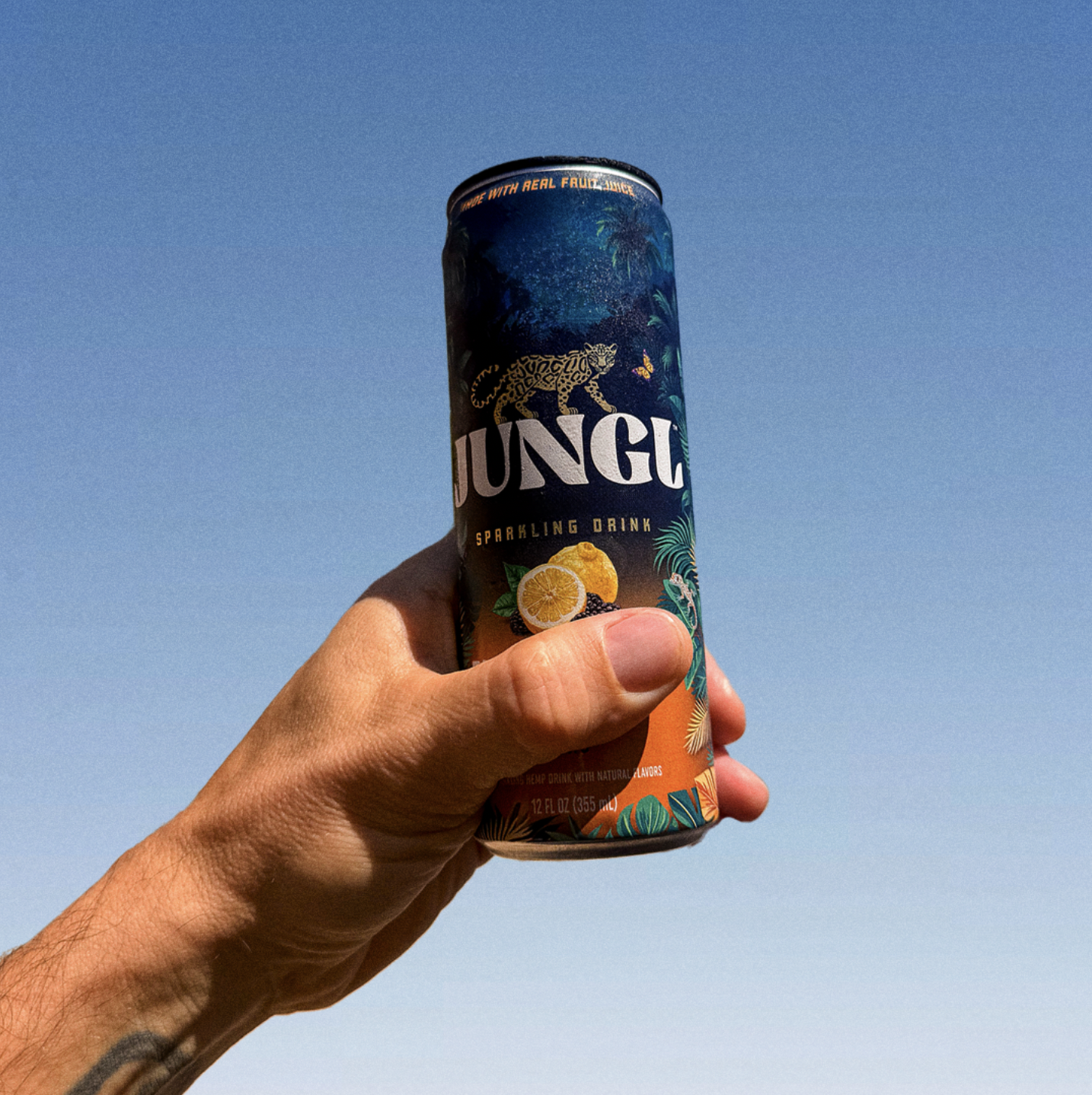
The cat in the JUNGL logo is a real clouded leopard named Kumo, who lives at a big cat habitat in Sarasota where Paslaqua and Strong volunteer. Both have spent years working hands-on with animals, and Strong has built a following around more than a decade of that work.
“All of the core JUNGL founding group cares deeply about animals and the places they live,” the team said.
For JUNGL, that care is meant to reach beyond the logo. “Our mission is to give back as much as possible.”
What Goes in the Can
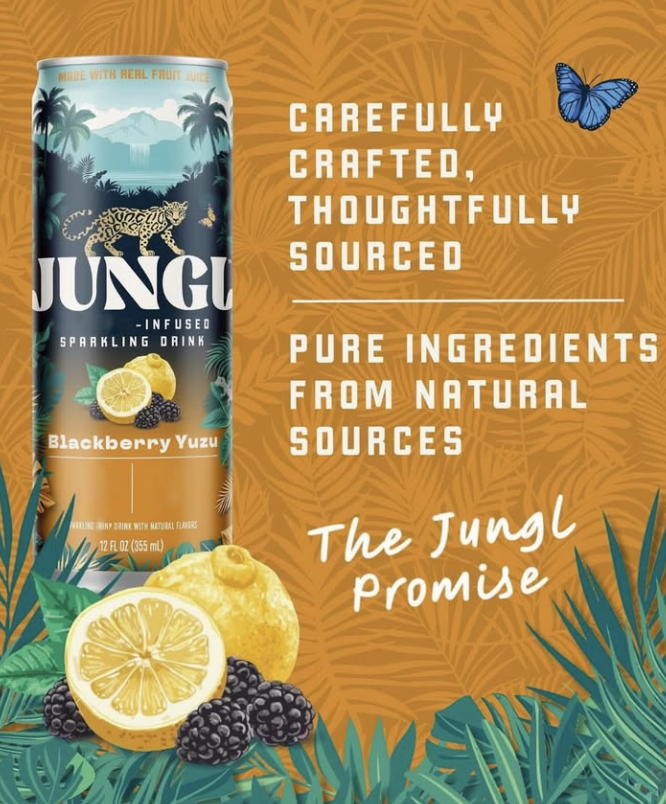
The same philosophy shapes the products themselves. “We care about what we put in our bodies and avoid artificial foods, sweeteners, and flavors at all costs,” the team said.
Each can contains 50 calories or fewer and is sweetened only with organic agave and real juice, with no artificial colors or flavors and no preservatives. Getting there took six months and countless rounds of formulation, with the goal of eliminating any THC or CBD aftertaste. According to the team, that is “much more difficult to do when only using natural ingredients.”
Every JUNGL flavor is custom-formulated, and the juices come straight from the source: yuzu from Japan, goji berry from Peru, and agave from organic farms in Mexico.
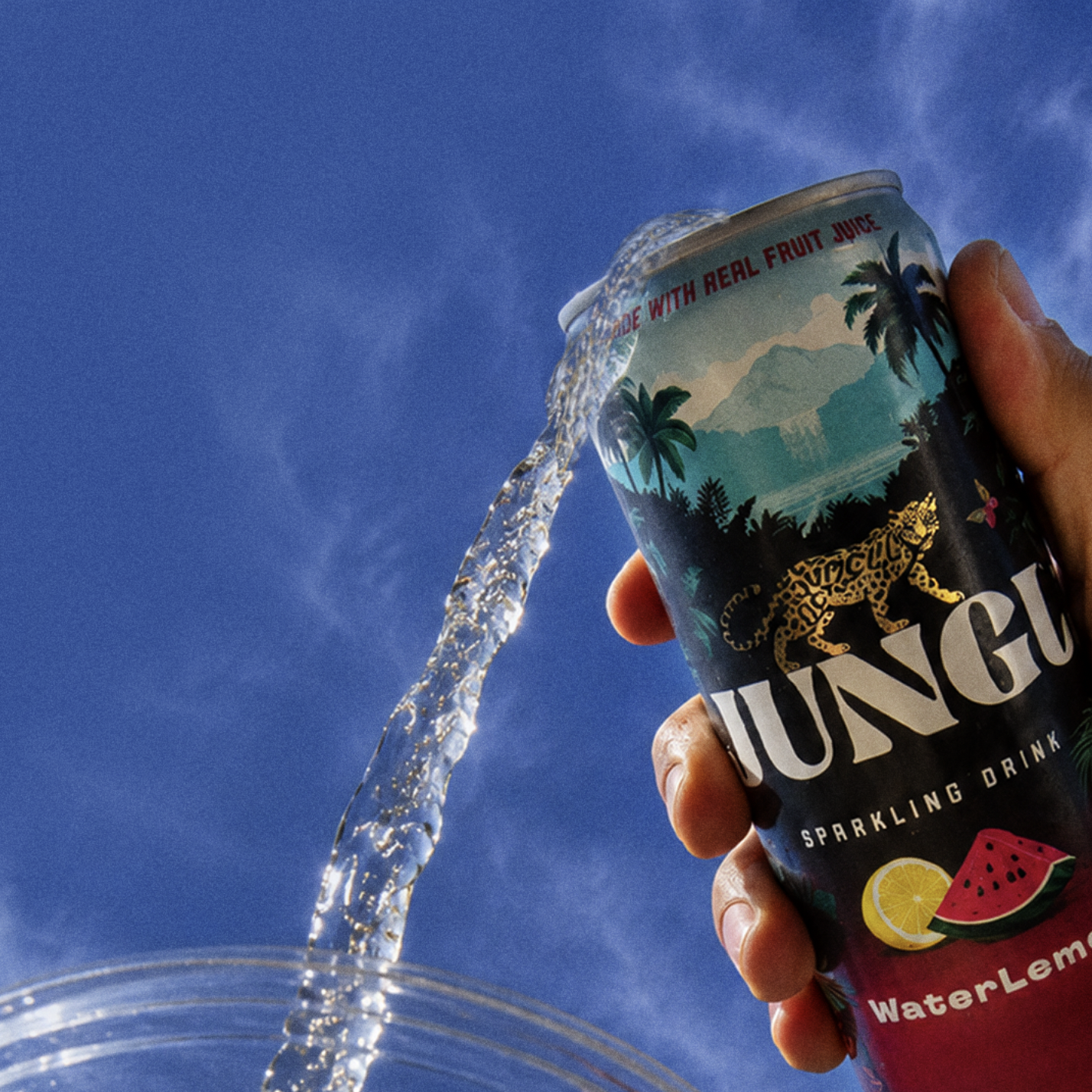
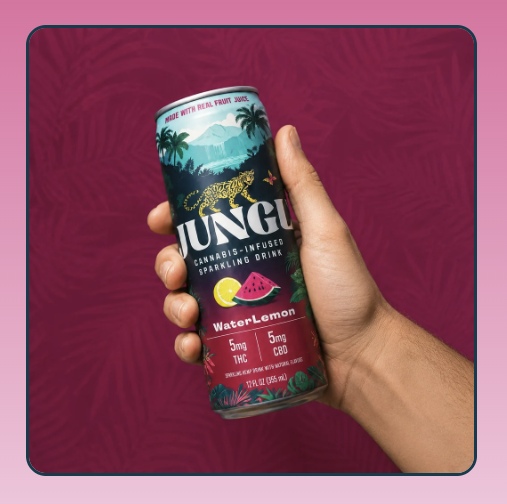
The packaging is built around a familiar moment. “What are you drinking?” is one of the easiest icebreakers at any bar, and it’s a big reason cocktails, THC cocktails included, are built to look as good as they taste. JUNGL designed its cans to start the same conversation.
The Lineup
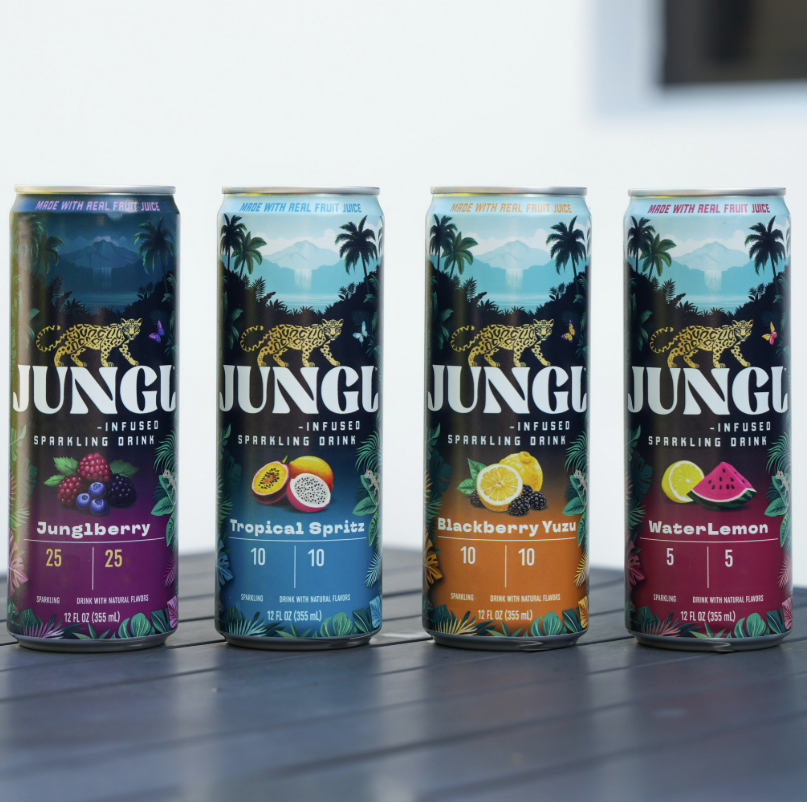
JUNGL drinks come in four flavors.
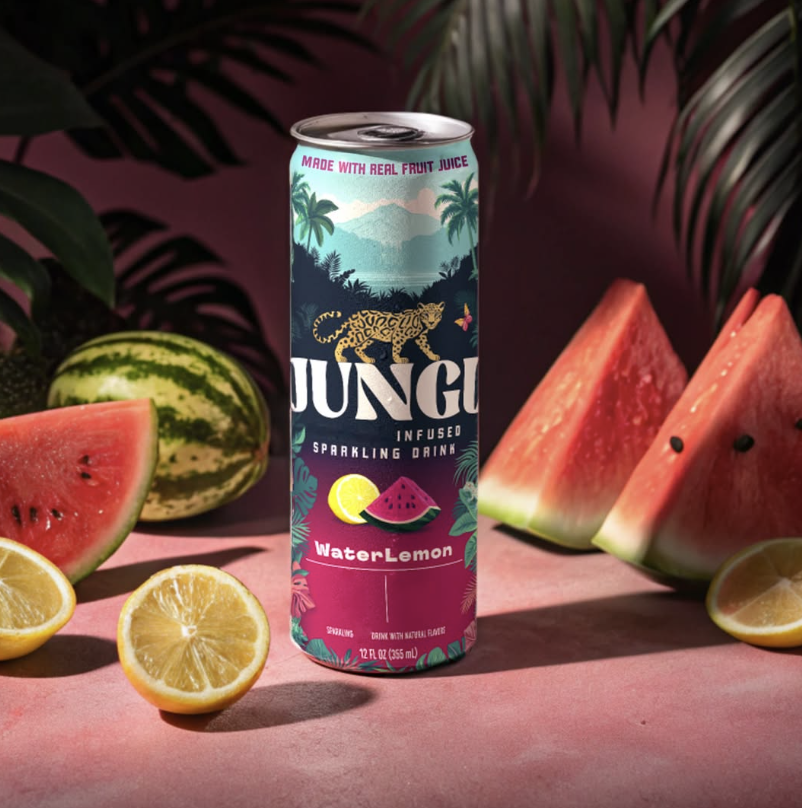
WaterLemon came out of the formulation process itself. Hill and Paslaqua were eating watermelon that happened to be mixed with lemon, and the combination stood out. The team was developing its lightest, most crushable option at the time, and WaterLemon became the brand’s lowest-strength drink at 5mg.
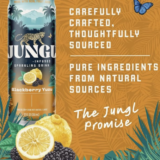
Blackberry Yuzu is the brand’s best-selling flavor. JUNGL says the profile is balanced enough that, by popular demand, it created a 50mg version that still carries no cannabis taste. The brand is quick to note that a dose that size calls for care.
Junglberry blends six berries, including blueberry, blackberry, raspberry, goji, and acai. The team calls it the most sophisticated flavor in the lineup, “similar to a top shelf cocktail with a floral flavor profile that you will learn to love more and more over time.”
Tropical Spritz is JUNGL’s take on a piña colada, which the team describes as “paradise in a can.”
The brand also makes gusher-style gummies, which it says are the only THC gummies of that style on the market that it is aware of. They are produced under an exclusivity agreement with JUNGL’s manufacturer. Each gummy combines 50% fast-acting THC and 50% slow-release THC, a formulation designed to avoid the overwhelming onset that makes some people hesitant to try edibles.
JUNGL is sold directly to consumers at jungl.com.
Images courtesy of JUNGL.
Sponsored Content Disclaimer: This article is sponsored by JUNGL. Information about the company’s founding, product formulations, ingredient sourcing and conservation partnerships, along with product claims was provided by JUNGL.