



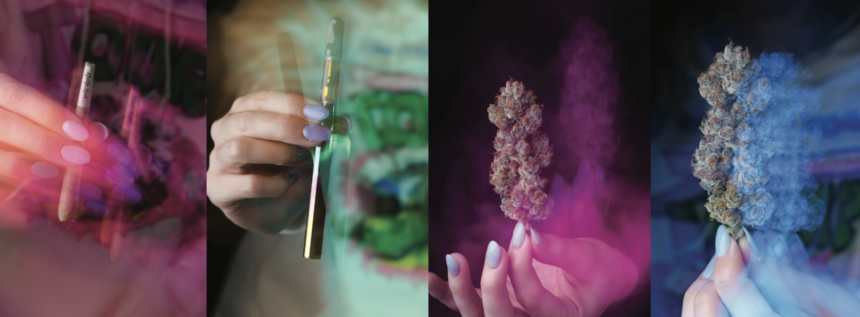
A decade after celebrity cannabis became one of the industry’s easiest cash grabs, Khalifa Kush is still standing: lean, privately controlled and built by longtime Pittsburgh friends who turned Wiz Khalifa’s personal strain into one of the most durable brands in weed.
This article originally appeared in High Times’ Summer/Fall 2026 print edition. Get yours here.
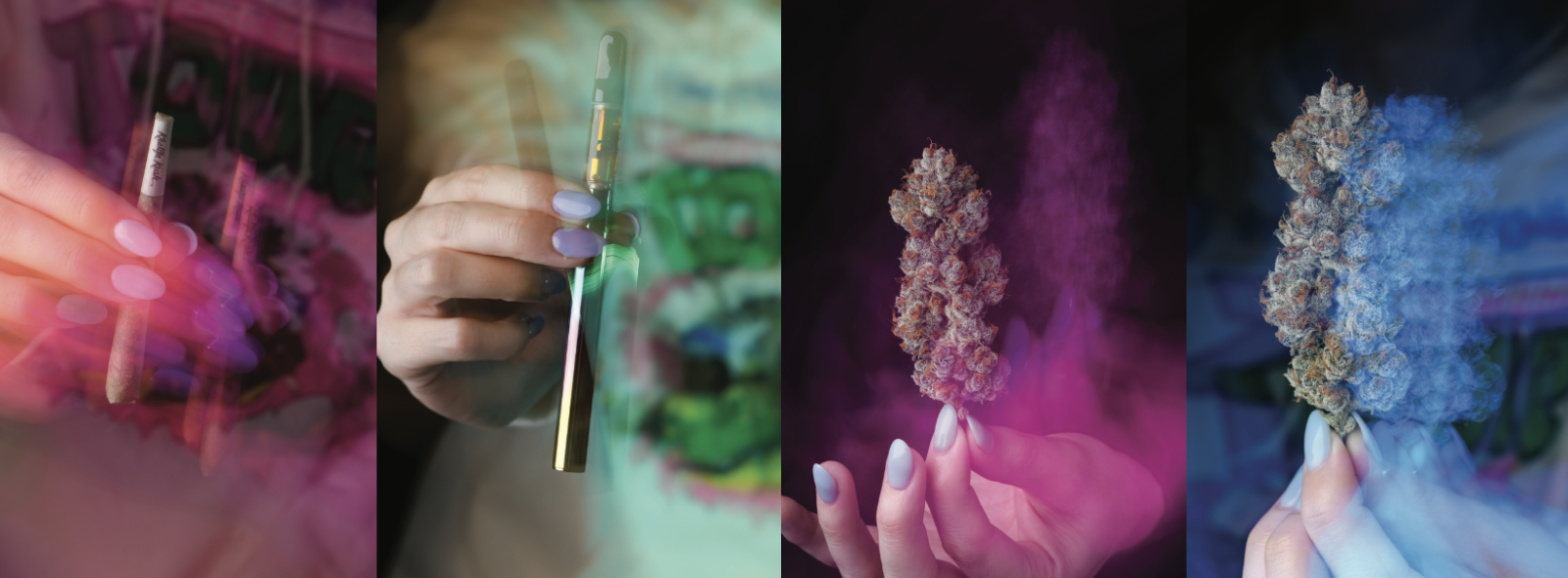
Photos by @dankford, courtesy of Khalifa Kush
Ten years is a very long time in legal cannabis.
Long enough for entire business models to disappear. For billion-dollar valuations to collapse into distressed asset sales, emergency refinancing rounds, and lawsuits between former partners who once called each other visionaries on conference stages and podcast episodes. Long enough for celebrity cannabis brands to arrive with parties, giant headlines, and promises of global domination before quietly dissolving into licensing disputes, inconsistent flower, debt, and explanatory videos on YouTube.
Khalifa Kush survived it all. That alone makes the company unusual, and places it among a small set of cannabis brands that have earned real respect along the way. The fact that it did so while remaining relatively lean, privately controlled, and culturally coherent makes it even weirder in a good way.
The Canadian Lesson
The clearest illustration of what kind of company Khalifa Kush ended up being is the story that didn’t end up well.
Before Canada federally legalized adult-use cannabis in 2018, public market excitement around the sector had already become ferocious. Canadian cannabis firms were raising enormous amounts of capital while investors naively treated legalization as the opening stage of a global consumer industry. Khalifa Kush seized the opportunity and entered that environment through a high-profile partnership with Supreme Cannabis, a deal that at the time appeared transformative.
“It was super exciting when it happened because it was so much money,” Co-Founder & COO Tim Hunkele told High Times from Pittsburgh. “It was like, ‘Oh cool, we’re gonna be rich.’”
Instead, they got an unwanted lesson in cannabis regulation when the regulatory reality stuck and the Canadian state began picking winners. They got kicked to the curb when, according to Hunkele, Health Canada effectively blocked key parts of the arrangement almost immediately after the deal was signed. Predictably, soon enough counterfeit and infringing products using Wiz Khalifa’s name and image began appearing in the Canadian market anyway.
“It was pretty crazy to see them kick us out of the market because of Wiz’s name and then allow people to utilize Wiz’s name to drive sales of their own products,” he said.
The experience became one of the company’s most important lessons. Not simply because the deal got squashed, but because it forced the team to rethink what kind of growth, or business deals in general, they actually wanted.
Upfront payments were not unusual in those celebrity-driven cannabis days. KK gradually concluded that that was not the way they were going to do business. The issue, from their perspective, was philosophical as much as financial.
“Upfront money is amazing because you get a check when you sign,” Hunkele said. “But that immediately starts you in some kind of weird, misaligned hole with your partner.”
“We like to build deeper with partners than surface-level relationships,” he added.
That approach later became one of the company’s advantages. While many cannabis brands expanded aggressively and collapsed under oversaturated markets, Khalifa Kush kept building incrementally, choosing operators carefully through a system based largely on outsourced licensing deals, and avoiding the kind of investor pressure that pushed other companies toward reckless growth.
Wild West Beginnings
The company built around Wiz Khalifa’s personal strain emerged during one of the most unstable and incredible periods in modern cannabis history. Colorado had only recently legalized adult-use sales, while California still operated through its sprawling quasi-legal medical system. Canada had not federally legalized yet. Investors were beginning to flood the sector, and the industry itself still functioned with the improvisational logic of a gray market trying to dress itself as corporate America — at a moment when corporate America itself was starting to look like a crypto-bro costume party.
“We started exploring it around 2013,” Hunkele said. “Back then it was super Wild West. You didn’t know who was real, who wasn’t real. But we knew who we were.”
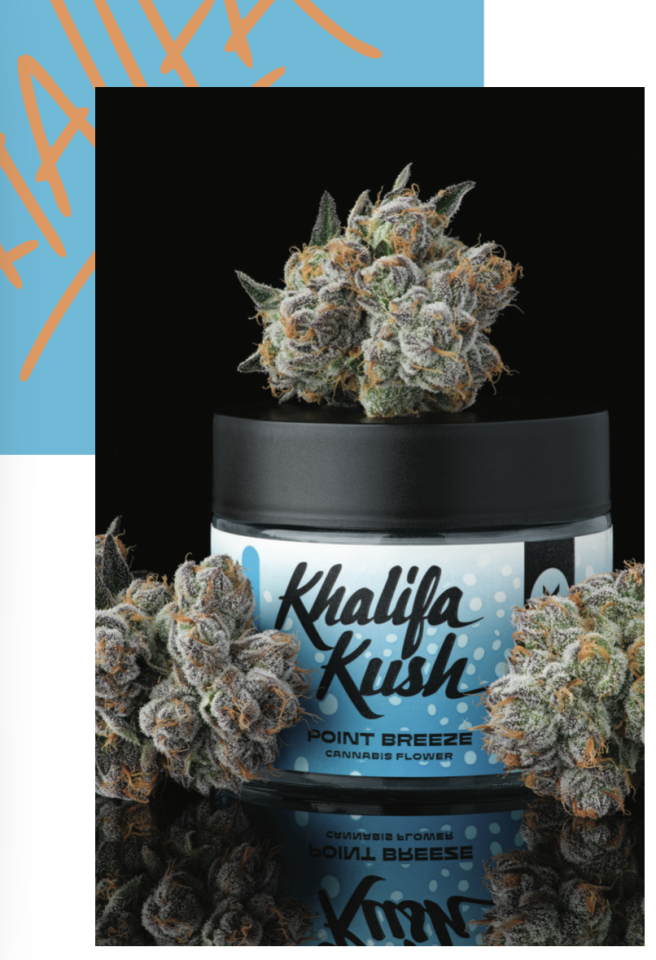
Hunkele has known Wiz since they were teenagers at Taylor Allderdice High School in Pittsburgh’s Squirrel Hill — the same school that gave Taylor Gang its name. Today he helps oversee Khalifa Kush alongside DJ Saul, the company’s CEO since 2020, and longtime partner Will Dzombak. The company itself remains surprisingly compact considering its reach: around 10 full-time employees spread across Los Angeles, Pittsburgh, Toronto and New York. No big corporate hierarchy. No sprawling headquarters full of middle managers. That structure seems to be a relatively conscious result of years spent watching the cannabis industry repeatedly confuse hype with durability. There was no pressure to maintain the kind of costly structure that forces companies to prioritize growth theater over good decisions.
Hunkele also stepped out of running the music side of Taylor Gang in 2020 to focus on Khalifa Kush full-time, the same moment Saul came in as CEO. That was the period the brand stopped being one project inside a larger ecosystem and started becoming a company in its own right.
When Khalifa Kush eventually entered the market, the team approached the brand with a degree of restraint that now feels almost alien inside cannabis. While competitors chased licenses, inflated valuations and celebrity licensing deals, KK remained comparatively careful.
“The funniest thing is Wiz didn’t want to sell KK,” Hunkele recalled. “‘No, this is my strain. This is my thing. It’s for me.’”
That reservation ended up shaping the brand’s aura in a way any marketing team would drool over.
The Celebrity Cannabis Graveyard
Part of that caution came from understanding something many cannabis companies learned too late about the incompatibilities of rapid monetization and long-term sustainability. Dozens got burned, plenty of them cashing fat checks on the way down. The cannabis boom years rewarded spectacle, and celebrity partnerships became one of the fastest ways to manufacture visibility inside a market that still lacked mature brands. For a while, nearly every famous rapper, musician, athlete or TV-show star with even the remotest relation to weed could easily earn a seat at a table. Most of them no longer exist in meaningful form in 2026.
But according to Hoodie Analytics, Khalifa Kush did roughly $50 million in tracked U.S. sales in 2024 — almost double the second-place celebrity brand, Garcia Hand Picked, and somewhere around 20 times what Snoop Dogg’s Death Row Cannabis pulled in the same period. KK held the number one spot again in 2025.
Hunkele says KK consciously tried to avoid operating like a conventional celebrity cannabis venture from the beginning, stepping away from that boxing-rap relationship with deals.
“Wiz’s name is on the brand, but it’s not a celebrity brand,” he said. “It’s a brand that happens to be owned by a celebrity. We don’t run it like a celebrity brand.”
That distinction mattered especially once major international opportunities started appearing again and the team got tempted by the lure of money up front and huge market promises.
Exactly Where He Should Be
There is also something unmistakably Wiz Khalifa about the way the company operates.
Some musicians live in an idyllic universe created by their own lyrics. For years, Khalifa’s music has revolved around a recurring idea of smoking heavily, working constantly, and enjoying life. That contemporary mentality — equal parts stoic and hedonistic, fully stoner — became central to his public image long before Khalifa Kush existed as a business.
So his brands tend to be extensions of his lifestyle, and the company leadership itself seems to reflect that worldview.
Everybody involved openly smokes, but they don’t treat cannabis like a branding accessory. Conversations drift naturally between quality control, parenting, Muay Thai training, packaging logistics, home grows and international distribution routes.
Hunkele remembers hotboxing cars on the way to meetings during the early music years, and DJ Saul still grows Sour Diesel on his Southern California balcony. Both describe Wiz Khalifa as somebody who smokes constantly while maintaining an unusually disciplined life centered around fitness, parenting, and work.
“If you follow him on Instagram, he’s working out every day, sometimes twice a day, with yoga on top of that,” Saul said. “He’s also an incredible Dad, living a full and complete life, and cannabis is a big part of it.”
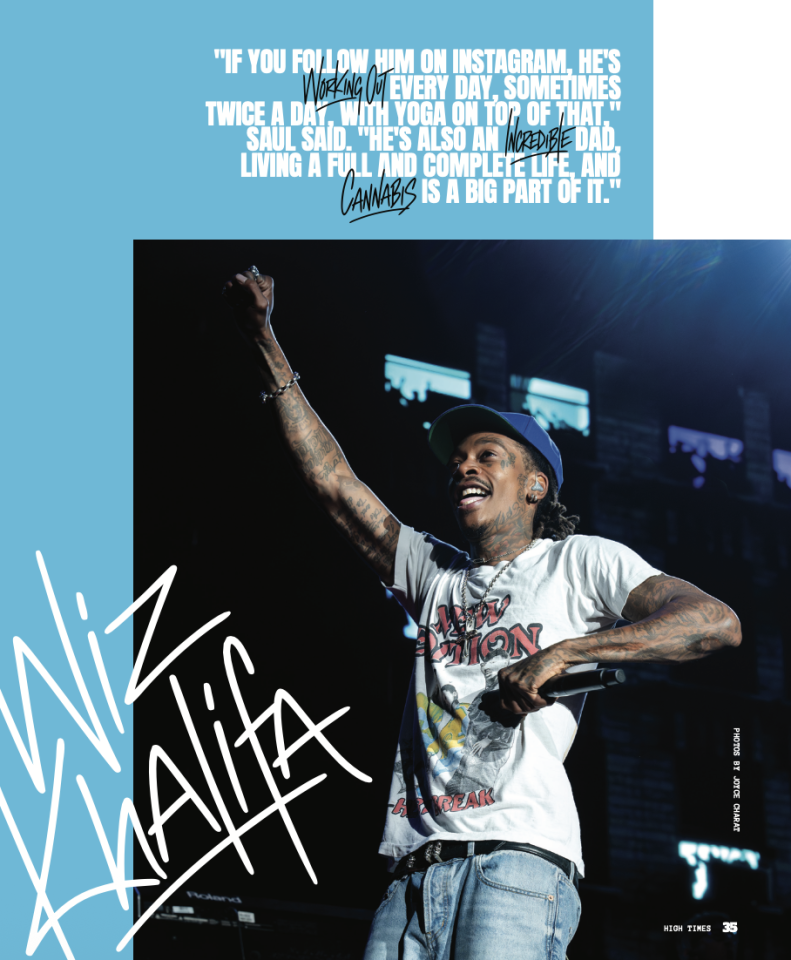
Asked how involved Wiz actually is in the day-to-day operation of the company, Saul put it this way: “He’s exactly where he should be. More than enough to hammer home our authenticity, as he does review all potential new products, on top of smoking our current products every minute of his life. He leads trend-setting and direction for all of our merch, apparel, and accessories, but we don’t have daily standups, and he’s not blowing us up 17 times a day; it’s the perfect flow.”
There are moments during the conversation where the entire thing briefly sounds faintly absurd: global cannabis distribution routes moving through Portugal, smoke sessions with hundreds of Trulieve employees, Wiz Khalifa training Muay Thai in Thailand while reviewing product launches, international expansion plans stretching from Germany to Australia. There is also, somewhere on a phone in Brazil right now, an app called Wiz Khalifa’s Weed Farm, where you can grow KK digitally — a 2017 launch that was almost blocked by an app store that did not believe a virtual cannabis farm was actually allowed. At press time, a sequel was in the works.
While a lot of celebrity cannabis brands were assembled putting the cart before the horse — celebrity first, culture later — Khalifa Kush grew organically out of habits, friendships and routines that already existed before the legal market understood how profitable cannabis branding might eventually become. You cannot really fabricate that kind of coherence after the fact.
Building While Everybody Else Expanded
That philosophy shaped the company’s expansion strategy. Rather than chasing direct ownership of cultivation licenses across every market, Khalifa Kush focused on building long-term operational partnerships with established cannabis operators capable of executing the brand properly.
Their first partner was Tryke, who grew with the brand across Nevada, Arizona, and Utah from the very first commercial drop. “We did a ton of business with them and grew with them,” Hunkele said. When Tryke was acquired by Curaleaf, Khalifa Kush moved across the street to Planet 13, where it now operates a store-in-store the team designed and installed itself. They hold licensing agreements with Trulieve in Florida, Pennsylvania, Maryland and Arizona, Kolaboration Ventures in California, Cresco Labs in Massachusetts, District Cannabis in Washington, D.C. and Flora Arbor in Illinois, among others. The company says it has never broken up with a partner. Every turnover so far has come from acquisitions or regulatory shifts, not from anyone walking away.
International cultivation relationships in Canada now service European and Australian medical markets through GMP-grade pharmacy channels — a structure designed explicitly so that the Canadian disaster could not repeat itself. The Australian piece is new. At press time, the company had just signed a deal to ship directly into the Australian medical market from Canada, a move it had not yet announced.
Thailand, where Khalifa Kush apparel and accessories already move freely, is a longer game — the cannabis-for-sale piece there waits on a regulatory environment that has been swinging back and forth for two years.
There has been quiet movement into mainstream retail as well. A 2024 collaboration with Stündenglass produced a line of high-end glass and smoking accessories, followed by the 2025 launch of Khalifa Rolling Papers. In 2026, the brand introduced a Khalifa Kush–branded cannabis-specific air purifier with a carbon filter, alongside a card-based party game built with a board game company. The products now sit on shelves at Walmart, Target and Best Buy.
It all sounds very romantic. But when it comes to weed, there’s a question worth asking: is it actually the same product?
“The genetics are the same, but the differences come with climate cultivation,” Hunkele explained. “At the end of the day it’s an agricultural product.”
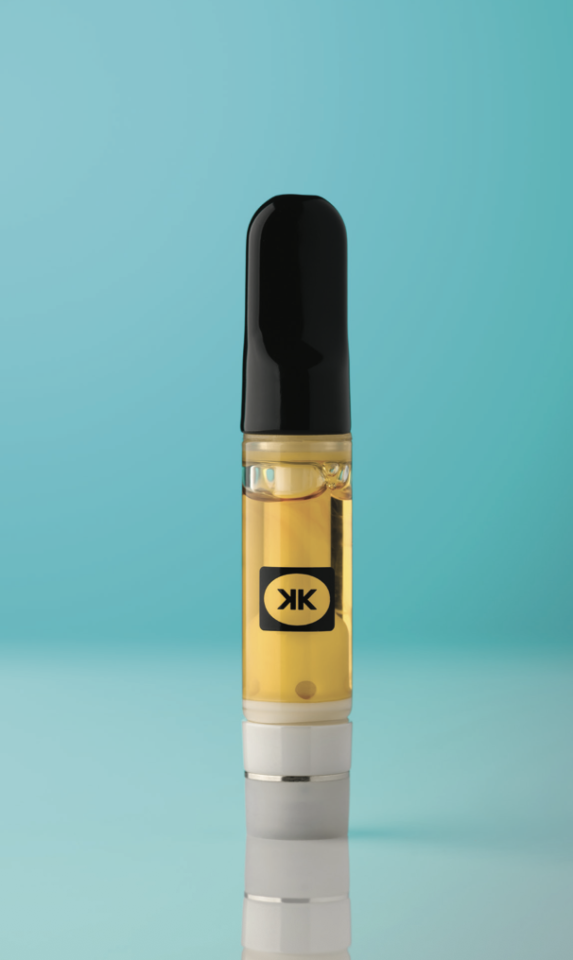
KK built extensive internal quality metrics around that problem: THC percentages, terpene levels, trim quality, nug structure, shelf-life standards, and packaging oversight. The company even took direct control over manufacturing its own packaging to maintain consistency across state markets where regulations often conflict with one another. You’ll find details about the growing operations in Nicolás Rodríguez’s article in the same print issue.
Saul argues that cannabis consumers have become increasingly sophisticated about these differences.
“We all wish we lived in a world where you could just trust whatever was in the jar,” he said. “Which is why we put so much focus on consistency.”
The company also resisted building the kind of bloated corporate structure that became fashionable during the investment boom years. They are not public, so there is no boardroom demanding growth targets disconnected from operational reality.
“We answer to ourselves,” Hunkele said.
The cannabis industry has spent 10 years rewarding spectacle and then quietly euthanizing the companies that took the reward. The ones still standing tend to be smaller than anyone expected them to be by now, more careful than the boom years made them look. Khalifa Kush is one of them. That restraint is a large part of the mystique.
Then Hunkele starts talking about searching for good weed in Pittsburgh as a teenager, and the mystique collapses back into something more down to earth.
For a group of longtime weed fans from Pittsburgh, the trajectory still sounds slightly surreal when described out loud. These are people who grew up smoking weed together and ended up building a global cannabis brand alongside one of the most recognizable rappers on the planet — who also happens to be their friend. Nearly touching heaven.