



Nepal’s Supreme Court has given the government three months to establish a framework for cannabis cultivation and production for medical, scientific, and industrial purposes. The ruling also opens the door to discussions about potentially reforming the country’s recreational cannabis laws. Fifty years after the 1976 restrictions, the Himalayan nation is once again facing a question that cuts across its history, economy, and traditions: What role should the plant play in Nepali society?
Nepal has three months to fulfill a legal obligation that has gone unmet for nearly half a century. The country’s Supreme Court has ordered the government to establish the regulations needed to oversee cannabis cultivation and production for medical, scientific, and industrial purposes, after finding that authorities had failed for decades to fulfill their legal obligation to implement the regulatory framework already provided for under existing law, according to a report by ABC.
The ruling, whose full text was made public in late October, stems from a petition filed by attorney Saroj Adhikari and other petitioners seeking a review of the country’s cannabis restrictions and the creation of a legal framework for the plant’s cultivation and use.
But the court’s decision goes beyond medical marijuana. Although it did not order the legalization of adult use, the country’s highest court also urged authorities to consult with experts and explore possible reforms to the existing prohibition.
The decision carries particular historical weight in Nepal, a country that became one of the world’s most iconic cannabis culture destinations during the 1960s, before tightening its laws in 1976 amid mounting international pressure.
Nepal and Cannabis—Before and After Prohibition
Kathmandu became famous around the world as a major destination along the legendary Hippie Trail. During the 1960s and 1970s, thousands of backpackers, Western travelers, and artists, including figures such as George Harrison and Jimi Hendrix, made their way to Jhochhen Tole, a street in the capital that eventually earned the nickname Freak Street.
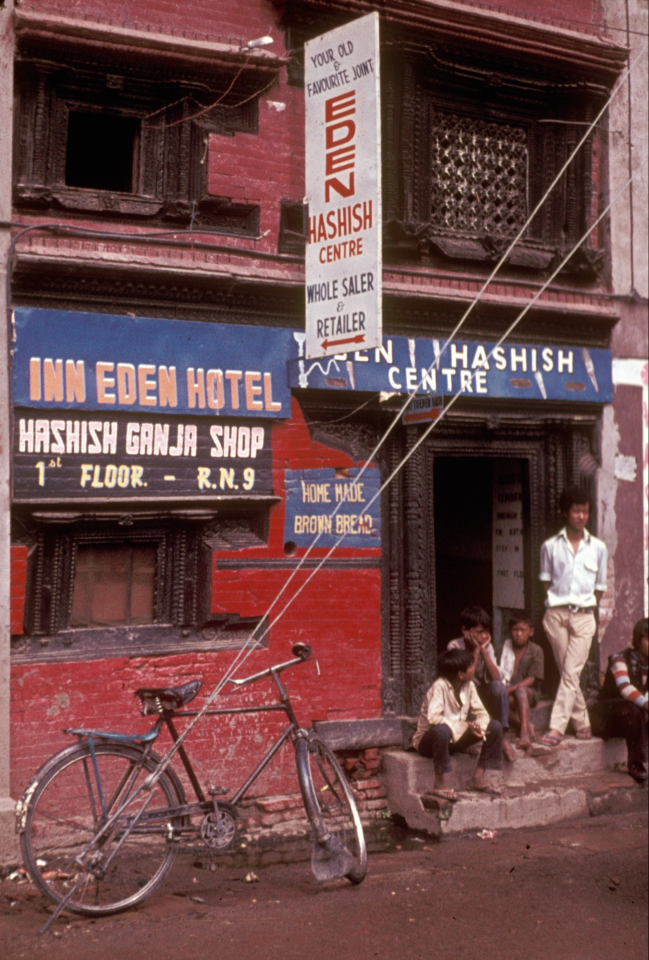
In Nepal, hashish and marijuana were completely legal and sold under government-issued licenses, under regulations adopted in 1961 and 1962. Among the establishments operating in Nepal was the famous Eden Hashish Centre, which even advertised its products through calendars featuring illustrations of Hindu deities. Cannabis was already part of everyday life in various Nepali communities long before the Hippie Trail became famous.
For generations before that, the plant had been used for medicinal and religious purposes, as well as an agricultural resource. Its fibers were used to make textiles and rope, its seeds had culinary uses, and various preparations were used in traditional healing practices.
Cannabis was particularly closely associated with Hinduism and the worship of Shiva, one of the religion’s main deities. Its presence in religious ceremonies and celebrations predates the arrival of the Western counterculture movement by centuries—if not millennia.
But in the 1970s, things changed quickly. As prohibitionist drug policies spread internationally, the US and United Nations agencies pressured Nepal and other countries to tighten controls on narcotics. Local concerns about rising consumption and international drug trafficking also helped drive the shift.
On July 16, 1973, authorities revoked the licenses held by cannabis businesses and traders. Three years later, the Narcotic Drugs (Control) Act of 1976 cemented restrictions on cultivation, trade, and consumption.
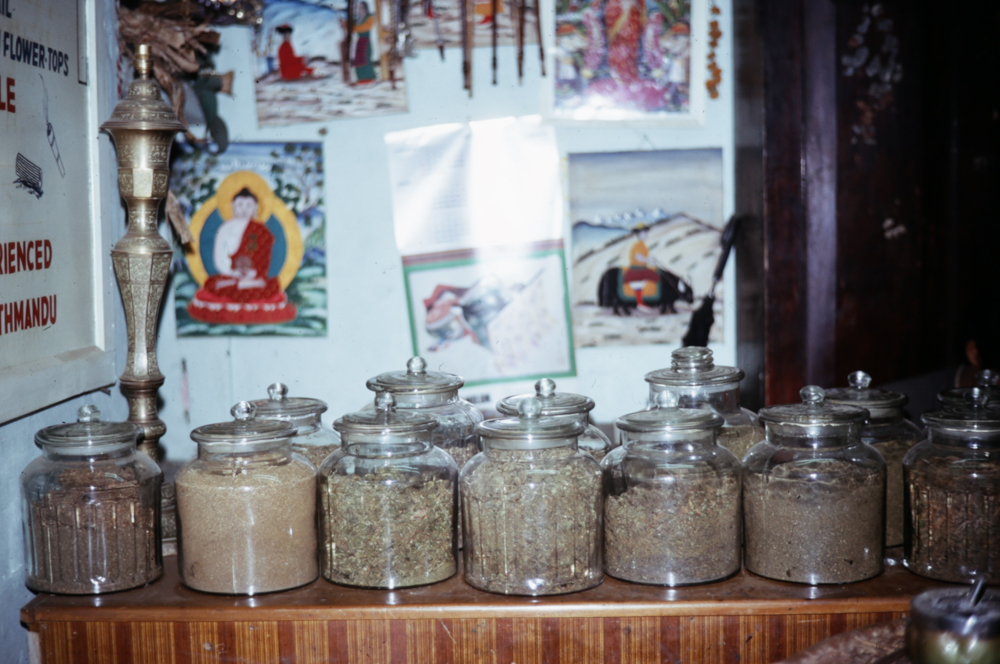

The impact went far beyond tourism. Farmers and merchants lost an economic activity that had previously been legal and generated tax revenue for the government, while many traditional practices involving the plant fell under a framework of prohibition.
However, the new legislation did not completely ban the possibility of using cannabis. And that very contradiction is now at the heart of the legal debate.
Medical Cannabis Was Already Allowed in Nepal, but Never Regulated
Nepal’s legal paradox is nearly 50 years old. Although the Narcotic Drugs (Control) Act of 1976 established broad restrictions on cannabis, it also included exceptions for certain medical and scientific uses under government supervision. The problem was that the government never properly developed the framework needed to put those provisions into practice.
As a result, activities permitted under the law lacked a functioning system of licenses, authorizations, and oversight for decades.
The Supreme Court ruled that this failure constituted a breach of the state’s legal obligations.
The decision, originally issued on May 18, 2025, by Justices Nahakul Subedi and Til Prasad Shrestha, now requires the executive branch to establish the necessary regulations, procedures, and oversight systems for controlled cultivation and production.
The regulatory framework must cover activities including the processing, storage, distribution, import, and export of cannabis intended for medical, scientific, agricultural, horticultural, and industrial purposes. It must also include a licensing system and enforcement mechanisms to distinguish authorized activities from those that remain prohibited.
The court set a three-month deadline, beginning upon the government’s official receipt of the order, to implement the necessary provisions.
The justices also recognized cannabis’s economic potential in sectors such as textiles, paper manufacturing, and pharmaceuticals.
In other words, Nepal isn’t creating a medical cannabis exception from scratch: the judiciary is compelling the government to make provisions that already exist in its laws actually work.
Could Nepal Legalize Adult-Use Cannabis?
The question of adult-use cannabis is more complicated, and the answer remains up in the air.
The petition filed with the Supreme Court wasn’t limited to calling for medical and industrial regulations. The petitioners also sought a broader review of cannabis restrictions, including the possibility of decriminalizing recreational consumption. However, the justices drew a distinction.
While the 1976 law already provides a legal basis for regulating certain medical and scientific activities, it contains no equivalent authorization for adult or recreational use. For that reason, the court determined that any potential decriminalization or legalization would require legislative action and could not be mandated through the same court order.
Nevertheless, the court urged the government to conduct studies and consult with experts and relevant stakeholders to evaluate potential reforms, taking Nepal’s social, economic, and cultural circumstances into account.
This doesn’t mean the country is on the verge of legalizing adult-use cannabis, or that there’s a court-imposed deadline to do so. Rather, it means the nation’s highest court has acknowledged the need to examine an issue that has been shaped by prohibition for decades.
And this is particularly interesting in Nepal, where cannabis isn’t simply a substance regulated by the state, but a plant deeply connected to cultural, religious, and medicinal practices that long predate modern laws.
Cannabis in Ayurveda
To understand why the cannabis debate carries particular significance in Nepal, it’s important to look at Ayurveda.
Ayurveda is a traditional system of medicine that originated in the Indian subcontinent thousands of years ago. Its approach combines dietary practices, daily routines, plant-based preparations, and a holistic understanding of the balance between body and mind.
In Nepal, where Hinduism has a strong historical and cultural presence, these traditions are part of a broader range of medicinal practices that remain relevant in various communities. Cannabis holds an important place in that history. Known in different contexts as ganja, bhang, or charas, it has traditionally been used in medicinal preparations and certain religious ceremonies.
A scientific review published in 2026 on medical cannabis and Nepali legislation highlights the plant’s historical connection to Ayurvedic traditions and the worship of Shiva.
One of the most visible expressions of this connection occurs during Maha Shivaratri, the Hindu festival dedicated to Shiva, during which cannabis has traditionally played a symbolic and ritual role for devotees and ascetics.
This cultural presence doesn’t mean that all uses of cannabis are legally permitted, or that its traditional medicinal uses necessarily have sufficient clinical evidence to meet the standards of modern medicine. But it does add a unique dimension to the regulatory debate: in Nepal, cannabis cannot be understood solely through the lens of modern drug policy. In fact, the Supreme Court itself referenced the plant’s historical use in Ayurvedic medicine when examining the reasons for establishing regulations.
The current debate therefore brings a longstanding tension in Nepali history back into focus: the gap between legal restrictions introduced in the second half of the 20th century and traditional uses of the plant that had existed for centuries and survived those restrictions.
For now, the government faces a concrete obligation: establish the rules needed to legally allow medical, scientific, and industrial cannabis activities under state supervision.
The future of adult use, meanwhile, will depend on a political debate that has yet to produce either a timeline or a clear outcome.
Fifty years after prohibition, Nepal is once again debating what place it wants to give a plant that was part of its history long before it became a legal issue.
Cover photo: Abishek Photographer, CC BY-SA 4.0, via Wikimedia Commons