




Hawaii grower Aaron Zeeman documented 144 rituals of the prohibition era, from coded phone calls to papaya-stem pipes. He says legalization is retiring the ones built to hide, and he wonders what the culture loses along the way.
Nobody ducked into the dealer’s house, bought and left, Aaron Zeeman remembers. That looked suspicious.
So in a lot of circles you sat down. You smoked a joint. You talked for fifteen or twenty minutes and acted like you’d come over to visit.
“And then it actually became a visit,” he says.
The cover story turned into friendship. The hiding turned into habit, and the habit turned into culture. Zeeman, a Hawaii grower and breeder, spent decades inside that culture and has now written it down. He says legalization is already retiring the parts of it that existed to hide.
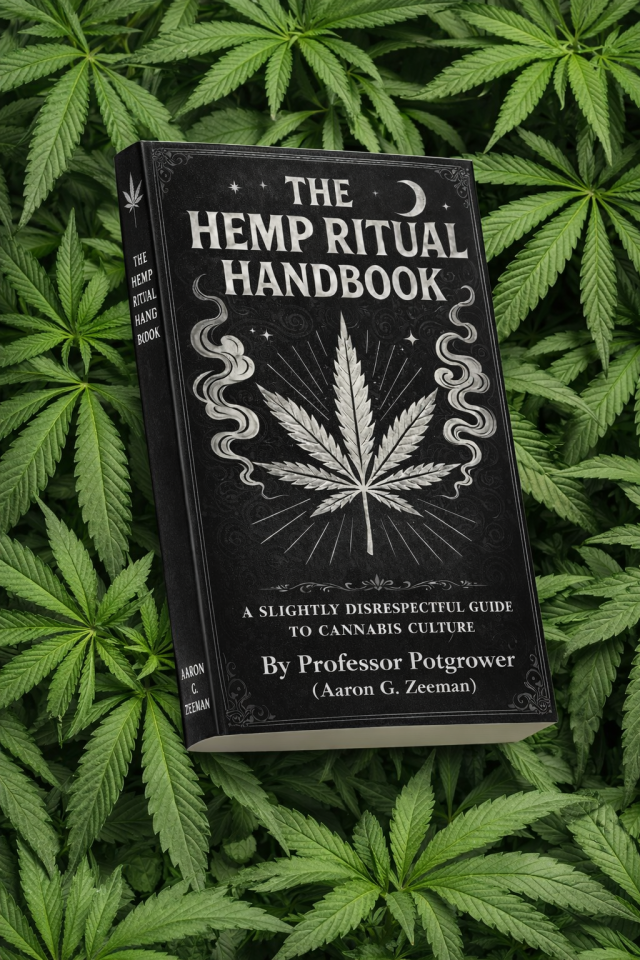
His self-published book, The Hemp Ritual Handbook: A Slightly Disrespectful Guide to Cannabis Culture, catalogs 144 of those customs, from finding a dealer to turning a papaya stem into a pipe. Roger Christie, founder of the Hawaii Cannabis Ministry, wrote the foreword.
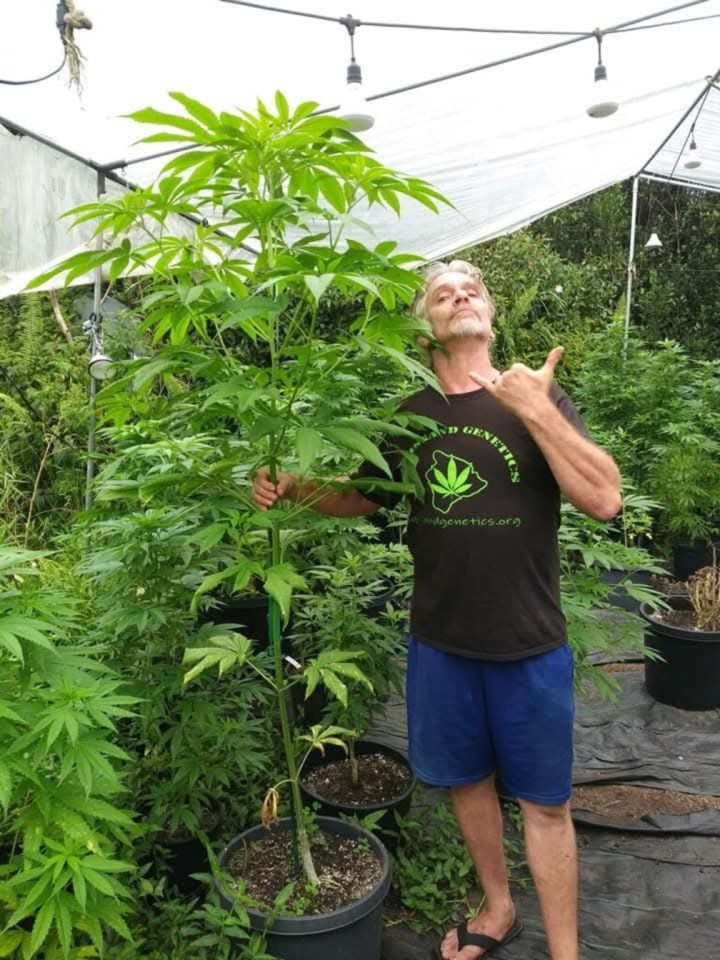
Zeeman runs Big Island Genetics in Puna, on the Big Island of Hawaii. In 2010 he was one of 14 people indicted in a federal marijuana case tied to Christie’s Hawaii Cannabis Ministry, and his book says he later served time in federal custody. The book also says High Times ran his work in October 2002 and September 2008. He says that history changed how he sees every ritual in it.
“I lived inside a community that said out loud the plant was sacred, and we paid a very real price for living that belief,” he says.
The Rituals That Die First

The book opens with the hiding. Finding a dealer. Calling your connection. Speaking in code. Concealed containers. Keeping your mouth shut.
“None of that exists without prohibition,” Zeeman says. “Take away the legal consequences and there’s no reason to invent half of it.”
The dealer is his clearest example.
“A good weed dealer was like a good mechanic. Hard to find, important to keep, and you depended on him. But your mechanic can’t get you locked up. Your dealer could, and you could do the same to him, so the whole thing ran on a level of trust no normal retail transaction ever needed.”
Aaron Zeeman, author of The Hemp Ritual Handbook
That arrangement is thinning out. “The first to go are the ones whose whole job was hiding,” he says. Speaking in code means little when you can legally place an order. Stash spots, odor cover-ups and stealth smoking lose their reason to exist the minute you can walk into a dispensary.
“A dispensary can give you excellent service,” he says. “It’s still retail.”
None of it disappears everywhere overnight. Prohibition is still alive in plenty of places, he notes, and the underground still runs alongside the legal market.
What Prohibition Built By Accident
Zeeman is not nostalgic for the arrests. “I’m not saying prohibition was good. It was destructive,” he says. He also credits legalization with the thing that matters most to a smoker. “But dependable access is a real improvement, and people deserve that.”
He remembers what the alternative felt like. “Somebody who grew up with a legal menu and a steady supply may never know what it’s like to have money in your pocket and still not be able to find weed anywhere.”
He has “a complicated relationship with the word ‘legalization,’” though. Regulation, he says, “can turn into prohibition wearing a different outfit” when the government still decides who can grow, how much you can have and who gets punished for stepping outside the lines.
What worries him is harder to measure. Stepping out back to smoke, behind the building or in the garage, gave people ten or twenty minutes in a private world. “The secrecy made it intimate,” he says. Zeeman compares it to what the Rastafari call reasoning, a shared conversation that wanders from God to physics to why people do what they do. He says he is not Rasta, but he recognized the experience the second he heard it described.
He puts the loss this way:
“When it’s dark, every point of light matters. When the whole sky gets brighter, the same stars are still up there. They just don’t stand out the same way.”
Aaron Zeeman
Legalization didn’t kill the high, he says. But once the plant is branded, advertised, discounted and packaged, it can start to feel ordinary, and ordinary things stop getting noticed.
A Joint With A Sleeve
Rituals also belong to places, and Zeeman’s favorite is local to Puna.
The outer crutch, as Zeeman calls it, is a strip of thin cardboard, cut from a matchbook cover or a rolling-paper pack, rolled into a short sleeve around the smoking end of a joint. As the joint burns down, you unroll the sleeve, pull the joint through and roll it back.
He took it for a poor man’s roach clip. Then he understood. In Puna, pakalolo (Hawaiian slang for weed) was grown nearby and smoked as soon as it was dry enough, sometimes barely. Fresh, sticky weed is hard to keep lit, and fingers and lips passing a joint around a circle squash the soft end and choke the airflow. The cardboard keeps the air channel open.
“It looks primitive until you understand what problem it solves. Then it looks smart,” Zeeman says.
The papaya stem works the same way. Papaya leaf stems are hollow, so cutting one gives you an instant pipe or an extra-long joint holder. “Rituals belong to places,” he says. “They carry the geography inside them.”
The New Rituals
The legal era is minting its own. Zeeman points to dabbing, pre-rolls and delivery, which he calls “damn near science fiction” for anyone who came up under prohibition. “There’s more ceremony around one dab now than we used to have around a whole joint.”
Asked what a first-time smoker in a legal market should hold on to, his answer was one word. “The communion.”
“Lose the secrecy without losing the communion,” he says.