





Vaporizing marijuana releases far fewer harmful chemicals than smoking joints does, according to a new study.
“These results demonstrate that combustion—not cannabis itself—is the primary driver of harmful inhalation byproducts, and that controlled vaporization can significantly reduce exposure to these compounds,” the study conducted and self-published by the vape device company PAX found.
Lighting marijuana on fire through smoking releases a number of harmful or potentially harmful compounds (HPHCs)—including benzene, formaldehyde and acetaldehyde. Vaporization, in contrast, heats cannabis to below the point of combustion while still releasing cannabinoids and terpenes.
The research—conducted by Richard Rucker, who serves as PAX’s director of product integrity, and Derek Shiokari, a senior chemist and data scientist at the company—compared aerosol generated by PAX’s dry herb vaporization device (FLOW) and its oil vaporization device (TRIP) with smoke from combusted marijuana joints.
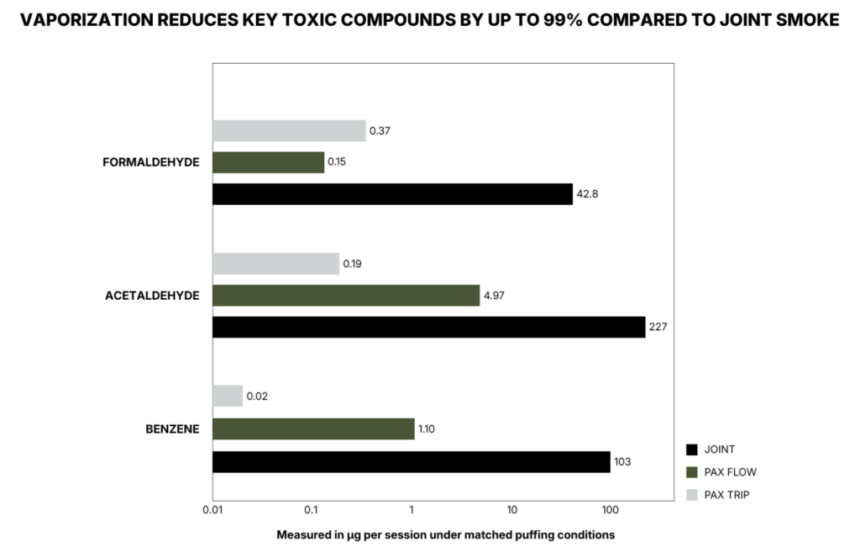
The team compared levels of 16 HPHCs between the methods of consumption, all using the same batch of ground Lemon Cake Batter cannabis from Humboldt Farms.
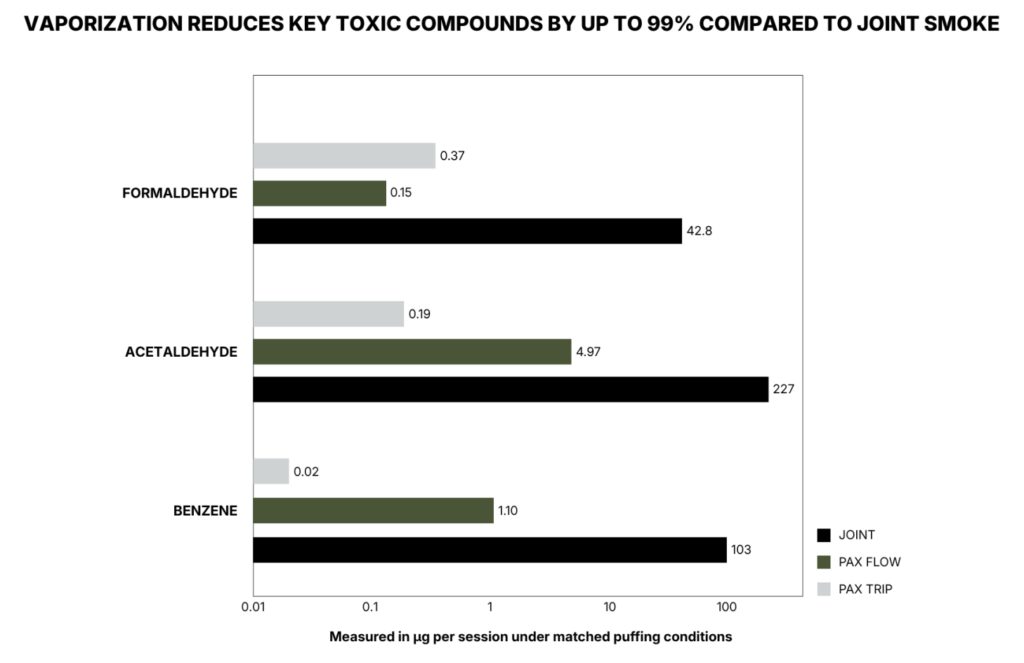
“Across all measured analytes, vaporization reduced harmful byproducts by up to 99% compared to joint smoke,” they concluded.
Via PAX.
“Combustion produces harmful byproducts—whether it’s tobacco, wood or cannabis,” Rucker said in a press release. “By heating cannabis without burning it, vaporization significantly reduces the formation of these toxic compounds. It’s the same plant, but completely different exposure. This research helps quantify the difference, giving consumers clearer information about how their choices impact exposure.”
When cannabis is lit on fire via smoking, its components like cannabinoids, terpenes, lipids, proteins and carbohydrates experience thermal degradation and oxidation. That leads to the formation of particulate matter and generates additional compounds such as volatile organic compounds, aromatic hydrocarbons and nitrogen-containing compounds, among others, the study said.
“Combustion of cannabis plant material produces a complex aerosol containing numerous harmful byproducts generated through pyrolysis and oxidation. Under matched puffing conditions, vaporization of cannabis flower reduced exposure to these harmful compounds by up to 99% compared with joint smoke. These findings demonstrate that combustion is the primary source of toxic chemical exposure during cannabis smoking, and that vaporization technologies can substantially reduce formation of these byproducts.”
“Across the sixteen quantified HPHCs, vapor aerosol contained up to 99% lower concentrations compared with joint smoke,” the paper concluded. “These results demonstrate dramatic reductions in key combustion markers including aromatic hydrocarbons and aldehydes.”
Photo courtesy of Mike Latimer.
Marijuana Moment is made possible with support from readers. If you rely on our cannabis advocacy journalism to stay informed, please consider a monthly Patreon pledge.