






Neuralink can simulate euphoria and stimulate the reward system on demand. But can a chip replace the ritual of rolling, lighting and getting lost in the smoke?
In Arco, an animated film nominated for an Academy Award and presented worldwide at the Cannes Film Festival, the young protagonist dons a multicolored hood with a diamond on his forehead that allows him to travel through time. Without it, he can’t or doesn’t know how. That diamond is what gives him that “power.” Recently, a video went viral on social media showing several people playing a video game without joysticks — supposedly using only their brains.
Inside their heads, like Arco’s protagonist with his diamond on his forehead, is the Neuralink chip: the device that allows them to control the character without using their fingers. Using nothing but their thoughts. Sometimes science fiction knocks on the door of the future. Other times, like now, science fiction and the future are one and the same. At this moment, science fiction is knocking on the door of reality.
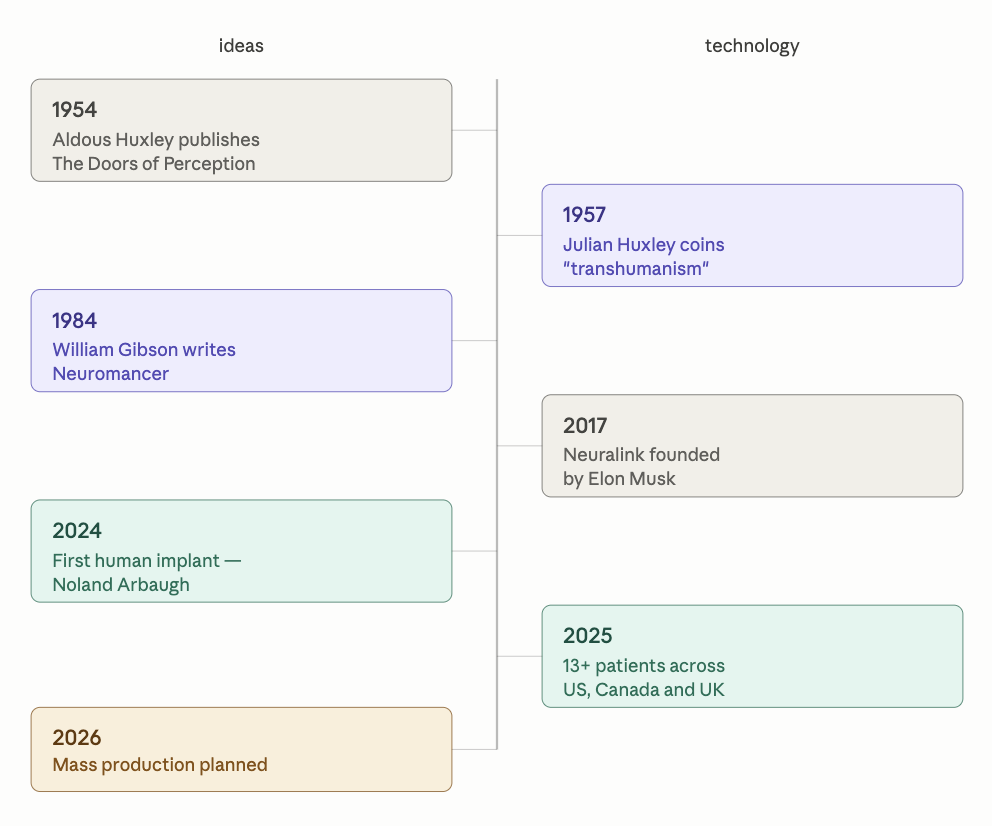
After years of development, the Neuralink brain implant — a kind of mind computer developed by Elon Musk’s team — is starting to show results. Musk has even promised industrial production by 2026. Currently, Neuralink, which reportedly already has more than a dozen people living with a functioning implant, focuses on decoding neural signals and restoring senses.
However, the long-term potential points toward enhanced perception: from ultraviolet vision to mind expansion. Will humankind’s natural abilities be replaced by information supplied by a chip? Will the next Lionel Messi, LeBron James, or Shohei Ohtani be born, or made? One piece of pop-culture trivia: Noland Arbaugh, the first patient, uses the implant to play Civilization VI and Mario Kart. He has already broken world speed records using nothing but his thoughts.
Will the Chip Replace the Plant?
So far, so good. But some questions remain — questions everyday life will have to confront: Will cannabis still be necessary as a source of heightened sensitivities, perceptual experiences, comfort, health, and distortion? Is the plant’s sensory hegemony coming to an end? Will the chip compensate for what the soil provides?
What we know so far: Neuralink acts through electrical impulses in specific areas. And while it could simulate states of euphoria or relaxation by stimulating the reward system, the cannabis experience will still act as a systemic chemical bath across the entire brain. So, if technology seeks precision, cannabis offers organic alteration and, consequently, an unpredictable logic.
If technology seeks precision, cannabis offers organic alteration and an unpredictable logic.
For now, what we’re seeing from Neuralink is just a tiny glimpse into the future. And it’s likely that, perhaps tomorrow, perhaps the day after, it could offer on-demand states of consciousness. What will obviously be missing is the ritual itself — the part tied to the plant: rolling, lighting, smoking, getting lost in the swirling wisps of smoke. Something a chip probably won’t replace completely.
What will obviously be missing is the ritual itself — rolling, lighting, smoking, getting lost in the swirling wisps of smoke. Something a chip probably won’t replace completely.
To Whom Do Our Thoughts Belong?
After all, if a chip can deliver sensory signals, it might be possible to “live” in universes with different physical laws. At the same time, the development of artificial intelligence is accelerating at a furious pace. There are already users with implants who can “design” 3D objects simply by thinking about them. That is, they “create” an “imagined reality.” What manifests in the mind could also appear. Or disappear.
From here, an ethical question arises: if Neuralink devices collect neural signals that can reveal emotions, intentions, and intimate cognitive processes, to whom do our thoughts belong? Imagine this: when (and if) “everyone” has one of these chips implanted, there will be a risk that this data will be used to sell advertising. Or worse, much worse, to orchestrate much-feared forms of extreme surveillance — and live, among neurons and transistors, with Big Brother.
If Neuralink devices collect neural signals that reveal emotions, intentions, and intimate cognitive processes — to whom do our thoughts belong?
Neurorights: who’s protecting your brain
- Chile became the first country in the world to constitutionally protect neurorights, expressly prohibiting the non-consensual manipulation of brain activity.
- Spain has been preparing legislation on the matter since mid-2025.
Huxley, Gibson and the God Button
In 1957, evolutionary biologist Julian Huxley, Aldous’s brother, coined the term “transhumanism,” stating that human beings should be improved through science and technology. In 1984, Canadian writer William Gibson wrote the cyberpunk novel Neuromancer, which triggered the definitive evolution of artificial intelligence, forever merging technology and human consciousness. And after his experiments with mescaline, Aldous Huxley managed to explore perception and reduce the activity of what he called the “brain’s reducing valve.” He shared this experience in his book The Doors of Perception, ultimately arguing something that Neuralink could undermine: the brain’s function of filtering reality so that, in essence, we don’t lose our minds among so much information.
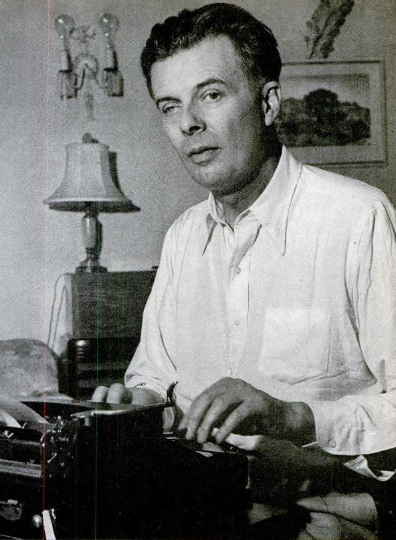
So, if mescaline (or cannabis, or any other chemical trigger) can open that valve, allowing the “Being-in-Itself” of things to pass through, Neuralink could become the first technological tool capable of “hacking” that valve. Transhumanist thoughts, cyberpunk fears. The implant could allow for manually adjusting that valve of perception. A license to fantasize: imagine turning up the volume of colors, lowering the intensity of pain, or tuning into data frequencies we normally ignore.
So, if the perception of the sacred is linked to neural firings in the temporal lobe, will Neuralink be able to activate that “God button” at will? Will a mystical revelation have the same value if it was triggered by software code instead of a spiritual quest or an organic process?
Will a mystical revelation have the same value if it was triggered by software code instead of a spiritual quest or an organic process?
Of course, Huxley advocated for individual freedom to explore consciousness. And if a company like Neuralink controls that interface, will it also decide which doors open — and which remain closed? Will there be a terms and conditions button for the perceptual realm?
Cannabis, Unfazed
And here, some clues hint at a dilemma that may be looming: the danger of having our minds “hacked.” For this very reason, Chile became the first country in the world to constitutionally protect neurorights, expressly prohibiting the non-consensual manipulation of brain activity. The next? Spain, which has been preparing legislation on the matter since mid-2025.
Meanwhile, Elon Musk is grappling with some technical challenges, such as brain tissue healing and battery life. Alongside this, cannabis remains unfazed, offering a “pure experience,” without sutures, chips, electrodes, or uncertainties: it requires no software updates or disclaimers. Thus, perhaps, in the future, amidst transistors and resin, cannabis will still be necessary to navigate the Matrix: an algorithm capable of replicating the plant’s imperfect poetry has yet to be invented.